
The smoke settles in the holler, unable to escape the hemlock trees encasing the valley. The white clouds of spice and cedar lift into the sky, but fall shy of the canopy of green above, dipping below, lower and lower, settling like a dense fog. The hemlocks stir and rattle. With a drip, drip, drip, they remind all those around that this is, indeed, a rainforest. Not one that you read about in a storybook — grand and filled with Amazonian splendor, with waves of color and exotic intrigue. Here there are no capybaras, toucans, or jaguars. You’ll find no anacondas, poison dart frogs, or bullet ants. Instead there are black bears, wild turkeys, and spotted salamanders. And an ensemble of woodpeckers and owls, unconcerned with our measurements of time. Whippoorwills cry their own names, constant, ceaseless, singing under the moon. With a crackle of a fire, a single ember releases, finding its way above the trees. Off, gone, forever.
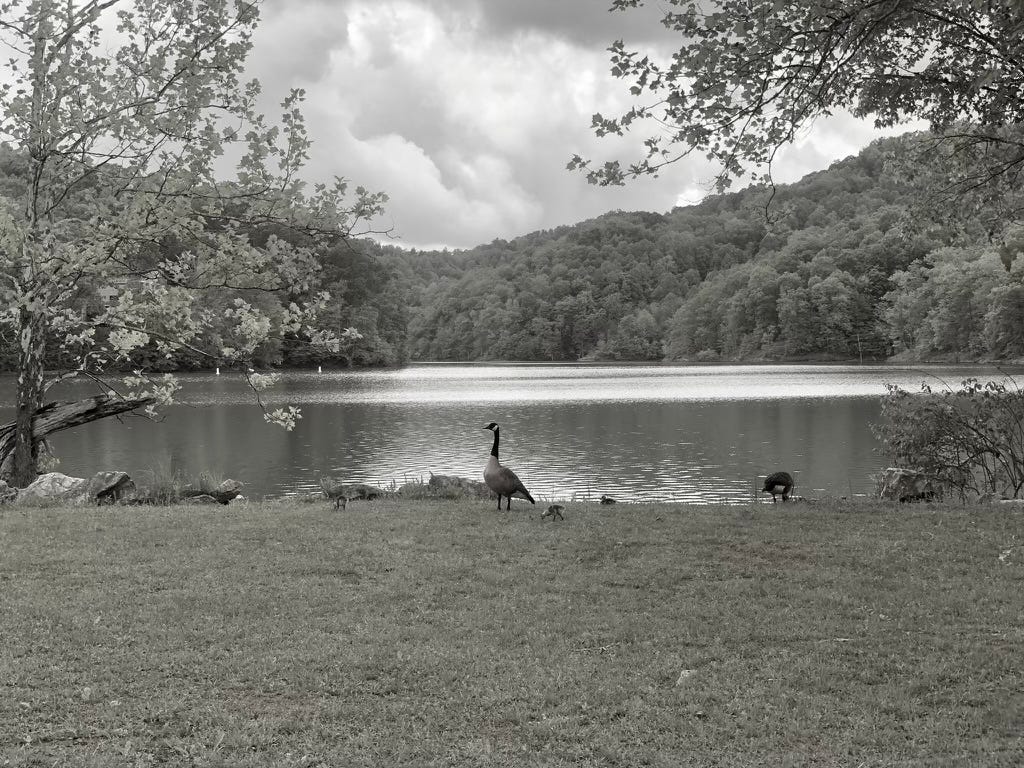
Beyond the holler lies a lake — modest, but loved. And a thickness in the air. A storm threatening to release its fury, a reminder of its power. One drop hits the lake, yet she hardly notices, standing proud and expansive, more than 1,000 acres. But as they are prone to do, that drop transforms into another, and then into hundreds and thousands, one drop indistinguishable from the next, rippling and quaking the water. Then, as quickly as it enters, it disappears, leaving blue skies and a freedom from this release of nature’s tension.
Beyond the hush of the holler, a town hums along. Paintsville, Kentucky lies in the foothills of the Appalachian Mountains in the Cumberland Plateau. The “City Between the Lakes” is made up of just over 4,000 residents and spans about five square miles of land. Most modern conveniences can be spotted in Paintsville — chain restaurants, grocery stores, schools, a library, a hospital, a detention center, even liquor stores, which made an appearance after Paintsville dropped its prohibition of alcohol sales in 2009. The downtown, removed from the big box offerings down the road, provides a sense of peaceful connection. On the way to Main Street, it’s hard to ignore the people on their porches. Sitting and sipping and swinging. Waiting for nothing, at least nothing in particular. And right by the courthouse, across the street from a diner, and a few paces away from a coffee shop sits a bench. A bench where you can watch the children line up in anticipation of the local theatre’s production of Beauty and the Beast. A bench shaded by an oak tree.
Paintsville is more than another small town. It is rich in its stories. Some whispered, some sung, some carried with the wind.
Less than ten miles from that bench lies Butcher Hollow, the childhood home of country music singer and songwriter Loretta Lynn. Touring the home requires a stop at Webb Grocery and an ambitious one-lane drive past an old yellow school house and the narrow opening to a coal mine in Van Lear, Kentucky. The two room cabin where she was raised still stands — adorned with quilts, guitars, and a coal burning stove. But Loretta isn’t the only country storyteller from this area. The US 23 country musicians, as they are known, dot Eastern Kentucky with a special focus in Paintsville at the US 23 Country Music Highway Museum. Each Thursday evening people of all ages join together in a joyful blend of line dancing, strumming, and jubilation. And while bluegrass is the flavor, the soul is more like church. A communion between neighbors. Between God and man. A tap of the shoe or the pick of a banjo begins to tell the tale and remind us that here, in this moment, we are all one. We are human, sharing in the same joys and sorrows, acknowledging that life is happening now all around us.
Music is more than simple sounds and lyrics strung together. It is a memory and an aspiration for the future. It is the stories we carry, the ones we can’t quite speak but can find in melody. Before stories were written, they were sung. Around fires, in yards, on front porches. The old ballads carried warnings and wishes, passing through generations like heirlooms. Even now, when words fail, music doesn’t, it can’t. It is a story we feel before we understand it, before we remember it, before we even know it. And long after we are gone, our stories will carry.
Nestled in the serene campground at Paintsville Lake there is no internet, no cell service. But there are stories. Stories that come through like whispers through the trees from another time. Stories from families gathered together around a campfire. Stories of unknown lights and lost travelers, of powerful coal barons still clinging to this world, of hellhounds and shadowy beasts. And stories of love, loss, and survival. Of appreciation of family and the holiness of breaking bread. Of honoring heritage and searching for meaning. The whippoorwill knows these stories and he tries to share them, constant, ceaseless, singing under the moon.
Paintsville is a place of stories. Forgotten by some, not gone. Quiet, not a ghost. A place where stories linger, waiting to be heard.
Comments
Nothing yet. Say the first thing.
Sign in to join the conversation.