
In the course of publishing more than 100 of these newsletters (welcome to edition #104!), I’ve gotten a lot of questions from readers. When they come via email, I try my best to respond to them promptly, but then these questions/answers aren’t available to other folks who might be wondering the same thing. So, here’s a selection of some questions (in no particular order) that I’ve received in the last few months, some about food and farming, some about economics and ecology, and some about me, this newsletter, and the point of everything. All this to say, please write to me! I love to hear new perspectives, see how my arguments hold up against critique, and share additional context whenever possible. —Sarah
Starting with some questions about last week’s What We Keep Getting Wrong About Regenerative Agriculture (it’s one of my most popular pieces of writing in a while, in case you were on the fence about reading it):
This sentence:
In short, regen practices do not effect the fundamental economic reality that in America, food is cheap, and the winners in the food system are not those that invest in the health of all the resources they manage, but those who force as many costs onto others (workers, partners, communities, governments, ecosystems) as possible in order to keep prices down and their own margins up.
Was too short! It is here that I think the closest thing to potential remedies exist. I would love to see you explore ways our society might approach a more true cost accounting—re-internalizing the tremendous costs of global industrial ag or pricing in subsidies for the regenerative alternative—without causing total system collapse.
Or as another reader put it:
All of this makes me want to scream - “well what fucking economic system WOULD make regen ag a truly viable solution?”
The answer to these questions comes down to what we could do to create a political-economy that incentivizes the internalizing of externalities. In other words, how do we force companies (and thus, consumers), to pay the full price of creating and buying goods, which includes the real cost of labor, environmental impacts, materials, and everything else.
One of the biggest barriers to doing that right now is that a lot of people simply can’t afford the actual price, and so forcing them to pay it would be, I think, a genuinely unjust burden. After all, how can you afford the cost of soil health in Iowa or water quality in Arkansas when you're working 60 hour weeks in Atlanta and still don't have money to buy groceries and enough gas to get to work?
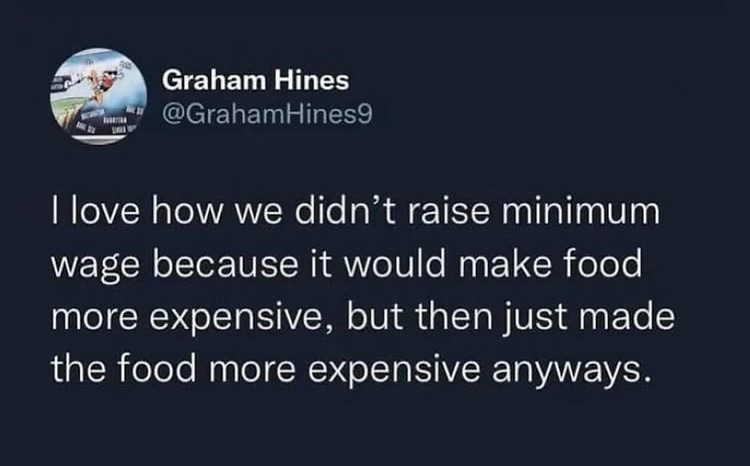
The answer, to my mind, is that it’s companies (and by extension, shareholders) who should be paying this price, in the form of reduced profits (and I’ll throw in reduced executive compensation as a kicker). Free-market heads out there are probably fuming, but hey, somebody is going to have to pay— why not the CEO of Starbucks who last year made 6,666 times that of the median Starbucks barista? Whether or not he’s deserving of that premium is besides the point here, what matters is he has the capacity to pay, and so maybe we should ask (force?) him/his peers to do so!
In other words, though the linkage might seem indirect, I think a concerted effort to address wealth inequality and strengthen worker protections would be the essential first step towards an economy where regen farmers can survive and thrive. And I say that with the full knowledge that there are plenty of rich and powerful people who would rather die (and have all the rest of us die too) than see these transformations take place. That’s the flip side of the folks who want to save the world and get rich doing it— if they can’t do both, they’d rather get rich, and the rest of us can fuck off.
Of course, right now, these changes feel so deep and dramatic, and so impossible to achieve, that most people would prefer to talk about USDA programs or philanthropic dollars. But philanthropy and voluntary programs cannot change our economic system, nor will they change agriculture, they quite simply don’t have the leverage. Farmers, especially American farmers, are very savvy people. They might flatter NGOs or NRCS folks for a little while, but the minute the money runs out, slows down, or is outpaced by other incentives, they’ll drop every single thing that doesn’t pencil. And I say again, in the harshest conditions, it is conventional, not regenerative practices, that squeeze enough dollars from the soil to allow farmers to pay their bills.
Of course, all of this is about the best “economic” solution. It’s possible there are other, non-economic solutions (say if an eco-cult became a dominant national religion, and fundamentally challenged the way we think about both money and the landscape). Though I think a prerequisite to even these extreme edge cases would involve a transition from capitalism to… something else. And who knows? Maybe that’s actually more likely than us ever actually addressing wealth inequality.
Wait so is the foundation of all your beliefs here basically that until people become place-based, we’re fucked?
In short, not necessarily! But I would argue that, unless the fundamental political economics change, regenerative farming is never really going to be competitive, as a model, with conventional agriculture. The reality is, if what you want is the most scalable, efficient, and profitable food and farm system, you’re in luck, because that’s the one we’ve already got! If you want a regenerative food system though, we’ve first got to stop prioritizing profit, efficiency, and scale, and prioritize resilience, health, and stability instead. There is no “both,” these are mutual exclusively, or what an economist might call “tradeoffs” Unfortunately, there is no version of regen ag that we know of that’s also hyper-efficient and profitable.
But in my read, your logic extends from regen (ok if we never get there) all the way to better (not ok if we don’t get there)...am I wrong?
Basically, we either have to capitalize externalities or else place-based-ness maybe means we do it in community for our neighbors and our properties because we don’t want to kill people we love (usually) and (more importantly) we want our property value to increase.
I think you’re overstretching my argument (slipping down the slope, so to say). What I’m saying is, current ag economics incentivize existing conventional practices. I’m not saying it’s impossible to overcome these incentives, or that these incentives will never change (if we run out of water, grow a pair on the regulatory side, or, you know, encounter a nuclear winter, they will definitely change!). What I’m saying is that the economic promises of regenerative ag are unlikely to materialize in a generalized way that’s accessible to most farmers because the current political-economic conditions make it essentially impossible for that to occur.
Here’s a goofy metaphor: If you drop a mento into a bottle full of coke, you’re going to get a little geyser and lose all the coke. Now, if you want to change that outcome, you could do something meaningful— you could empty the bottle first, or replace the coke with water, or use a peppermint instead of a mento, and each of these fundamental changes would alter the outcome. But in all the evidence I’ve found, switching from conventional practices to regen practices is an economically superficial change, not a fundamental one. It’s like switching coke to sprite. It looks really different, but you’re still going to end up thirsty, and with a big mess.
How many powerful people in Agriculture do you think actually know you are right, but just can’t say it out loud??
I love this question, but my answer might surprise you.
I’m more worried that a lot of rich and powerful people actually don’t know this stuff, or perhaps more accurately, refuse to believe it. In my experience, rich and powerful folks tend to be some of the most die-hard “save the world and get rich doing it” believers, and they are obsessed with finding “solutions” that allow them to be the heroes and have their yacht too.
Personally, I think the people who know this stuff but can’t say it are, almost universally, farmers. I just had a conversation the other week with a young farmer who, after we’d been talking for over an hour, finally and very shyly broached the topic of regen ag. I immediately raised my qualms, and she was so relieved, but at the same time she said, “it doesn’t matter. I have to be all in on regenerative ag. If I didn’t use those words, I think most farmers I know would stop speaking to me.”
All this to say, unfortunately I think “regen ag” lends itself to a flavor of progressive purism that becomes really toxic, one that’s wildly unaligned with the actual values of the movement. Regenerative agriculture is supposed to be about matching practices, plants, animals, and people to the landscape, the climate, and the community, and adapting as conditions change. It is the antithesis of purism. But I’ve found more often that it’s actually about using the right lingo, in the right meetings, while presenting the right aesthetic to impress the right stakeholders.
Now I just sound jaded, but the point I am making is, I think a lot of hustling, practical farmers are actually the ones who know that “Regenerative Agriculture” is, to use my favorite colloquialism; all hat, no cattle.
There are several grammar mistakes in this piece. Do you need a proofreader? Also, do you plan to send this particular piece out to news outlets?
Sorry about my spelling and grammar ya’ll. It’s mostly a result of the fact that I often write my newsletters on Sunday after 5pm, and then published them like 9 hours later, and I always feel like that’s too tight a turnaround to ask for a second pair of eyes. Also, the later I start, the more likely I am to write the whole thing right in substack, which has a less sensitive spell-checker than say, a google doc. And the cherry on top: I’m a comically bad speller (just ask anyone who’s ever suffered through playing bananagrams with me). So yeah, the process is imperfect.
Why is that the case? Mostly, because I’m a journalist in my heart of hearts, which means I’m motivated exclusively by deadlines, and am otherwise an intense procrastinator.
But also, this newsletter is not my main gig. Though I cannot express how grateful I am to my paid subscribers (truly, you all are the most lovable, and frankly, the sexiest group of people I can think of), the amount this newsletter contributes to my “paying the mortgage” fund is small. That’s not a complaint! I love writing this newsletter, and don’t want it to become a grind, which is why I was hesitant to turn on the paid option in the first place, and why I still promise that I will always make as much of writing/podcasting/etc. free and public as I possibly can. Paid subscribers help me keep that promise, and I’m so grateful to all of you for that.
All to say, this is a “nights and weekends” labor of love for me, and that means it’s going to be imperfect! But also, enjoy those typos— they might be the best proof there is that I never use AI in my writing, and I don’t plan to start anytime soon. This newsletter is now, and always has been, more than “content” (derogatory) to me. It’s where I come to learn out loud, to hone my ideas and positions, and to try and make cases that I struggle with, warts and all.
On the other half of the question, I don’t usually have the bandwidth to shop my newsletters around beyond sending them to you all. But if you have ideas of places that might be interested in taking a read, I’m all ears. And you can always share this newsletter by forwarding the email or sharing a link to the native story.
In fact, they abandoned much more regenerative practices in the past like diversified operations, integrated livestock, more perennial plants because those practices were making them worse off.
Awesome post. If I have to remind another fucking person that the tillage they so angrily oppose actually does incredibly important stuff that’s why the farmer does it i’mma jump out the window.
OOOOOOHHHH Chris I feeeeeel you. It’s the irony of people wanting their fresh produce to be grown with no tillage, no chemicals ever, in the shade of an old oak tree, on the banks of a babbling brook, but also wanting long, straight carrots and to buy them for 89 cents a pound.
You know, a fantasy. A cheap, impossible fantasy.
What are you reading right now? Any recommendations?
Hahaha I’m always reading too many things. Recently, I accidentally got myself in an “only sad books” rut. I just finished Man’s Search for Meaning by Victor Frankl and The Childhood of Jesus by the GOAT J.M. Coetzee. Couple that with my ongoing Blindness by Jose Saramago and American Midnight: The Great War, A Violent Peace, and Democracy’s Forgotten Crisis by another of my all-time favorites, Adam Hochschild, and you round out my tour de bummer. But! I’m not exclusively a high-brow reader (duh). I also just finished By The Sword by Mercedes Lackey, which was wild because I guess I’d never read real, grown-up fantasy besides The Lord of the Rings before (tbh, it was a little too much description of swords and armor for my taste), and I read The Viscount Who Vexed Me, which is shockingly not one of the Bridgerton books, but also, it sort of is though. If you are are looking for a Romantasy, I’ve been in a drought since Warrior Princess Assassin, which made me realize the fundamental truth that in stories where characters struggle to be fully realized, the correct answer is to just… not choose.
But most importantly, I’m about half-way through Pig Tales by Barry Estabrook, which I’m reading for the new food and farm book club that Alison and I are spinning up over at Grow Well. If you’re interested in joining, shoot me an email.
On The Only Thing That Lasts:
The only take that I didn’t agree with were your conclusions surrounding the visit to Pitchfork Ranch and their cienaga. I think you drew some conclusions about how Ag can realistically interact with “wild” places, that, at first listen, seemed like a stretch.
Connections made between erosion features in Georgia from tillage/unique geology, and stream cutting in poorly-managed drainages of the desert SW felt tenuous (but I’m a recovering Geologist, so perhaps I’m being too strict!). Also, my understanding of the science and my practical ranching experience is that well-managed grazing benefits grasslands, wildlife and soil. “Well-managed” is tricky to pin down, but grazing impact from diverse ruminants with “appropriate” recovery periods is a huge part of how grasslands evolved, and I’m confident that cattle, sheep, goats, bison, etc should be part of any future grassland management. Wildlife won’t do it alone, especially when fire is removed from the ecosystem and there is no significant ruminant migration anymore. This is a tricky, deep discussion and the “rules of the grassland road” change in an elevated carbon atmosphere (which isn’t being discussed well anywhere), so perhaps all bets are off!
First off, I think your critique, overall, is valid. I have a line in the first of the two environmental episodes that says, “the intersection of agriculture and the environment is a topic that could easily take up a whole podcast season, if not multiple,” and I really do believe that’s true. I didn’t want to leave farmland’s connection to wild spaces out of the series (it would have been such a big and obvious oversight), but it’s also a really tricky topic to cover with any amount of character, story, or nuance in 90 minutes.
But I will also say, the environmental historian I talked to actually pointed out that the geomorphological mechanisms at work in Georgia and the Southwest are almost exactly the same-- the landscapes are obviously very different, but essentially, anytime you try to usher water off the land faster, gullies happen, especially on these more fragile geological landscapes. He argued that ushering water (in addition to other manmade impacts, like logging, grazing, fire prevention, etc.) has actually transformed the Southwest even more than it has Georgia, because the loss of cienegas in places like New Mexico has actually impacted the climate there, too.
I also agree on your other point, I think livestock can be a part of appropriate grasslands management, though I purposefully left in some of the edgier comments about cattle. I think cattle have become a real one-size-fits-all miracle cure to many in this space, even though they do not act the same way on the landscape as sheep, goats, or bison. But people like to raise cattle because the money is much better (no value judgement), which means the story always seems to be “cattle are the secret to fixing the grasslands” which I think is a flawed and oversimplified conclusion.
And yes, elevation, local geology, so many variables alter all this stuff. That’s why it’s all about practices customized to place! (Again, why there’s no such thing as a one-size-fits-all... anything). I do think you’re right, too, that wildlife can’t do it alone given all the other ways we’ve altered the landscape, but one of the things I wish I’d stated more clearly in the episode is that, if we’re eliminating wildlife to make more space/resources for cattle (whether that’s other grazers, predators, plants, even bugs and microbes), which many “regen grazers” still are, than that’s not really a “regenerative” system. That’s just your same old cattle ranching with a nice environmentalist ball cap on.
But yeah, anyway, this is all a very hard needle to thread, even without the time limitations of a short podcast episode! I’m hoping to do more reporting on these topics in future to both flesh out my knowledge and source material more, and to continue complicating people’s understanding.
Thanks for the thoughtful discussion! I think we need a diversity of grazers on the landscape, cattle included. And I don’t think it’s so much that the money is better, it’s that the money is easier: the infrastructure/sales/transport/volume -- the system -- is built around cattle, and, perhaps more importantly, the culture is built around cattle. I didn’t come from Ag, so I’m already weird and adding goats to a cattle operation is easy -- not so for my neighbors who have reputations to protect! ;-)
And I would disagree with your framing of:
if we’re eliminating wildlife to make more space/resources for cattle (whether that’s other grazers, predators, plants, even bugs and microbes), which many “regen grazers” still are, than that’s not really a “regenerative” system. That’s just your same old cattle ranching with a nice environmentalist ball cap on.
Well-managed cattle should INCREASE the plant and animal diversity. I will come to hate the word “regenerative” quickly! It might be worse than “sustainable” in it’s nebulousness. Perhaps an increase in diversity should be the test of whether it’s “regenerative” -- not the practice, but the result.
But, as you noted in the podcast, I don’t get paid for wildlife habitat or bugs or plant diversity or predators or microbes. I love those things, but they don’t pay the mortgage.
100%, you are right, like so much in agriculture, it’s a combination of economics, ease, and culture. They all matter, but each matters a different amount to different people. Not having to build your own market or figure out your own logistics is huge, and in that way I understand why folks are clamoring to raise cattle and not bison, even though bison are a meaningfully different animal that has a meaningfully different (arguably, better!) impact on the landscape. Similarly, depending on your region of the country, your prestige crop is either corn, cattle, cotton, or tree crops (apples, almonds, citrus). Even when soybeans, sheep, and veg make more money, there’s plenty of people who will forgo the money because, essentially, preference. To me, that fact just kind of is what it is-- we live in a free country, after all.
I also agree with your second point, I think regenerative systems should, by definition, accommodate more diversity and life (that’s what I was imperfectly trying to say). I think I’ve just met a few too many people who call themselves “regenerative grazers” simply because they have cattle on pasture instead of in a feedlot, even though they’re not moving the herd, the number of animals doesn’t match the carrying capacity, and they’re still spraying for grasshoppers. Which, to your point exactly, is a big part of “regen’s” problem-- nobody really knows what it is, so everyone is just using the term willy-nilly. I’m whole-heartedly on board with the “regenerative outcomes” not “regenerative practices” frame, but I think the group of us who agree is quite small. Practices are wayyyy easier to measure (and thus, to monetize).
For better or worse, it always comes back to the money
There were a few powerful companies who would benefit from us growing more corn. I’m wondering what are the best incentives to change ag in a way that supports farmers and eaters? e.g. pay farmers to transition to perennials, charge fees on CAFOs, expand crop insurance broadly to food crops, institute Good Food Purchasing Policy across the govt, etc.
I definitely agree that corn production these days mostly benefits a few powerful companies (and a lot of wealthy landowners). If you're how to change ag to grow less corn though, that's a wildly difficult thing to do, not least because the USDA just put out their estimate yesterday that US farmers intend to increase corn production by a few million acres this year. I wrote about corn and corn acreage extensively in my MAFIA CORN SALAD, but the long and short of it is, we have a 200 year old ag system custom built to encourage corn production. There is no “small changes” to be made that cut into the benefits to corn production accrued over such a long period of time. I'm convinced that nothing short of a short-circuiting of property rights could lead to any significant change in the amount of corn planted in the U.S.
The question you pose though, "What are the best incentives to change ag in a way that supports farmers and eaters?" is slightly different. One question I have is-- which farmers are you talking about, and which eaters? Like the rest of American society, there are two tiers of both-- there are hugely wealthy farmer-landowners who are already well-supported under the current system, then there are small farmers who are not. There are also rich eaters who, even now, spend less than 6% of their income on food even when they buy elite, fabulously healthy food, and then there's the ordinary eaters that need to optimize calories per dollar, and so eat a lot of highly processed convenience food. I think we have to make these distinctions before we can start answering this question in a thoughtful way, and yet, we rarely do. So to the extension of your question:
"Pay farmers to transition to perennials." This would have the biggest environmental impact when done on the largest properties. Smaller (generally poorer) farmers who might have 1-10 acres would surely be interested in perennials, but probably not at a meaningful scale (plus, someone still needs to grow vegetables, and vegetables are not perennials). So this kind of program would inevitably go to paying large farmers, the wealthy landowner type. Why would the rest of us pay wealthy landowners to plant thousands of trees (etc.) on their private property, when they realistically already have the resources to do so, and they’re the ones who would reap the benefit. So then, why should the public pay?
"Charge fees on CAFOs." I think this is a good idea, though in places where it would be most impactful (Iowa, North Carolina, Missouri) there's no political appetite for it. I don't know what to do about that.
"Expand crop insurance broadly to food crops." There are some USDA-subsidized insurance products already available to food crops (and many “commodity grains” also enter the food system in one way or another, especially wheat and some seed oils). Personally, I think the idea of insurance (or lack thereof) as an incentive mechanism has been overblown, because it's not actually insurance programs that encourage farmers to plant corn and soybeans, it's the commodity programs. These are not weather dependent but market dependent, and essentially pay out every year no matter what (just to greater and lesser degrees). But insurance and commodity payments are really besides the point when it comes to food crops. The economic hangup for the food crops you’re probably thinking of (especially fresh fruits, veg, and nuts) is labor. Labor is expensive in the U.S., and cheaper in Mexico and points South. That means that the market price of produce is almost always too low for U.S. producers to compete. Insurance does not remedy that problem.
"Institute Good Food Purchasing Policy across the govt." This just seems so outside what could be possible in the next four years, and also, I’m not sure what kind of impact this would have really, or if it’s plausible, even in a medium-term.
But you asked if I knew of better incentives to change ag, and I have to say, I don't think this is a simple incentives problem. I think one big thing that would change agriculture is new state and federal regulations. The free market for agriculture is broken, and has been for over a century. There is not market-based solution to these problems. The only solution that would work at scale would be to regulate agriculture. If we know what we want (support for small farmers and all eaters?) and what we don't (support for the wealthy and maintenance of the status quo?), our best bet is to create rules and policies that reward actors for doing what we want, and punish them for doing what we don't. Policy is hard and it will be difficult to do this well, but in my experience/research, I don't have much conviction that anything else would work.
I just listened to you on the Agrarian Futures podcast. I'm with a small local non-profit… we mostly rent land but we've recently acquired our first farm parcel, and put it into conservation. It is farmed partly for education/donation to food banks, partly for profit by the resident farmer for nominal rent. We rely hugely on volunteers, and if there's a ray of hope, it's that many in the community are embracing us. Meanwhile development continues relentlessly. It will be a while before we can manage another acquisition, and by the time we can, I worry there may be nothing meaningful left to acquire.
Non-profits weren't specifically mentioned as a means to acquire land and give land access to a new generation of farmers. Is it pie in the sky to think that this might be workable? I'd love your thoughts, and any advice you might have for our still toddling 5-year-old organization.
Yes, I think non-profits can be a piece of the land access puzzle. However, it's complicated, and there are challenges. Definitely check out “The Things We Do For Land”, the final episode of The Only Thing That Lasts, for more on this.
One of the big challenges in a model like this is that land appreciation is an important buffer against price swings and other risks for farm businesses. An economic downturn, a canceled farmers market, or a storm, pest, or just an unlucky batch of seeds could put a farmer on a path to financial devastation. One way that farmers secure themselves against this risk is through the equity in their land, which they can draw on, or at least confidently know is growing, no matter what happens in the farm's production business. Of course, if farmers are renting, then they don't get the benefit of this equity, but are instead put further at risk, because rent usually doesn't change depending on the quality, quantity, or price of the crop. This is often the very bind that puts new, young, and disadvantaged farmers out of business. They get squeezed between an unlucky year or two and an unyielding landlord. Also, renting, whether from a non-profit or for-profit landlord, is just a vulnerable place for most farmers to be. There will be limited investment in long term projects or infrastructure (which is generally cost-saving or revenue increasing) due to lack of confidence in long-term tenure.
Now, a non-profit could do some things to cushion farmers from these drawbacks. A non-profit can reduce or eliminate the rent in bad years in response to a farm's financial hardship. Naturally, this can be challenging and a slippery slope for the owner organization, and still does not provide the positive benefit of equity (unless the non-profit is using a rent-to-own model). A non-profit could also provide something like a 99-year lease to farmers in order to give them confidence in their longevity on the land. However, that would require a significant degree of confidence in the long term ability of the organization to resource itself.
All to say, in a perfect world, I think non-profits would not own farmland-- farmers would. But we don't live in a perfect world, and nonprofits have a lot more power, flexibility, and access to capital than farmers do, and therefore nonprofits should (and must!) be an ally to farmers.
But these very same factors also mean that nonprofits can be just as predatory, abusive, and problematic towards farmers as any other landowner. I've visited a number of non-profit "teaching" or "demonstration" farms in particular where farmers are either paid a pittance or charged an arm and a leg to rent a space that's ill-cared for, poorly-managed, and where funders are constantly tramping through even though their dollars never flow to the people actually working the land. So while, personally, I do think non-profits can be a valuable part of this ecosystem, especially when they organize community and bring people together to support growers, I think it still takes a tremendous amount of care, intention, good relationships, and no shortage of resources to do it well.
In response to The Me I Used To Be On Social Media:
Sounds fine. But your essay isn’t complete. This was all about you, you, you. Nothing about how you treat your readers. You need to state that you do not read or reply to comments. Many of us have wasted our time commenting thoughtfully and professionally to your excellent work, hoping for a respectful discussion. Save the next person the trouble. Or continue being part of the toxic social media problem.
Thanks for your message, and thanks for being a reader. Generally, not engaging with public comments is one of the guardrails I mentioned in the story. Doing so in the past has led to direct threats to my safety, which is one of the reasons I left social media years ago.
But! I’m happy to engage with you directly if you’re interested. I’m always into trading emails or jumping on a zoom/phone call to learn more about what you’re thinking or how you’re understanding my work (or how I might better understand yours!). I understand that it’s not as convenient as posting directly on socials, but in my experience, it’s just enough of a barrier that people who want to have thoughtful, productive exchanges will be willing to do it, but people who are just interested in spewing hate for internet points won’t.
Anyway, thanks again for the feedback, and I’m looking forward to getting to know you better if you’re interested.
Thanks for your kind reply. I totally respect your need and right to restrict your exposure to the awfulness of social media interactions. Particularly now I know you had threats of harm. I now understand that you are better off being publicly obtuse about how you choose to interact. Frustrating, but sensible.
I guess what I like about your work is that you are curious, investigative and objective. Yet not shy to voice your opinions (some of which I disagree with, which is great.) I’ve been in agriculture almost my whole life, from an idealistic ‘homesteader’ to a farmworker, research and extension scientist, in produce distribution, and in the last few years, farming full-time on a tiny plot of land using only hand tools.
For all my experience, I feel like I am no closer to knowing the essence what it really is to be a farmer with a future. Your work stimulates my thoughts, dreams and despairs.
Thanks for understanding, and yes, my inbox is always open (even if I’m sometimes a little slow to respond).
And to your last point-- same. I got into all of this in the first place for one reason; I wanted to find a way to make small farms work. In the early part of my career, I watched many of my coolest, smartest, hardest-working friends work their way to the land, do all the right practices, love the land, have the CSA, go to the markets, be straight up super human, only to end up (almost to a person) broke/in-debt, divorced, with lifelong injuries, and swearing off farming forever. I’ve never gotten over seeing the wounds that the farming dream has caused so many people I care about. Directly or indirectly, I’ve dedicated my career to finding a remedy to this problem.
That’s why I do this work. And even though a lot of people think my perspective comes from a place of cynicism and doubt, it really doesn’t. I want to figure out how to make small, regenerative farming work. But I also cannot stand to see my friends harmed by another half-assed, pie-in-the-sky, good-on-paper solution. Hell no. They’ve already been fed into the wood chipper of “you’ve just to hustle and it’ll all work out” once. I’ll leave this industry altogether before I see my friends, or the next generation of would-be farmers coming behind us, sold another false promise without, at the very least, writing a salty essay about how it’s probably not going to work.
Thanks for reading, and for always sharing your thoughtful questions, experiences, and objections. I hope you all know how much it fuels me to hear from you, to get to chat with and learn from you, and to know that (most of the time, at least) I’m not screaming into the void. When I write, people usually write back, and that’s the whole reason I do this. So to all these folks, and all the others I didn’t have space to include here, thanks for making me feel like I’m not alone. And for all the folks who have written to me and haven’t heard back yet, I will respond! I never delete an email that was written by a human, and though sometimes I get behind (current inbox: 377 unread), I always respond eventually. For better or worse, I just recently responded to email from 2022. So. There you go. Also, if you really want to hear back from me, a second ping is never a bad idea.
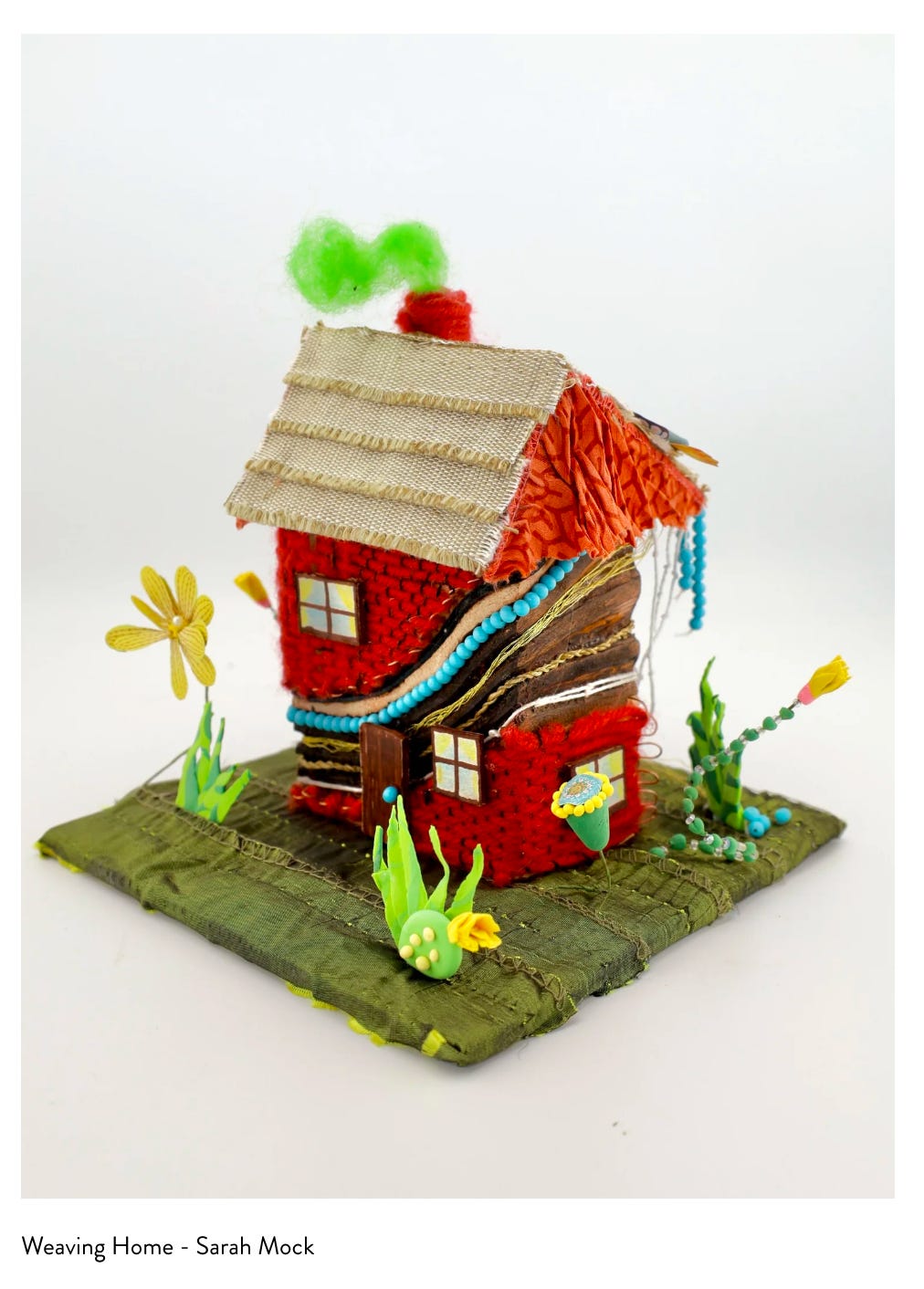
In the spirit of today being a holiday, enjoy this glamour shot of a tiny house I made for a community fundraising event here in ABQ. Frankly, I did not like how it turned out, and I did not think it was good! Alas, my skills are not in visual artistry (haha). But like Kurt Vonnegut taught us, “I don’t think being good at things is the point of doing them. I think you’ve got all these wonderful experiences with different skills, and that all teaches you things and makes you an interesting person, no matter how well you do them.” Well Kurt, here’s hoping.
No posts
Comments
Nothing yet. Say the first thing.
Sign in to join the conversation.