
Right now, all over this country, people are suffering from explosive diarrhea.
This is due to an outbreak of Cyclosporiasis, a microscopic parasite that’s hospitalized nearly 100 people already, and sickened thousands. This kind of contamination usually originates in fresh produce, on farms.
That makes now an excellent time to talk about regulations in our food and farm system, about the rules meant to reduce the risk of this exact kind of outbreak, and more broadly, those meant to reduce the temptation to do all kinds of naughty things— from misusing ag chemicals to abusing farmworkers.
Now if you follow the common entreaty and “ask a farmer” about the state of ag regulations, you’re almost certain to get some version of this answer.
“Agriculture is already so heavily regulated! In fact, farmers, ranchers, and our allies are being crushed under the weight of existing regulation. Any more will drive us out of business!”
Hearing this argument again and again over the last 10+ years (they’ve moved on to calling it “lawfare”) I’ve always wondered how true it could actually be. Especially when, you know, so many people are fighting demons in the bathroom because of illnesses they’ve contracted from food and farm products.
The answer I’ve found is there are a good number of regulations that govern some crucial areas of agriculture (though still, many fewer than I think a lot of consumers would believe). However, what’s also clear is that enforcement of these regulations ranges from “limited,” at best, to non-existent. In other words, there might be rules galore, but overwhelming, the industry is running on an honor system. And that lack of enforcement means we don’t even really know how often, or how severely, the rules we’ve tried to implement are being broken.
All this begs the question, why is there so little enforcement of regulations in food and farming?
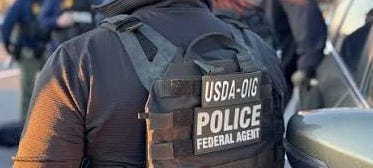
One of the most rigorous enforcement agencies at the U.S. Department of Agriculture is the Food Safety and Inspection Service (FSIS), who’s responsible (thanks largely to Upton Sinclair) for inspecting meat and egg processing facility, namely slaughter houses.
The industry has bemoaned these regulations since they were first instituted some 120 years ago. Processors hate that to sell USDA-certified meat, they have to have on-site inspectors, paid for by the operator of the slaughter house. These inspectors would, at first blush, appear to be some of the most rigorous “enforcers” in the food system. But look closer, and you’ll find plenty of evidence that slaughter plants themselves exert tremendous power over these inspectors, to the point of making them largely ineffective. While the inspectors are meant to perform daily checks for unsanitary conditions, inspect live animals for diseases, examine every carcass, and monitor processing lines, it is abundantly clear that many both lack the bandwidth to accomplish these tasks because the facilities are too big and move too fast, and that they often lack the power to raise or address issues even when they spot them.
This is hardly the only case of captured regulars in food and farming, but it’s probably the most blatant. So how did it happen? Well, I think a big part of it is that the USDA is the main federal agency that oversees American agriculture, and its stated mission is to “promote American agriculture,” not “to regulate American agriculture.” That’s already why the organization’s regulatory functions are so limited, and often focus on protecting U.S. producers from risks (like crops pests and pathogens) and competition from abroad, rather than on regulating how the producers themselves bring food to the market. And even where domestic regulators do exist at USDA, they’ve been pressured over the last 60 or so years to work with industry, rather than to provide a backstop against the industry’s instinct for corner cutting.
The problem with this “collaboration” is that regulations are intended to work against industry goals. After all, it’s more cost-effective to, say, rush animals through your line than it is to inspect every carcass. But since we don’t want the public exposed to animal diseases, we require processors not to do the most profitable thing. So when regulators become too cozy with industry, the goal of regulations— to curb these profit-seeking practices that put people’s lives at risk— erodes. And eventually, we arrive where we arguably are today, with a “regulatory system” in name only, which just rubber stamps (in this case, the stamp reads “USDA Inspected”) whatever practices the industry prefers.
From my research/observations, this is the biggest category of unenforced regulations in the American food and farm systems. This category comes in two flavors; the first, where there is no identified group responsible for enforcement, and the second, where there is an enforcer, but they don’t have any resources with which to do their job.
The textbook example of the first is ag chemical usage. When it comes to ag chemical usage, “The Label is the Law.” The label on a given product describes the maximum quantity you’re allowed to use, when you’re allowed to use it, and on what crops in what geographies. Technically, it is illegal to use those chemicals in any way that it is not directly described on the label. In an attempt to ensure that people understand how to follow the label, people (often farmers, but professional applicators too), have to become a certified pesticide applicator through a state agency.
If you hang around farms long enough though, you’ll start to hear another phrase– “Off-label.” If you’re a doctor, this idea is probably familiar to you, it involves using a medication as a treatment for something other than what it’s labeled for. Farmers/pesticide applicators do this too. And sometimes, what result is dangerous chemical mixes, not measured as precisely as they should be. And sometimes, due to bad weather or bad timing, someone applies a product a little outside its labeled application window. And sometimes, a farmer/applicator ends up putting on a little more than they should, “just to be safe” maybe or because it was windy, or for whatever reason.
But the Label is the Law! The problem is, who is there to enforce the law? There is no one on the federal level deputized to police ag chemical usage on-farm (EPA is only responsible for the label itself). There is some state-level enforcement in some areas, but they don’t go around and test tank mixes of ag chemicals, check applicator licenses, or determine if a farmer is applying something outside its prescribed window— in fact, they generally rely on public complaints to take any action at all. And even if someone did find a farmer wantonly disregarding a label– what would they do? Arrest them? No– at best, you might be able to fine them (it’s generally only a civil offense), but that’s often only if you can prove that someone did something extreme like apply pesticides while dozens of school children were nearby or use pesticides to purposefully kill migratory birds. Another way that pesticide misuse enforcement happens is through neighbor lawsuits– if your off-label application killed my crop, for example, and I can prove it, I might be able to hold you responsible for damages.
My go-to example for the second flavor of inadequate enforcement has to do with the H-2A agricultural guest worker program. This system is regulated, by the Department of Labor, and there are people whose express job it is to oversee the program and ensure regulations are being followed. That’s probably why you will hear agriculture complain about how the program’s “red tape” makes it difficult to use, and that the adverse wage rate– meant to ensure that foreign workers weren’t being used to artificially lower the price of American labor– is absurdly high (it varies by state, between about ~$13-$30/hour). And yet, because of too little staffing and too high a caseload, guest workers still end up in dangerous housing, deprived of food, and in some cases literally locked up. In one case where enforcement did take place, more than 100 H-2A workers had to be rescued from slave-like conditions on a Georgia farm, where the applicant’s abuse of H-2A workers netted them an estimated $200 million. In this case, because it is an expensive program to use, bad actors have been known to use the vulnerability of H-2A workers to extract the maximum labor possible. Some bad actors have been caught, but with so little oversight, estimates suggest that most issues go unreported and uncorrected.
There are a lot of other regulations that fall into this category too— from on-farm child labor laws to environmental regulations (hello, Clean Water Act) to rules governing federal grazing leases. But why are there inadequate resources for enforcement? Political power/lobbying is a big part of it, but another part is just poor policymaking. In defense of agriculture, this very type of unenforced regulation is common throughout the economy. In the obsessively deregulatory world we’ve been living in since the 1980s, plenty of publicly popular rules have been left in place while the enforcement capacity of the regulatory agencies have been stripped away. Calls for “reducing government spending” targeted many of the most powerful regulators years ago, ensuring that government funds flowed mainly to projects that further the profit-seeking goals of industry, rather than towards those regulators who might curb those goals in the name of the public good.
This category is becoming increasingly prominent, with most new rules being introduced today falling into it, and many old regulations being “updated” to become voluntary rather than mandatory.
Returning again to food safety, an obvious example of this might upset some farmers market shoppers. Take the Good Agricultural Practices (GAP) certification— the one that essentially all commercial food vendors in the U.S. require at a minimum— is a fully voluntary program administered by the USDA. This audit-based system, which checks that farms growing and selling fresh fruits, vegetables, and nuts have basic food safety protocols in place (we’re talking hand-washing stations, fresh water for workers, and bathrooms… so, you know, workers aren’t forced to shit amongst the raspberries). But, the fact that this program is voluntary means that plenty of farms, especially those selling locally and/or in informal markets, almost certainly are not being regulated. Does that mean they’re not meeting these minimum food safety standards? There is simply no way to know.
Why do we have so much voluntary regulation? Mostly, because the industry asks for it. The food and farm systems (including many farmers) don’t want to be subject to binding rules, but they also don’t want to come out against popular causes like consumer protections or fighting climate change. So demanding “voluntary” regulations allows them to split the difference— take credit for being “in favor” of all the good things the public wants, but also only agree to make changes when it’s lucrative to do so.
Returning to food safety, there are two very prominent examples where regulations were in place at one point but have either been overridden or delayed to the point of irrelevancy.
A commonly overridden food safety regulation is the one we started with today— the rule that meat sold in the U.S. must be inspected by USDA officials. If you’re a small farm or processor, there are ways to get around these food safety rules today. The main one is through the federal poultry slaughter exemption (though some state regulations go further, and work arounds like “herd shares” allow farmers to sell meat from other animals processed outside an inspected facility, too). You may think that this simply allows small farmers to process a dozen chickens on-farm, but it actually allows them to process up to 20,000 chickens a year without dedicated facilities. (Anecdotally, while I’ve seen a few clean, efficient, and seemingly safe backyard/barnyard processing setups, I’ve seen way more that turned my stomach.)
The other regulation that fits this category is the Food Safety Modernization Act (FSMA). FSMA was literally meant to be The Thing that addressed the fact that 3,000 Americans die every year from food poisoning, and 48 million are sickened. It was a rule that was signed into law way back in 2011 with the goal of advancing food traceability (though it still included exemptions for small producers), among other goals. But the full rule still hasn’t gone into effect. Mostly due to industry pushback (from the food sector and the farm sector both), the rule has been pushed back and back and back, and now isn’t expected to go into effect until 2028, a full 17 years after passage (but also, I’m not holding my breath).
An honorable mention in this category that honestly deserves a whole newsletter is the “right to farm” laws that have been passed in all 50 states, which in most cases eliminate existing private property protections for non-farmers, allowing producers and other agricultural facilities to destroy local air, water, land and quality of life and prevent their neighbors from doing shit about it.
Why do regulations like these (and WOTUS!) get clawed back? On the one hand, yep, political power, and because adapting to new rules is expensive and businesses don’t want to do it if they can avoid it. But I think there’s something else here too. Part of it is that farms and food businesses come in (essentially) two sizes, and both are hard to regulate, even for those few who are empowered to do so. Especially when it comes to things like food safety rules– large, well-funded, and politically powerful operations have already found their way around regulations (mostly by way of reasons 1 and 2). That can leave small farmers, who are less able to capture enforcers or shape regulation, at a disadvantage. In that way, exempting the small from regulation can feel like it levels the playing field, even though it can also defeat the whole purpose of the rules.
Also, we can’t overlook that small farmers both have politically/culturally powerful stories (lawmakers and regulators live in fear of the small town news story about the farmer who claims you’re putting them out of business), and are simply hard to regulate because they are small. There are literally millions of small farms across the U.S., and many don’t look that much like farms at all. That makes enforcing everything from animal welfare regulations to pesticide rules to food safety and labor protections, especially with any consistency, really tricky for the “beat cops” of regulatory agencies.
Stick around in ag academia long enough, and you’ll come across the idea of “agricultural exceptionalism.” The idea is, essentially, that no matter what the rules are for the rest of us, farmers and ranchers tend to get exceptions (this is a verifiable phenomenon in the literature!). And nowhere is ag exceptionalism more pronounced than in labor regulations. Which means that, in much of the ag labor space, it’s not that there’s rules in place that are not being enforced, it’s that there are no rules at all.
These exemptions persist no matter how you slice ag labor. Consider that farmworkers are exempt from almost all federal labor protections, and many states also exempt farmers from things like paying minimum wage and carrying workers compensation insurance (despite the fact that “farmworker” is one of the most hazardous occupations to one’s health). This is both how farms get away with paying field hands “piece-rates” like $1.25/bucket of tomatoes harvested, which can (if you work too slow) come out to a tiny quantity of income, and it’s how your friend who was a farm manager for a few years got paid $1,200/month despite working 60-80 weeks and living in a tent. It’s because farmers, big and small, are mostly exempted from financial and legal responsibility to their workers.
To get around even the meager rules that might protect these farmhands, people up and down the food system often hire undocumented workers instead. These people not only have no legal protections, they are very much at the boss’s mercy, and can suffer not only wage theft and extreme conditions, but also assault and abuse. This is why the Coalition of Immokalee Workers originally organized under the flag of a bloody shirt, worn by a 17-year-old worker who was brutally beaten by a field boss for asking for a drink of water. And even the rights that farm workers have won through generations of intensive organizing are, today, being stripped away.
Again, there’s so many rules that fall into this bucket of, “seems like they would/ should exist, but they don’t.” Environmental regulations around nitrate contamination, food safety rules around use of chemicals banned around the world, and rules protecting public land and the animals that live there.
So why do we allow this ag exceptionalism to continue? Every reason we’ve discussed so far is a part of the answer, but I’ll add one more reason. It’s because at a deeeeep level, Americans trust farmers. In other words, the public believes farmers and their allies when they declare, “I would never do anything to harm my land, my family, my workers, my neighbors, or my customers.” We believe them even though there is a mountain of evidence that sometimes, farmers and others across the food system make choices that cause all these kinds of harms. On purpose or by accident, sometimes, they poison their neighbors and sicken their customers. They overuse chemicals and cause environmental degradation. They abuse their animals and their workers.
They are human, after all. And when we know that no one is watching, plenty of people break the rules.
Not all people, of course! Plenty of farmers, ranchers, and food industry folks follow regulations regardless of enforcement. But it doesn’t take many bad apples to spoil the barrel, and that’s exactly why we make rules in the first place! And today the evidence— written in poo across America’s porcelain landscape— suggests that a little less blind trust, and bit more oversight, may well be called for.
There’s a few important things we need to keep in mind as we imagine what comes next in our strategy for regulating the food and farm system.
First, I think we need to remember why we created these regulations in the first place. If you want a dramatic indoctrination, maybe start by reading The Jungle. But you don’t have to look that far back to find human health devastation wrought by the food and farm system. Or environmental devastation. Or worker devastation. Or animal devastation. We don’t have to accept that torturing animals or people, destroying our natural resources, or playing Russian roulette with our fresh produce is just “the cost of eating in America.” We can demand better, we have demanded better, and we should keep demanding better.
Second, we need to remember that regulations work to change business behavior and improve outcomes. There’s a ton of evidence for this in both American history and in the current experiences of other countries (like new EU rules). But also, we can literally look at the financial disclosures of businesses themselves to see this is true. Publicly-traded companies, the largest, most impactful, and arguably most profit-motivated in the world, directly state that one the most motivating risks they face is “new regulation.” Not “activist investors” or “consumer pressure campaigns” or anything else. Companies fear regulation— that’s why they fight it so vehemently.
Finally, we will have to address all the reasons why we’ve failed to enforce rules on farms and food businesses in the past. That will involve a reckoning with all the reasons I’ve listed above, and probably more. It will require us to figure out why we allow people throught the food and farm system to do things that cause harm, and why we are so moved when these same people argue that, “we already suffer under too much regulation!” It will require us to look past the industry sob-story, and to ask hard questions when they claim that all would be well if only we’d get rid of the few rules we have left. And it will probably require us to interrogate other people with power, especially those tangential to the industry (i.e. the wealthy, bankers, investors, non-profit funders) who find these argument familiar and acceptable.
If I was going to chart a path forward, it would be two-pronged. First, let’s enforce the rules we already have. Let’s aggressively fund the regulators (at EPA, FDA, USDA, etc.), and empower them power and public approval to fight for the public interest against the excesses of greed. Only then would I begin part two— looking closely at where there are holes in the regulatory system that might need to be patched with new rules.
Before we could do any of this, we’d first have to harden ourselves to the inevitable tears, tantrums, and threats that will come from those who do not want to forego the money they could make from cutting corners. In fact, the kind of rigorous regulatory work that we profess to want might even put a few food companies or farms out of business. Today, I’m not sure most people have the stomach for that.
But in my mind, we either develop the stomach for that antagonistic relationship between regulators and the food and farm systems, or we develop a stomach for diarrhea. And farmworker slavery. And animal cruelty. And undrinkable water and unbreathable air.
I don’t know about you, but for me and my stomach, this is not a hard choice.
Thanks for reading! Also, you should check out my recent appearance on Food Transforms, where I got to sit down with Alex Robinette of Nebraska’s Robinette Farms to talk Big Team Farms, regen ag, and the future of U.S. farm economics. If you’ve always wanted to hear someone really challenge me, you won’t want to miss this conversation!
No posts
Comments
Nothing yet. Say the first thing.
Sign in to join the conversation.