
From the far reaches of Northern New Mexican grasslands all the way down into the arid south, cholla (or more formally, cylindropuntia) is making inroads everywhere you look.
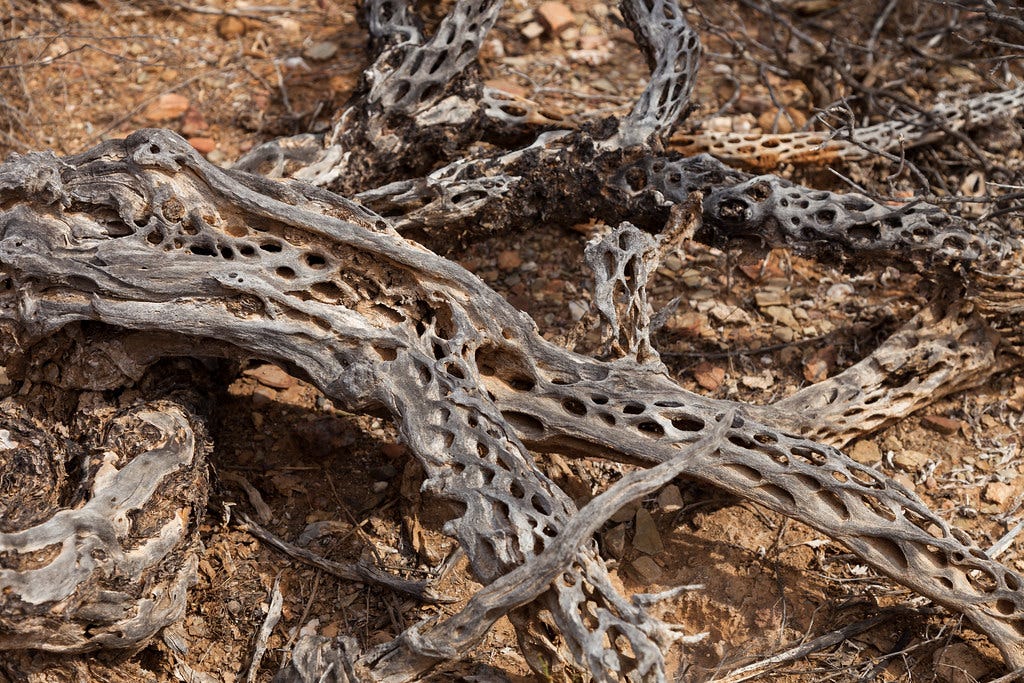
If you’ve never met cholla before, it’s an amazing, almost otherworldly plant. Underneath it’s elegant limbs, spines, flowers, and fruit, it’s woody bones look like they were made by elven architects; intricate yet sturdy, perfectly engineered to make cholla a master adapter at the transition between grassland and desert landscapes.
But talk to most any rancher in a state like New Mexico, and you’ll not hear about the wonders of this persistent perennial— you’ll get an earful about it’s enormously frustrating incursion. Cholla are not only tall, robust, and have spines that often get stuck in cattle, they’re also incredibly resilient in the face of essentially all eradication methods. I’ve heard stories of ranchers cutting them down and burning them, dragging them out with chains, scorching them with herbicides, and even scooping them out of the ground (roots and all!) with heavy equipment. None of it lasts long. The cholla always comes back.
Some take the persistence of these woody desert-dwellers as a sign of irreversible, climate-driven decline of New Mexican rangeland. And there’s almost certainly some truth to that. Our state is getting hotter and drier, which gives more arid-accustomed natives a leg up.
But this explanation leaves something important out of the story. Something I witnessed first-hand when I visited the CS Ranch, home to Kim Barmann and her herd of adaptively-managed cattle. That “something” is that healthy grass can outcompete cholla.
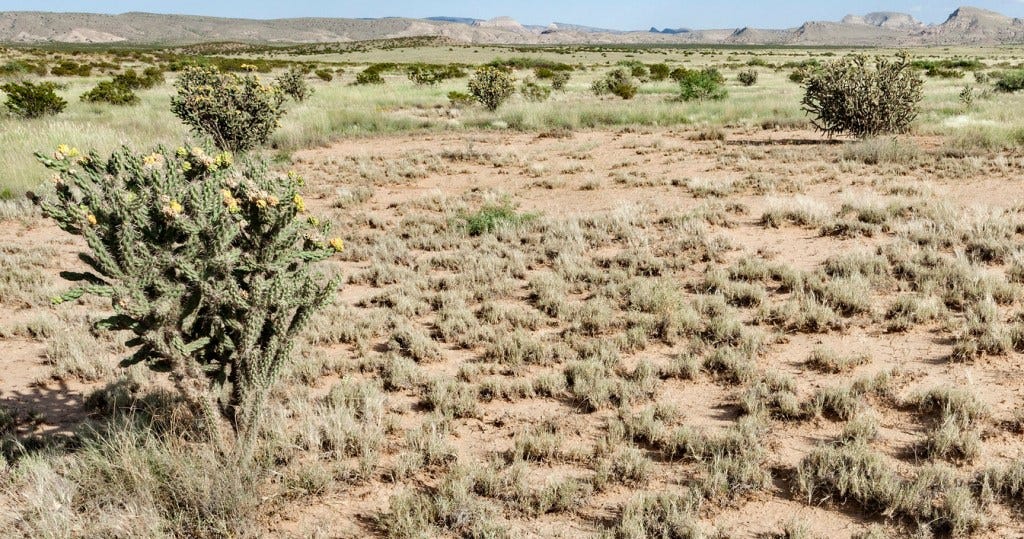
To understand what’s happening on the CS Ranch, we first have to understand one of the reasons that cholla has become such an aggressive “invasive” in Southwestern grasslands in the last few decades. While it’s easy to lay the blame at the feet of climate change, there is another key contributor– overgrazing.
The mechanism here is subtle— it’s not that hungry cattle are somehow transporting cholla to places it’s never been before, it’s that too many cattle are staying too long on too few acres of rangeland, over-stressing the grass species, like the blue grama, alkali sacaton, and western wheatgrass that cattle feed on. As the pressure mounts, plants are eaten before they can make seed or are grazed so low to the ground that they cannot sustain their roots. Their roots get shallower, accessing less water and so making them more vulnerable to damage from wind, rain, and trampling. They become weaker and weaker, many plants die, and even the ones that remain lack the ability to compete with newcomers, like cholla, for water and nutrients.
This is one way to tell the story of the cholla incursion– with the cholla as the opportunist sneaking in and taking over a weakened or collapsing grassland community.
But I think there’s actually a more helpful (and accurate!) way to understand cholla’s presence.
In this version of the story; the cattle overgraze the grass and broadleaves, and these grassland ecosystems become weaker over time. As this occurs, the soil communities that coexist with these plants also get stressed. These soil bacteria, fungi, and micro-fauna need cover and to be in relationship with living plants to persist. So, as the conditions above ground change, with absent and dying vegetation leaving behind more and more bare ground, the soil communities begin to change, and a new kind of plant life, one that can survive in these new conditions, emerges, aided by the soil organisms that can partner with those plants.
“If the grass can’t survive this grazing pressure,” the land seems to be saying. “We’ll find another plant that can.”
And soon enough, whether through the propagation of a seed long buried or from the lucky rooting of a stem or fruit, a cholla comes, invited in by the soil ecosystem that needs living roots in order to survive.
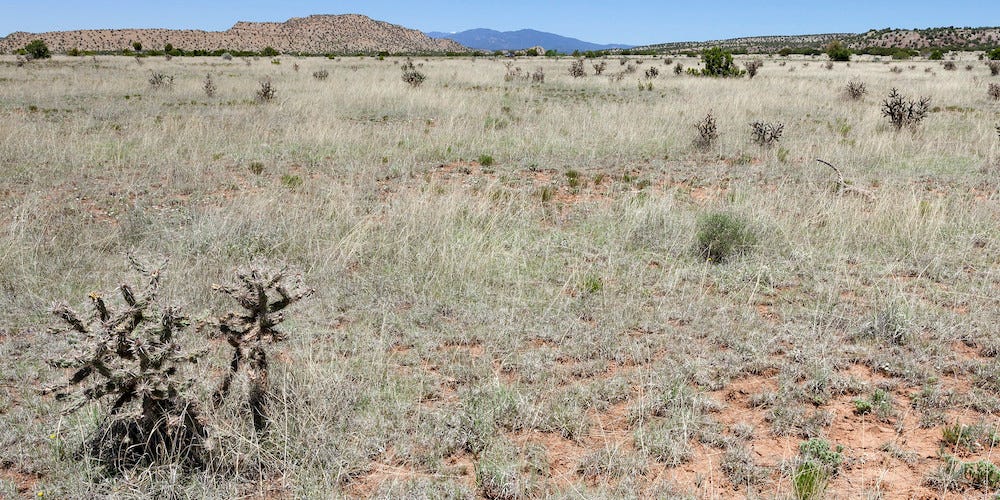
This second version of the cholla story allows us to see this cactus not as an invader to be exterminated, but as a natural response from the land to overgrazing, one that can be arrested, or even reversed, without waging all-out war against a prickly plant.
It also reveals why cholla “removal” efforts are often so fruitless. Because the cholla aren’t killing the grass, the cholla are here because the grass is already dying.
All of this might sound a little “woo-woo,” so I’ll let some images of what’s happening at the CS Ranch do the talking.
Maybe these pictures seem to capture ordinary, if slightly sickly, cholla plants in a pasture (“you know it’s a bad drought,” I can hear some old rancher say, “if even the cholla are dying”). But I want to draw your attention to two things.
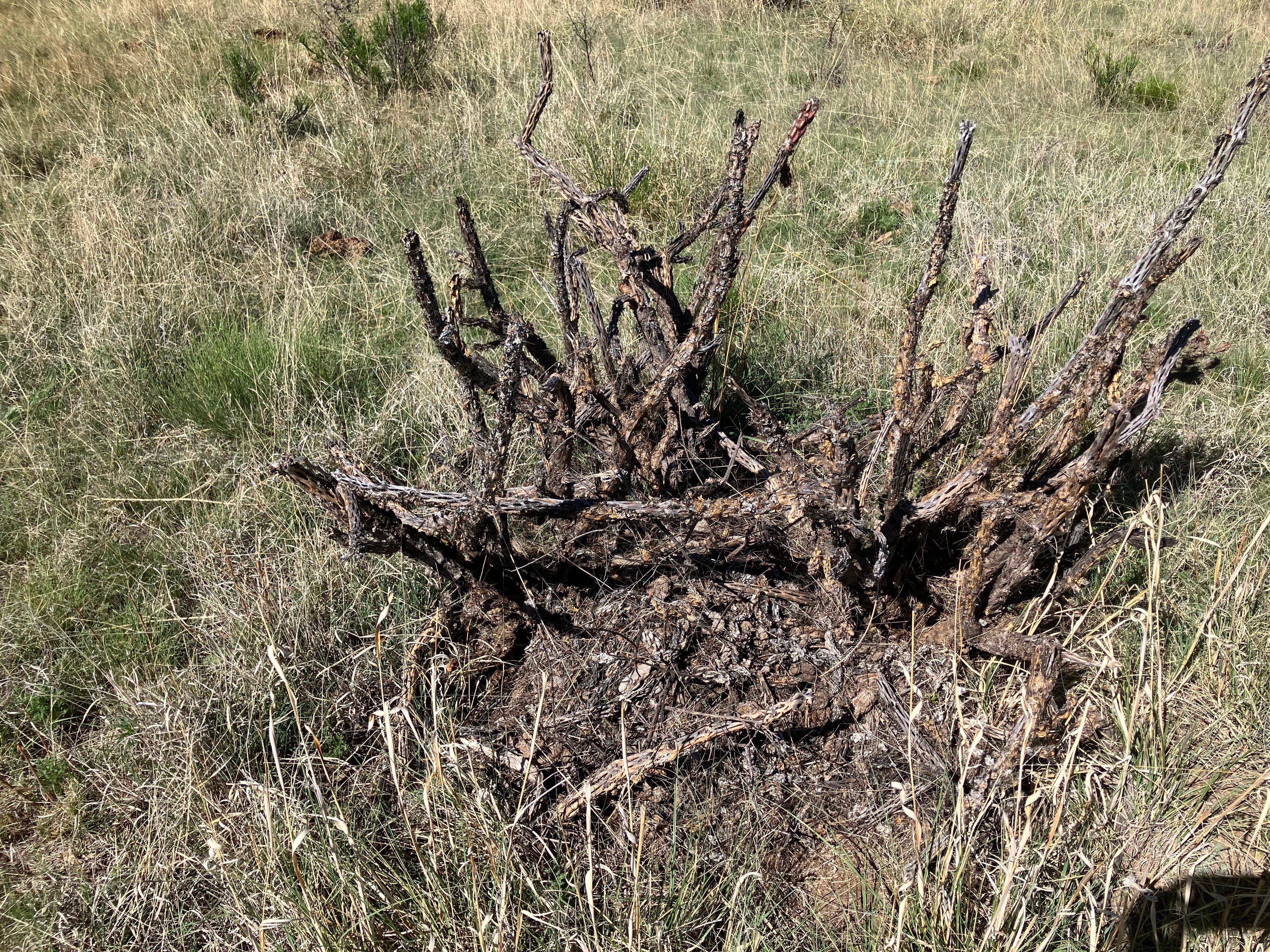
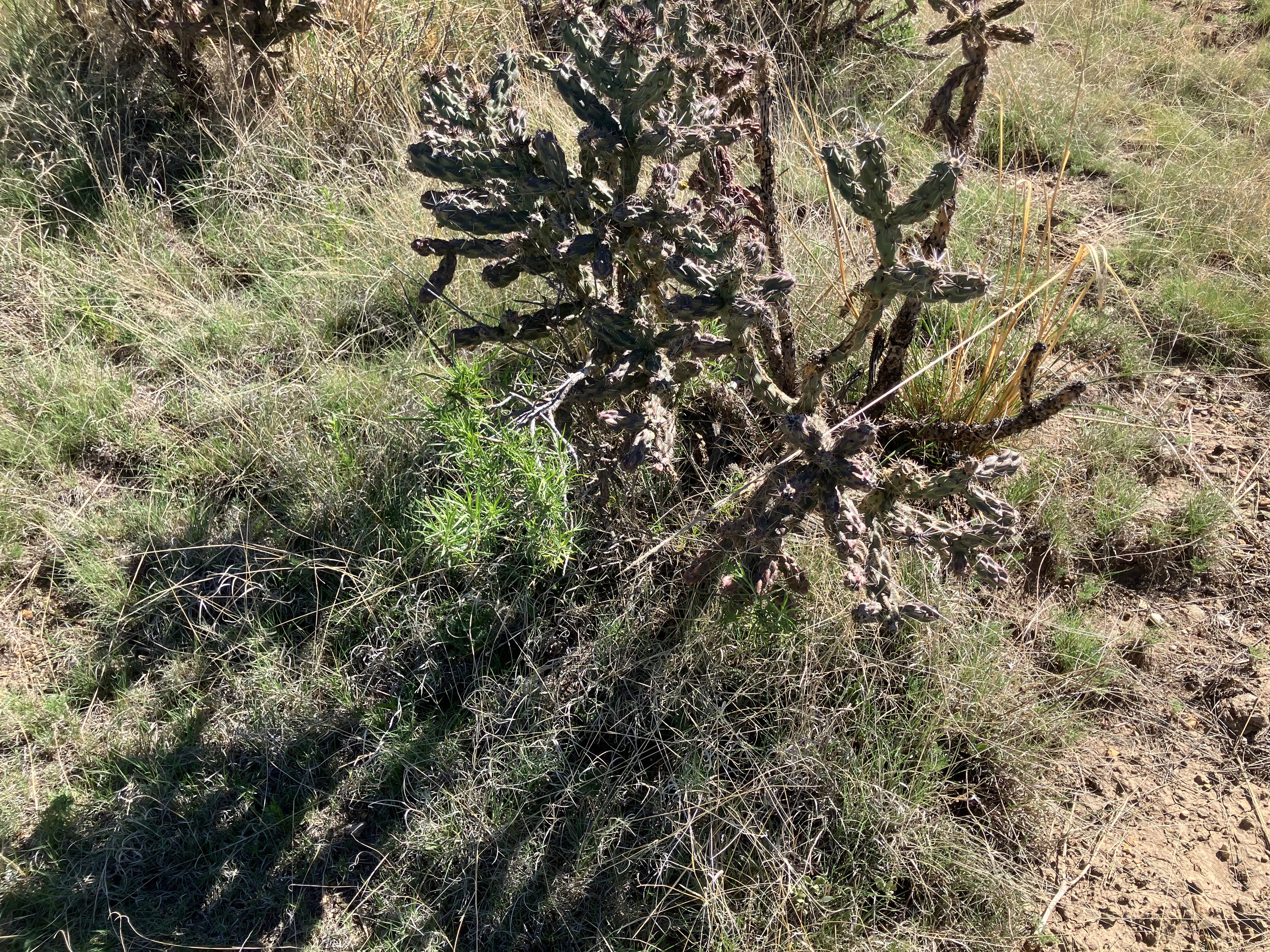
First, as our old rancher noticed, these cholla are sickly. In fact, the first cholla is mostly dead. And yet, neither of these plants have been sprayed with herbicide. They have not been burned, cut, attacked with pests, a backhoe, or anything else. They are dying naturally, all on their own.
Then I want to draw your attention to the grass and broadleaves, especially in the second image. Do you notice where these other plants are greenest and tallest?
The healthiest looking plants seem to be, paradoxically, growing quite close to the cholla. But how could that be, if the cholla are nothing but destructive outsiders here to disrupt the ecosystem?
To answer this question, we have to step back and think about what we can’t see in this picture. What is happening in the soil? Well, in the past, this pasture was overgrazed. The grasses and broadleaves were stressed and dying, and so their soil communities were dying too. Then when the cholla arrived, they provided healthy, living roots that these soil communities could cling to for survival.
Today, as rancher Barmann has pulled back the grazing pressure, allowed the grass community to rest and recover, and then used adaptive grazing techniques to maintain rangeland health ever since, the grasses and broadleaves have started to return. And they return first to those spaces where soil communities have survived– in the root zones of the living chollas.
Beneath these living cholla plants is a critical habitat for these vulnerable, recovering grasses. The chollas’ root zone likely contains more organic matter and nutrients than other bare spots in the field. It’s also cooler, as it holds more water and air in the soil structure than more compacted soils nearby. The chollas branches will also provide some vital (if limited) shade, helping individual recovering plants hold onto their limited water as they grow, and the branches even provide protection from too much trampling by occasional hooves (cow, deer, elk, or others!). Under the right grazing conditions, Barmann has found that these cholla actually act as a kind of nurse plant, giving grasses and other species a place in an open pasture to regain a foothold.
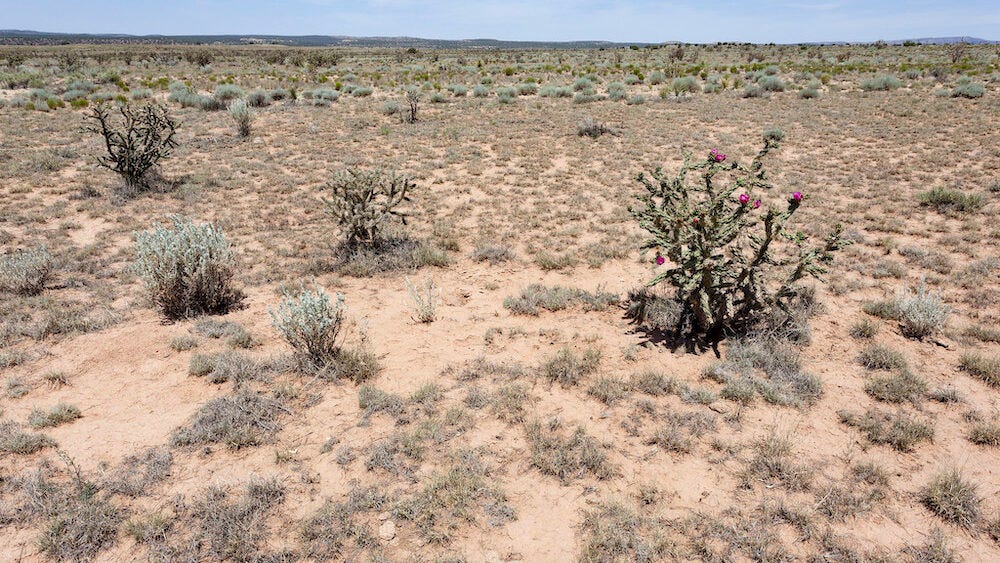
Perhaps the most amazing thing to see at the CS Ranch was not just that the grasses were returning, but that, as the grasses were regaining their strength, they were naturally outcompeting the cholla, which became sick and were dying (especially after getting trampled by a few cows). These cholla plants, having tended the recovering grasses in their healthy soil, were slowly disintegrating, their fallen woody limbs providing valuable lignin to the organisms in the soil below.
Knowing how much time and money ranchers and land managers in New Mexico spend trying to get ahead of cholla, seeing this first-hand seemed almost miraculous. But it’s really just ecology. We know that healthy plants in their natural environments are more competitive than newcomers, in large part because of the relationship they have with the local soil community.
We also know that there are few truly “nefarious” actors in natural systems. We know that if some plant is overpopulating somewhere it doesn’t belong, it’s not because that plant is “evil” or “bad,” but because something else in the system is out of balance, and the “invasion” we see is really just the Earth’s efforts to balance the scales.
Thanks for reading People Eat the Land! This post is public so feel free to share it.
To me, what Barmann is seeing on the CS Ranch offers hope, and a playbook, for ranchers and rangeland managers who are looking to beat back the incursion of woody cactuses like cholla in grasslands. The first step for Barmann was, critically, the exact opposite of what most people do– it’s to leave the cholla alone! Or if nothing else, absolutely do not rip them up by the roots, a process which destroys some of the healthiest soil left in disturbed rangeland environments. The cholla’s presence is signaling that the rest of the plant community is struggling. Heal the grasses and broadleaves— through right-sizing grazing herds, resting pastures for longer periods, moving animals more often via adaptive grazing methods, and even using tools like compost— and those cholla very well might die without any further intervention (or expense) in the course of a few years.
What’s more, if we put down the axes and chains, the pesticides and the heavy equipment, and leave the cholla be for now, they’ll do their part to help grassland species recover, providing an invaluable (free!) service that just might have us thanking those damn cholla once they’re gone.
Thanks for reading— and hope you enjoyed a bit of a shorter essay this week! A version of this story first appeared on the New Mexico Healthy Soil Working Group blog, which is also home to a ton of other valuable resources in you’re doing farming, ranching, or other land management work in the Southwest.
A quick programming note: it has been a summer of pure chaos in my world, and I’m looking to slow things down here in August, so we might skip a newsletter or two here in the next few weeks. I’m also planning to play with shorter and more photo-heavy formats. Hope you enjoy, but looking forward to the feedback either way. And here’s hoping that all of you are finding some relief from this extraordinary summer heat as well.
No posts
Comments
Nothing yet. Say the first thing.
Sign in to join the conversation.