

Last month, I traveled to Carmel with my family to celebrate my mom’s birthday. This wasn’t my first time in the picturesque seaside village, tucked along the coast of California’s Highway 1. This was, however, the first time I toured an organic farm there.
To me, visiting a local farm is the adult equivalent of sending a kid into a toy store with a hundred-dollar bill and no supervision.
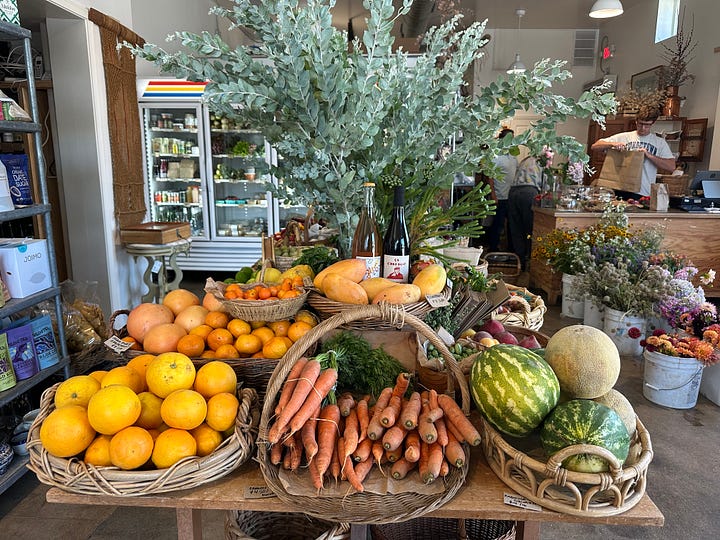
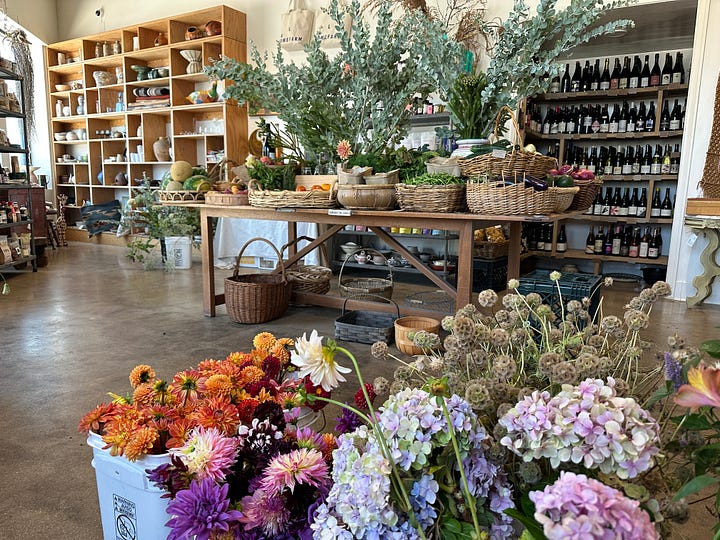
As we approached the farm store I gasped with excitement: The shelves were stocked with thoughtfully vetted snacks, many of which were produced locally; the rattan market baskets were brimming with the most beautiful seasonal produce. Within minutes, my shopping basket was overflowing. We didn’t come here with the intention of eating, though we were convinced otherwise after perusing the lunch menu—which proudly boasted that all food was prepared using only organic ingredients.
Situated on the far end of the sprawling lawn was an absurdly large Adirondack chair. My kids immediately ran over to and climbed on top of it. As though the place was fashioned by the three bears themselves, several feet away from the enormous Adirondack chair were two miniature ones. Unlike Goldilocks, I didn’t find “just right” in a chair somewhere between the oversized version or its miniature companions, but in my bucolic surroundings.
Next, my son and I wandered into the actual garden through a field of deep purple lavender buzzing with bees. Yet as we turned the corner, I was abruptly roused from my blissful daze by the sight of a man wearing a face mask, gloves and white hazmat suit, spraying the raspberry bushes. At first, I naively assumed he was watering the plants, until I realized his elongated metal hose was attached to a portable, clear plastic canister filled with a dark substance. So, of course, I snapped a few pictures to show my husband—as if he could offer an explanation I hadn’t thought of.
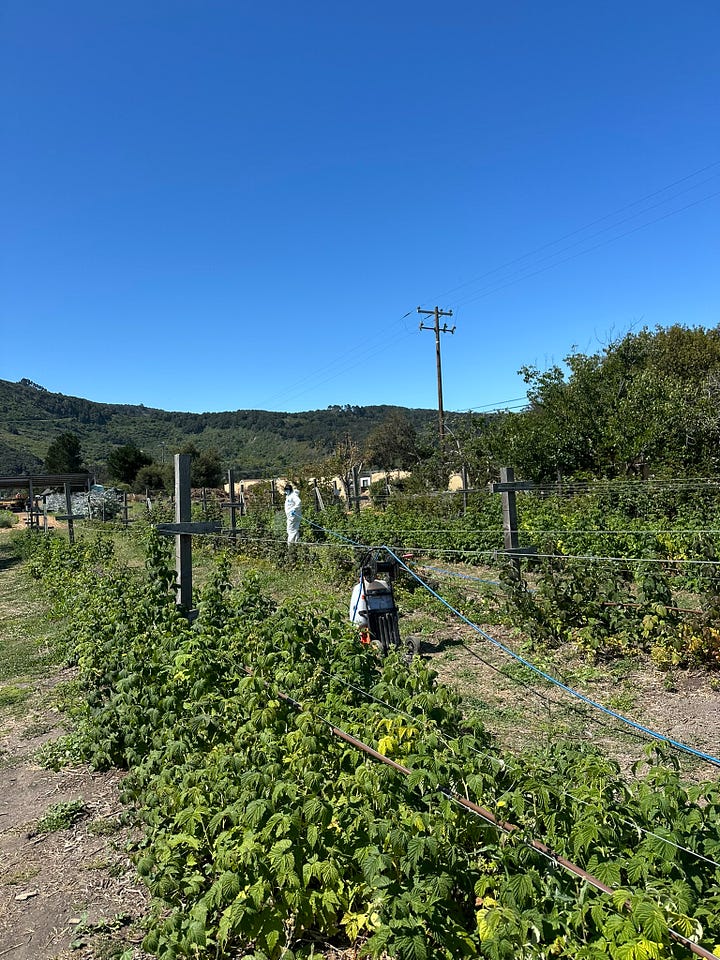
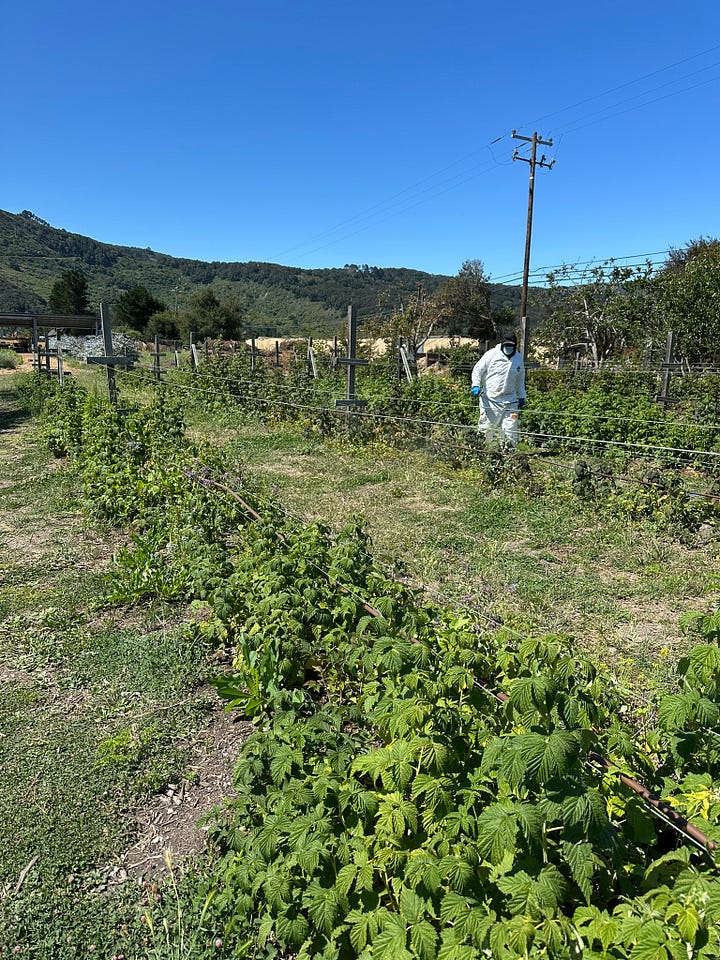
When lunch arrived, I reluctantly took a bite of squash, wondering whether it, too, had been doused in some mysterious dark substance, by a man wearing protective equipment reminiscent of that found in an ad cautioning against the dangers of Roundup.
I thought back to the sign I saw in the produce aisle at the grocery store many years ago, warning consumers that certified organic produce may be coated in food-grade wax intended to extend shelf life and preserve freshness. That sign was one of the reasons I eventually stopped purchasing organic produce from conventional grocery stores and began buying exclusively from farmers markets. The pivot not only came at a higher monetary cost to me but at a greater inconvenience—though I was willing to make these sacrifices in exchange for the assurance that my family was eating “clean” produce, devoid of antimicrobial chemical washes and wax coatings.
I believed that by making that shift, I was avoiding many of the treatments applied after produce leaves the farm. Yet standing there, watching a person in protective equipment spray raspberry bushes, I found myself questioning whether I had simply traded one set of concerns for another.
This is the exhausting reality many of us who care deeply about what we feed our families know all too well: the more we learn, the more questions we have.
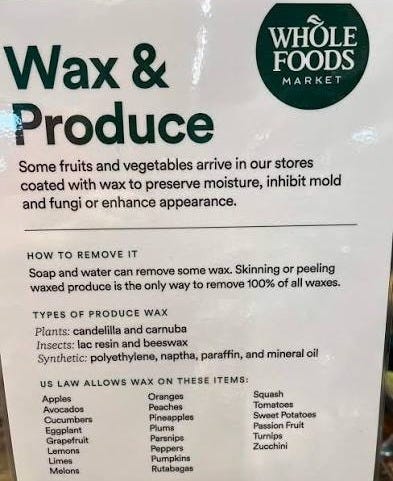
Organic farming is not synonymous with pesticide-free farming. The Organic Foods Production Act of 1990 established national standards for organic agriculture, permitting a limited number of natural and synthetic substances that have been reviewed and approved under the USDA’s National Organic Program while prohibiting most conventional synthetic pesticides, fertilizers, GMOs, and sewage sludge. Even after produce leaves the farm, retailers may apply approved waxes and antimicrobial washes before it reaches grocery store shelves. In other words, the man in the hazmat suit wasn’t necessarily violating organic standards. He may very well have been following them.
This has led to accusations of compromised standards and exploited loopholes. Many consumers believe “organic” means no pesticides; in reality, the farming method actually relies on naturally derived sprays and powders, some of which can pose risks comparable to those of conventional pesticides.
Critics further argue that the premium price is driven by marketing rather than scientifically validated health outcomes. I still believe farming practices that minimize synthetic inputs and prioritize soil health contribute to better health outcomes. But I have grown less convinced that the label “organic” alone guarantees the qualities many consumers associate with it.
Although farmers market produce is generally not subjected to the same post-harvest treatments used to extend shelf life in conventional retail settings, I began wondering what types of “natural” pesticides were being applied to the farmers market produce my family and I regularly consume. In addition to the endless calculations my anxiety performs every time I purchase food, my trip to the farm reminded me that I must also contemplate the following questions: Does this particular farmer use any pesticides and, if so, which ones? How often do they apply them? Where are the pesticides manufactured? Are they of low or high quality? Are they natural or synthetic? Are they contaminated with trace amounts of other chemicals? Have the long-term, cumulative effects of the consumption of these pesticides on humans been sufficiently studied, and if so, would I believe the findings?
I can’t plant fruits or vegetables in my garden without insects and animals devouring them. When farmers rely on sales to survive, they cannot risk the decimation of their crops—particularly those farmers who sell to large supermarket chains and are relied upon to feed the masses.
In the ongoing war between health and capitalism, the good guy in this particular battle is a little less obvious. The scale doesn’t necessarily tip decisively in favor of one side over the other. While I am all too happy to blame the decline of the organic movement on corporate capture, I’m not entirely confident that this is the only explanation. Yes, I’m strenuously in favor of pesticide-free farming. But if farmers ditched the use of permissible “natural” pesticides, our food supply would dangerously dwindle, resulting in lower yields that would drive prices so high that the produce we require for our health and survival would become an unaffordable luxury.
We cannot stop consuming produce. Ultimately, the benefits of eating fruits and vegetables–even those treated with natural pesticides—seemingly outweigh the alternative.
No matter how much I cringe at the thought, I would admittedly be blinded by optimism if I believed we could realistically rely on pesticide-free farming practices to meet the needs of our massive population.
Those of us who seek out organic farms, shop at farmers markets, and scrutinize ingredient labels are not doing so because we believe we can create a perfectly controlled environment for our families. We do it because, when it comes to the health of our children, every choice feels meaningful.
Although I am certain some of the produce I purchase from the farmers market has been sprayed with natural pesticides, I have noticed a significant change in my health and the health of my children in making the switch from grocery-store to farmers market produce. This may be attributable to a reduction in the overall use of chemicals; or it may be that the journey a piece of fruit goes on between the time it is picked and the time it finally makes it to the grocery store shelf depletes most of the nutrients that once existed. Or perhaps it is that the fruit found in grocery stores is produced by larger farms, where the soil is dead.
I am encouraged by the fact that so many farmers markets are springing up in communities where they didn’t previously exist, along with small, independent stores that exclusively carry produce from reputable local farms. In Los Angeles, my favorites include L.A. Homefarm and Cookbook Market, among others.
I find hope in the number of schools that now cultivate campus gardens, teaching children that our food doesn’t come from the grocery store, but from the Earth, and that a lot of hard work goes into growing it.
In an ideal world, we would plant neighborhood gardens in our communities and invite everyone to access them. Ultimately, change begins with education and encouraging our children to develop a relationship with their food in a more primal way. We must incorporate regenerative farming practices into the core grade school curriculum. A far greater skill than balancing chemistry equations or writing out geometry proofs is learning to grow food at home.
It almost feels elitist to wish for something that feels like it should be a basic expectation.
Perhaps the most sobering truth is that there may be no perfect choice—only a spectrum of better choices. We can spend our lives searching for a food system untouched by compromise, or we can acknowledge its imperfections while continuing to support the farmers and practices that move us in the right direction.
What began as a simple trip to the farm stirred up both new and familiar anxieties. It also reminded me that, as parents, we can only do our very best despite the obstacles that stand in our way. We may not be able to change the current system overnight. However, the greatest impact we can make on the future is raising knowledgeable, self-sufficient children equipped with the skills to build a better food system than the one they inherited.
Thanks for reading Sarah Intelligator, Esq! This post is public so feel free to share it.
No posts
Comments
Nothing yet. Say the first thing.
Sign in to join the conversation.