
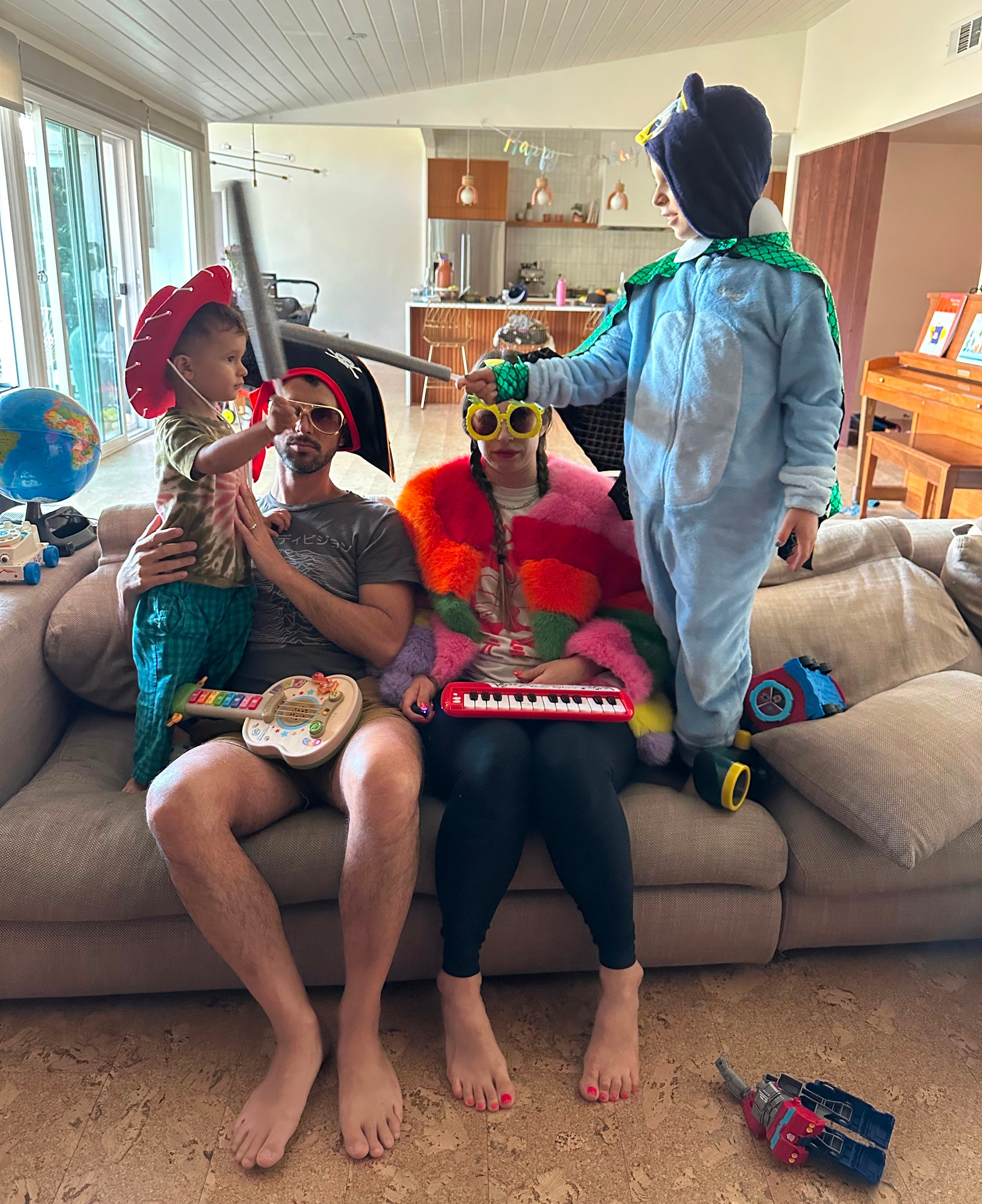
I always assumed these men were simply immature and unable to cope with the fact that they were getting less attention from their spouse after the birth of their child. Admittedly, I, at times, faulted them…until I became a mother and recognized how significantly it changed me.
Having a child doesn’t just make us parents; it transforms us into entirely new people.
Parenthood can feel like entering a chrysalis together. The people who emerge are fundamentally transformed—and so, too, must the relationship between them.
Although we spend months preparing for the baby’s arrival, no one prepares us for becoming strangers to ourselves, far less to each other.
Science, in fact, confirms what many mothers already know—that pregnancy and motherhood quite literally reshape the brain. Hormonal changes alter neural pathways involved in bonding, vigilance, and caregiving, helping mothers respond to an infant’s needs. These adaptations are remarkable—and they can persist long after a baby is born.
Of course, hormonal fluctuations affect desire and emotional priorities. Sleep deprivation changes mood, patience, and cognitive function. The mental load of parenting can interfere with intimacy and spill into nearly every aspect of our lives. Our identities become centered around caregiving—occasionally at the expense of a couple’s relationship.
Ironically, the very traits that make us attentive and devoted mothers also make us more distant partners—not because we don’t love our spouses, but because pregnancy, childbirth, breastfeeding, chronic sleep deprivation, and the enormous responsibility of keeping tiny humans alive have rewired our priorities.
Motherhood reorients a woman’s attention toward whoever needs her most. She notices the first signs of a fever before anyone else does, remembers which child refuses grapes unless they’re cut in half, and mentally inventories snacks, meals, playdates, activities, permission slips, appointments, and grocery lists. Unfortunately, in the process of constantly attending to everyone else’s needs—quite often even at the expense of her own—her partner can feel like another responsibility. Few of us possess the bandwidth to care for children, build a career, prioritize self-care, and remain the fully attentive partner we once were.
Many women additionally struggle with the changes to their bodies. This is exacerbated by the social pressure to quickly “bounce back” to pre-pregnancy shape, which is virtually impossible after her ribs expanded, her organs crammed into places they were never meant to go, and her skin stretched in almost astonishing ways. When the reflection we see in the mirror is unrecognizable, many of us view ourselves as less attractive and, in turn, assume our partners share this sentiment. We do not perceive ourselves as desirable and project this onto our spouses, perpetuating self-fulfilling outcomes.
Research indicates that new fathers may experience a noticeable drop in testosterone and an increase in oxytocin, prolactin, and estrogen. These shifts are an evolutionary mechanism designed to suppress aggression and promote bonding, patience, and caregiving behaviors. Many new fathers feel consumed by the pressure to provide financially, at least for some time. This may lead them to work longer hours, leaving them feeling withdrawn. Or, they may feel displaced by the mother-child bond.
The pressure parenthood places on relationships is unlike anything most couples have experienced before. As we evolve into people whose priorities, perspectives, and identities have shifted, we are still expected to nurture our relationship.
A woman who once delighted in spontaneous weekends now thinks in terms of nap schedules and meal planning. The woman who once noticed her partner's bad days now notices that he forgot to pack snacks and a water bottle. Consequently, many partners feel sidelined, unaware that their wives are overwhelmed, struggling to get through the day. This isn’t personal; it’s survival.
Whereas some men may miss the woman they married, many women miss the man who used to pursue them. Perhaps on a deeper level, we’re both missing the simplicity of a life in which we had the luxury of making each other our first priority—before children, mortgages, soccer practices, and the relentless demands of parenthood competed for our attention.
As a divorce attorney, I have had a front-row seat to the ways in which romanticizing relationships and parenthood can foster unrealistic expectations that ultimately lead to disappointment—and, all too often, divorce.
From a very young age, we have been sold the fairytale notion of “happily ever after.” When the protagonist is typically a kind-hearted female rescued by Prince Charming from oppressive circumstances and even death, it’s understandable that women relate to this fantasy. When we enter adulthood, we graduate from Disney movies to rom coms, which continue to spoonfeed us an overly idealized version of relationships, divorced from reality.
I question whether these rom coms are merely two sides of the same coin—the female counterpart to, “My wife changed after she had children.” They offer women a temporary return to the version of love in which they felt pursued, courted, and prioritized—while quietly reinforcing the belief that love should remain untouched by the realities of time, responsibility, and change.
Maybe so many of us gravitate to these fairy tales precisely because they transport us to a time when being pursued felt effortless and loving one another required far less logistical coordination than it does now.
By expecting our relationships to remain forever frozen in the “happily ever after”, we forget that the “after” part is where life actually happens.
For years I heard men say, “My wife changed after she had children,” and I dismissed it as an excuse. Now I believe these men were sensing something genuine, without truly comprehending its biological underpinnings. Their wives hadn’t stopped loving them. They had simply undergone a transformation neither of them anticipated. And that transformation required both of them to keep falling in love with the people they were becoming.
Because ultimately, the goal isn't to remain who we were before we had children. Those people are gone. "Happily ever after" isn't about resisting transformation. It's about growing together—and continuing to choose each other through every version of ourselves.
Thanks for reading Sarah Intelligator, Esq! This post is public so feel free to share it.
No posts
Comments
Nothing yet. Say the first thing.
Sign in to join the conversation.