
The other day, one of my coworkers asked for suggestions for hobbies she could try in her spare time.
I had plenty.
When you have ADHD, the struggle isn’t usually finding something interesting to do. It’s having approximately 57 unfinished projects from every hobby that sounded interesting for five minutes.
As just one example, I currently have five unopened boxes of amigurumi projects scattered around my house, stacks of fabric for curtains I intended to make seven months ago, and a completed cross-stitch that still hasn’t found its way into a frame.
So, yes. I know a thing or two about hobbies.
I spend most of my spare time—during the rare moments when I actually have some—writing stories. But even creative brains need breaks from creating.
Lately, I’ve realized that the activities I find most restorative aren’t necessarily the ones that ask me to do nothing. They’re the methodical hobbies that keep my hands occupied, give my brain one simple task to follow, and temporarily quiet all the other thoughts competing for my attention.
I started with crochet, mostly because my son loved all the available kits for making things like Minecraft and Batman characters.
True story: The Batman kit is still sitting unopened in my home office. I bought it last Christmas.
At first, I enjoyed learning to crochet. The instructional videos were helpful, and I was genuinely impressed when I completed my first project, and it looked… halfway decent.
But crochet is still a new skill for me. Every time I begin a different project, I have to find the right video, remember what the stitches in the patterns mean, and repeatedly pause and rewind the instructions. Eventually, something I had chosen for relaxation began to feel like another assignment.
That doesn’t mean I’ll never return to it. It simply wasn’t giving my brain what it needed right then.
Cross-stitch, on the other hand, clicked almost immediately.
I remembered loving it as a kid, and the huge variety of modern patterns made me want to pick it up again. At its most basic, cross-stitch is simply making tiny Xs with colored thread. I think of it as paint-by-numbers with fabric: follow the pattern, count the squares, and make the next stitch.
There are certainly more advanced techniques for people who want to learn them. But I don’t need to become an expert. For me, the simple repetition is the point.
Counting the stitches occupies my brain just enough to stop it from bouncing between a dozen different thoughts. My hands settle into a rhythm. One X becomes a row, the rows slowly become a picture, and eventually I have a piece of art to show for all those quiet little moments.
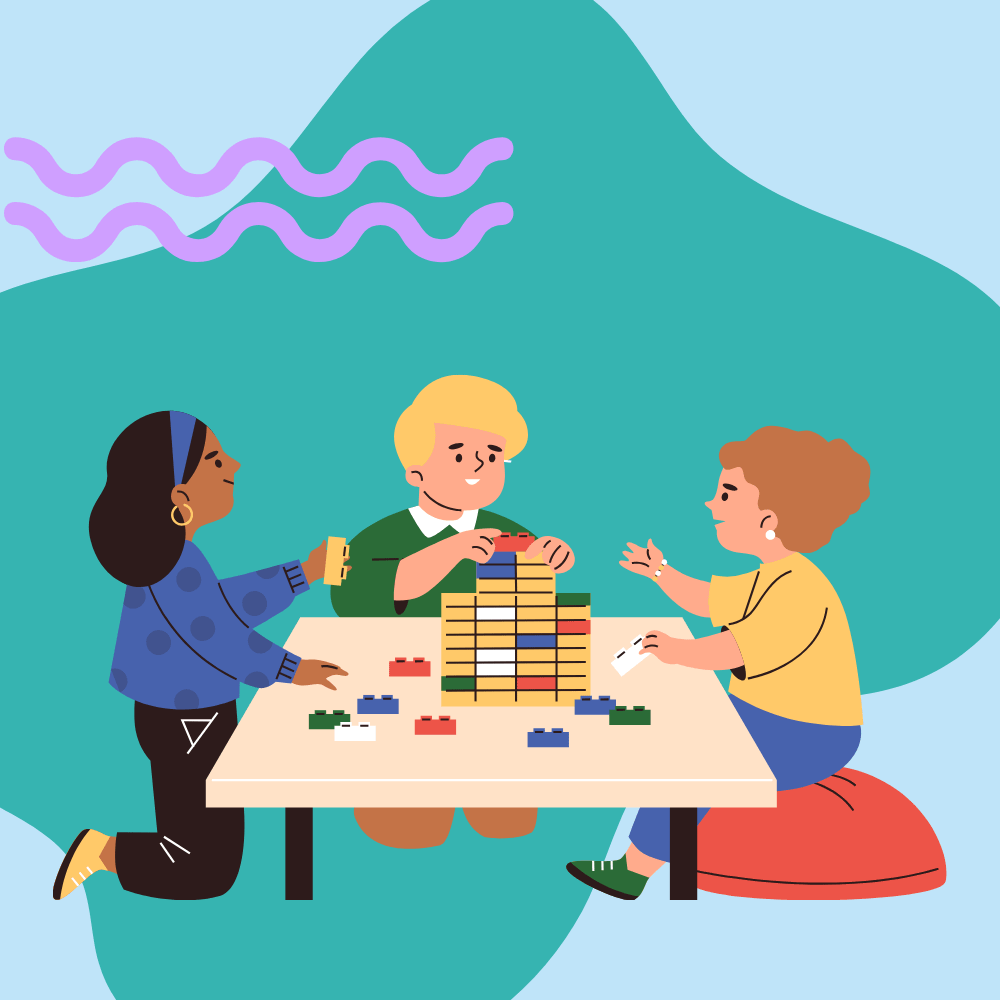
My favorite hobby right now, though, is building LEGO sets.
There is something deeply satisfying about snapping colored bricks into place and watching a miniature world gradually appear. I don’t have to invent anything, make decisions, or stare at a blank page. I only have to find the next piece and follow the instructions.
Then find the next piece.
Then the next.
Some people would find that kind of repetition boring.
For example, one of my favorite board games is Eurorails, which involves spending literal hours laying railroad tracks across a map of Europe so you can transport goods from one country to another.
That’s it. That’s the whole game.
My husband considers it a special kind of torture. I could happily lay tiny railroad tracks across a game board all afternoon.
I think these hobbies work for me because my ADHD brain rarely becomes quiet simply because I’ve decided it’s time to relax.
Reading can be wonderfully immersive, but some books require sustained attention. Even watching television doesn’t always hold my thoughts in one place.
The other night, while watching a movie with my husband, I paused it several times to ask, “Wait—did I miss something?”
Most of the time, the answer was, “Yes. They explained that at the beginning.”
Unless a story is especially engaging—or gives me a mystery to solve—my attention has a tendency to wander, even when I’m enjoying what I’m watching.
Methodical hobbies are different.
They keep my hands busy and give my mind a small, manageable task without demanding constant decisions. Building with LEGO requires me to study the instructions, locate the right pieces, and fit them together. Cross-stitch asks me to count, follow a pattern, and pull thread through fabric.
There is enough stimulation to hold my attention, but not so much that it becomes exhausting. And somewhere inside that balance, my brain finally settles.
We often picture relaxation as completely switching off: sitting quietly, watching television, or doing absolutely nothing. But maybe rest doesn’t have to look the same for every brain.
Sometimes rest is a repetitive motion. A pattern to follow. A collection of small pieces gradually becoming something whole.
Sometimes creativity doesn’t come from producing new ideas. Sometimes it comes from giving our minds enough breathing room for those ideas to stop shouting over one another.
For me, that breathing room looks like colored thread, tiny bricks, and the quiet satisfaction of knowing exactly what comes next.
What activity helps your mind settle—even if other people might not consider it relaxing?

No posts
Comments
Nothing yet. Say the first thing.
Sign in to join the conversation.