
While in Paris, we visited Le musée d’Art et d’Histoire du Judaïsme in the Le Marais, where we were staying.
In the courtyard of the museum was a wall of plaques in memory of Jewish residents of the building who were deported by the French Vichy government.
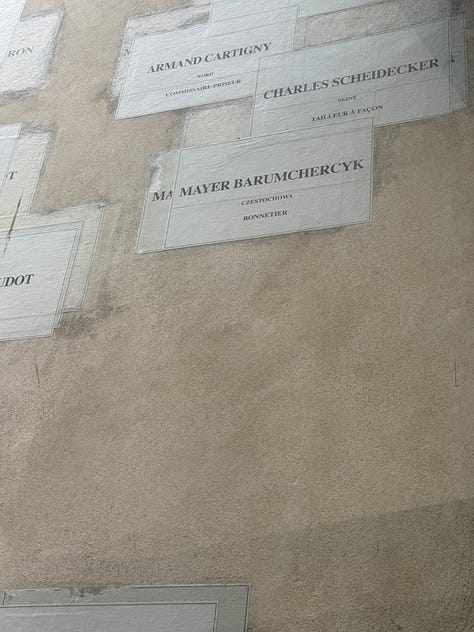
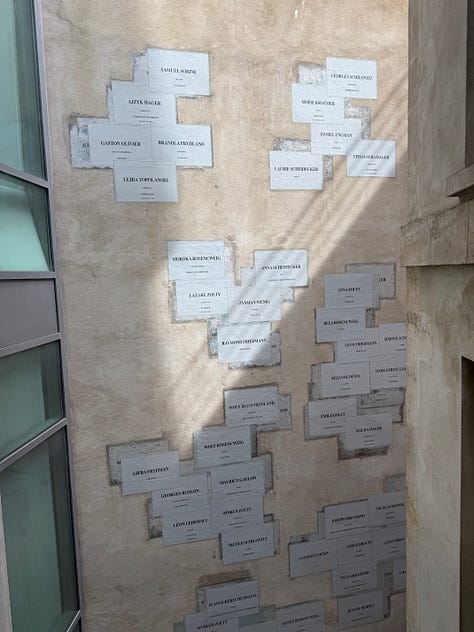
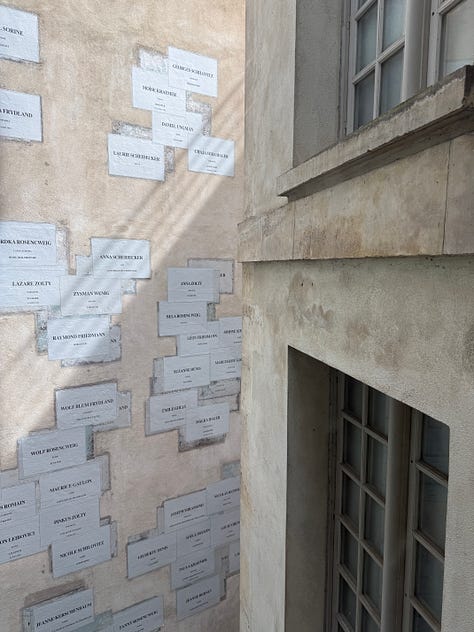
Many were murdered in Nazi death camps.
We were fortunate to see the exhibit of a graphic memoir created by the late Belgian artist and comic author, Chaïm-Charles Kaliski (1929–2015), known as Jim from Etterbeek.
From the exhibition description:
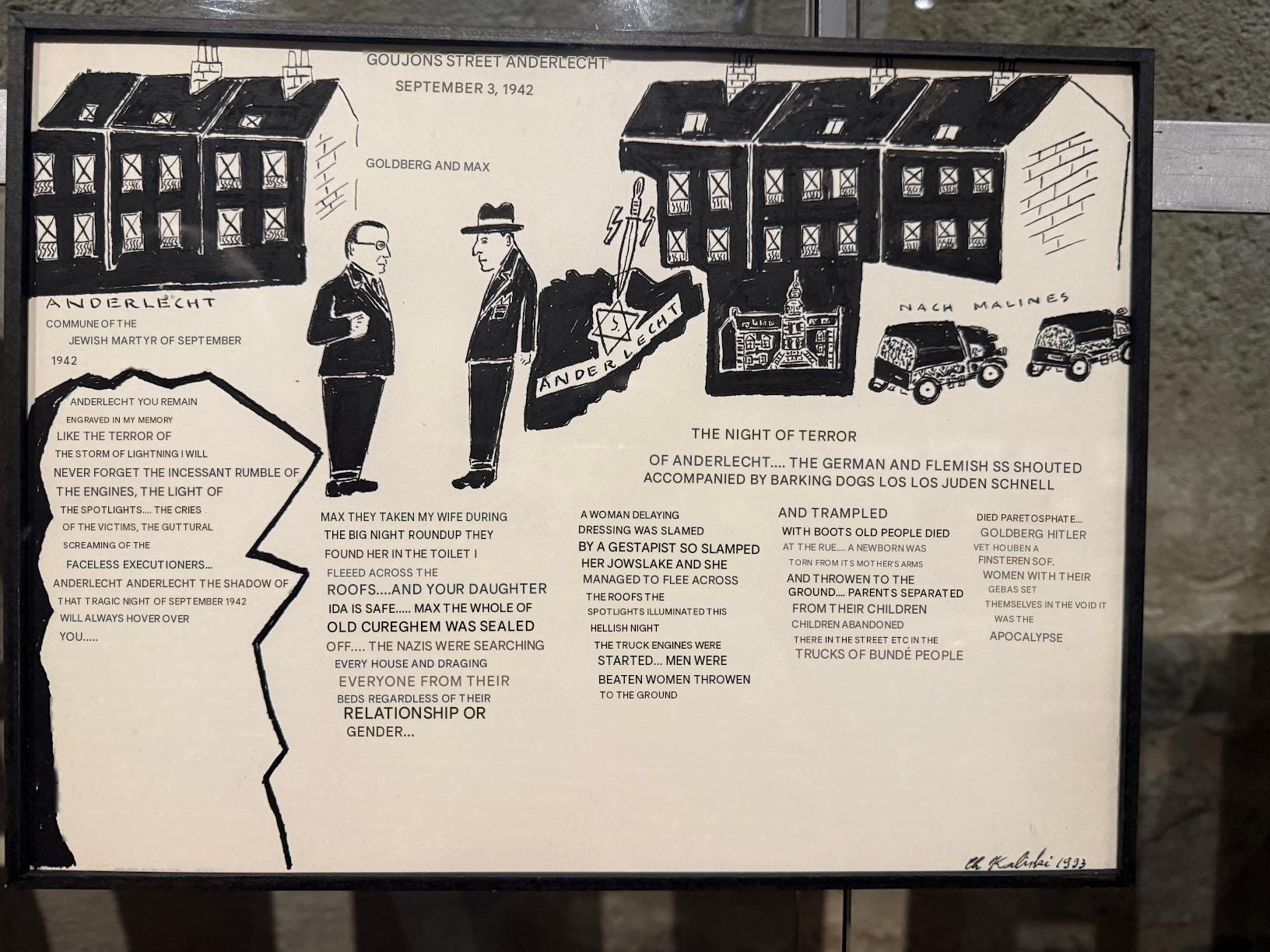
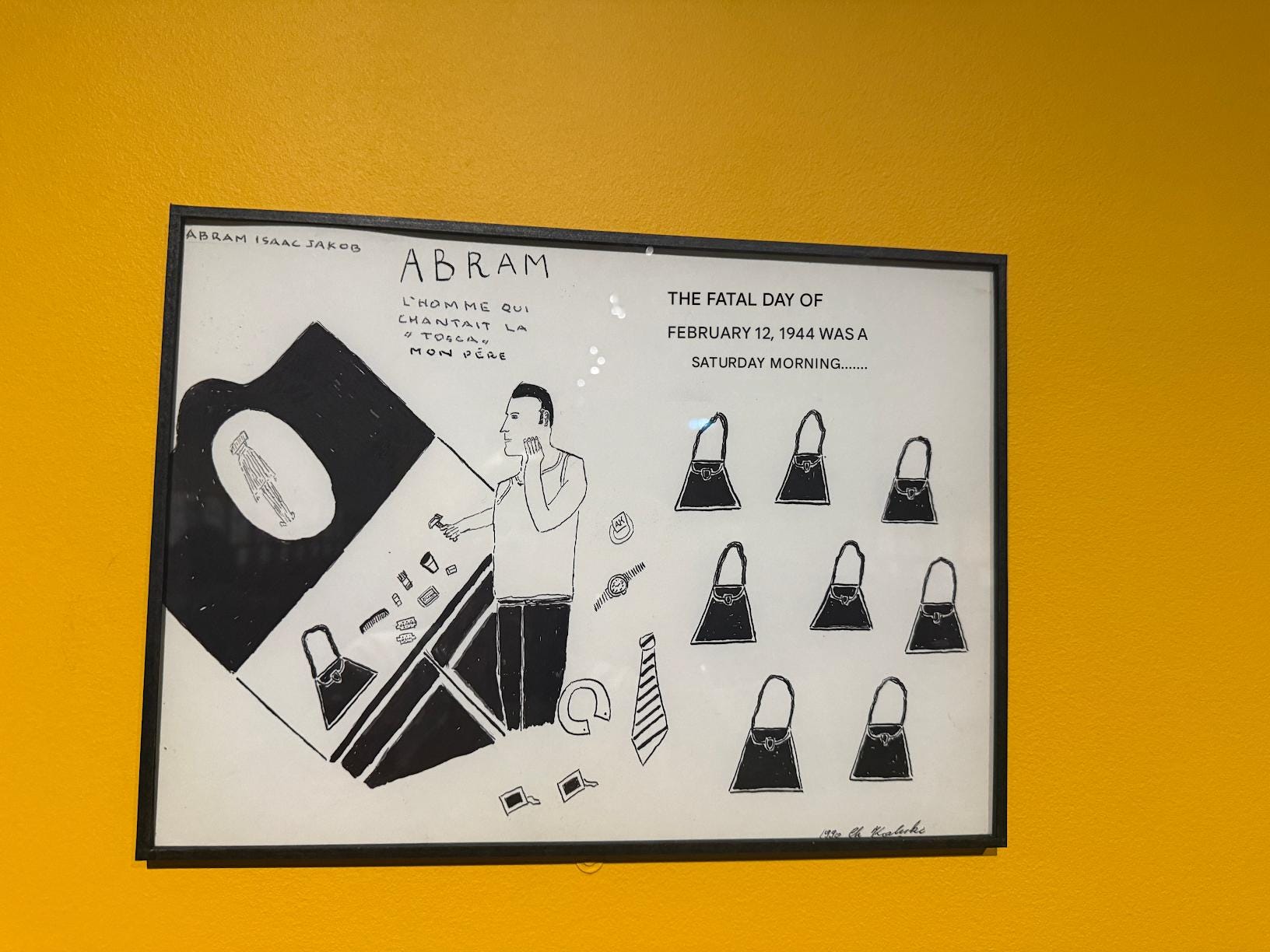
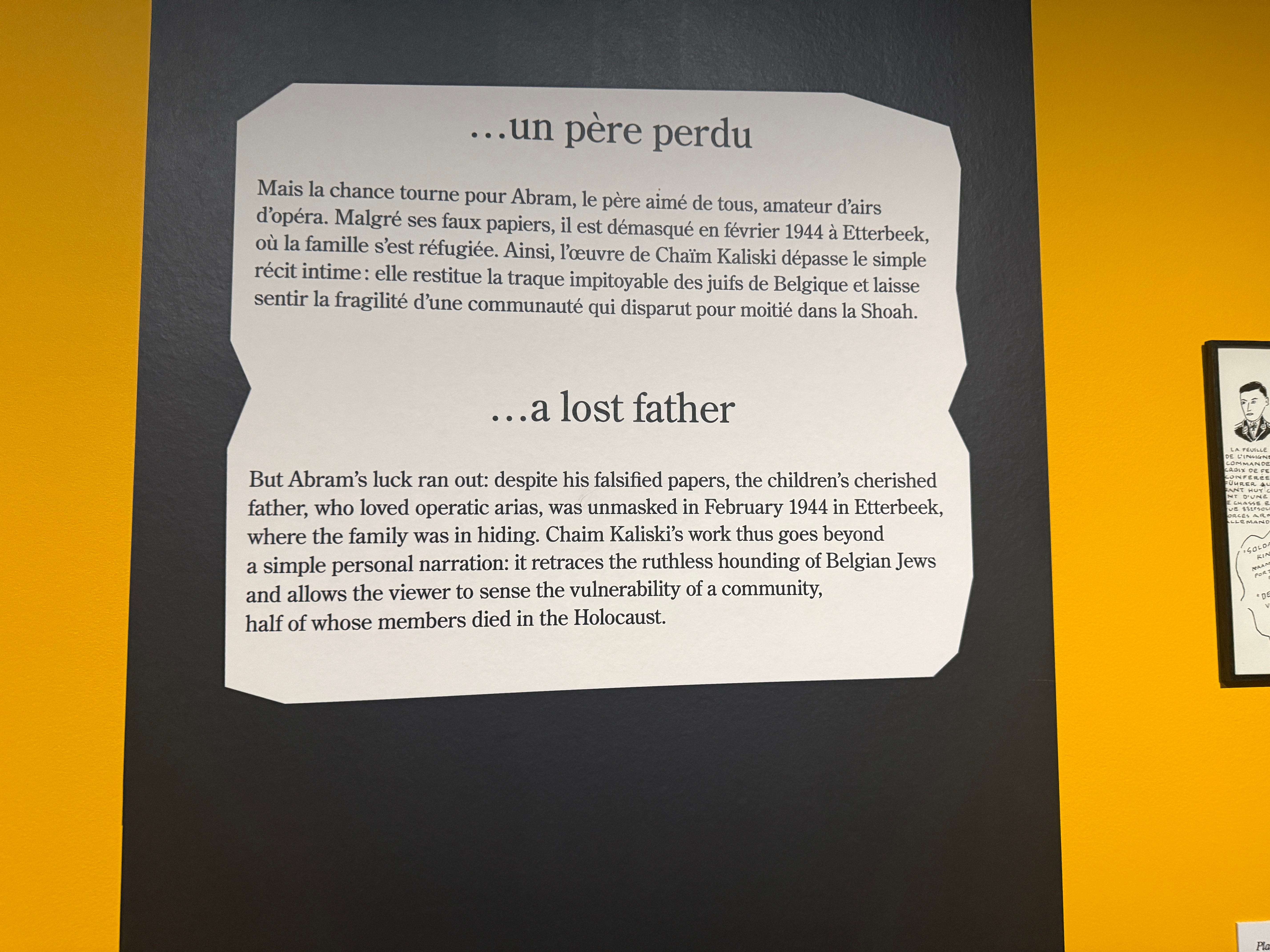
The eldest of four children, [Kaliski] was born in Brussels in 1929 between the Midi railway station and the slaughterhouses, into a Polish Jewish family. His father, Abraham, was a leatherworker, and his mother, Fradla, a seamstress. The occupation of Belgium in May 1940 turned their lives upside down. After fleeing to France ahead of the advancing Wehrmacht, the Kaliski family returned to the Belgian capital due to a lack of resources. This marked the beginning of a miraculous survival story, as they managed to escape the checks, denunciations and the great round-up of the Jewish quarter of Cureghem on 3 September 1942. However, Abraham was arrested on 12 February 1944. Fradla managed to find refuge for her youngest children and went into hiding with Chaïm until the Liberation in September 1944.
For Chaïm, life came to a halt on the day his father was arrested, and he would relive the trauma for the rest of his life. It was at the age of sixty, in 1989, on the advice of his sister Sarah, herself a painter, that he began to draw their story, to which he devoted himself for eighteen years, producing thousands of drawings.
One hundred and twenty of the over 5000 drawings Kaliski produced over 18 years were exhibited in France for the first time. I want to highlight a few.
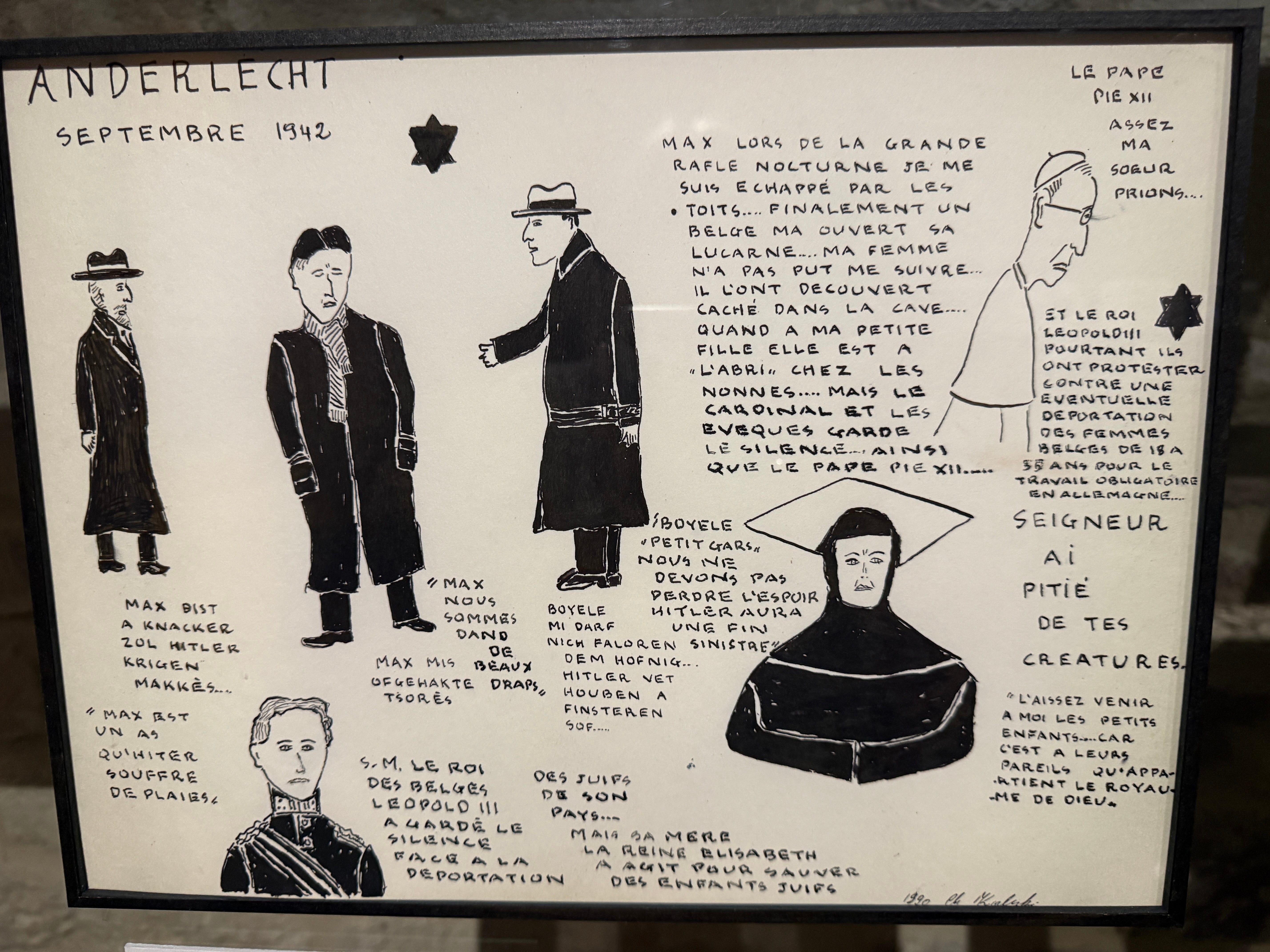
Here’s a Google translate of the description:
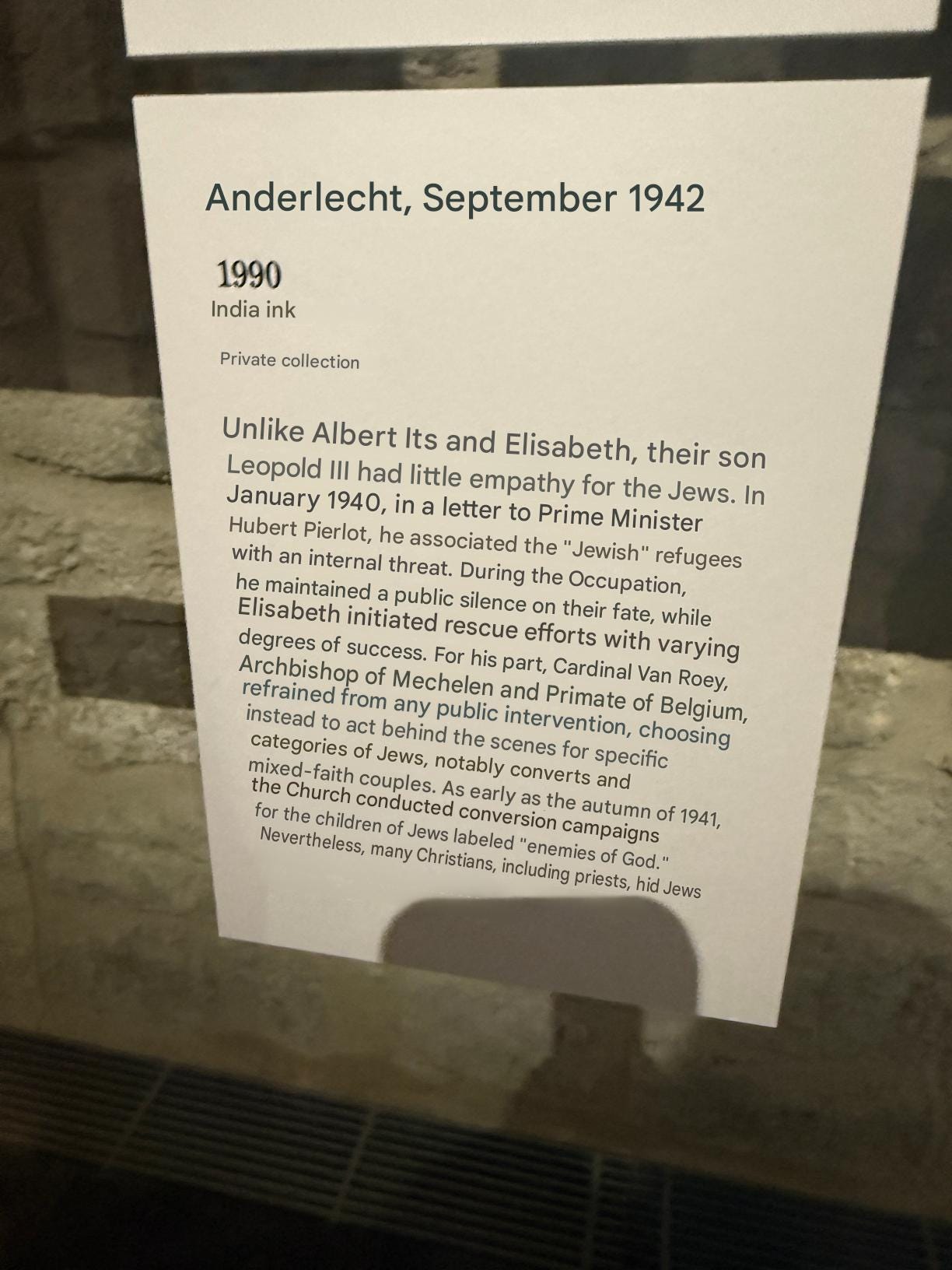
Forty-eight years later, you can sense Kaliski’s righteous fury at Belgian King Leopold III, who stayed silent in the face of the Nazis deporting his country’s Jewish citizens, and the Catholic Cardinal Van Roey, for using the dire situation of the Jews for a conversion campaign. Leopold was a controversial figure in Belgium after WWII1 for many reasons, including surrendered to Hitler without the consent of his government. He was such a divisive figure post war that in 1951 he was forced to abdicate in favor of his son, Baudouin and retire from public life.
In contrast, his mother Queen Elisabeth used her position to try to save Belgian Jews, and was declared Righteous among the Nations in 19652 for her efforts.
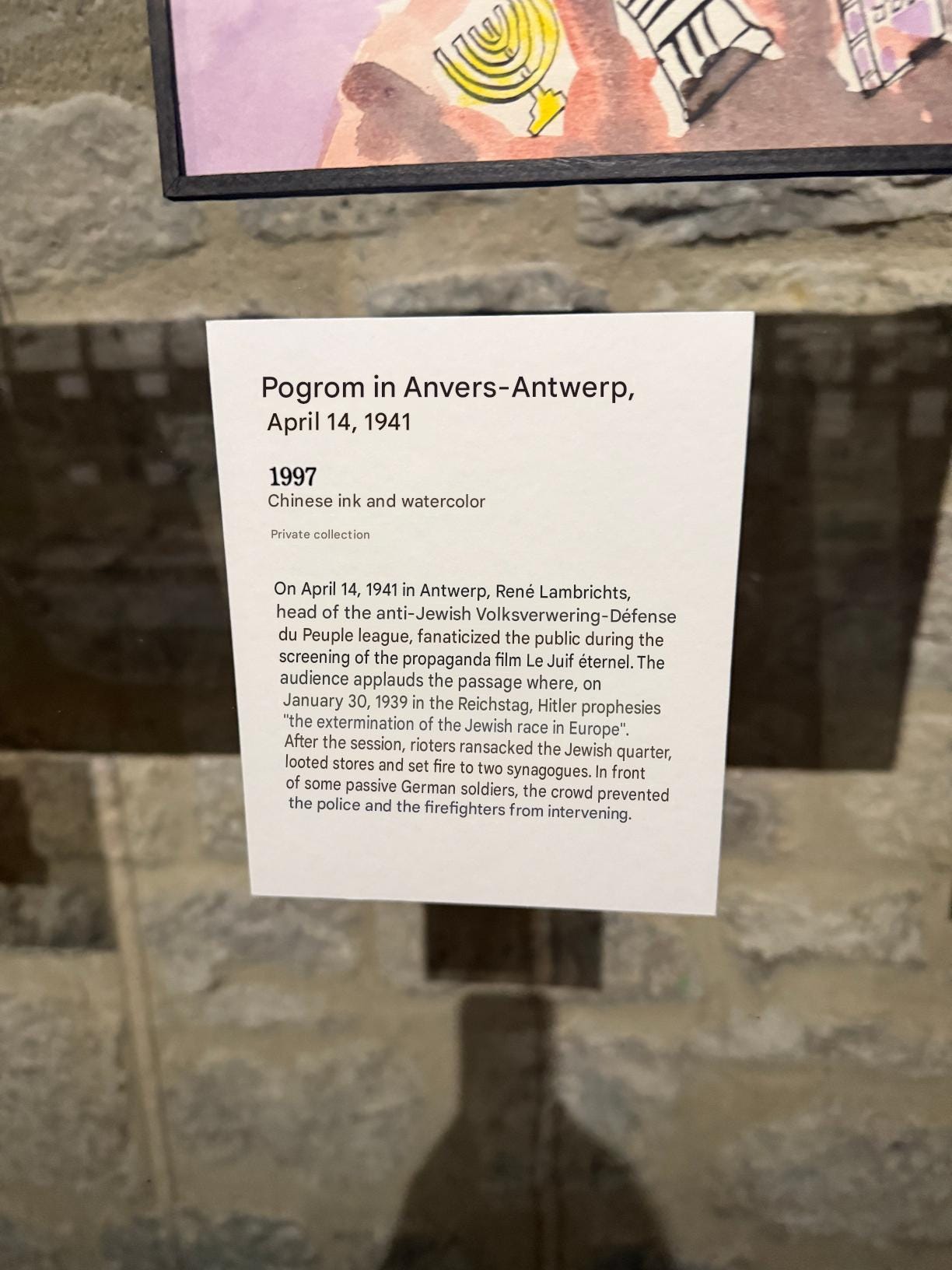
Some of the early works refer to the Antwerp in April 1941 - particularly after the screening of The Eternal Jew (which Google translate calls “The Unchanging Jew” for some reason. This vilely antisemitic German propaganda film dehumanizes Jews as rats, spreading contagion. 3
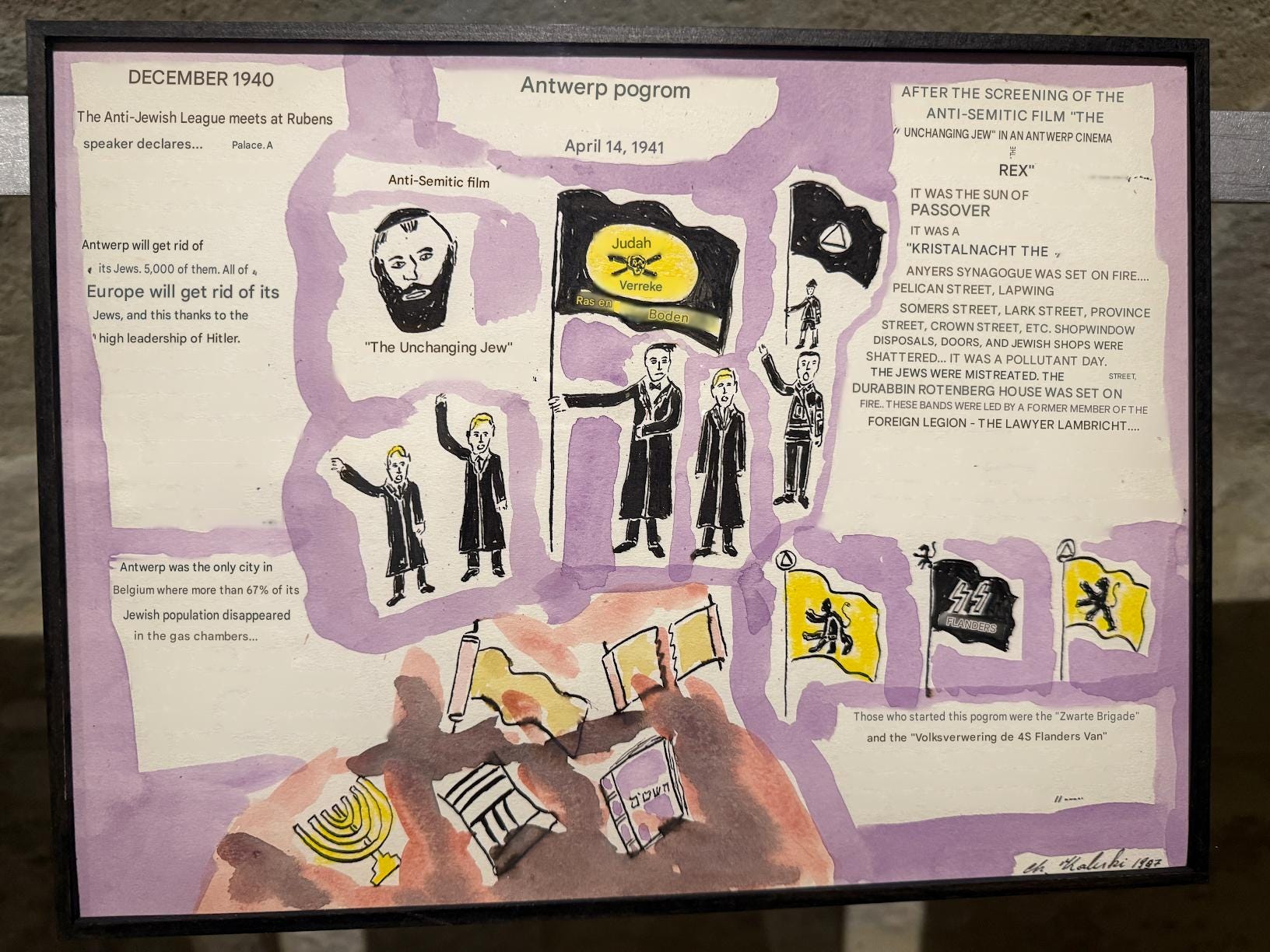
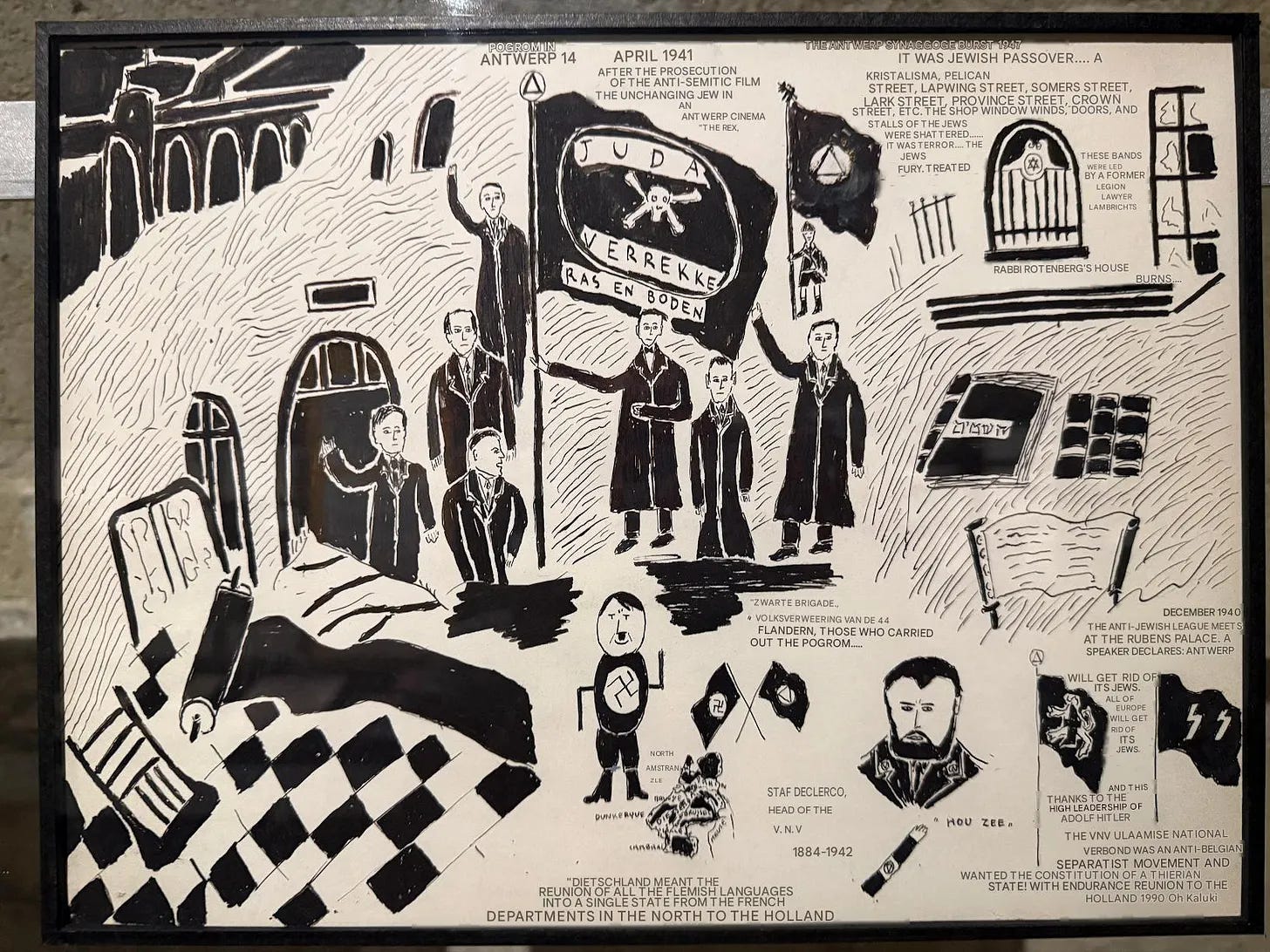
The film appealed to Flemish speaking Nazi sympathizers, who used it as an excuse for a pogrom.
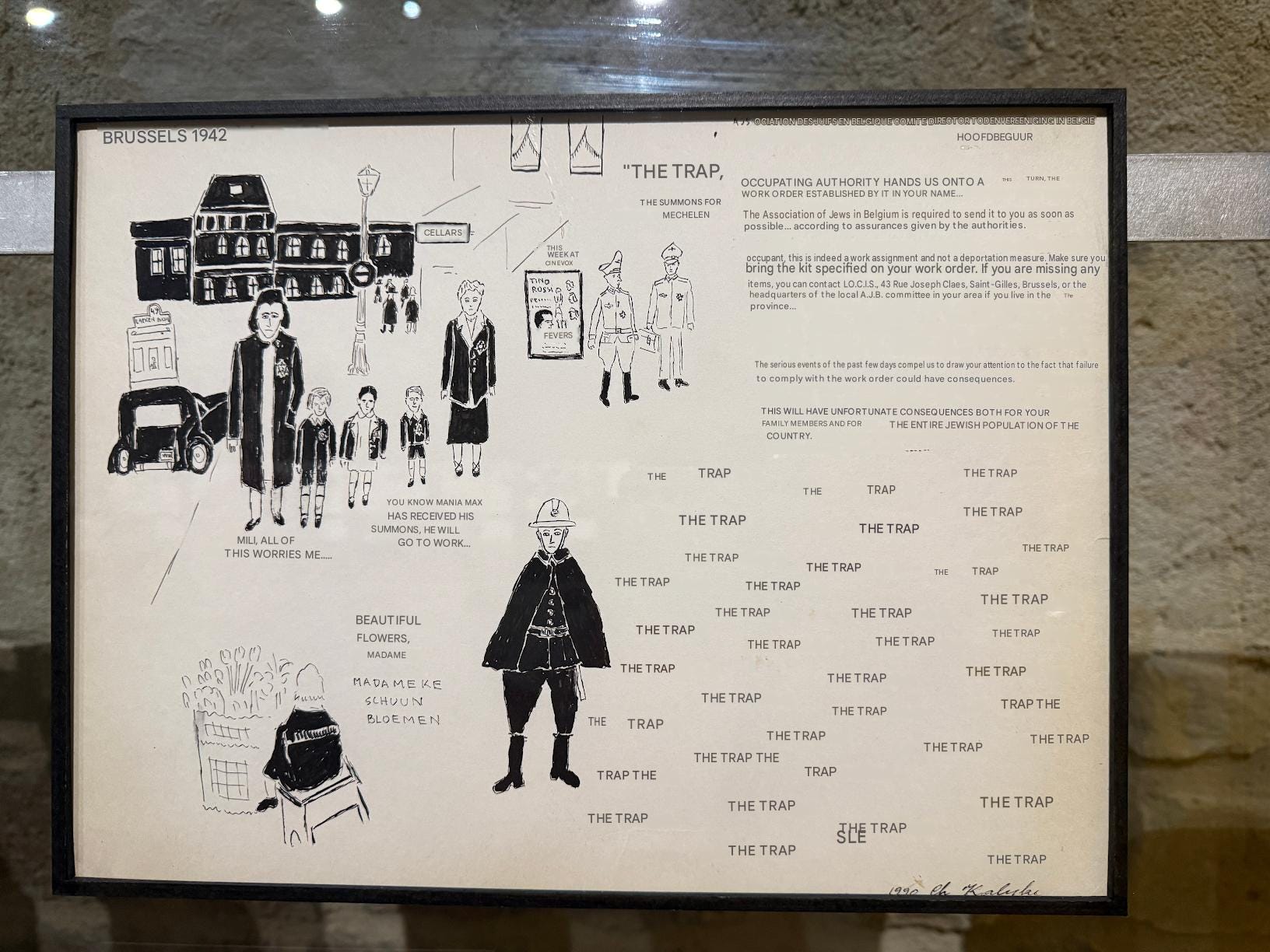
From Antwerp, Kaliski returns to Brussels in 1942 and the trap of the “work summons” - the beginning of deportations.
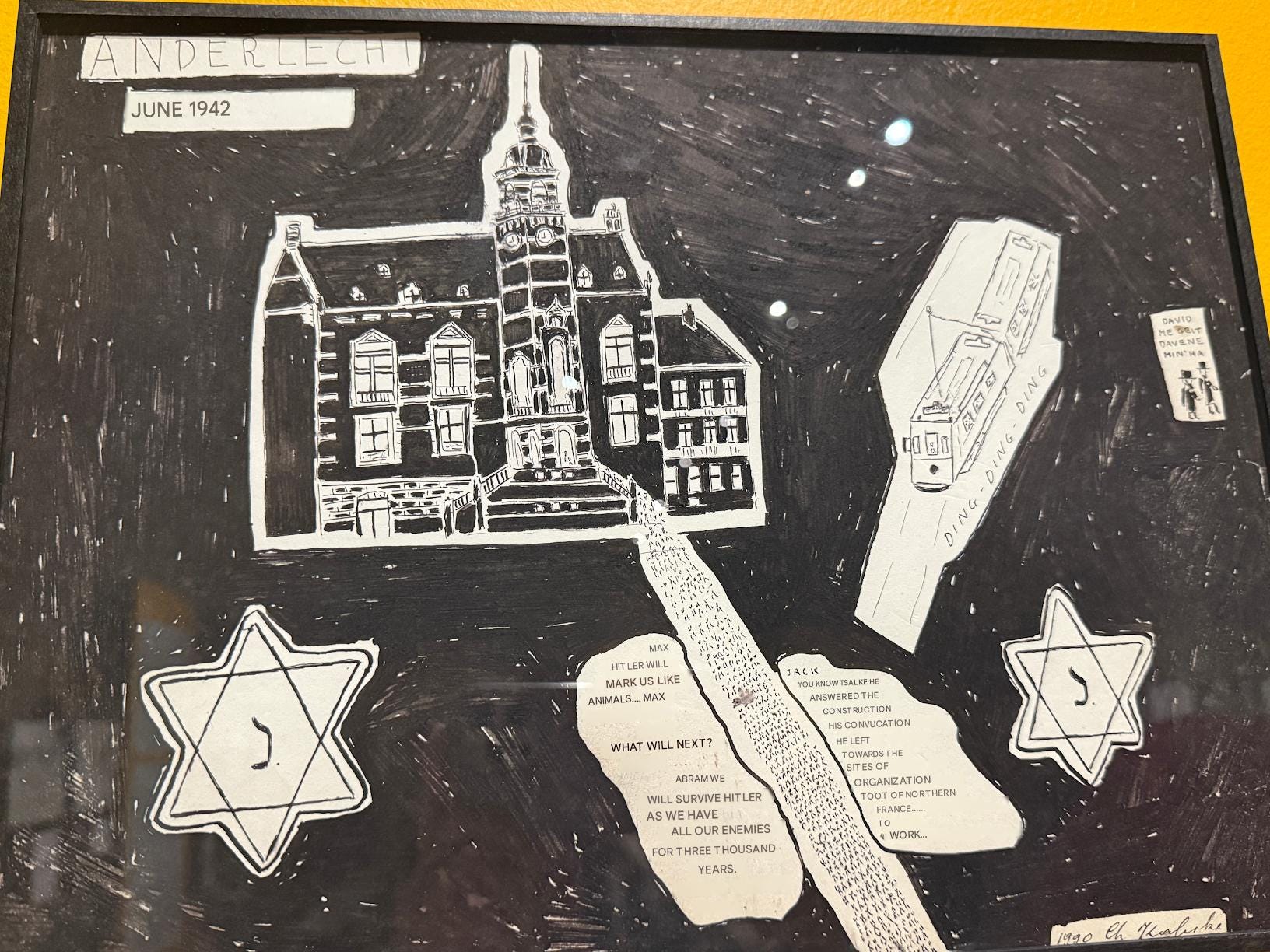
Finally, he moves from the mass roundups in Anderlecht from June - September 1942.
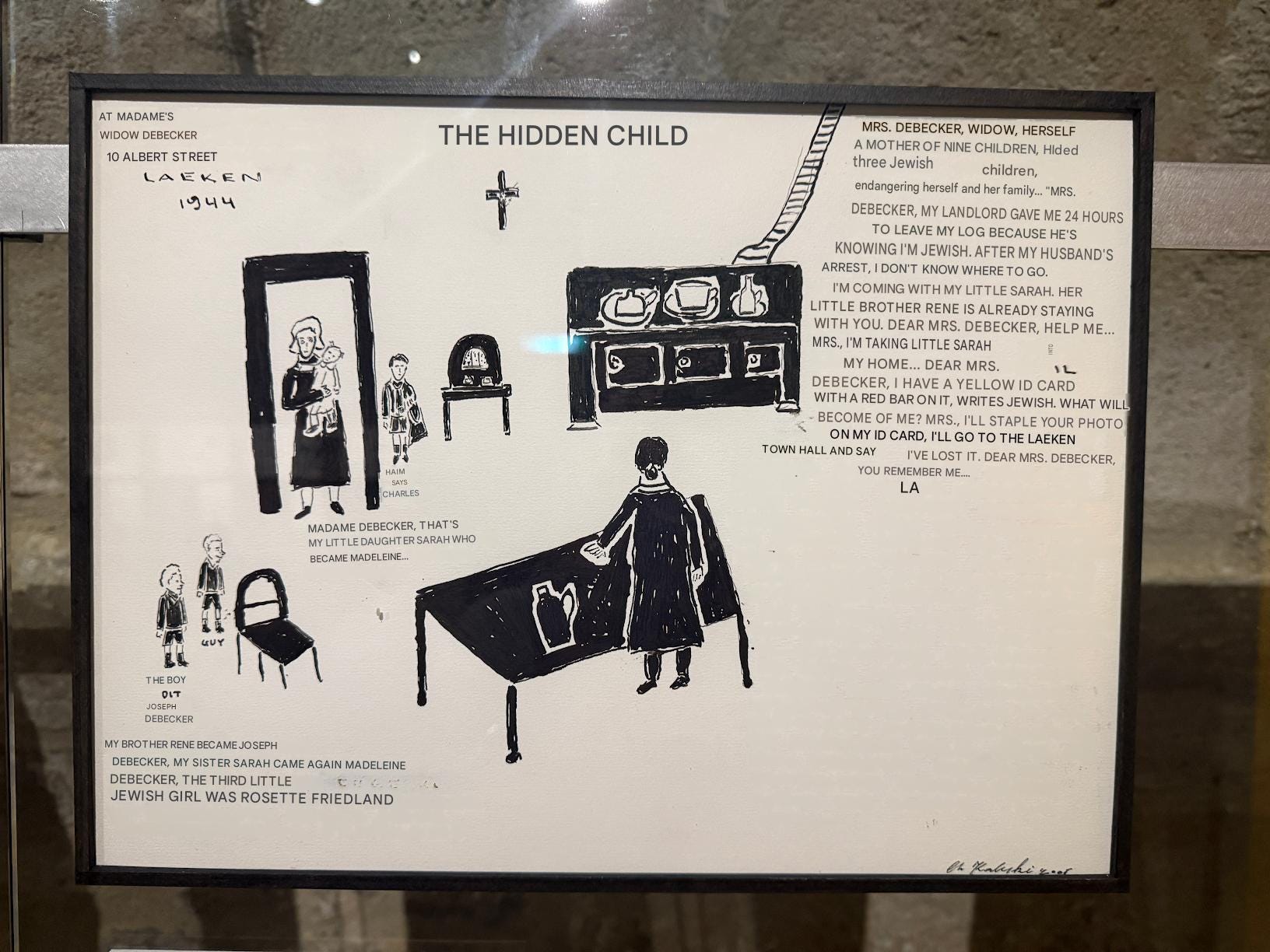
The Kaliski went into hiding in Etterbeek. His mother arranged for Chaim’s siblings to be raised by a brave Catholic widow, Mrs. Debecker. Their names were changed from Rene to Joseph and Sarah to Madeleine to sound less Jewish.
Meanwhile while she and Chaim went into hiding together.
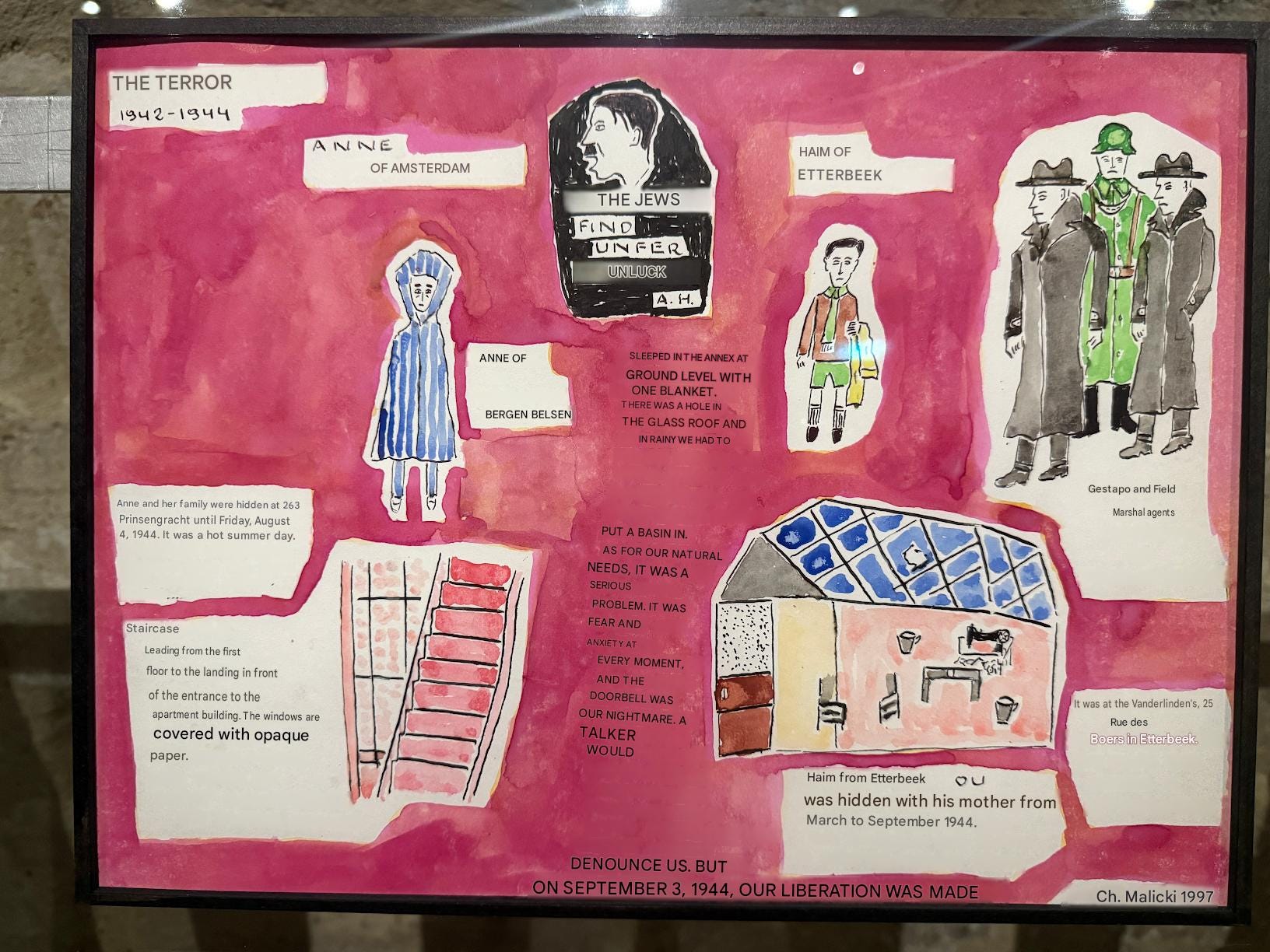
Above, Chaim compares himself to the most famous hidden Jew, Anne Frank. Fortunately he survived, and thanks to his hypermnesic memory, was able to create these images with such powerful detail.
Why does Kaliski’s work matter, and why especially now?
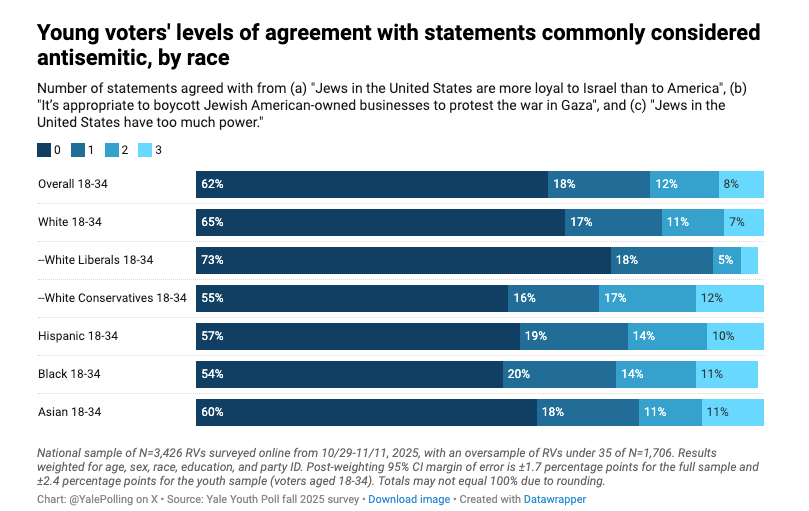
When I look at the findings of the Dec 2025 Yale Youth poll, it seems seems the rhymes of history are becoming a little too on the nose.
“18% of 18- to 22-year-olds said Jewish Americans have had a negative impact on the country, as did 15% of 23- to 29-year-olds.”
I’ve talked about The Horseshoe Theory previously, and the fact that there’s only a few percentage points of daylight between white conservative youth and Black, Hispanic and Asian youth who agree with antisemitic statements is both extremely frightening and deeply depressing. 4
The final Kaliski panel I’ll share resonated deeply. I stood in front of it for a long time, translating with my rusty French.
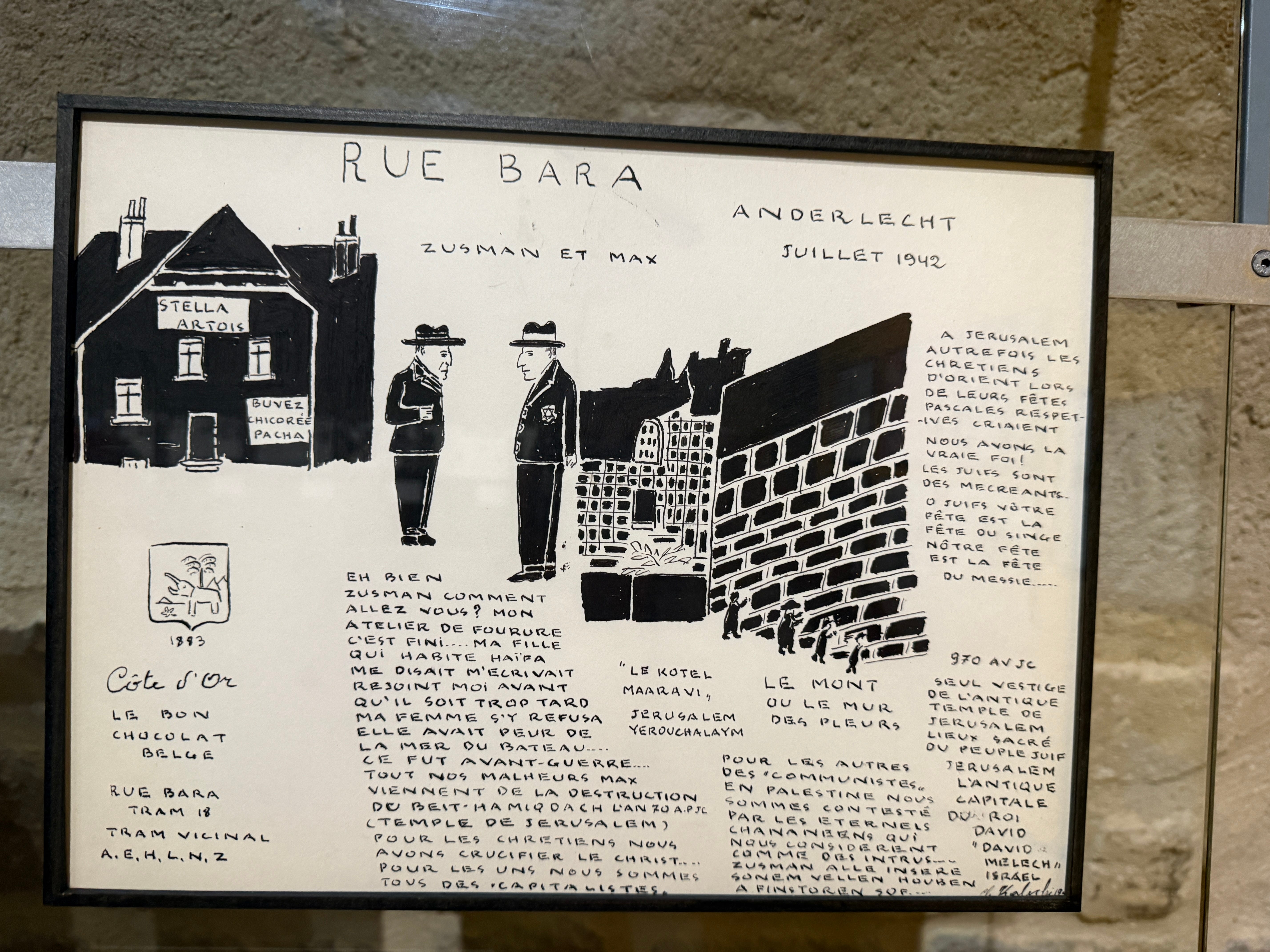
Zusman laments: “Tout nos malheurs…viennent de la destruction du beit Hamiqdach l’an 70 A.P. J.C. (Temple de Jerusalem)”
All our troubles started with the destruction of the Second Temple in Jerusalem in 70 CE.
Note: One could argue with Zusman’s assessment of when the diaspora of the Jewish people began, as there was an earlier deportation of Jews from Judea known as a the Babylonian exile. But you get the gist - our troubles started when we were forced to leave our homeland 5
To Christians we have crucified Christ...
Yep, I’ve written before a classmate in the UK shouting “YOU KILLED JESUS” at me, and how logical young Sarah protested, “I couldn’t have killed him, I wasn’t even ALIVE then!”
For some, we are all “capitalists”. For the others, “communists.”
We’re Schrödinger's Jews, both the moneyed capitalist elites secretly controlling the world or communists who want to bring down capitalism and Western society.
In Palestine, we are contested by the eternal Canaanites who consider us intruders.
Intruders although Jews were indigenous to the area. (see footnote 3)
In Jerusalem in times past, Eastern Christians, during their respective Easter celebrations, would shout: “We have the true faith! The Jews are infidels. O Jews, your festival is the festival of the monkey; our festival is the festival of the Messiah.”
Why did panel this resonate so deeply?
Because it reminded me of how I’ve felt as a progressive Jew for the last few years. Watching as young people conflate being an American Jew with the actions of the Israeli government.
Boycotting stores just because they are owned by a Jewish person, regardless of the owner’s position on Gaza and Israel.
Here’s an example. After our Central Europe trip, I wrote about the Stolpersteine project. 6
And while researching to learn more about Kaliski and Anderlect, I came across this, from January 2025:7
Eighty-five years after the deportations began, two Anderlecht schools have refused to attend the ceremony on Friday at Brogniez and Georges Moreau Streets, where the Tancman family and Eva Fichtenholc will be honoured with stolpersteine.
Zalc Meyer expressed his shock at the decision by Carrefour Primary School and the Institute Communal Marius Renard. The latter cited concerns about “importing conflicts into our school,” a reference to the Middle East conflict and Israeli actions in Gaza.
Wait what?
This is where “antiZionism” crosses over to antisemitism. Look, I understand wanting to protest Israeli actions in Gaza, but how does refusing to commemorate your own nation’s history with antisemitism help the suffering of Gaza? Why are the two being conflated?
Plus ça change, plus c'est la même chose indeed.
https://www.brusselstimes.com/45058/leopold-iii-the-belgian-king-who-was-forced-to-abdicate-after-the-second-world-war
https://collections.yadvashem.org/en/righteous/4042684
https://germanhistorydocs.org/en/nazi-germany-1933-1945/the-eternal-jew-1940
https://sociology.institute/diaspora-transnational-communities/jewish-diaspora-historical-overview-impact/
https://www.stolpersteine.eu/en/
https://www.brusselstimes.com/1386009/two-anderlecht-schools-refuse-to-attend-holocaust-memorial-ceremony
No posts
Comments
Nothing yet. Say the first thing.
Sign in to join the conversation.