
“Bar is loaded. 300 lbs.”
I step up onto the platform, wind my straps around the bar, adjust feet, bend knees, look up.
I take a deep getting ready breath. Let it out. Then I take a deeper breath, feel the belt around my waist as I brace. I push away from the ground.
The bar comes off the ground, up to my knees, and up the length of my thighs. Hips forward to lock it out.
The arm in front of me goes down. I low the bar. Hands up in success.
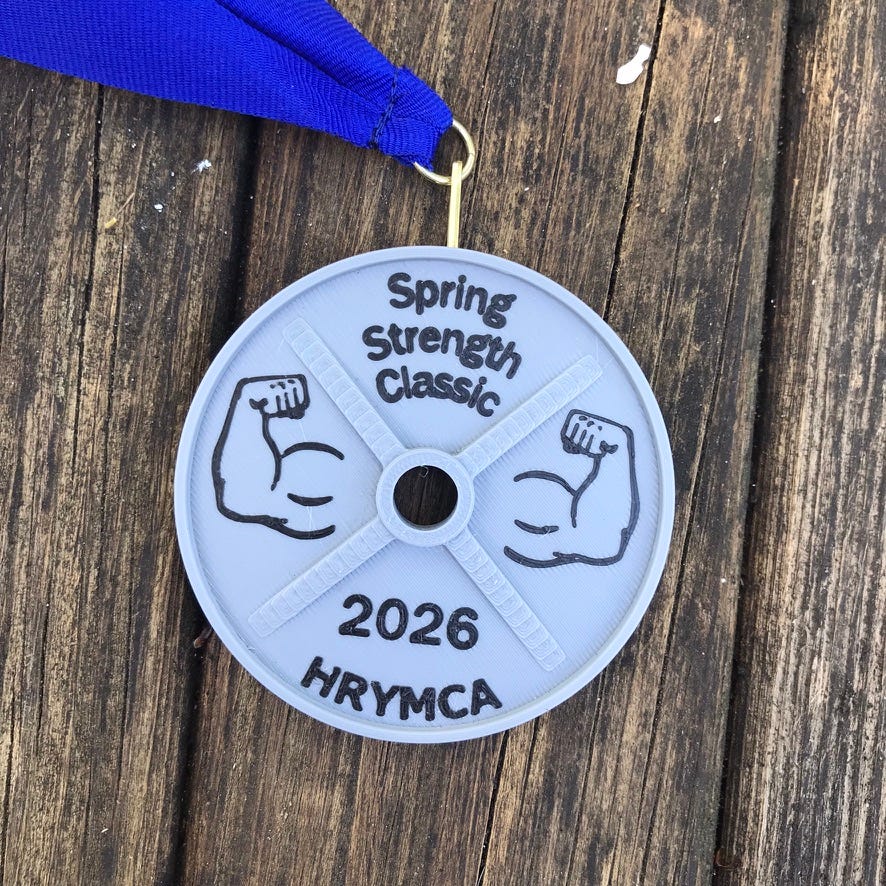
300 lb. deadlift achieved.
—
Strong, adj.1
1a. having or marked by great physical power
2a. having moral, emotional, or intellectual power or ability
—
My friend Heather used to call me Muscles when we worked together as dishwashers in our dorm kitchen. We’d dump food, rinse and stack plates, slide glasses into the divided trays on the rack above our heads.
She’d call me when it came time to pull down the full rack to run it through the steaming, rumbling Hobart. She wasn’t strong enough to get the full racks down, but I swung it down with relative ease if not grace.
Thus, Muscles, a name that made me laugh, because my arms were untoned, I struggled to lift many things. And yet, I took some pride too. Who doesn’t want to be considered strong?
—
Once I loved being called strong, took pride in it, smiled at my own strength.
I loved feeling the changes in my body as I showed up for yoga again and again and again. How my muscles stopped trembling in downward facing dog. How I could hold plank longer and longer. How I could finally lower myself into chaturanga without simply collapsing onto the floor with a thump.
I chose work, discipline, and sticking through the tough parts again and again and again and again.
I chose strong.
—
In 2007, people said, “You’re so strong,” and I hated the word.
I didn’t want to be strong. Not in that way.
I didn’t want to be strong enough to kiss my baby goodbye with a smile and see him wheeled off to surgery.
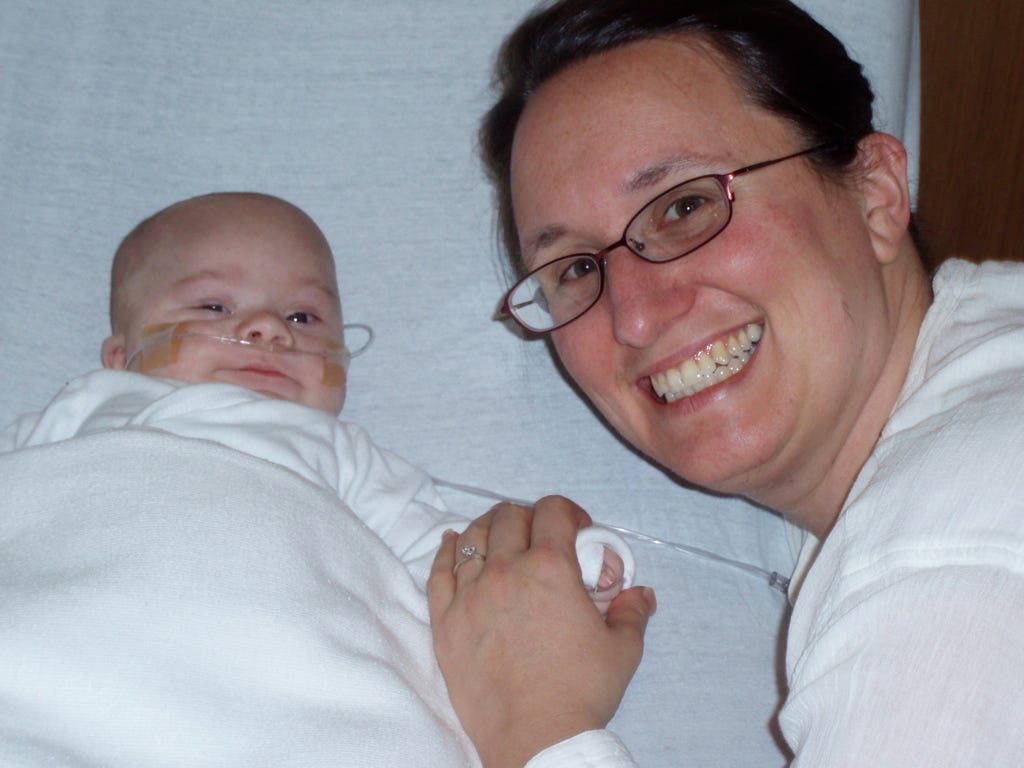
I didn’t want to be strong enough to sit day after day after day in the hospital, waiting to see when he would come off the ventilator, come off oxygen, come home.
I didn’t want to be strong enough to watch my baby turn blue in my arms, see a team come running with a crash cart, shield me from whatever else they had to do to revive him.
I didn’t want to be strong. I just wanted to be a mom. A tired, sleep deprived, not sure if she was doing it right but the kids would turn out OK in the end mom.
—
A decade later, I watch my daughter playing tough defense at basketball practice. Hands up. Knees bent, feet shuffling, always moving, staying in front of her opponent. I watch her plant herself, try to stand her ground while a fifth grader with a good half a foot and nearly double her weight pushes her around, leans into her, pushes off with her left arm.
I watch my daughter, face flushed with the heat of exertion, lean back in. She gets right in her opponent’s face, sticks to her even as she is pushed away. She might as well have roared.
That’s my girl. That’s the strong I want her to get from me.
I want her to own strong as a badge of honor. I want her to know strong as her birthright. She can run. She can work out. She can build strong bones and muscles, but it is that tenacious strength inside that will keep her going no matter what her body does that I want her to know.
—
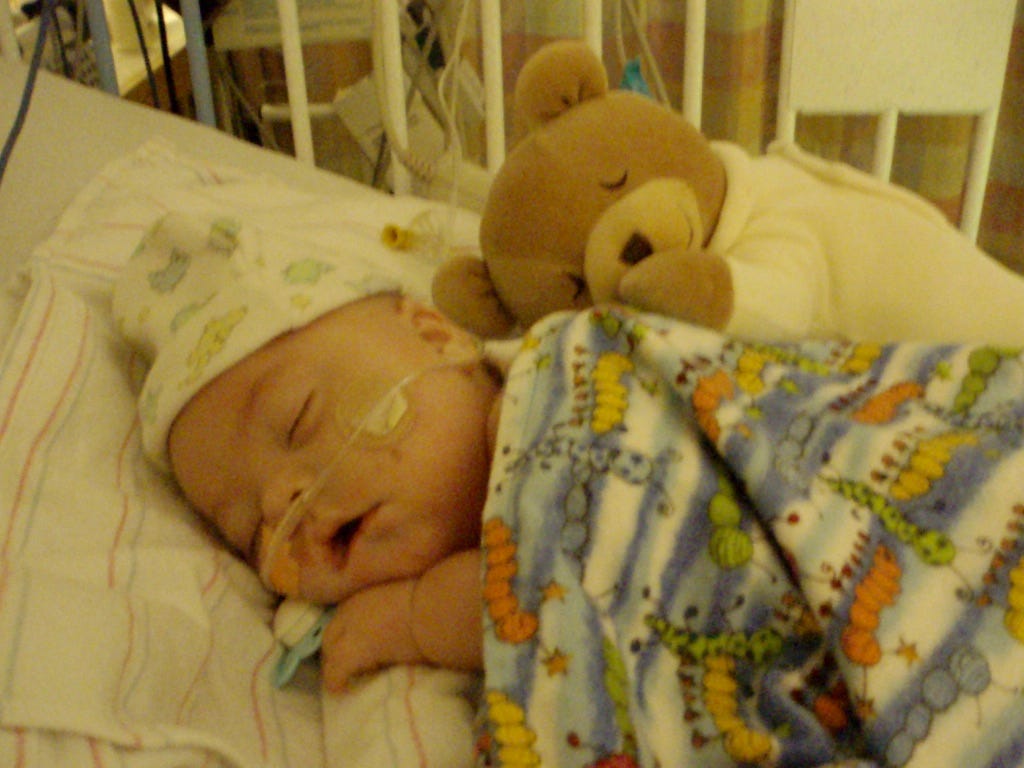
In 2007, I was called to be strong enough to be there with my son, singing my love to him as his spirit moved on.
I was called to be strong enough to hold his heavy, still warm body.
I was called to be strong enough to put that body down and walk out of the room. It took a strength I did not know to walk down the hall and out of the hospital with empty arms, the weight of emptiness heavier than his body.
—
“It’s not the weight you carry
but how you carry it–
books, bricks, grief–
it’s all in the way
you embrace it, balance it, carry it
when you cannot, and would not,
put it down.”
So I went practicing.
Have you noticed?
—“Heavy,” Mary Oliver2
—
I’ve practiced carrying the weight of grief for almost 20 years now. I carried it when I could not put it down.
I learned to take pack-off breaks with grief, putting it down, resting before I picked it up again.
I learned over time, with practice, again and again, to balance it, carry it, and even to put it down for long stretches.
Still sometimes it slides into my bag, not a leaden weight, but a gentle drag. Less anchor, more fingers trailing through the water as you glide forward in your kayak.
—
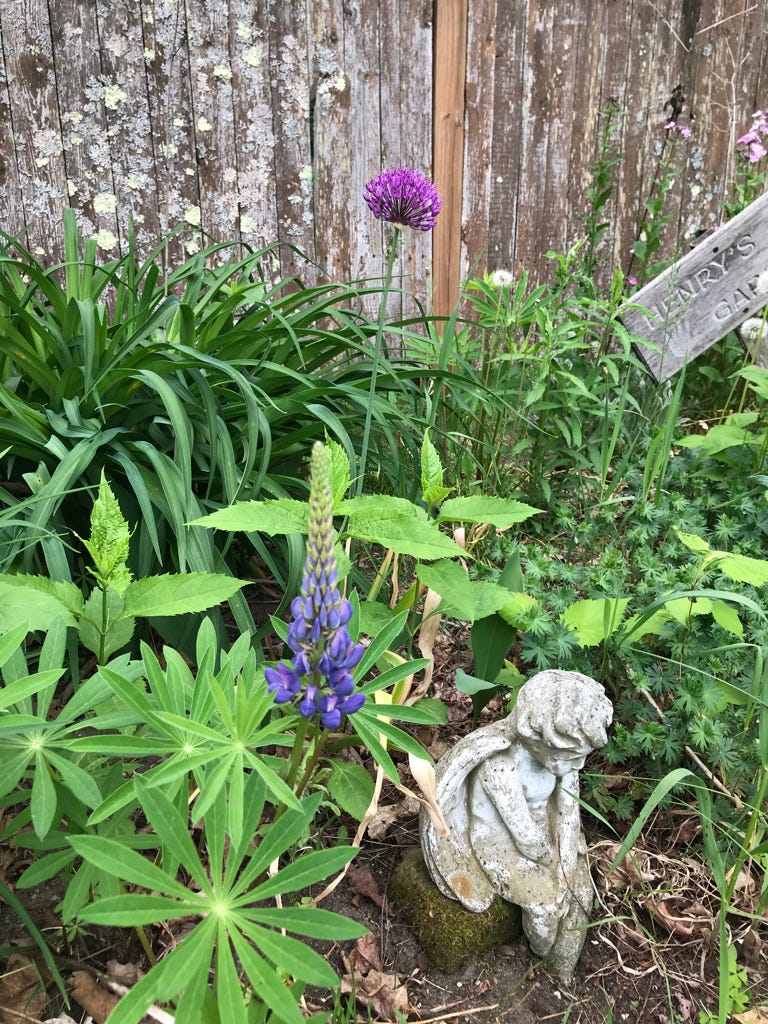
My son Henry was born in the month of May, this month which is so full of life and liveliness — the track meets and the prom and the confirmation, the lilacs bursting and the rush of the blue star and lupines and iris and rhododendron, the peonies swelling and crawling with ants. The tentative leaves on the trees suddenly a green canopy. The birds waking the world before sunrise. The volunteer arugula and mustard greens in the garden, the seedlings begging to be planted.
He was born at the end of this month, and every year, under all that living is the reminder that he is not. It’s subtle, just an undercurrent, not distracting from the energy of the living, not shading it. Just there.
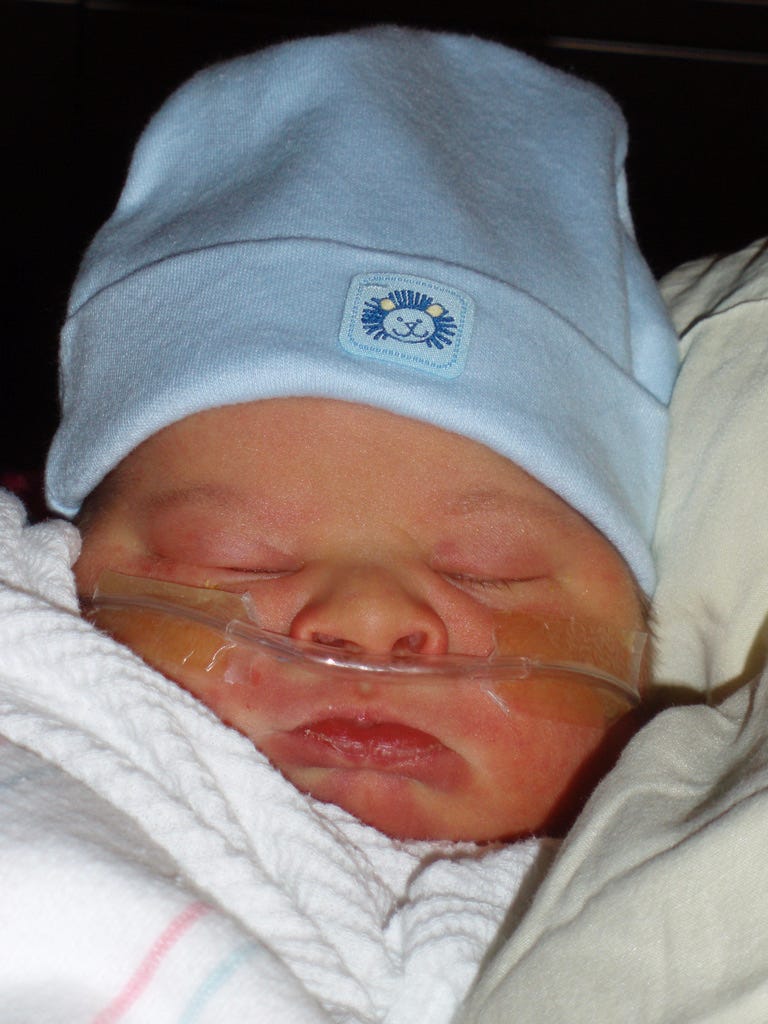
His birthday is a reminder that he was born, that he lived, that he was part of this glorious season 19 years ago.
He was born. He lived, briefly. He died. There is tension there, even now. A load I can and do carry.
—
Today my daughters will see me hold and re-balance that weight once again.
Sometimes that weight looks like cake for breakfast, but no candles. It looks like muscles sore from working in the garden. Some years it looks like tears or sharp words or maybe like nothing at all from the outside.
They have seen that weight bear down in the dark days of December. They have picked up reading the pages of the story where my voice cracks and I take deep breaths.
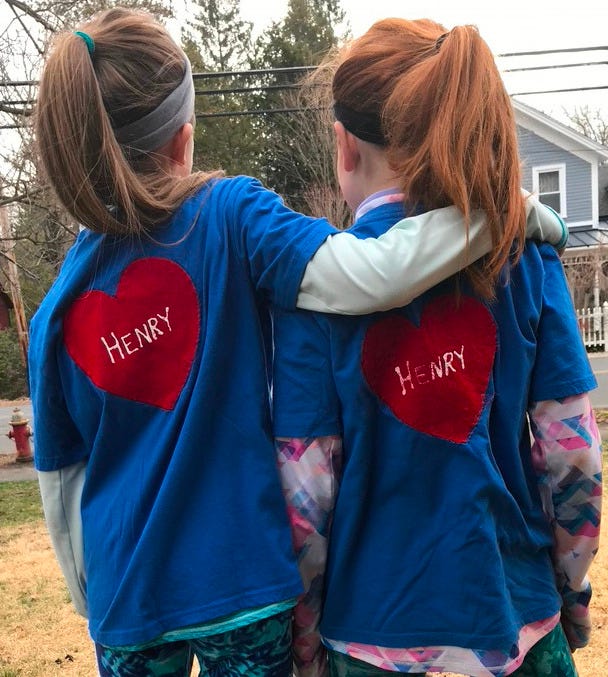
One year, the one who hates hugs came downstairs in the morning, marched up and gave me a fierce hug. Then she said, “Mom,” and gestured to her back, where a red felt heart with the name of the brother she will never know sat from a 5K. A boost of strength on that day.
—
My daughters have seen the weight that I carry.
I hope they have learned — I think they have — that strength doesn’t mean denying or pushing it away. I hope they have learned that tears are not weak, that the weight of grief does not have to crush them.
They have had their grief that they learned to carry, but I hope they are not tested at any great weight.
—
My daughters have seen me carry the weight of grief, but I don’t know if they see me as strong for carrying it. I don’t need them to.
They have seen me lift 300 lbs, cheered me on, high fived and hugged me, told their friends of my feat.
This summer I’ll keep lifting. My daughters will be at the gym with me or on their own. We’re all working on getting our first pull up.
I’ve reclaimed the word strong, though I prefer it applied to the physical, prefer to test myself, not to be tested.
—
I’m off to work in Henry’s garden, to clean up weeds and make space for new growth, to tend. I’m off to balance the weight of a wheelbarrow full of compost. I’m off to balance a heart full of what is and what’s missing. This month is so full, and I hold and re-balance it all.
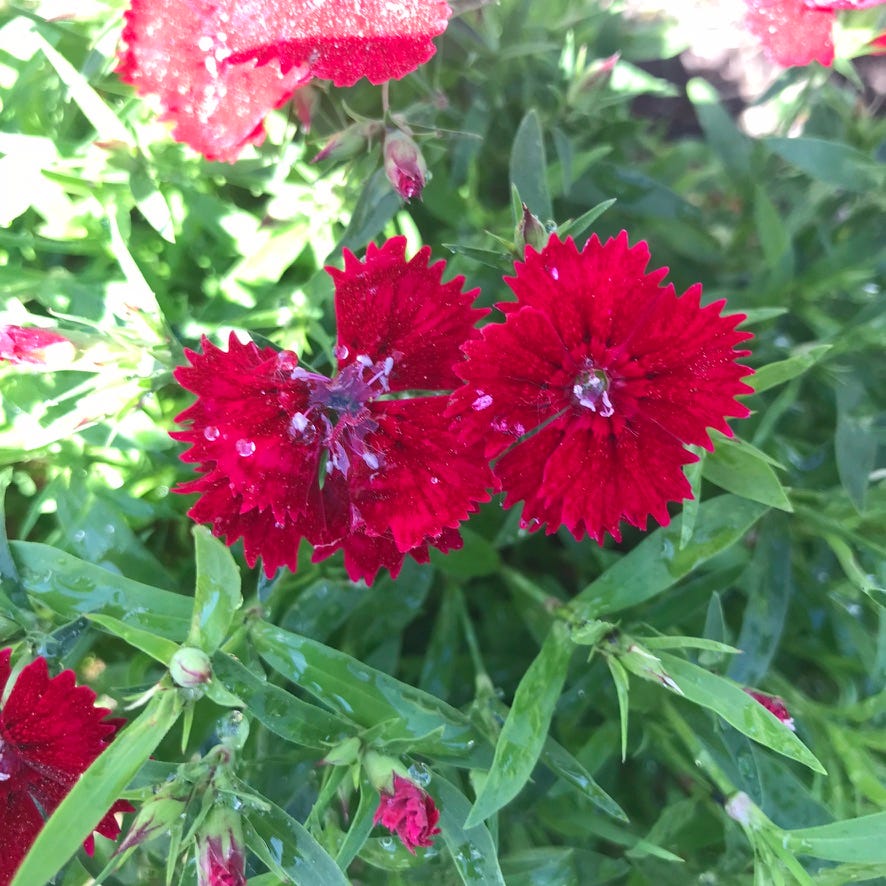
What weight are you carrying these days? What signs of life surround you in this season?
“Heavy” by Mary Oliver appears in her collections Thirst and Devotions. Mary Oliver got grief so well. A friend sent lines from “In Blackwater Woods,” after Henry died, lines that have always stuck with me:
To live in this world
you must be able
to do three things:
to love what is mortal;
to hold it
against your bones knowing
your own life depends on it;
and, when the time comes to let it go,
to let it go.
No posts
Comments
Nothing yet. Say the first thing.
Sign in to join the conversation.