
The 2026 Ursula K. Le Guin Prize for Fiction has announced its shortlist, and we’re thrilled to see titles put out by small presses including Neon Hemlock, Coffee House Press, and Psychopomp among the nominees.
The winner will be announced by the committee on Ursula’s birthday, October 21, 2026.
Now, here’s what’s happening in the small press world this week.
—Kit
Managing Editor / Sapling editor
Black Lawrence Press
Genre(s): poetry, fiction, and literary nonfiction
Award: Publication in The Cincinnati Review and $1,000 (one winner in each genre)
Entry Fee: $25
Deadline: July 15, 2026
Guidelines: cincinnatireview.submittable.com/submit

Genre(s): poetry
Website: deanza.edu/english/creative-writing/red-wheelbarrow
Guidelines: redwheelbarrow.submittable.com/submit
Open to submissions for the Red Wheelbarrow Poetry Prize through July 31, 2026

Genre(s): fiction, nonfiction, poetry
Website: unleashcreatives.net
Guidelines: unleashpress.submittable.com/submit
Accepting fiction, nonfiction, and poetry in progress for the Unleash WIP Award through July 15, 2026.
Accepting submissions for Dear Body, a cross-border literary anthology, through January 12, 2027.
This week, Sapling spoke with Clem Cairns, Founder of Fish Publishing.
SAPLING: Fish Publishing, an independent publishing company based in the West of Ireland, is the publisher of the annual Fish Anthology. Fish also hosts annual writing contests and offers editorial services and writing courses. Whew! Can you take us back thirty-two years to give us a peek at the press’s origin story?
CLEM CAIRNS: It was apparent back then that most Irish writers looked to the UK to be published, as there were few outlets in Ireland, so we sought to provide that outlet. We ran the Fish Short Story Prize to attract new Irish writers and Roddy Doyle, Dermot Healy and Deirdre Madden agreed to judge. Generous of them. They had a keen interest in promoting Irish writing and over the years Roddy has remained supportive. I was working on a Fishing trawler out of Schull in West Cork at the time and Jula was holding the fort at home. Fish seemed an appropriate name for the endeavour, casting a net, sorting through the catch, and bringing it to the public, not in tins but more Molly Malone style in a barrow, wheeling it through the streets and declaring it loud to the people. Alive alive O!
Then the internet arrived, and suddenly the horizon widened. We went global, with the aim not just to support Irish writers, but to connect them with the world—and to bring the world’s voices back to Ireland. We have published over 700 writers in the last 32 years.
SAPLING: Where do you imagine Fish Publishing to be headed over the next couple years? Are there any changes you foresee taking place in the near future, or anything on the horizon you’d like people to know about?
C. C.: We’re always looking ahead, always thinking about what more we can do. One area we’re particularly interested in is giving space to voices that struggle to be heard—writers in places like Iran, for example, where publishing opportunities can be limited. Finding ways to support those voices is on our minds.
SAPLING: As the founder of a literary press, is there anything you wish more authors would know from your side of the desk?
C. C.: No. Generally they have a pretty good understanding and appreciation of the difficulties we face. Sometimes the very new writer doesn’t appreciate how little money there is in writing unless you are at the top end of it, but that is quickly learned.
SAPLING: You hold several annual writing contests, many of which lead to publication in the Fish Anthology for the winners. Writers can find information about open and forthcoming calls on the Fish Publishing website. What’s the first thing that Fish editors look for in a submission? Any deal breakers?
C. C.: Quality, however how difficult to define. Good writing. Sentences that enthrall, stories that bind you to them. When you reach the end of a piece and ask the inevitable question “so fucking what” and the answer is obvious. Originality is always welcome. So is humour, though that’s perhaps the hardest thing to get right—and the rarest.
SAPLING: What would you like writers to know about the editorial services (critique, mentoring, editorial consultancy) that Fish Publishing offers?
C. C.: We offer a wide and varied array of options, all aimed at helping writers to improve, refine the craft, find the right voice or voices. Every writer is different and there are no solutions or advice that fits all and we do all of our work on a one-to-one basis.
SAPLING: What one or two small press publishers deserve more recognition, and why should more people be seeking out their books (or perhaps seeking a home for their own writing there)?
C. C.: Stinging Fly in Dublin and Salt in the UK. Both consistently publish work of real quality and deserve a wider readership.
SAPLING: Just for fun (because we like fun), if Fish Publishing had a brain, what three things would it be thinking about obsessively?
C. C.: How to run a publishing house while travelling on a motorbike. How to enrich our writers. How to get the next generation to read books, all the time.
SAPLING: Clem, thank you so much for taking us behind the scenes at Fish!
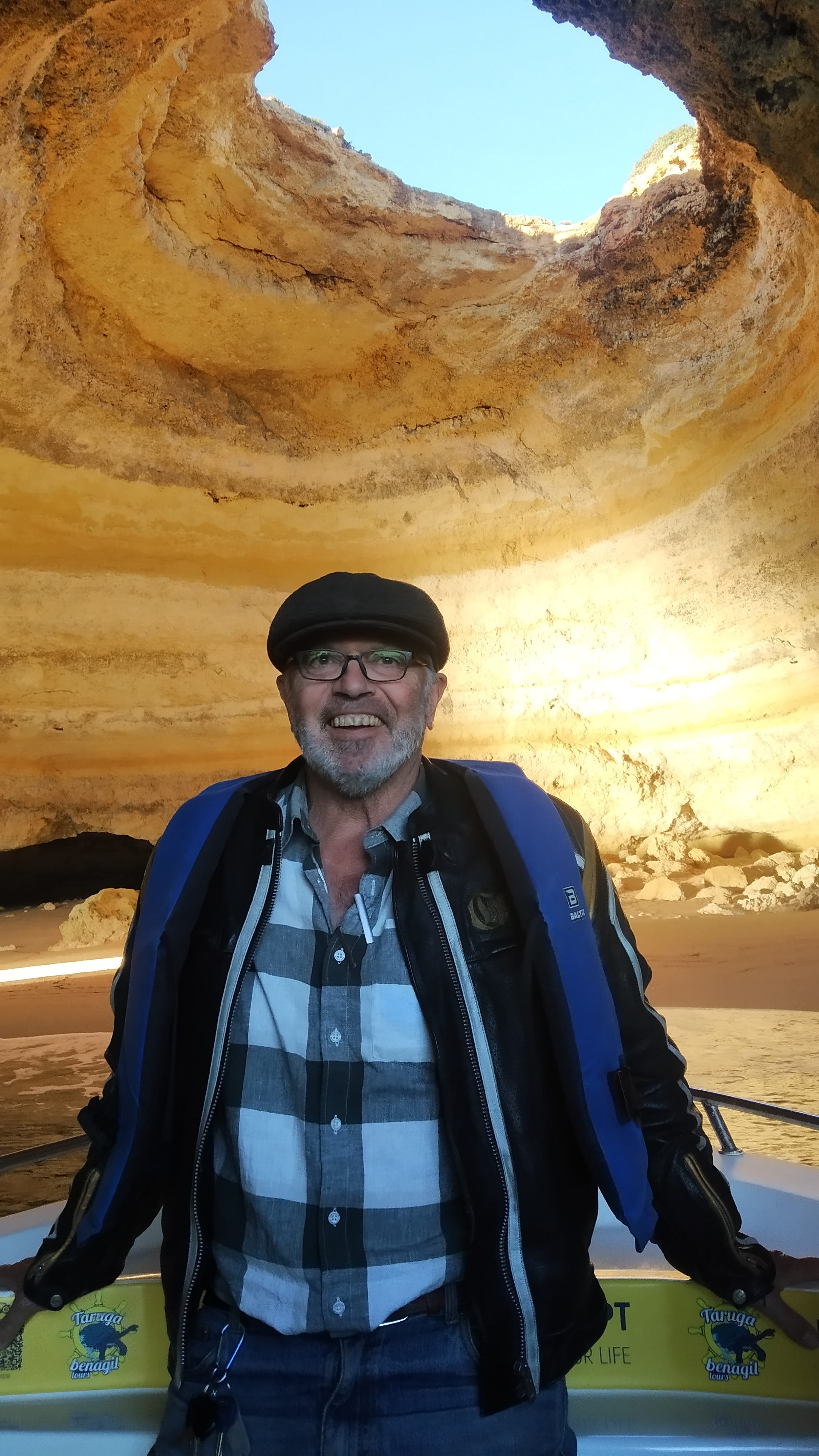
After spells as a sign maker, builder’s labourer, farmer, lumberjack and fisherman Clem Cairns, along with Jula Walton has been running Fish for over 32 years. During that time he started the West Cork Literary Festival and ran it for its first decade. His other passion is motorbiking.
Would a writer in your life enjoy a gift subscription? You can send one for either $5/month or $50/year. All you’ll need is the gift recipient’s email.
No posts
Comments
Nothing yet. Say the first thing.
Sign in to join the conversation.