
Let me say something that might make you bristle.
Your discomfort is not a diagnosis.
Before you close this tab, hear me. I am trauma-informed. I have spent years helping women identify trauma patterns, name what happened to them, and build real awareness around it. Trauma is real. The work of healing is sacred. I will never dismiss it.
But that’s exactly why I can say this next part with authority: not everything that hurts is trauma. Not every hard feeling is a disorder. And somewhere along the way, we became a generation that stopped knowing the difference.
We feel bad, so we reach for a label to explain why we aren’t functioning. And here’s the trap: if the label only validates your struggle and you never change, you stay fragile, and your gifts stay locked inside you, never reaching the world that needs them.
Meaningful information is not the problem. Being mentally health literate is good. But avoiding discomfort is not self-care. It’s self-abandonment on a delay.
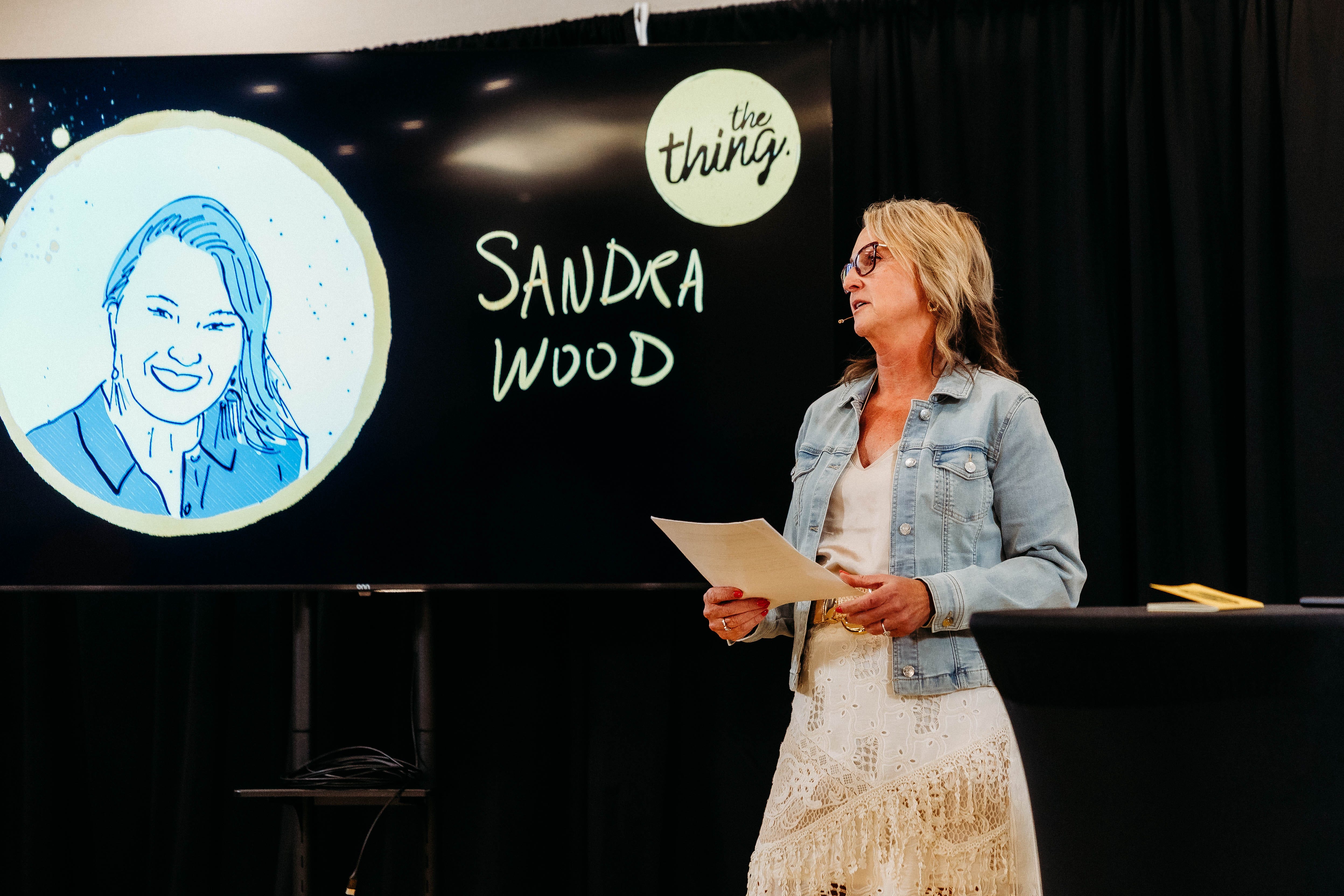
At The Thing Conference in Nashville this past June, I heard Kelly Greene of the Center for Holistic Resilience share ideas that stopped me in my tracks. She took what I have known for years and put it into a far deeper form and understanding, solidifying what I have been saying about the era of AI and how it is impacting not only our workforce but our livelihood.
Here’s my paraphrase of what she taught:
AI is reshaping human life the way the Industrial Revolution did. Every business model. Every job. And it’s happening at lightning speed.
And here’s how most of us are responding: we’re either all in or all out.
Both are distress tolerance failures.
The disruption we are facing today puts us into overdrive and dysregulation, racing to keep up, white-knuckling every change. Or we respond with all-out avoidance, dressed up as confidence, “I don’t need to deal with this” or “this is bs!” when the truth is “I can’t bear to look at this.”
Neither one works. We can’t push through with toughness, and we can’t hide. We have to learn to feel it without breaking. To metabolize what’s happening through grit, perseverance, and passion toward a goal. Through resilience, absorbing hardship without lasting damage. Through distress tolerance, we feel it, but we don’t break.
In the age of AI, we need holistic resilience. Not a mindset trick. A capacity.
When she said we’ve become a generation that calls discomfort trauma, it hit me like a ton of bricks, because it’s exactly what I’ve been watching in my clients for years. Brilliant, capable women, benched by a belief that their discomfort means something is wrong with them, and then cycling around the loop of this endlessly.
Nothing is wrong with you. Something is being asked of you. Those are not the same thing.
Here’s what happens when you treat discomfort as a diagnosis instead of a signal.
In your career, you stop reaching. The stretch role feels dysregulating, so you tell yourself you’re “not ready”, when the truth is you’ve never built the capacity to feel unready and move anyway.
In your leadership, you avoid the hard conversation, the honest feedback, the decision that will disappoint someone. You call it “protecting your peace.” Your team or family calls it absence.
In this changing world, while everything reshapes itself at lightning speed, you’re waiting to feel comfortable before you adapt. Guess what? Comfort is not coming. The women who will thrive in the next decade are not the ones who feel the least; they’re the ones who can feel the most without breaking.
And underneath all of it, the deepest cost: you keep fleeing. Think about this: Have the big moves you’ve made been toward something or away from something? Away from the boss. Away from the exhaustion. Away from a version of your life you couldn’t stand one more day of. Pain is information, so there’s nothing wrong with that. But if all you know is what you’re fleeing, you’ll keep running in circles, busier, more capable, more exhausted, and no closer to what you actually want.
You cannot invite in what you really want while you’re busy running from what you can’t tolerate feeling.
So in my work with women, we change the relationship with discomfort itself.
First, we stop flinching. What are you running from? What is actually happening? Where does it hurt? We name it honestly, not to diagnose it, but to face it. Calmly, without judgment.
Then we ask the question fleeing never lets you reach: what do you really want? Not what would make the pain stop. What would make your life yours?
And then we build the capacity to hold both the discomfort of the season you’re in AND the pull of what you’re creating. That’s the whole game. That’s what lets you adapt instead of white-knuckle, lead instead of hide, choose instead of react.
This is why I work with women who are doing too much. Over-serving everyone. Over-performing everywhere. Your competence has become everyone else’s convenience, and that is a recipe for losing your shit. If your brain has no distress tolerance, you will fall apart from the inside out. Quietly at first. Then all at once.
And here’s what Kelly said: “Nobody in the AI conversation is saying: this is a human problem that only humans can solve.” No AI is coming to build your nervous system’s capacity. No algorithm can teach you to stand in the fire of a hard season and stay whole. The machines can take over your tasks. They cannot take over your becoming. And they certainly can’t replace your wisdom, your voice, your resilience.
It’s why so many therapists are turning their attention to nervous system regulation, a real step toward distress tolerance and the capacity to manage many moving parts at once.
My job is to look you, the professional, the executive, the entrepreneur, in the eye and say: build the capacity for this. Because when you do, you stop cycling through depression, anxiety, and perpetual anger. Here, we don’t avoid, and we don’t wallow. We address. We build skills and abilities. And we find freedom to flex, to be imperfect, to learn, just like everyone else.
I’ve been talking about resilience for over fifteen years, back when almost no one knew what the word meant. I learned it early, cancer at 40, twenty-two years ago. I learned not just how to heal, but how to overcome depression and every mental and physical symptom of overwhelm that came with it.
Was this easy? Hell to the no. Was it a journey? For sure.
So when I tell you to build perseverance and grit, understand: this is not “buck up and get over it.” It goes deeper. It’s where we show up. Pay attention. Tell the truth. Practice flow and non-attachment, holding our plans loosely enough that disruption can’t shatter us.
I asked a woman recently what her backup plan was. She didn’t have one. When everything rides on one outcome, one identity, one role, that’s not commitment. That’s fragility waiting for a trigger.
When you build this capacity, not only can you perform sustainably, but you can also perform for yourself and for the work you actually want, not for everyone else’s approval. You trade performance for presence.
Both of my parents died within a four-month period at the end of 2025, after I had been caregiving for them for a long time. I came out of it unharmed. With capacity still. With deep, abiding love and gratitude that I could show up fully without destroying myself to do it.
THIS is what I want for you.
And here’s the part nobody wants to hear: you don’t build resilience without something to be resilient from. The hard season you’re in right now isn’t in the way of your growth. It IS the growth
.
This work isn’t just cognitive. It’s tapping into your higher purpose. Realizing you are more than your roles, you are not a role, you are a soul. It’s gratitude. It’s finding growth in a hard season. It moves beyond your head into your heart, your purpose, your actions, and your human connections.
The world is not going to slow down for you. The disruption is not going to politely wait until you feel ready. So the choice in front of you is simple, and it’s yours: keep treating your discomfort as evidence that something is wrong with you OR start treating it as the training ground for everything you’re becoming.
You are in charge.
You don’t have to spend years untangling every thread of your story before you’re allowed to change. You get to choose. Now, in this moment. Not to break.
Your discomfort is not a diagnosis. It’s an invitation.
Answer it.
Want to learn more about working with me? Book a connect call now.
No posts
Comments
Nothing yet. Say the first thing.
Sign in to join the conversation.