

It’s been two weeks since my family and I made the pilgrimage to Naoshima Island in Japan to experience site-specific artworks and Tadao Ando’s architecture, and I’m still processing this immersive, full-body experience.
Heretofore my only Ando building was Wrightwood 659, an extraordinary space in Chicago, where I was honored to be the inaugural executive director and oversaw its opening in 2018. Ando worked within the existing envelope of a four-story 1930s apartment building, completely gutting and re-envisioning the interior in his signature stark concrete, which can be glimpsed from the windows of the brick shell.
As a scientist, art historian, and art conservator, I had been trained to gather data before making any inferences about an artwork or built environment (or people, for that matter). But academic knowledge cannot replace experience, and what I learned at Wrightwood 659 is how Ando engages us, body and soul, before our minds fully comprehend what we are experiencing. Naoshima provided the opportunity to visit five more Ando buildings — and learn from juxtaposing those experiences. I purposely avoided my usual full-on research of the spaces before going. I wanted to take in each building with no preconceived notions or expectations — to allow Ando to teach and surprise me.
And surprise and delight me he did. There were so many moments in each building that stuck with me… this missive would be a tome if I tried to describe them all. Highlights will have to suffice.
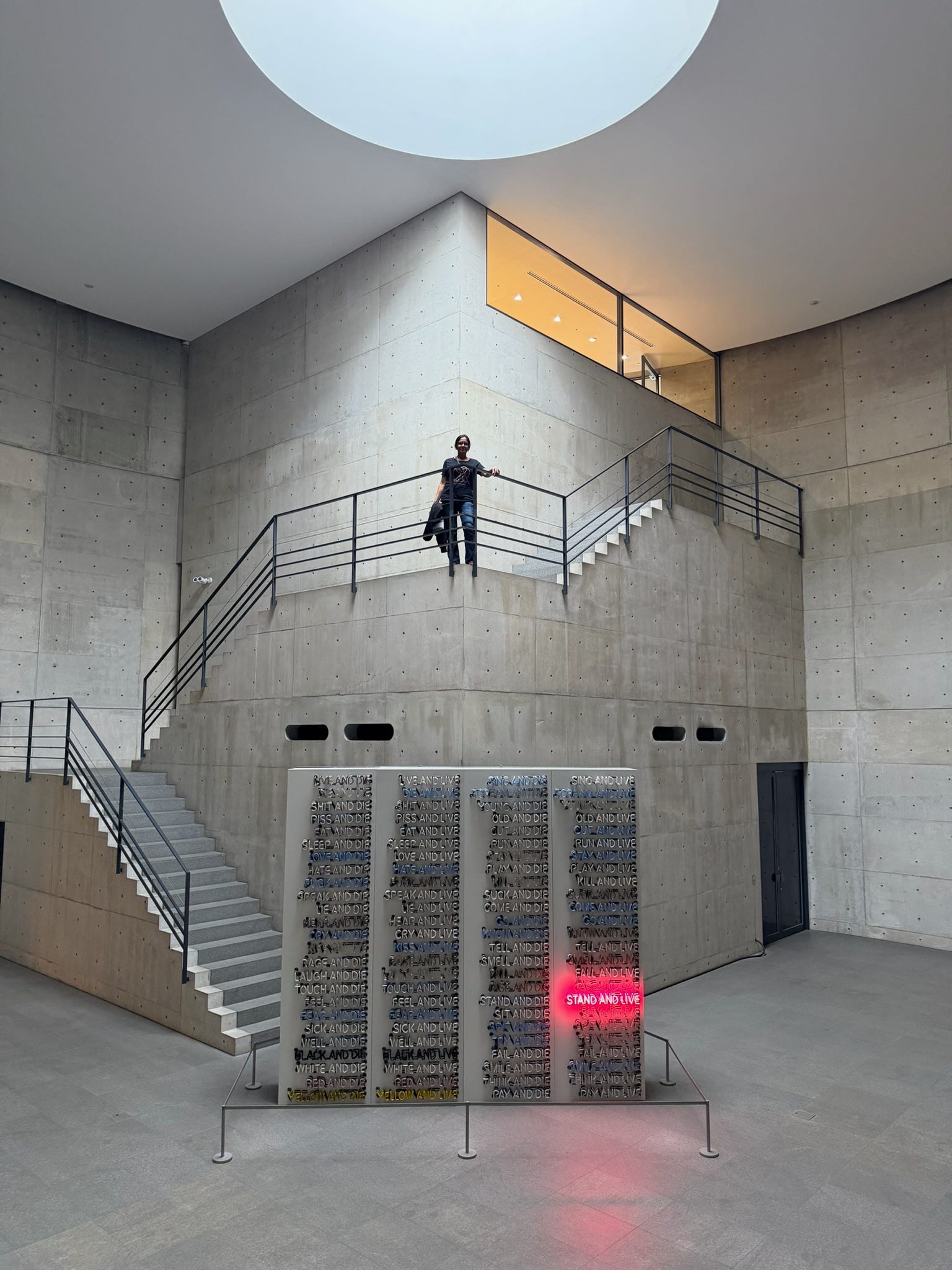
We arrived in Naoshima and immediately headed to Benesse House Museum, the only one open on Sunday. I was beyond excited to visit. Once inside, we were rewarded with picture windows into the circular atrium. I instantly knew I had to climb the stairs that led to nowhere. At the top, I had to laugh. Ando had made that spot the perfect vantage point from which to spy the reception desk through a perfectly placed picture window. I could almost hear him whisper, “Here’s your reward for climbing these stairs.”
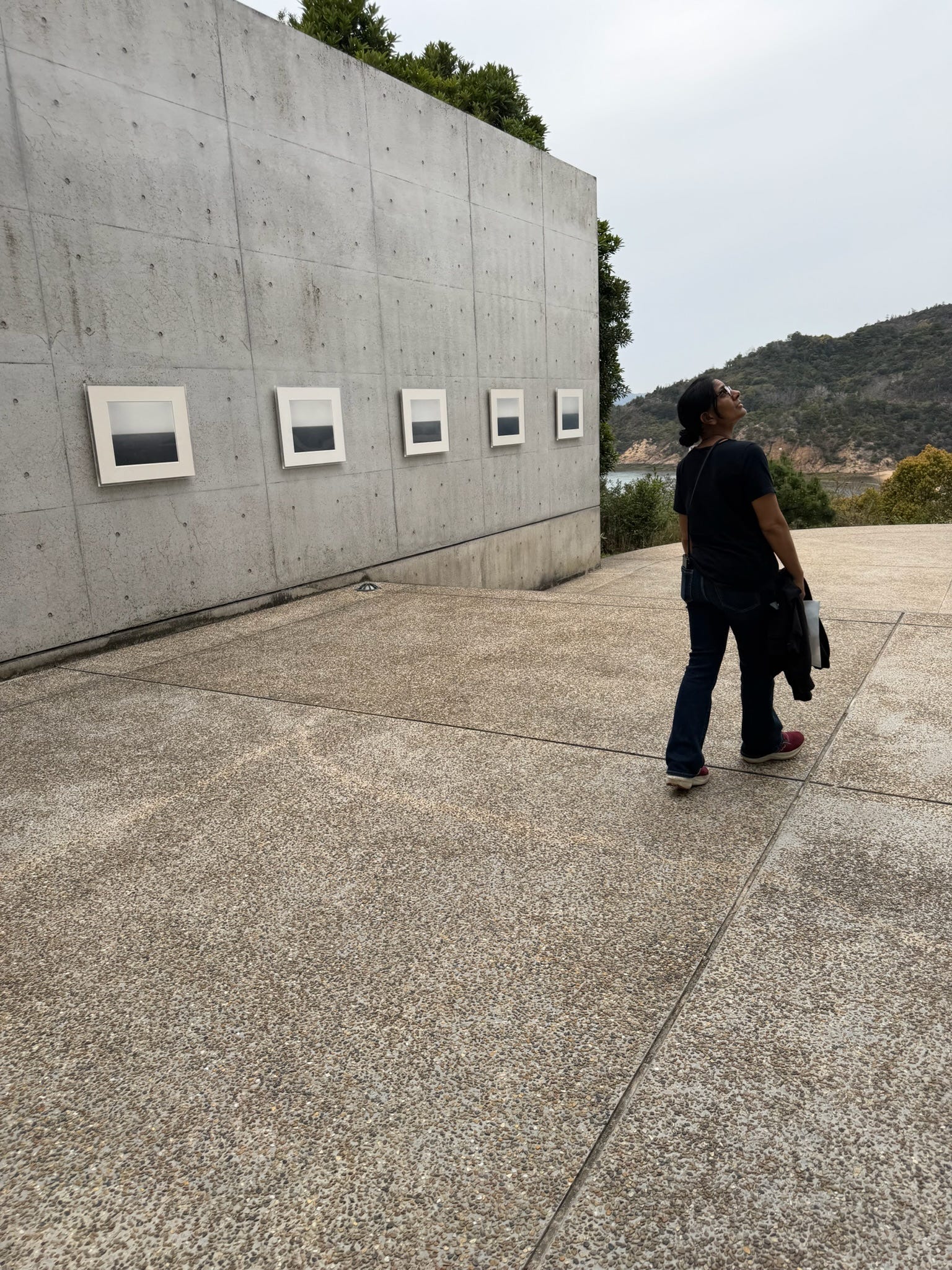
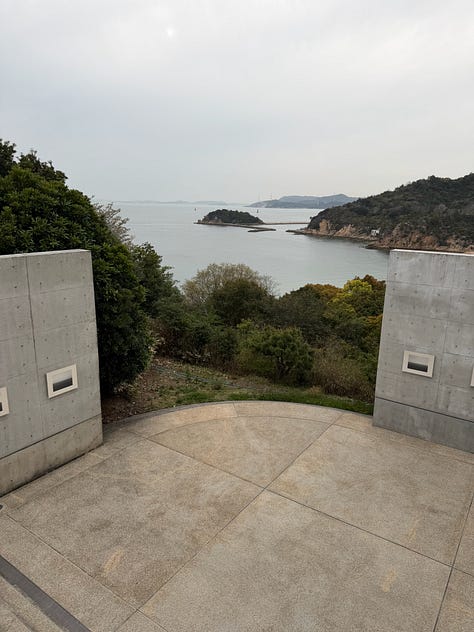
I heard Ando whisper something else: “I’ll reveal the sea when you’re ready for it.” Ando framed the view of the Seto Inland Sea with curved concrete walls, on which are displayed Hiroshi Sugimoto’s “Time Exposed” series — photographs of liminal seascapes that are perfectly offset by the gray concrete walls as they lead your eye to the real seascape in front of you. Looking at his photographs and then the sea, I could feel my body floating in the water.
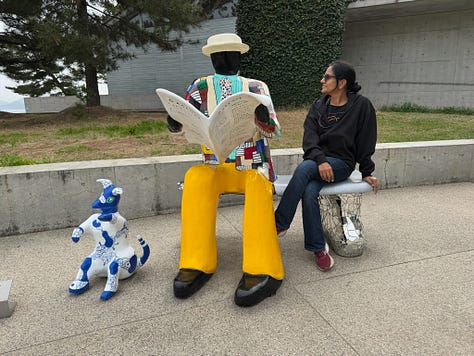
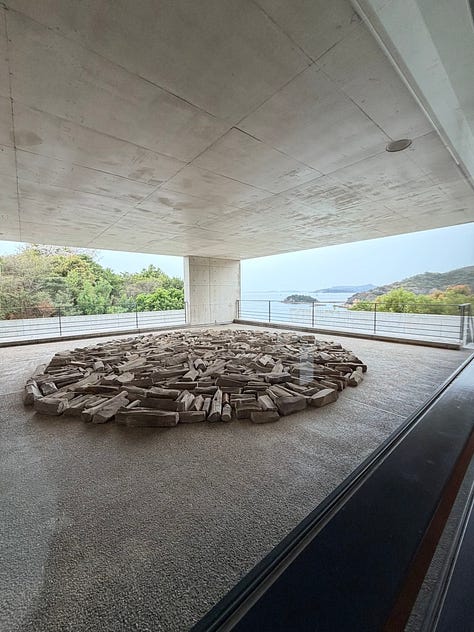
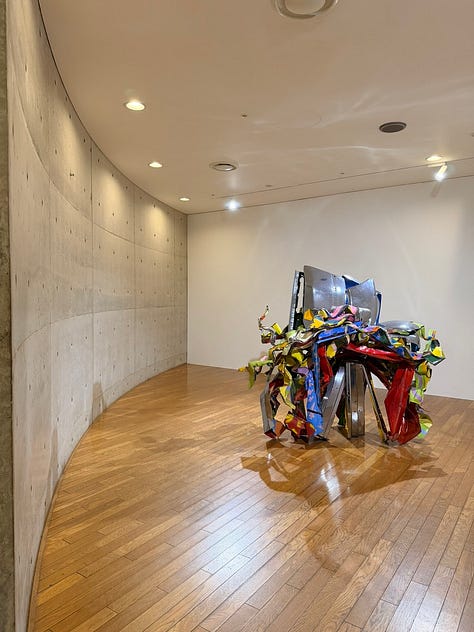
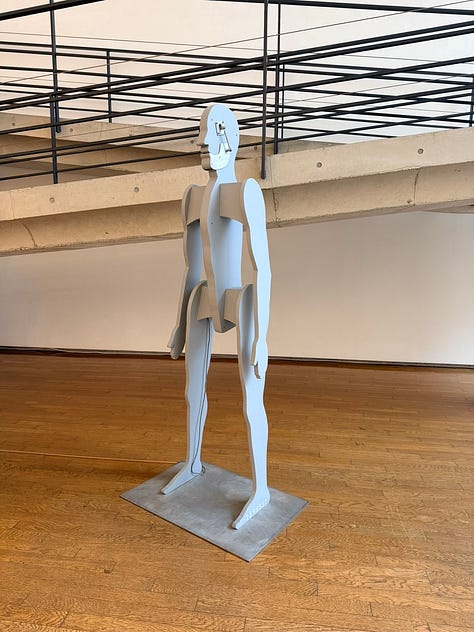
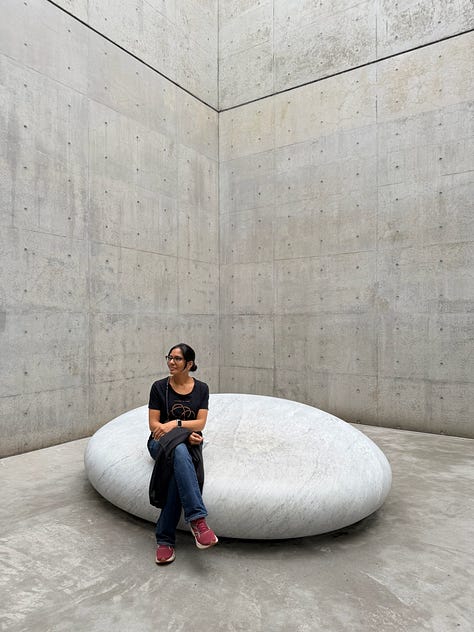
For details from Benesse House Museum and the rest of my Japan travels, follow me on Instagram.
Monday brought total immersion: four Ando buildings that took us deeper into the earth, and his world.
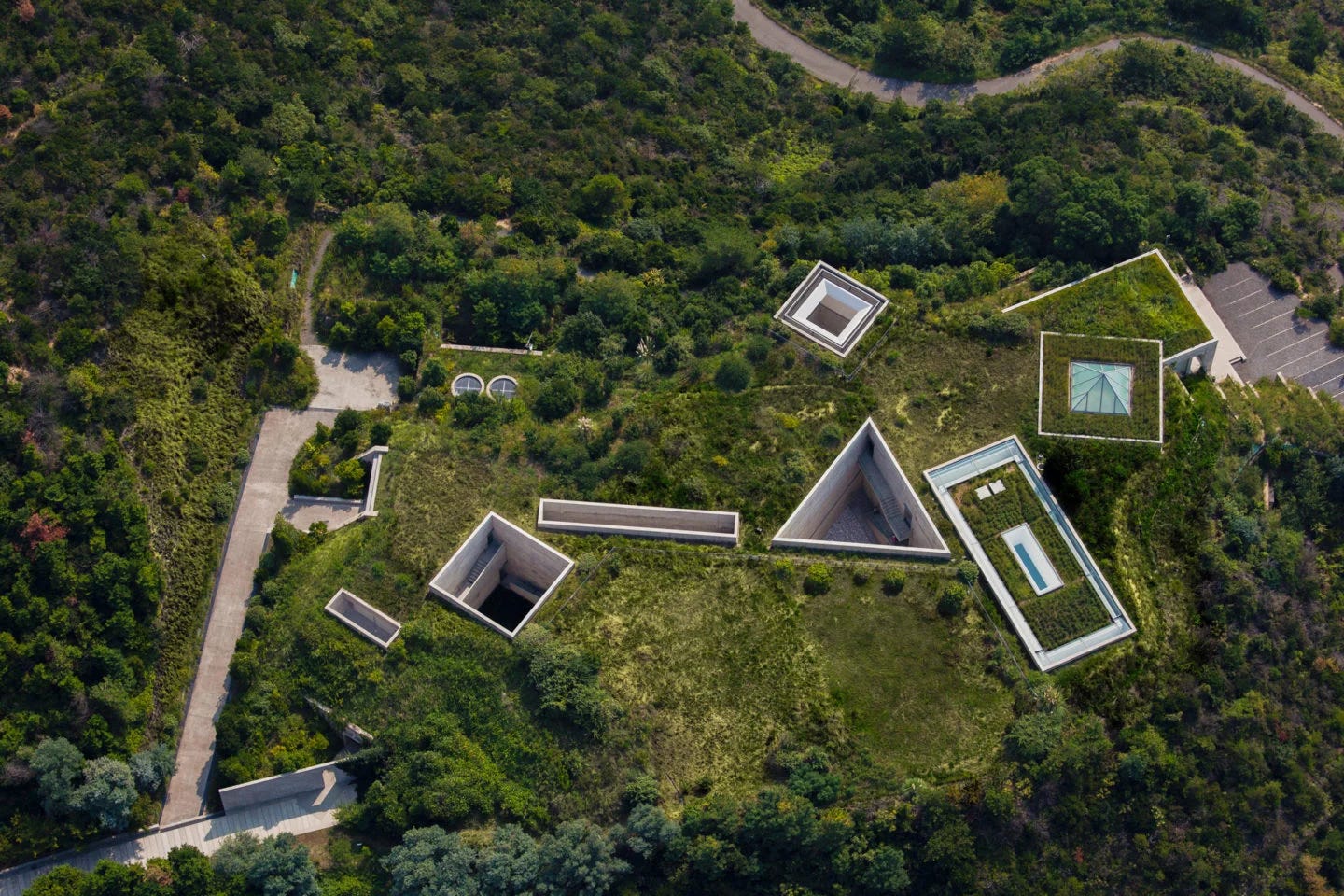
Ando buried the Chichu Art Museum underground to preserve the island’s natural landscape. From the sky, it looks like a didactic puzzle that teaches toddlers their shapes (parents: amirite?). The aerial view reveals that Ando designed each gallery to be lit by a single, precisely calculated light source — geometric skylights that transform the interiors as the sky changes overhead.
After walking through a slightly darkened and narrow corridor, we were shunted into an open courtyard. The only way to go is up an integrated staircase at the periphery, into the upper floors. There the first of three experiences greeted us. We were asked by the visitor assistants to remove our shoes and wear slippers before entering a single room edged with slivers of daylight from above. And hanging in all their glory are five versions of Monet’s Waterlilies. I gasped in surprise.
The family and I studied those paintings as best we could in the gray daylight before moving to the second highlight, Open Field by James Turrell. We stood at the base of stairs gazing at a blue projection. After a few minutes, the exceedingly hospitable visitor assistants encouraged us to climb the stairs and then, amazingly, step into the light. It was not a screen but in fact a cavern. It felt like entering a sacred tomb. I held hands with my kids as we watched the ethereal light cycle through the rainbow.
But it was Walter De Maria’s Time/Timeless/No Time (2004) that was my absolute favorite highlight.
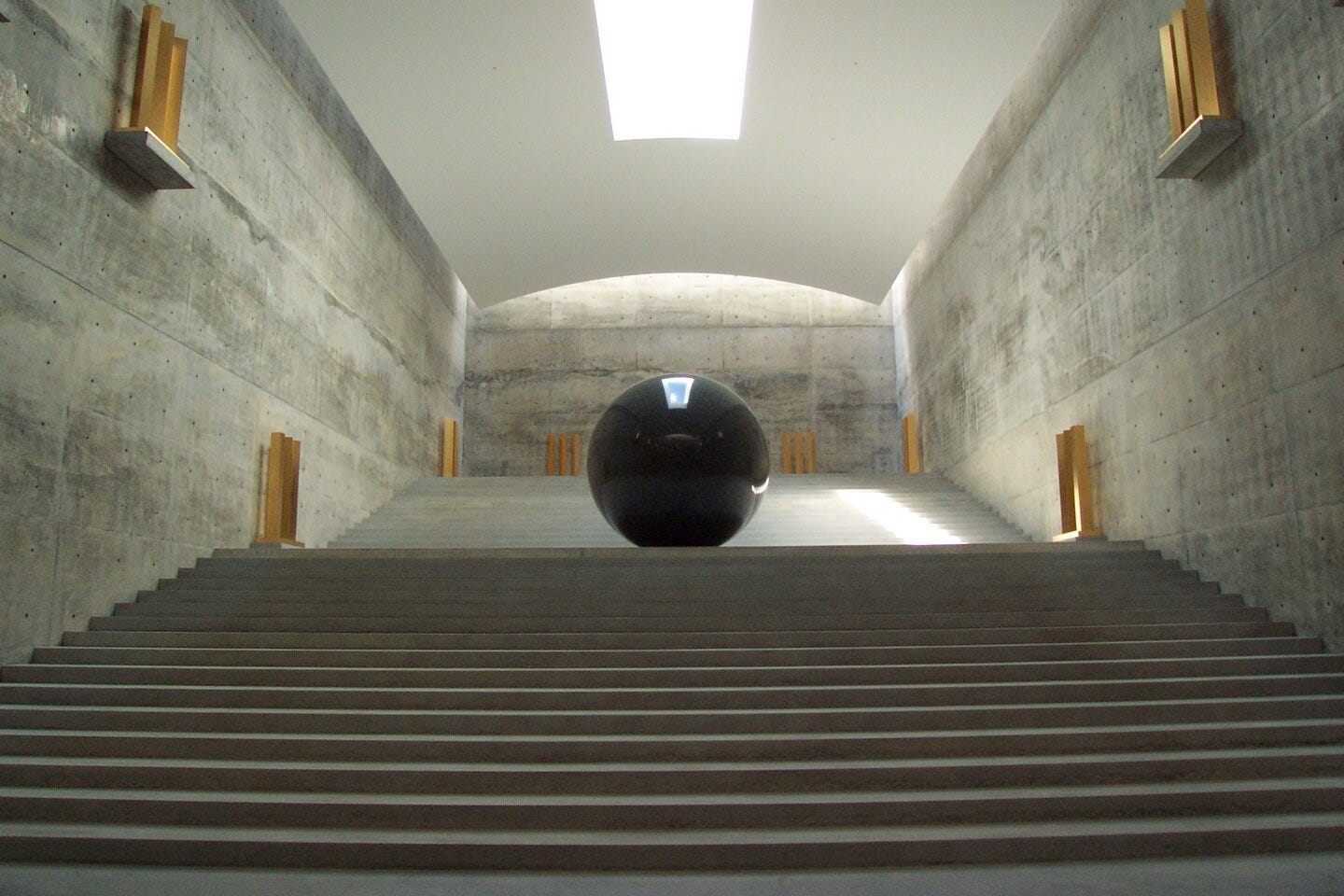
De Maria’s installation tickled my art-and-science heart in the most delicious ways. It hearkens back to classical and Renaissance canons with its specific references to sacred geometry and mathematical precision. The gilt wooden posts scattered around the room are each shaped in cross-section as triangles, rectangles, or pentagons, arranged in specific combinations that felt both random and inevitable. The giant orb at the center reflect these geometric forms, lit by the daylight masterfully filtered by Ando. As my daughter adroitly observed, they looked like windows in a church clerestory.
Standing there, I felt like we were in a modern temple. It felt sacred and glorious — the combination of De Maria’s mathematical precision and Ando’s choreographed light creating something that bypassed intellectual understanding and hit my senses directly. I wanted to stay there forever.
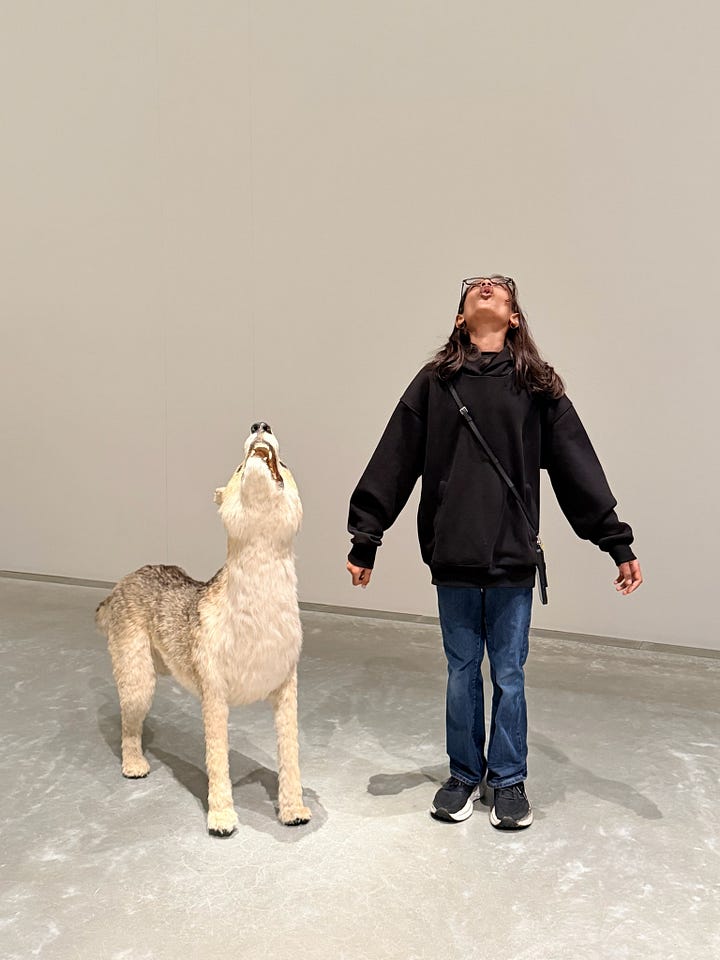
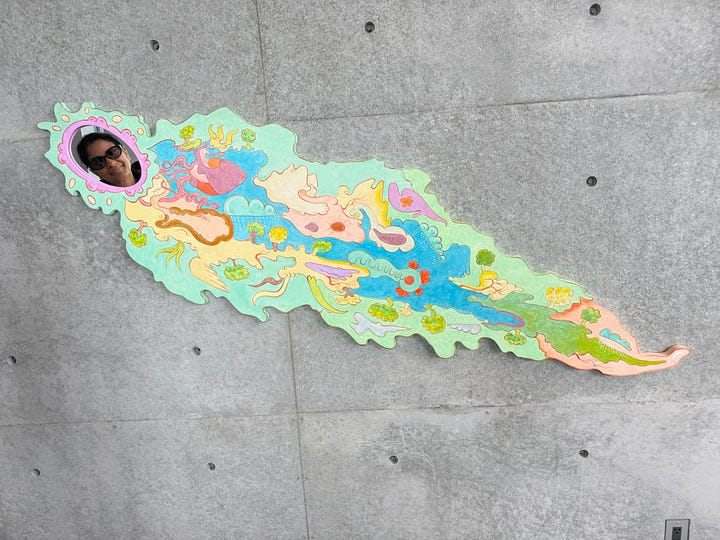
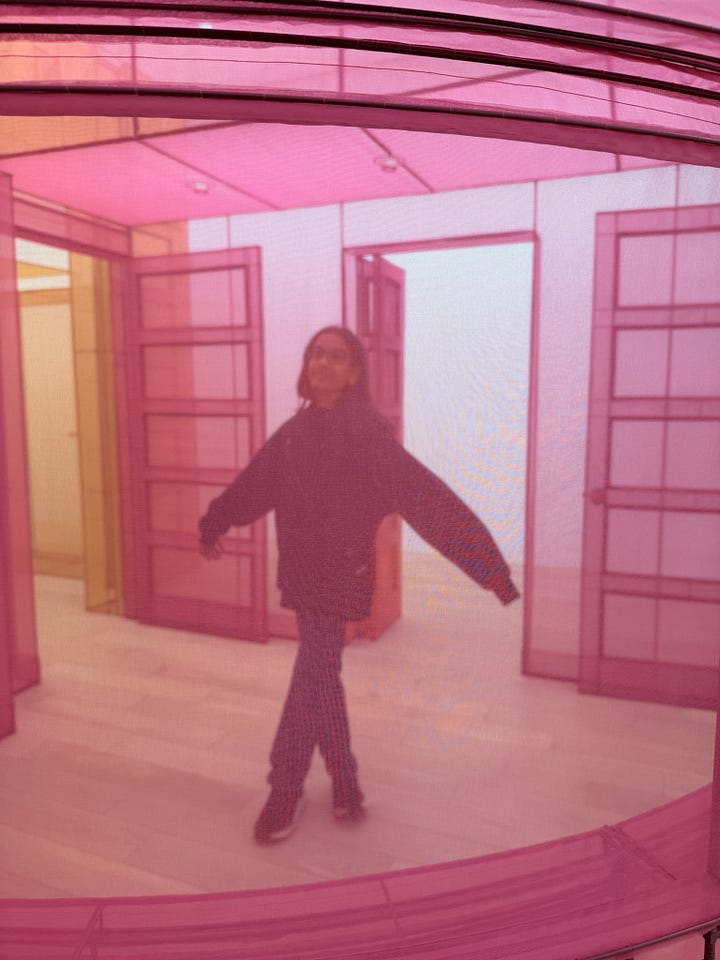
If Chichu offered an intimate, ethereal experience, the Naoshima New Museum of Art was the complete opposite. As with Benesse, Ando buried two of the building’s three floors so the outline barely disrupts the terrain. He uses his signature concrete as well as black plaster, glass, and pebble walls to integrate the architecture with the surrounding nature. The galleries are expansive and well-lit, whether by artificial or natural light, in keeping with the museum’s dedication to contemporary Asian art.
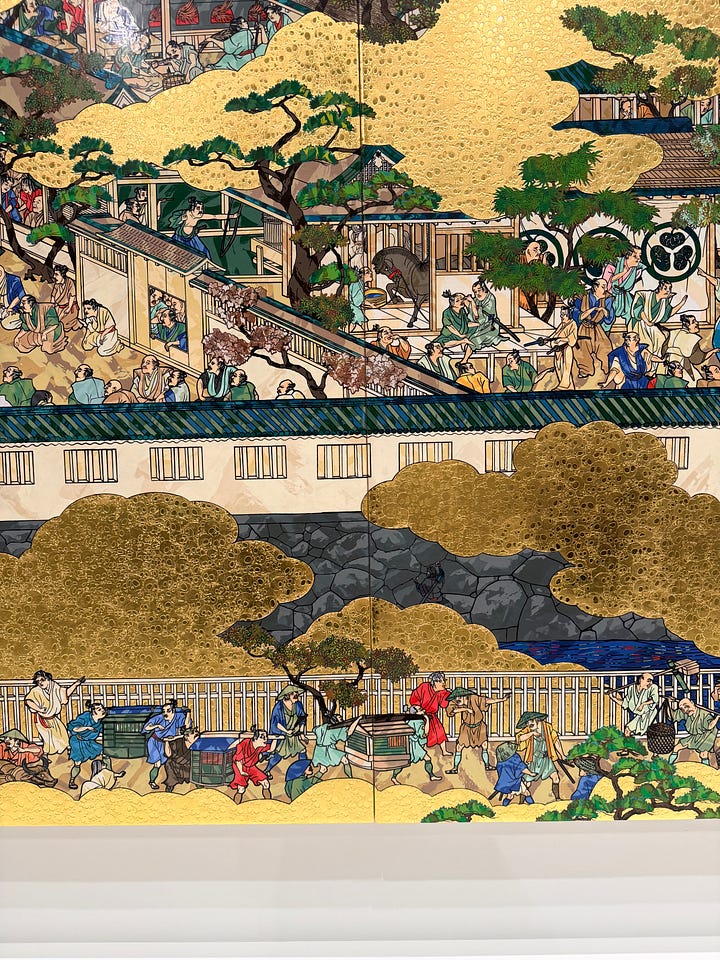
The inaugural installation, “From the Origin to the Future” (still on view), consists of site-specific large-scale installations, and we were gratified to immerse ourselves in so many great artworks. There was a sense of fear and urgency as we walked through Cai Guo-Qiang’s installation of “Head On” (2006). Murakami settled a family debate that had been raging since we visited Nijo Castle in Kyoto two days earlier: could ninjas actually breach those walls? Murakami’s monumental work included that exact scenario (see image), and we burst out laughing as our kids proclaimed victory. Part of Do Ho Suh’s “Hub/s” (2025) recreated a NYC apartment (specifically, 455 W23rd St, apt 15C) that was so similar to our own Brooklyn place, right down to the peephole security box on the door. And there was pride in seeing South Asian representation with N.S. Harsha’s “Happily Married Life” (2025) in the cafe. Despite standing in a foreign place, NNMoA gave us a sense of belonging, confirming that we are not just New Yorkers, but also global citizens.
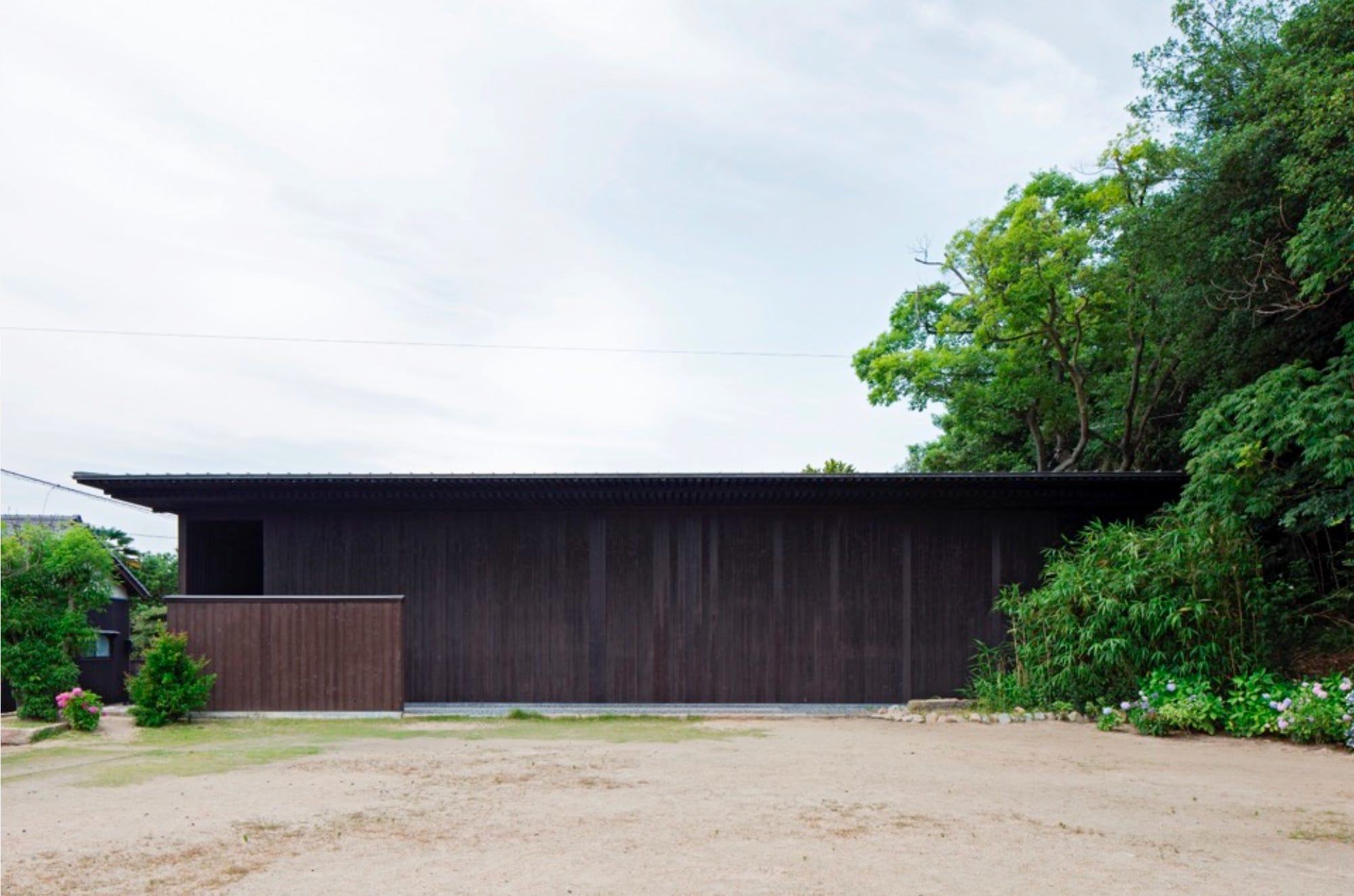
Minamidera was designed by Tadao Ando to house another work by James Turrell, “Backside of the Moon” (1999). It is located in an area that was once home to five temples and shrines and the ruins of a castle. The name “Minamidera” (“southern temple”) pays homage to the temples which once stood here. As we queued for our entrance time, the visitor assistant gave us instructions on how to navigate the space. Use your hand on the wall to guide you. Find the bench. Sit down and look straight ahead. Unlike the other Turrell experiences, this one is in total darkness. I was nervous. I could smell the wood facade as it baked in the sun. Gradually, I became aware of near-infrared lights rotating over us to help eyes adjust. They created the eerie sensation of being spotlit in an invisible performance, or an interrogation room.
And then, a faint blue rectangle appeared, as if out of nowhere. Though I had been preparing for a moment of revelation from the moment I sat down, it still made me gasp out loud. The visitor assistants invited to approach the color field. Once again, the field was not two-dimensional, but another cavern, this time at midsection height. We extended our hands into the blue. The air was cooler, the tannic smell of sun-baked wood absent. I felt as if I was vibrating with the light’s wavelength.
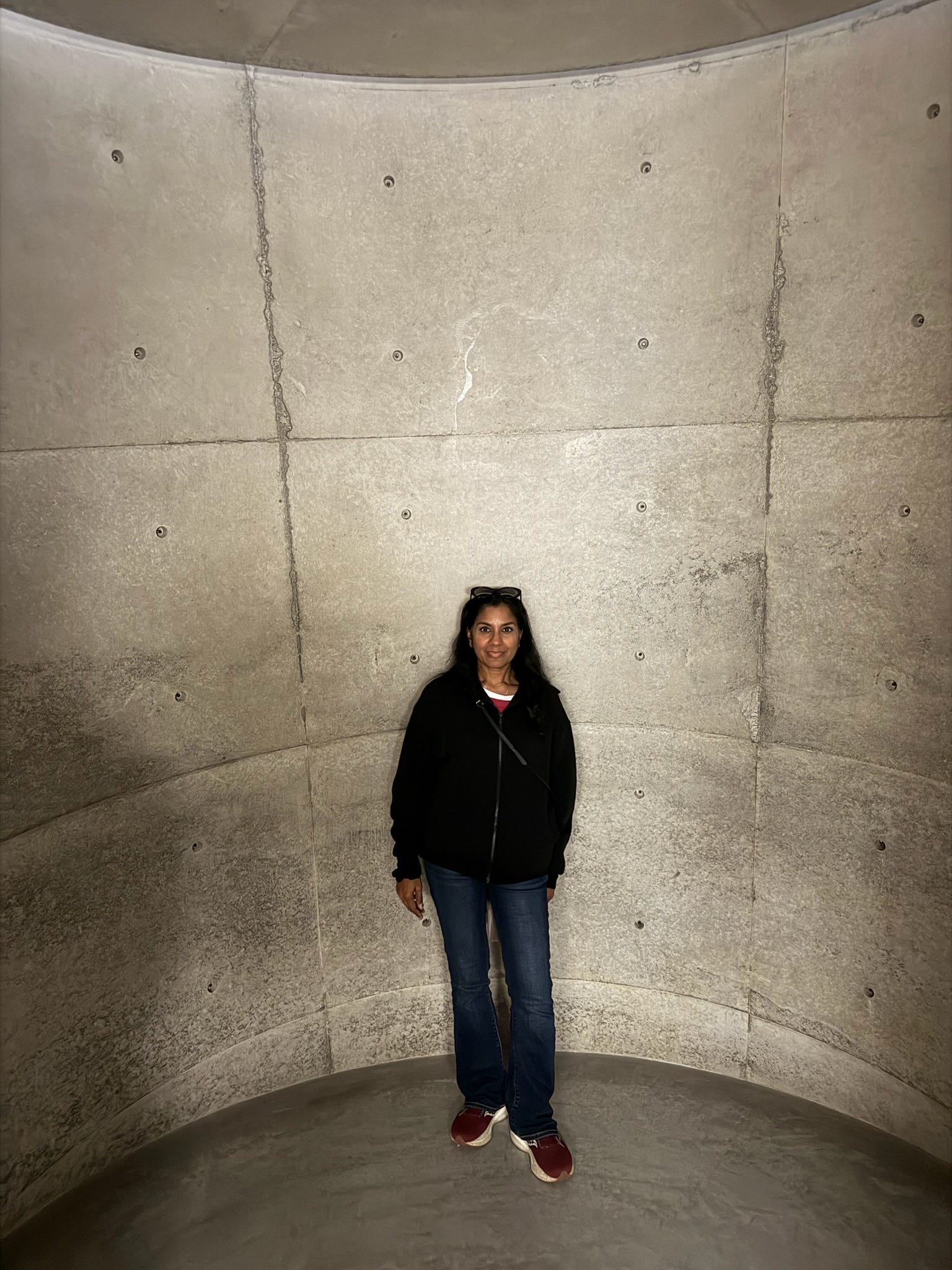
Our final stop was the Ando Museum. Here, Ando had inserted his concrete volumes into an existing structure — this time, a traditional Japanese wooden house… an intervention that felt deeply familiar after Wrightwood 659. There were surprises at every corner. A slanted wall, a stairwell with a mere horizontal slit of a window, a silo in the basement where our voices echoed. And the subtle transition from the scent of pine to petrichor as we descended, imbedding the memories even more deeply.
There’s more where this came from. Thanks for reading and sharing.
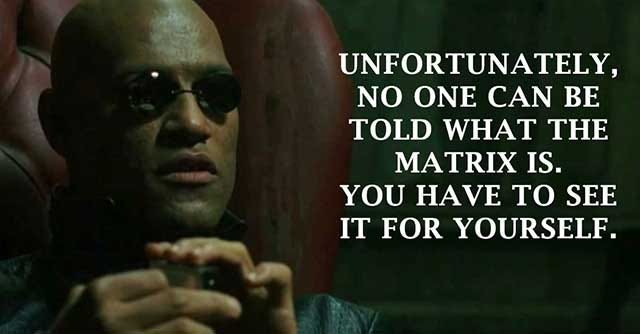
In reflecting on our visit to Naoshima, I am reminded of what Morpehus says to Neo in The Matrix (1999): “Unfortunately, no one can be told what the Matrix is. You have to see it for yourself”. This is absolutely true for so many of Ando’s buildings and the art they shelter: true understanding requires direct experience rather than just theoretical knowledge.
To quote Ando, “Architecture must be felt from within. It’s a physical experience.” I hope you get to experience his “Matrix,” too.
Comments
Nothing yet. Say the first thing.
Sign in to join the conversation.