
Part 1 of this essay can be found here.
We have now examined the causes of the Indian Dream of “Escaping” India, explored a historical precedent in the United States, and familiarized ourselves with the two different forms of “Escape” from India - Gated-Societyism and Visaism. This next section is meant as a deep dive into the consequences of the more interesting and consequential of the two - Visaism.
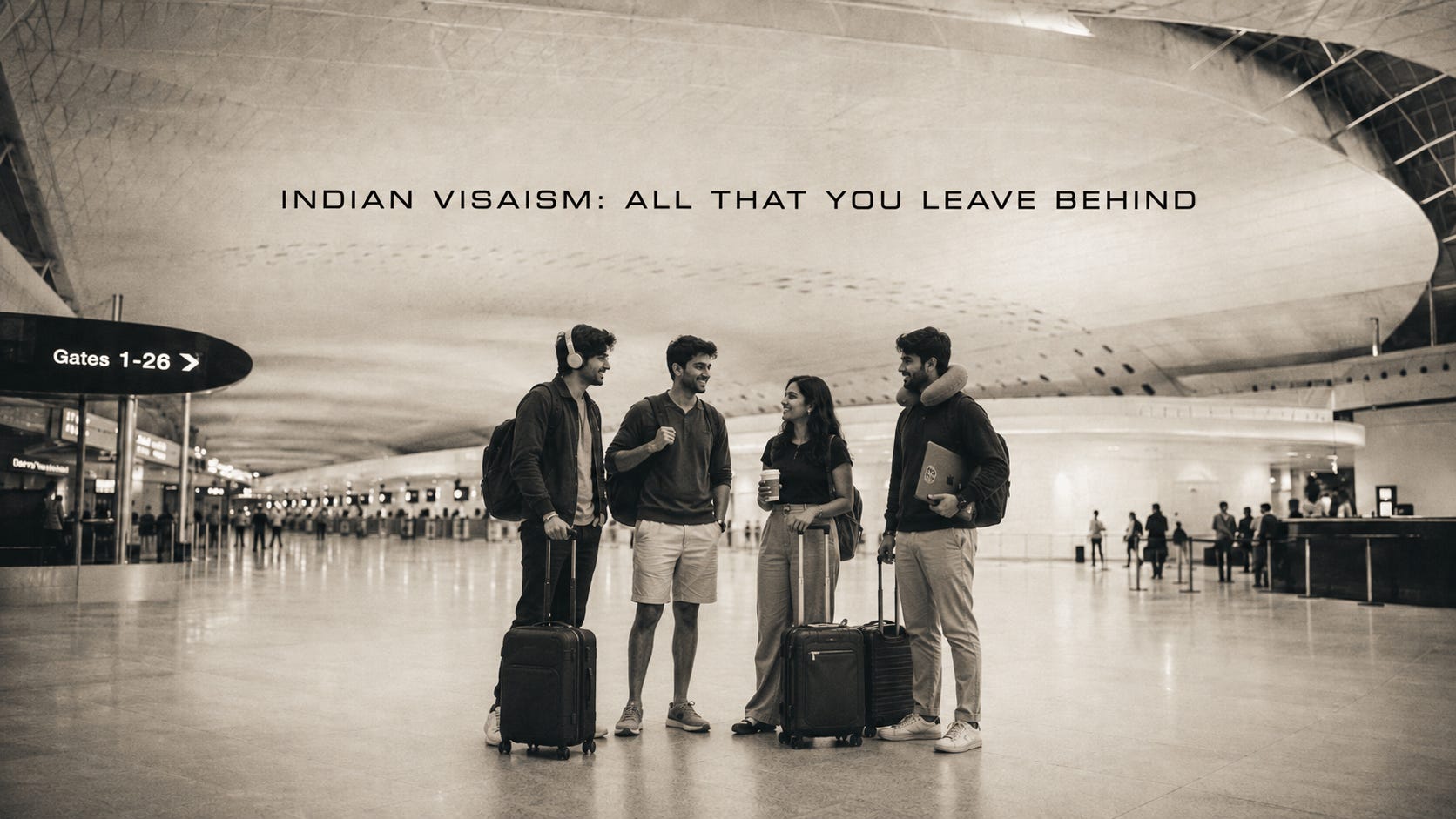
And how can something like Visaism not have a deep impact on a society? After all, if it becomes a religious impulse to desperately want to “Escape” from a society, it creates a perverse set of incentives for people at every level of that society. First, it absolves the rich from their responsibility of giving back to those below them through capital expenditure and charity. It prevents them from wanting to invest in the well-being of the country, both materially and spiritually. For the masses, it also creates a rat race for getting out of a fast-sinking ship. From the point of view of the masses, if the ship is indeed sinking, and there are only a limited number of slots in the emergency boats, then they have to grab their own spot, whether by hook or by crook. It also means that the masses know that their own nation’s Elites are looking to jump ship at all times - that the Elites have one foot in the door, and one foot outside it. In these circumstances, there is no chance for the creation of a sense of moral unity between the Governed and the Governing, which is my definition of Legitimacy for a Regime.

In short, the kind of society that one would expect to be produced in an environment where both the Elite and the Masses are permanently looking to “Escape”, is the kind of society that India has produced - Low Trust, petty, and corrupt at the most microscopic of levels, and completely nihilistic about even the possibility of change.
The first thread to pull at with the concept of Visaism is that Indians seem to be particularly well-suited to be “nowhere men and women” in this age of mass globalization. We all know how and why “nowhere men” come into being. They are products of Modernity, of immediate access to information and images from around the world. Both you, dear Reader, and I are also permanently under the effect of these same forces.
We now live in a world where the definition and reality of the “local” has become largely incoherent. This is a world where a young Telugu kid in Hyderabad can be exposed to visuals of the quality and luxuries of life that a similarly-aged person in a developed country is experiencing, all at the press of an app on their smartphone. Concurrently, every single young person in Panjab is being fire-hosed with images of the lives of their school friends and family, who now live in places like Canada and the U.K. How can these young men and women not be completely consumed by jealousy and regret? How can they not curse the “accident of birth?” In many ways, the proliferation of these kinds of visuals on the internet represents a special kind of mental and emotional cruelty inflicted on people growing up in the developing world. They see others who are of the same age as them, living lives that are unachievable for them, no matter how hard they try. The only, small, way out for them to achieve it is to just try to “Escape”.

Consequently, the historical idea of a localized “community” has degraded to the point where it is almost non-existent now. Localized “community” brings localized responsibility and localized benefits. While every local community in the world has been struck by this lightning bolt of technology, there is something about this that has struck Indians uniquely. Perhaps it is a cultural thing, perhaps it is just the result of how large and populous and competitive India is, or perhaps it is a result of India’s complex and meandering history. But the reality cannot be denied. It says something about Indian society and Indian culture that has made us the most prominent and numerous Visaists in the world, but I’m not sure what exactly this something is…
Our next thread to pull at has to do with the average Indian’s conceptualization of the idea of “civilized behavior”. The first question we must ask ourselves, and try to honestly answer, is:
What percentage of Indians today are civilized and/or self-governing?
What percentage of this self-governing subgroup would continue to be civilized/self-governing when no one (the law, an authority figure, etc.) is watching?
The truth is, modern Indians equate civilized behavior with “existing” in Western, civilized countries. It is something special you do when you are in a Western country, not a code of conduct that is morally righteous in and of itself. Being in civilized countries seems to turn on a hidden switch within Indians, which somehow magically allows them to conform to that society’s code of “civilized behavior”.
That packet of chips they would’ve thrown out of their car window if they were in India? They tuck it into a bag with them when in the West.
That quick leak they took in the bushes in India? They’ll hold their bladders when in the West.
It seems, looking at things plainly, that Indians are only capable of being civilized if they are under the influence of, or surrounded by, White people.
Now, as most of my readers - who I assume to be capable of being self-governing individuals - will know, the truth about “civilized behavior” is not complex. Being truly self-governing is not dependent on one’s location or one’s company. One can be a Self-Governing person even if they are standing in the middle of an urban Indian slum. It is not about where you are or who you are with. It is about your own sense of self, and your own internal will and discipline. A good visual that might help the reader at this point is to picture a 19th-century British administrator as he is walking down the street of a small Indian town. He is surrounded by India’s medieval and colonial squalor, but it does not affect how he carries himself and interacts with those around. His sense of self-governing existence is independent of his surroundings…
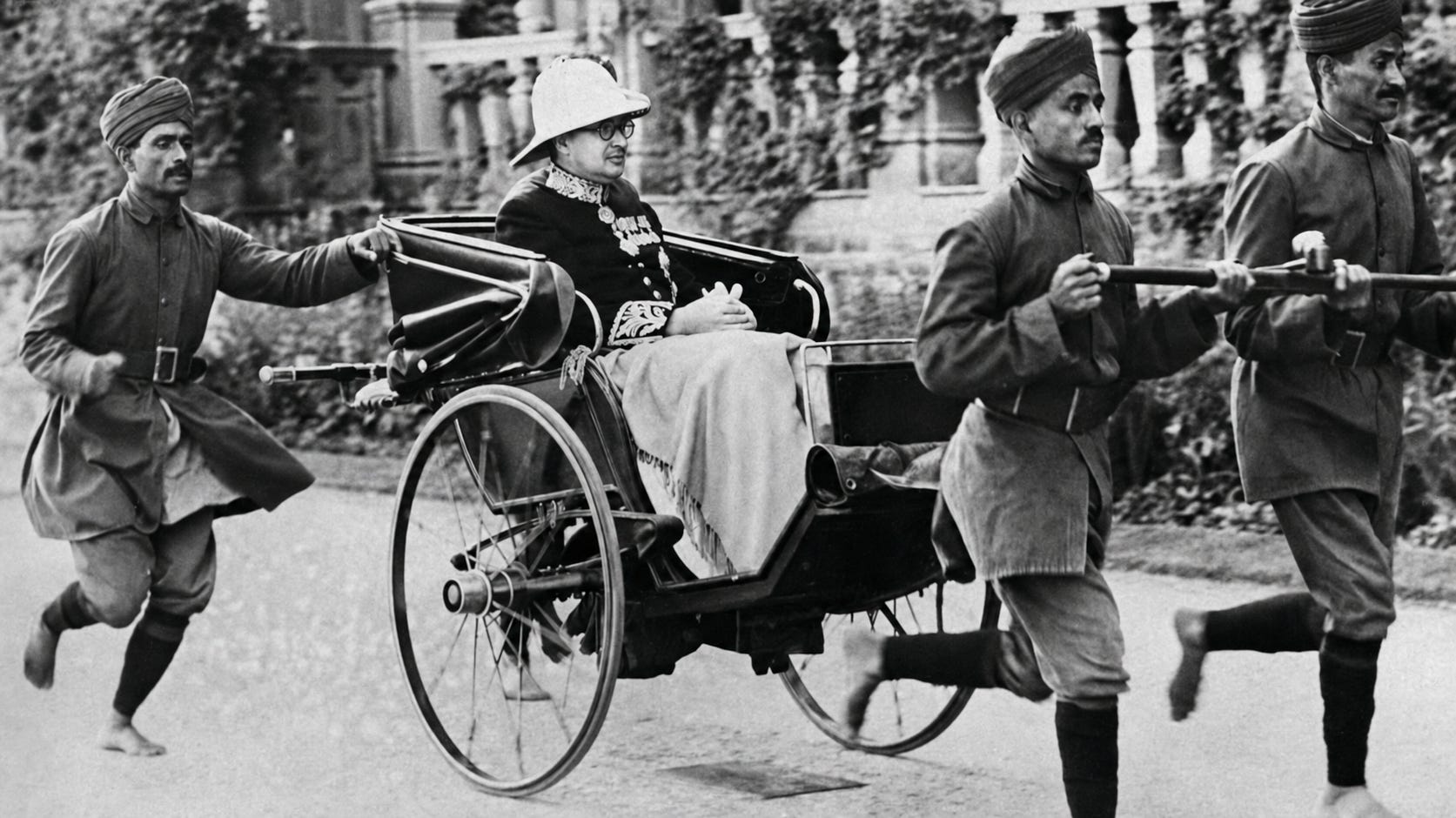
Westerners have created the Self-Governing Man over decades and centuries of technological, social, and political evolution. It has taken countless iterations and trial-and-error to achieve this standard of Self-Governance that the rest of the world - even seemingly antagonistic countries like China - all seek to mimic. In comparison, the modern Indian process of becoming Self-Governing - Indian Self-Actualization - seemingly cannot be attained within the geographical constraints of India. In what is a great mystery, this process of Indian Self-Actualization can only truly take place when an Indian becomes a Visaist. India - and all her Squalor - seems to be a set of chains that are holding the average Indian back from becoming civilized. And this is one of the great tragedies of Modern India.
The next branch of our idea of Visaism is a phenomenon that I like to call “Exist in a Beautiful Place-ism”, which has penetrated the Indian upper classes as fiercely as crack cocaine took over the urban African American community in the 1980s. Simply put, for a lot of upper-class Indians, the point of life is simply to “Exist” in a beautiful city in developed countries. It doesn’t matter if you have to live lives of relative poverty or struggle in your new location. It doesn’t even matter if you have to borrow from the wealth of your parents to do so. In this way of thinking, life is not really worth living or worth telling a story about unless you “Exist” in a developed country, where the air is already clean, and the streets are already paved, and the people around you are already Self-Governing.
You could be performing tasks that are mundane and can also be undertaken in an Indian city - going to a restaurant or a bar, meeting up with friends or family, going shopping for clothes or groceries, etc.. You could be meeting the same people or social class that you could be meeting in an Indian city. But the crucial part is - you are performing these same mundane tasks in a place where Beautiful Lives can be lived and Order has been pre-established for you by other groups of People. The place is what is important, not the tasks being performed.
From my point of view, this ideology of “Existing in a Beautiful Place-ism” contrasts heavily with the creed and behavior of the average person who has grown up in a developed country. It might be helpful for the Reader to commit to a thought experiment at this point: What would happen if you took one hundred average citizens from a completely nondescript American city like East Palestine, Ohio, and airlifted them squarely in the middle of an Indian city? What if you then gave them their own isolated neighborhood and the ability to restrict outsiders from coming in or out? Essentially, this population would be free to dictate and decide on the laws and regulations of the area they’re governing.
In my opinion, in twenty years, this one neighborhood would look completely different from its surroundings. We all know this, because the people who’ve grown up in High Trust Societies are used to fixing problems. They take for granted countless intangibles that they have inherited from the trial-and-error learnings of their ancestors, and that people in developing countries would never be able to achieve on their own. In the minds of those who’ve grown up in High Trust Societies, it is almost taken for granted that societal problems are meant to be addressed “Directly” and collectively, and solved. If an individual is not following the law and breaking the Trust of everyone else, then this rebel is socially ostracized and punished accordingly.
The contrast between the Self-Governing Westerner and the Dependent (on Western Self-Governance) Indian gives us much food for thought. When an Indian “Exists” in a city or country that already contains a High Trust Society, he tries to embody the spirit of the People who created the Order in the first place. But there is an asymmetry to this performance. The Indian doesn’t truly know how to embody this spirit. His ancestors didn’t build the High Trust Society that he now “Exists” in. If he wanted to, this Indian couldn’t go back to India and create a High Trust Society there through his own hard work and ingenuity. He doesn’t know how it would even get done. In this sense, the Indian is spiritually more of a visitor to the High Trust Society than an actual contributor.If this hypothetical individual came back to India, he would immediately revert to Low Trust behavior, because the society around him would compel him to do so and because simply “Existing” around High-Trust Westerners does not make you one yourself. In a sense, this can be considered an international variant of code-switching.
Someone like Vivek Ramaswamy comes to mind when conducting this thought experiment. He is a second-generation Indian American who has lived the American Dream (because his parents lived the Indian Dream - achieving Escape through Visaism - before him) by all metrics. But when he tells Americans about how they don’t “work hard enough”, there is something about this that makes him sound really hollow, even to the objective observer. It flows into how Indian Visaism is received in the host country, which is a later topic in this essay.
The next obvious consequence of Visaism for India is that it results in a Brain Drain of epic proportions. It is a process through which some of the most capable and talented people in India leave the country in the thousands every year. It is a removal from Indian politics and economic life of a group of people who, if they had grabbed the chance and opportunity to organize, could have created a Counter Elite in India that could replace the bumbling Legacy Shuddho Elite, who inherited the reins of India from the British in 1947, and ran this British-built system on autopilot for the next sixty years.
In the decade since the “opening” of 2014, Shuddho has been displaced from their pedestal of being the natural rulers of India. But this does not mean that a new Counter-Elite has risen to take their place. The 19th century British State trudges on, like a tedious glacier, and while the political parties continue to win elections, there has been no new Elite that has risen to a stature of moral and intellectual leadership so they could replace Shuddho as the “null-hypothesis” of Indian politics. There is still a giant vacuum in Indian politics for a collective Dream that could inspire millions of young people into spectacular and creative action, something that could strike bolts of energy into the body politic and energize the indifferent middle classes towards action to improve their communities and the nation. The State itself remains firmly in control of Babus and Judges, who represent the immovable inertia of the State, and functions in the manner of an endless staircase, or a Penrose Staircase.
This lack of substantive moral leadership can be seen in issues like India’s Urban Squalor Omniproblem, which we discussed in part 1 of this essay. One of the reasons for the permanence of this Omniproblem is the fact that there is simply no incentive - political, economic, social - for the political and administrative authorities to forcefully change their behavior. There is no organized body of citizens, activists, or donors who consider the Indian Urban Squalor as their only issue, and who hold the ability to punish and extract costs from the politicians and bureaucrats who’ve either created the Omniproblem, or lack the will to fix it. These pressure groups already exist in developed countries, where problems like this have often already been solved. We know these groups by concepts like “Civil Society” or “Domain/Subject Matter Expert”.
In this sense, a constant and persistent bleeding of a large group of competent people who could create such pressure groups is a crippling loss for India and her overall polity. Instead, these people have “Graduated” to sit in profitable but invisible corporate jobs in Western countries, embodying the spirit of LinkedIn Americans and their insanity.
From the Visaist point of view, it makes sense to treat India as a waiting room at an Airport Departure Lounge. A place where one is simply passing through, with their place of departure on one side, and their destination on the other. After all, there is a ceiling to what can be achieved in India, a very low probability of achieving the kind of quality of life one can get in developed countries, and an almost insurmountable amount of work that needs to be done to “fix” things.
Plus, everyone you knew from school has already left, and so has half of your family.
What will you do here in India if everyone you know in your life no longer even lives here?
The rest of the world is now just a short flight away.
What does India get in return for subsidizing this education and Escape of the Visaist? It gets the petty compensation of remittances. The large amount of remittances are the Visaist’s first line of defence when they are confronted with their hypocrisy and selfishness. And sure, no economy will say no to remittances. But there is something fundamentally wrong in a nationalist sense to view remittances as a major pillar of national economic growth. Remittances can help the families of individual Visaists get some much-needed, short-term economic relief, especially in the case of poor Indians who travel to the Gulf countries to do menial work, but they offer no long-term benefit to the larger economic and political body of the country. Remittances are also not a real compensation for the immediate and potential benefits of having a high-performing and talented person working within India. The latter can, if the circumstances are right, have a multiplier effect on their society and community. Remittances can never compensate for this loss.
As I pull together all these threads of this section, I cannot help but think of this passage from V.S. Naipaul in An Area of Darkness,
Eighteenth-century India was squalid. It invited conquest. But not in Indian eyes: before the British came, as every Indian will tell you, India was rich, on the brink of an industrial breakthrough. Indian interpretations of their history are almost as painful as the history itself; and it is especially painful to see the earlier squalor being repeated today, as it has been in the creation of Pakistan and the reawakening within India of disputes about language, religion, caste and region. India, it seems, will never cease to require the arbitration of a conqueror. A people with a sense of history might have ordered matters differently. But this is precisely the saddening element of Indian history: this absence of growth and development. It is a history whose only lesson is that life goes on. There is only a series of beginnings, no final creation.
Seeing the explosion of Visaism reinforces Naipaul’s claim about India. It is hard not to rue the fact that the current burst of energy that we’ve seen in India since the early 1990s could end up being yet another in a long line of “beginnings”, leading to no final creation within India itself, as most of the fruits of the growth that will be planted in India will be harvested abroad. Indeed, this will be the result if we do not work to reverse the current state of things.
Now that we have explored the Visaism phenomenon thoroughly, it is time to better understand the people at the eye of this storm. When we turn our clocks back to 2014 - to the arrival of Narendra Modi on the national political stage in India and the concurrent emancipation of social media - we see that something fascinating starts to happen in the world of Indian Visaism.
An entire generation of Indian Visaists who had built their careers in the IT and tech boom in the 1990s-2010s started to suddenly wake up and realize that they wanted to contribute to Indian nationalism and the growing “Hindu civilizational consciousness”. I call them the AIR (All India Rank) Generation, as their entire life was defined by their All India Ranks in JEE or AIIMS or other competitive exams. We can call this way of being “AIRism”. This increased energy from Non-Resident Indians (NRIs)/Persons of Indian Origin (PIOs) from other countries coincided with a growing English-language domestic discourse of young, hungry, upwardly-mobile people in India wanting to match the same energy.
On platforms like X (then-Twitter), Instagram, YouTube, etc., there was an explosion of pro-India and pro-Hindu civilizational content from Visaists in countries like the U.S., Canada, the U.K, Australia, etc. It was met by a rising domestic voice and audience, and a small but powerful dialectic was created. This upswell of discourse was seen as proof of an increasing trust from Visaists towards a version of India that was starting to show signs of wanting to wade out of its permanent state of stagnation and entropy. In the last decade, this cohort of Visaist Indians and Hindus has spent their time, money, efforts, and more on these causes, and has added immensely to the Indian and Hindu discourse. Blogs and YouTube channels started and flourished, institutions established, an online “community” created - both in foreign countries and through the occasional meetups in India. There can be no doubt that a large number of Visaist Indians put their heart and soul into this discourse, and continue to do so even today. While people will obviously quibble about names and labels, for the sake of simplicity, we can call this phenomenon Visaist Hindutva. Or, Hindutva with Pardesi characteristics.
The trajectory of this group of people makes for fascinating reading. They are the children of the Indian Tryst with Visaism that picked up pace in the 1990s. Most of them left India with a sense of regret and cynicism, often against their will, because they were leaving their friends and families behind. Being witnesses to the sheer contrast of the permanent Chaos of India with the ordinary Order of the West, they would have likely gone through a period of intense disillusionment towards their home country and how it was governed. And that feeling would have been completely understandable.
At the same time, there is something genuinely admirable about these early Visaists. Taking the leap of faith that they did in the 1980s-1990s - in an era without the proliferated internet, stuck within India’s socialist stagnation, and with no certainty about whether things would work out for them. These early Visaists were pioneers in their own way. They showed a kind of appetite for risk and endeavor that had almost become a lost quality in the Indian soul in the last millennia. They were essential to India finally being able to smash through the ghost of the “Hindu Rate of Growth” in the 1990s and 2000s. Then, when the times started changing in India, these early Visaists embraced the new Indian energy of the mid-2010s. Just the mere possibility of change was enough to inspire them to care about their home country again.
It was a transformation that almost resembled the Evangelical Christian phenomenon of being “Born-Again Christians”. This phenomenon, which is a popular fable of the American Christian story, involves someone who was born in a nominally Christian family, but has lived a life to a certain point that was not compatible with Christian teachings. However, the individual then goes through a sudden, radical, and personal 180-degree transformation that involves them (apparently) obtaining personal communion with Jesus Christ, and finding Him as God again at a later age in life. Born-Again Christianity is an American cultural staple and is probably a specific example of the American tradition of religious revivalism, the most recent of which was seen in American Progressives (followers of a Godless variety of historical American Progressive Christianity) during the Black Lives Matter movement of the early 2020s.
From the perspective of our essay, it is more important to understand the structure and process of being “Born-Again”, rather than the content. The process of being “Born-Again” is one that places the individual at the center of the process. He or she is the one who strays from the “Truth”, and they themselves have to “rediscover the Truth”. A transformation of the heart that happens voluntarily is much more powerful than one that happens through external manipulation or guidance. The former is more “sticky” and permanent.

It is hard not to think of the Visiasts who rediscovered a love for India and Hindu civilization in the mid-2010s as having gone through a very similar process. Perhaps as a matter of survivor’s guilt from a group of people who caught a boat out of the Indian sinking ship while others simply couldn’t. Perhaps it was after a reconnection on social media with family or friends still “stuck” in India. Perhaps it was a direct inspiration from the new Indian energy that started to ferment after 2014, and a small opening to being able to contribute to ending the permanent state of Indian stagnation and squalor. Perhaps it was all of these things, and more.
But regardless of the reasons, a large section of erstwhile apathetic or cynical Indian Visaists were “Born Again” as nationalists in this period. They have made their presence felt in the online discourse about India, often even “returning” to India to play a small role in the new movement of people.
Culturally, there’s perhaps no artifact that embodies this phenomenon of Visaists “returning” to India more than Ashutosh Gowariker’s Swades (2004). Borrowing from various inspirations, the movie follows Mohan Bhargava (Shahrukh Khan) as he plays a NASA scientist of Indian origin in the U.S. In our parlance, he is essentially an early Indian Visaist. The storyline sees Mohan returning to Delhi and eventually Uttar Pradesh to find the nanny who raised him while he grew up in India. It is a story of an erstwhile cynical Visaist reluctantly “returning” to India with equal parts romance and inhibition. Mohan’s journey takes him to the heart of rural India, where he encounters the kinds of problems that would not be out of place in Indian villages even in 2026 - segregated living spaces based on jaati or religion, an extreme kind of poverty made worse by exploitative money-lenders, problems of addiction and substance abuse, young men and women with an ambition to change things but being buried under the immovable reality of Indian suffering.
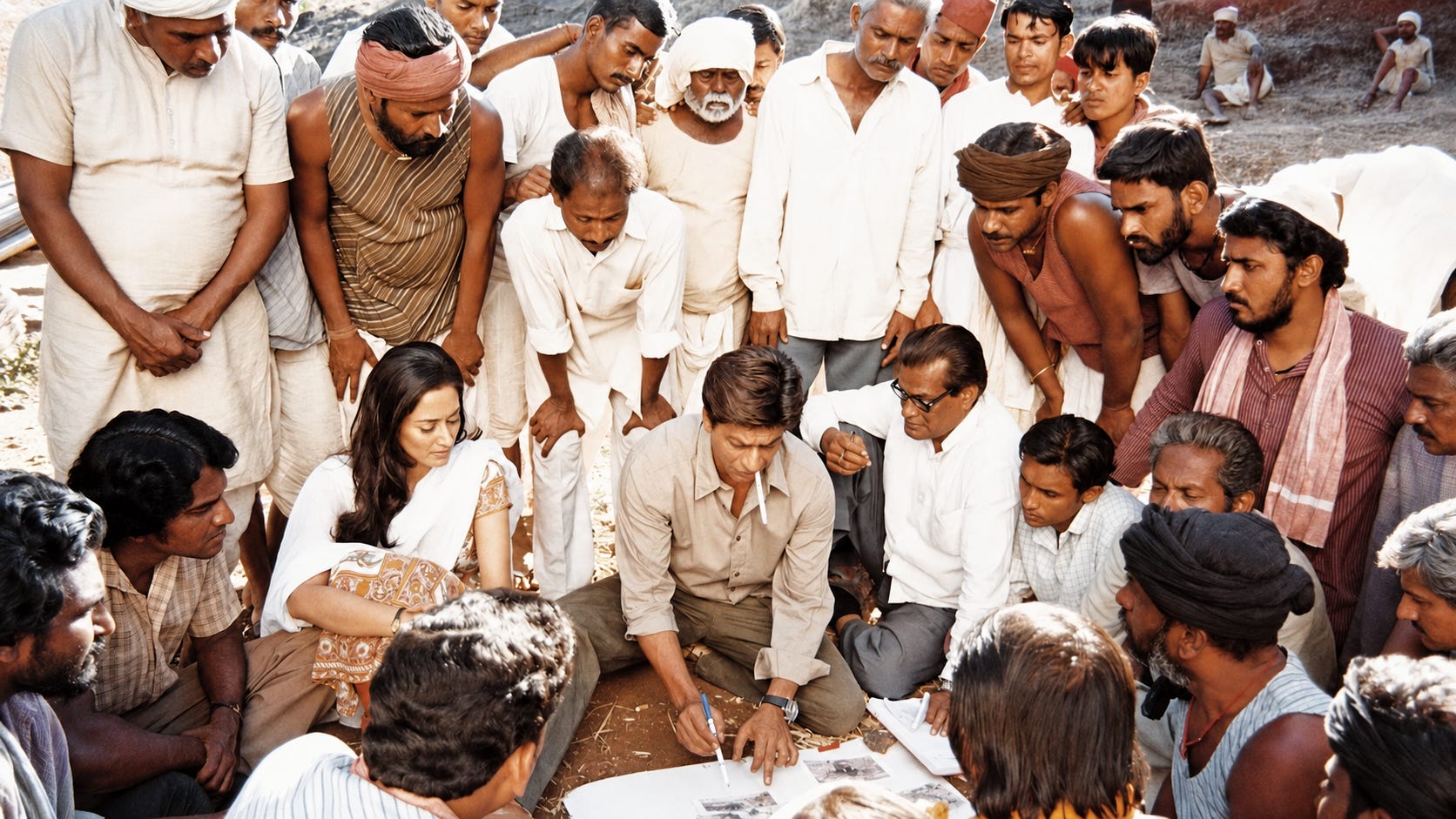
In the movie, Mohan gets involved in solving some of these problems, and eventually has a change of heart that convinces him to give up on the Indian Dream (i.e., Visaism) and to “return” to India as a Born-Again Nationalist. Now, of course, this is a Shuddho story at its heart. It touches all the bases of Shuddho and its lenses of looking at India. It looks at rural India and only sees its problems. Mohan’s “Nationalism” is also very much a Shuddho strain of “Nationalism”. There’s much to be critiqued in this film, and my writing about it should not be taken as an endorsement. Instead, I’m bringing it up because over time, Swades has indeed become a cultural touchstone in the story of Indian Visaism. Despite its Shuddho biases, it captures many small and intricate details about the Born-Again Nationalist experience very well - the newfound ability to see India “Directly”, the increased awareness about India’s permanent squalor, the bias towards action (a trait the Visaist borrows from westerners after being around them for many years), etc. The heart of the story is one that many Visaists will themselves relate to - the feeling of pining for “home” as they build their lives abroad, the missing of foods, scents, the unique Indian warmth and human interactions. In this context, the movie is a useful piece of media for us to grasp the minds and hearts of Born-Again Nationalists, especially in the context of them “returning” to India.
Once the Visaist becomes a “Born-Again Nationalist”, or even takes the rarer step of “returning”, they start studying and “looking back” at India to learn more about their own country, in what ends up being a form of re-education. Previously-held assumptions about India that were formed while living there have to be wiped clean, and replaced with more “honest” assessments about the Indian reality. In a metaphorical sense, being a Visaist allows them to be “above” India - above all her Decay and Chaos. After all, if this project doesn’t work out, they always have the option of losing interest and going back to living Beautiful Lives in Ordered Societies created by the people of developed countries. Since they are now “above” India, the view they have of India and the unlucky Indians still stuck in India is one where they are “looking down” at India from their Visaist perch. This gives the Born Again Nationalists a very unique perspective on India.
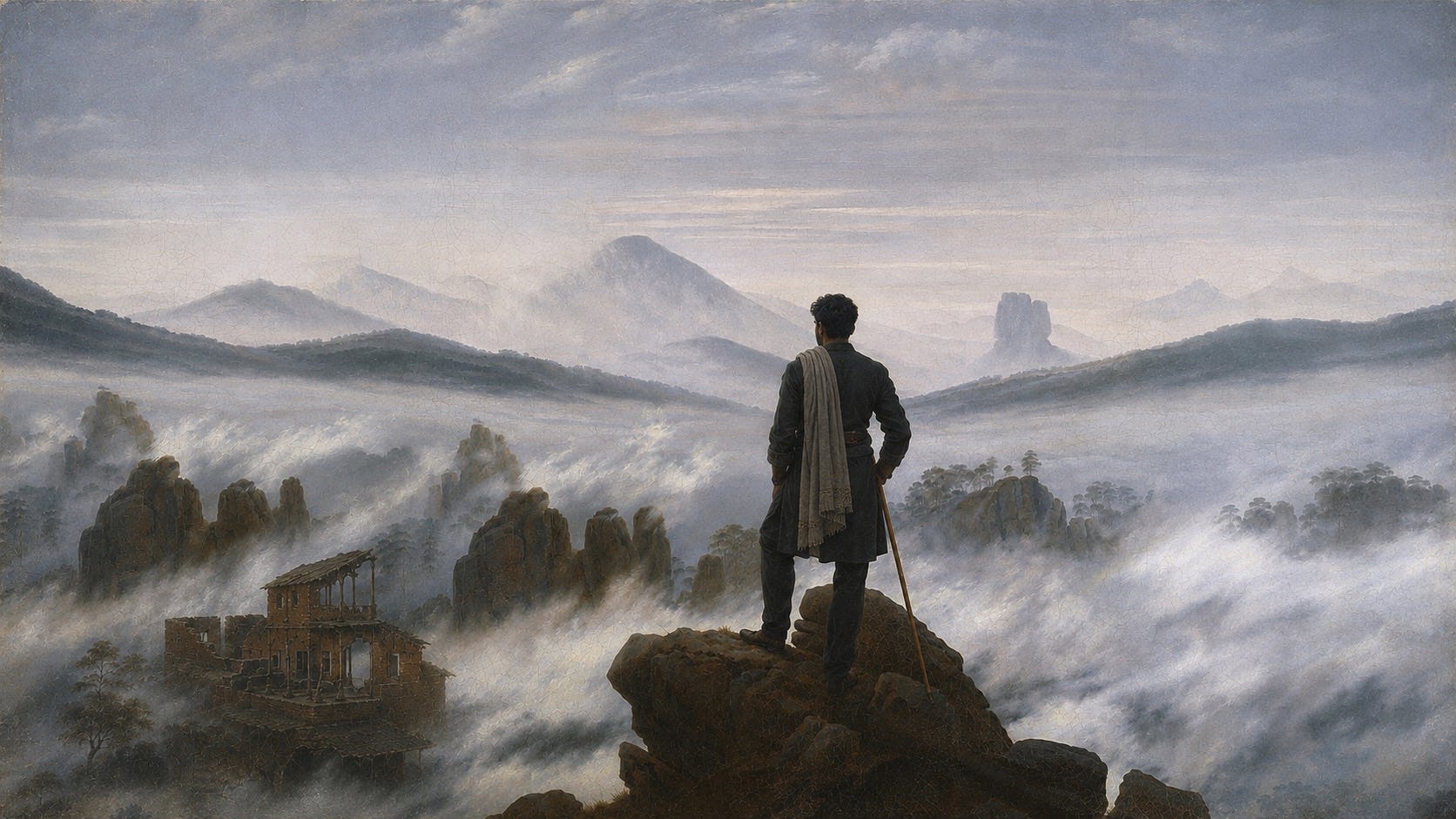
In some ways, what their experience shows us is that it is only really possible to view India accurately when you see it from “The Outside”, i.e. from a distance. Only when you are unaffected by the daily Squalor and Suffering and Noise and Chaos are you actually able to observe and judge the country with clarity. It almost gives you a more complete and constructive view - the mythical power to see India “Directly” - and to see her in all her flaws and beauty. The first “Direct” look at India might blind you - it is like looking at a solar eclipse without a pair of sunglasses - but if you persist in this vision, you will see India in her completeness. You will see her ability to produce extraordinary human endeavors, and her inherent Chaos, which acts like quicksand and swallows up any attempts to “fix things” in its wake.

Interestingly enough, the Born Again Visaist Nationalists are in great historical company in this experience. Looking back at the Indian freedom struggle, we see that so many of the major personalities like M.K. Gandhi, J.L. Nehru, Aurobindo Ghosh, V.D. Savarkar, Lala Lajpat Rai, Bhai Parmanand, etc. fundamentally evolved and transformed their worldview when they “Escaped” from India. For some of them like Gandhi and Nehru, this “Escape” was voluntary, and for others like Aurobindo, Savarkar and Rashbehari Bose, this “Escape” was forced and involuntary. When they “returned” from their time abroad, the way they “saw” the country was completely different from what they saw before. If you read about their lives and especially their own writings, you can sometimes see the exact moment when new ideas, new possibilities, new observations, and new clarity start to take over their minds. This exact process is now playing out with thousands of Visaists when they go through the different steps of the Visaism and Born Again Nationalism process - the Departure (accompanied by cynicism), the Re-engagement, the new Critical Eye and ability to see “Directly”, and finally, being Born Again as a Nationalist. Every fault - that they had previously learned to ignore - becomes visible now. They cannot ignore it anymore.
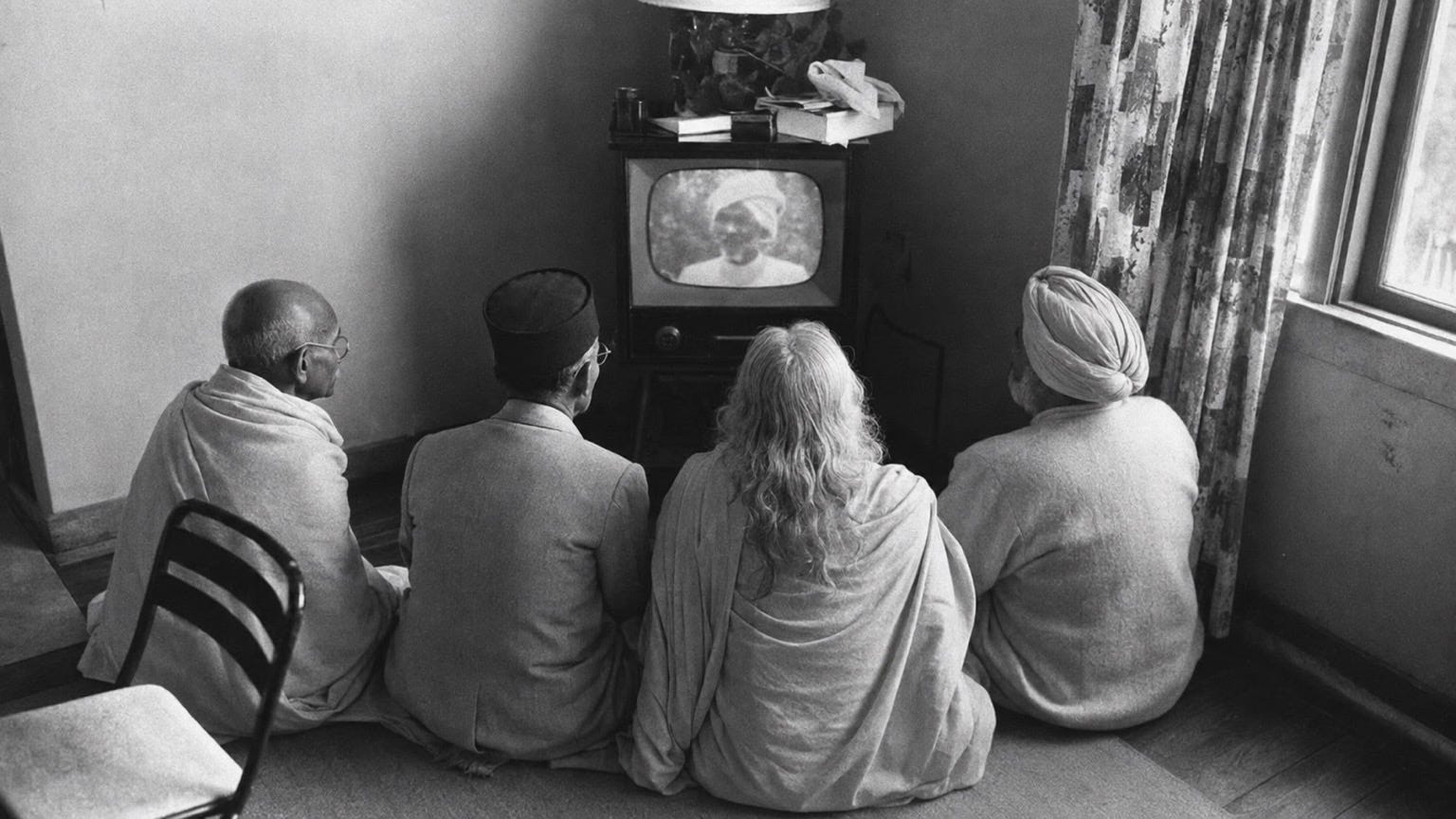
This is perhaps the biggest tragedy of Indian Visaists, particularly of those in the pioneer generation. They could have, if they had wanted to, returned to India and formed a group of educated, powerful and talented citizens to create a Counter-Elite to the existing Shuddho elite, and to eventually transform India in the way the American elites did so in the Age of Reform.
The early Visaists were so close, yet so far. They had so many variables in their favor. Whether they knew it or not, they also stood on the precipice of history - eternal glory awaits any generation who can one day “fix” India (and all her obvious and visible problems) and lead her to her rightful place in the world. But somehow, despite their wealth and their considerable contributions to the economies and societies of Western countries, they displayed a lack of ambition, especially on a historical scale. They seemed to lack a sense for the moment in History. History was calling them to grab the moment and lead the Indian people to the promised land. The way the American Founder Fathers knew it was their moment and their destiny to produce the country they did. The way the Chinese Communists fought every internal and external force to kill the ghosts of the Chinese past, and to banish the memories of being called the “Sick Man of Asia”.
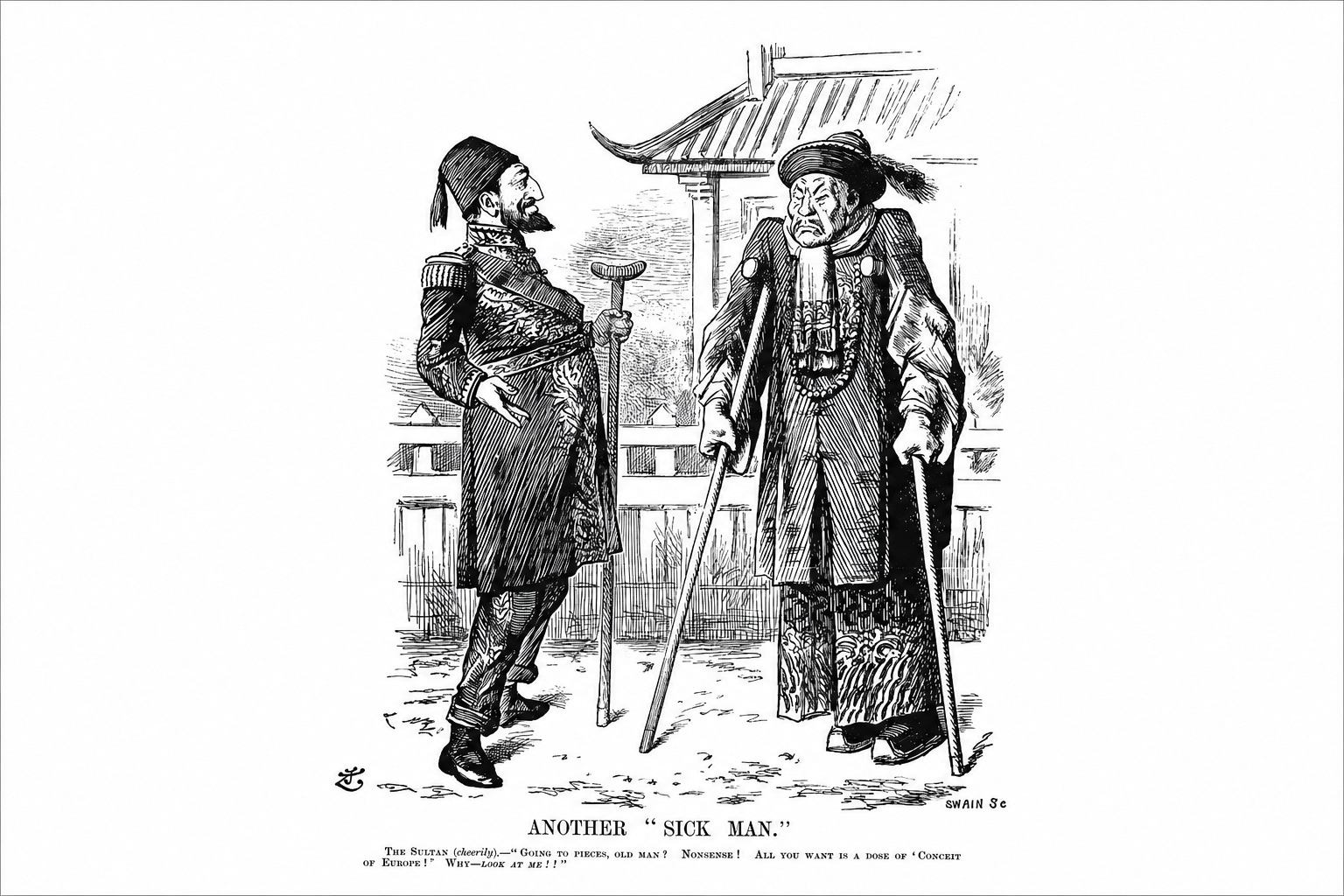
Born-Again Nationalists could have changed the trajectory of India if they had wanted to. But - as is clear now with the clarity of history - they clearly didn’t want to. They like India, and they want India to succeed. They just don’t like it enough to live here. They certainly didn’t like it enough to assume the leadership of the country that was calling out their name. Their ambitions were too humble, and in that, they undermined their talents and what could have been their place in History.
But this is precisely the saddening element of Indian history: this absence of growth and development. It is a history whose only lesson is that life goes on. There is only a series of beginnings, no final creation.
And this reluctance of Born Again Nationalists - as they lecture Indians on Indian nationalism from the comfort of western countries - has obviously started to receive … pushback … from disappointed Indians, who expected, and continue to expect, more from this group of people. This has created a fascinating dialectic online that will be the topic of the next section of this essay.
In the penultimate section of this essay, we will be covering a fascinating new development in the Visaism saga. As we have seen in the last section, the 2014 moment in Indian politics and the new energy it created inspired a lot of Visaists to re-engage with Indian political discourse. Specifically, the voice of Visaists was added to a large and growing cohort of Indians in India who were also starting to create a new presence in the online discourse.
Naturally, as time went on, these cohorts found each other on places like Twitter (Now X), Instagram, YouTube, etc., and a bubbling dialectic emerged on these platforms. Voices from India and from the Visaist cohort - often even Indians who’ve become Visaists in the last two decades - have started sharing ideas, forming friendships, writing articles, creating podcasts, and so much more. All in all, it has been a fruitful endeavor, and it has - when you add up the pros and cons - strengthened the hand and the voice of nationalist voices within India. If you follow the Indian discourse online, then you probably know who these people are. Some examples are: Aadit Kapadia, Sham Sharma, Kushal Mehra, Surya Kanegaonkar, Sahana Singh, Priyanka Deo, Sree Iyer, Amey Sapre, Savitri Mumukshu, Aravind, etc. This is obviously not an exhaustive list. Additionally, me mentioning these names is not really meant to antagonize these individuals. I enjoy most of their commentaries and analysis, and many of them are my “oomfs” on X. Instead, as some of the more prominent examples of this phenomenon, I think they give us a good reference point for this section.
While mostly exciting and effervescent, this Indian-Visaist dialectic has seen its own share of needling issues. As we discussed at the end of the previous section, one of the primary cleavages has been the inability of the Visaists to truly commit to their supposed “Born-Again” Indian nationalism by “returning” to India.
The Indian point of view is simple: How can you be a nationalist for a country if you don’t even want to live in the country? Especially if you do so completely voluntarily, out of our own choice?
A lot of Indians have started to see this “Born-Again” Visaist love for Indian nationalism as performative. They accuse the Visaists of lacking skin-in-the-game, and a lack of material and physical stake in the future. How can you have a stake in the Indian future if all your children are settled abroad? Why will you care about India’s future when your future is not in India? It is obviously possible for people to care about something in an academic sense. But there is a limit to what they can substantively do when they have no real stakes and substantive interests in India’s future. As IP lawyer and internet polymath Navroop Singh recently said about the Indian bureaucracy, who are infamous for having their children “settled abroad” as they continue to run India from their 19th-century perches: When will the Indian bureaucracy understand that education of your sons & daughters, your junkets in the West is not (more) important than India’s national interests?
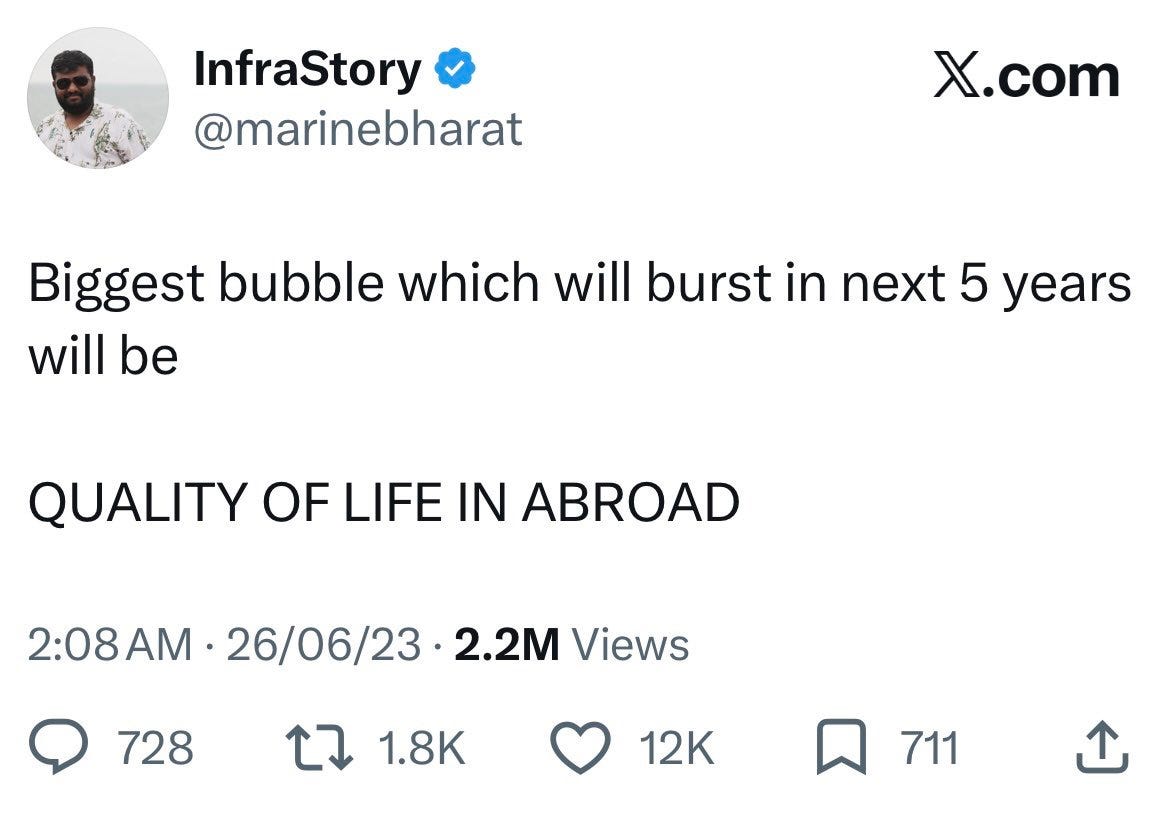
There are countless more examples that can be considered in this vein, but perhaps the most interesting and amusing one is that of X user Marine Bharat’s unilateral crusade against Visaism. As an extreme optimist on India and her prospects, Marine Bharat has held the line against Visaist mockery by insisting that in a few years’ time, India will be able to boast about an equivalent standard of “quality of life” that most Visaists flee to developed countries for. This is a position that has got Marine Bharat a lot of mockery and derision, even from other Indian “nationalists”, who consider his position to be idealistic but unrealistic. In this criticism, we see that a potential Visaist probably hides within a lot of Indian “nationalists”, just waiting to be brought out if they get cynical enough at the state of India’s squalor.
This dialectic further nudges me towards my hypothesis that the real percentage of nationalists in India is somewhere in the range of 2-5%. These are the people who would refuse a U.S. Green Card and an all-expense-paid settlement in the U.S. if they were offered one for free tomorrow. Think about it carefully, dear reader. Do you have what it takes to say no to this offer? In my opinion, this was also the real percentage of nationalists that existed during the Freedom Struggle. As uncomfortable as it is for us Indian nationalists to admit, even during the height of the Freedom Struggle, the vast, vast majority of Indians were apathetic to the movement and the change it claimed to want to bring. The British wrote about this extensively in their internal dialogue about their Empire and the legitimacy of their Raj in India. One such example of this is the Montagu Chelmsford Report of 1918, which talks about what percentage of Indians they objectively quantify as being a part of the effervescent nationalist movement in the Extent of Interest in the Political Question section. Indeed, the entire section from pages 112-123 of the report is essential reading for understanding the character and emotions of the Indian public in this period. Indian Nationalism, and always has been in the modern era, the project of a small section of the Indian population…
Broader Indian apathy towards constructive politics and nationalism was the reality with the Freedom Struggle, and it is a reality today with Visaism. The Elites want to “Escape”. The common man wants to “Escape”. India is a country you do not fix. India is a country you leave.
From the point of view of an Indian nationalist, a lot of the Visaist interest in Indian politics and “Hindu issues” comes across as a form of entertainment or voyeuristic curiosity for the Visaist. At its best, it could be an item of genuine academic interest, but never a real, substantive political cause. Because if it were a real cause, it would lead the Visaist to fully commit to the purpose and move back permanently to India to fix things. Indian nationalists lament - and are right to lament - that almost none of the human brilliance produced in India and given sustenance by India gets used for the benefit of India and other Indians. The top layer of it simply “Escapes” to developed countries, where it becomes an important contributor to Western economic growth. Almost none of the competence hierarchies in India end up finally benefitting Indians, with strange exceptions like the sport of Cricket.
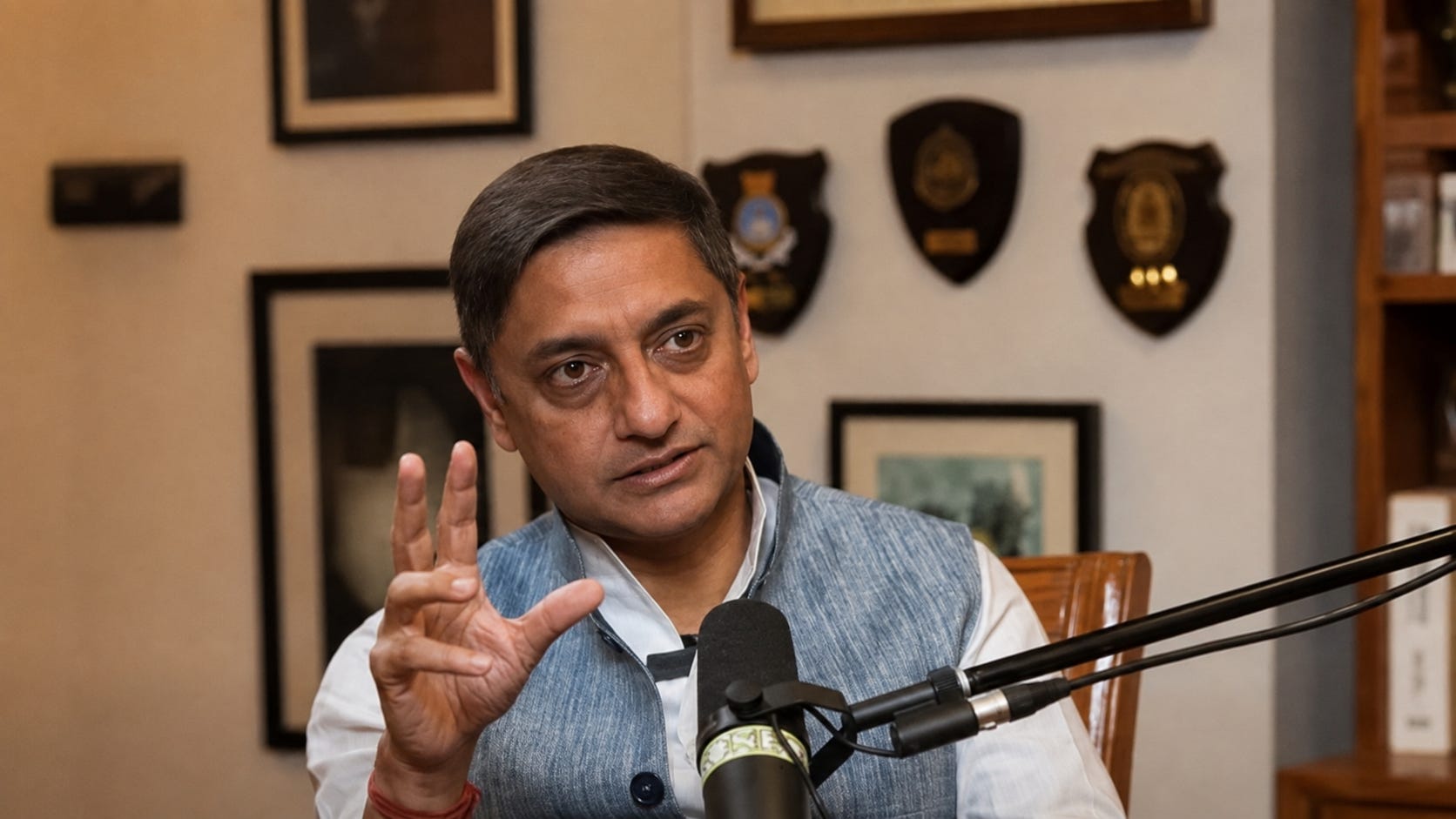
The Visaist response to these accusations of apathy is two-fold. The first is an instinctive and emotional fight-back. This is because in the Visaist mind, there is somehow no hypocrisy or incoherence in being a nationalist of Country X while voluntarily living in Country Y. But beyond the instinctive emotional response, the rational Visiast response usually points to the many examples of Visaists who have moved back to India. A person like Sanjeev Sanyal (who spent two decades in Singapore before “returning” to India in 2017) or the brilliant Sridhar Vembu are great examples of this cohort. Even among those who still live abroad, many have invested their time and money towards the national cause.
Pressed further, the Visaist usually responds with a reassertion of the Fundamental Brokenness India - the fact that India is so broken, and so unfixable, that it makes no sense for the individual Visaist to ever consider “returning”, or not leaving in the first place. This post from Visaist Akshat Shrivastava captures this sentiment well:
I used to laugh when people said: “The ultimate goal of an Indian is to leave India”
At one point in time, I decided to leave Singapore. And (to) come back to India. To build a life here.
I was a stupid patriotic person.
Then I saw that day-by-day: dumb people defending high taxes, stupid economic moves, jobless growth, crony business.
They were cheering for (their) own demise.
So I decided to move out.
And I am very happy with my decision.
India was and will always be my motherland.
I love it. And, always will.
But, I see no point -- subjecting my kids to hate, bigotry, and absolute stupidity that exists today.
The world is big enough for hard-working people who wish to compete on merit.
At this point of my essay, this refrain should be familiar to the reader. The reality of India’s countless Omniproblems, the daunting nature of fixing them, and a clarion call to act in your own interests. These instincts continue to help the Visaists rationalize their own hypocrisy.
Finally, another position held by Indian, particularly Hindu, Visaists is that while they might not be “nationalists”, as is clear in their actions, they are instead “civilizationalists”. That is, they are some sort of missionaries or agents of the expansion of Hindu civilization and traditions outside the historical boundaries of India. In my opinion, this is a dishonest attempt to reframe what is in reality a selfish set of actions (most people “Escape” India for better immediate economic prospects, quality of life, standards of living, etc.) into a cause that was not the actual intention of those actions.
The question also begs to be asked: What Hindu civilizational causes? There seems to be no consensus on these “causes” are in the first place, as most Visaists have too much of an ego to work with, or under, each other. In fact, this “too many Chiefs and not enough Indians” phenomenon has played itself out to such an absurd degree that a brand new organization called Banyan Tree Network was created in 2025 just to give all these disparate organizations a platform to work under one agenda.
Therefore, the chasm in the Indian vs. Visaist paradigm has begun to widen. Indians have started to see that while the Visaists “love” India and want the best for India, they simply don’t love India enough to live here themselves. Their lack of physical presence and lack of a major skin-in-the-game means that they will remain, at most, effective outsiders who are helpful with the ideas and propaganda of the politics they support. The revealed preferences of their actions are simply in too much dissonance with the stated preferences of their opinions.
If the Visaists know this, and accept this fundamental hypocrisy and gap in their stated opinions and their revealed preferences, I think their decision becomes almost understandable. Beyond a point, you cannot really fault an individual for being selfish about their own lives…
As the Indian-Visaist dialectic has raged on, a fascinating third position has also been added to the mix. This is the position of Indians who have been born or raised in developed countries over the last thirty years. This includes Indian-Americans, Indo-Canadians, Indian Brits, Indian Trinidadians, etc. In this essay, we will call them PIOs. Having never lived in India at all, this group has brought a third, independent voice to the Indian discourse online. Some prominent names in this category are: Balaji Srinivasan, Vishal Ganesan, Amit Majmudar, The Emissary, Shawn Binda, Indu Vishwanathan, Suhag Shukla, roon (Tarun Gogineni), and more.
From an Indian perspective, this is a fascinating group to evaluate. Most of this group wasn’t born in India, has almost never lived in India, and does not plan to do so in the future. Despite all this, this group of PIOs has developed an academic interest in India, has visited India regularly, or has materially invested in the country as a part of their interest. Their relationship with India is perhaps best summed up by V.S. Naipaul - who, as an Indo-Trinidadian writing about India, definitely falls into the category we are discussing - in his second India book, A Wounded Civilization:
India for me is a difficult country
It isn’t my home and cannot be my home;
and yet I cannot reject it or be indifferent to it;
I cannot travel only for the sights
I am at once too close and too far

Having obtained a much larger “distance” from India than even the Visaists, the PIO is obviously not as emotionally invested in the day-to-day politics and economy of India itself. They might still have family in India, or latent business or property interests, but their present and future is definitely not directly linked to India. For them, interest in India is more an exploration of their own history and identity. This may evolve into a passive and fleeting interest for some, or into a deeper and more intensive interest for others. The “distance” that PIOs have from India allows them an even more “Direct” and “critical” view of India than the one obtained by the fresh-off-the-boat (FOB) Visaist. This “distance” even allows them to be more self-aware of their relationship to India than the Visaist. They feel no obligations to broadcast their Indian “nationalism”. They are not Indians. And they are not Indian nationalists. How could they be?
A great example of this is my friend Vishal Ganesan’s contentious January 2025 essay The Hindu Case Against “Hinduism”: A Reflection on Dharma in the Diaspora. In this article, Vishal tries to put forward a radical proposal that the Indian American experience, so far joined at-the-hip to the Indian experience, has to eventually splinter from its “Indianness” and find a path to “Americanness” in the way other hyphenated Americans (Irish-Americans, Italian-Americans, Polish-Americans, Jewish-Americans, Hispanic Americans, etc.) have in the last century and a half. In writing this article, Vishal set the cat among the pigeons and drew hatred from all sides - from Indians, PIOs, and Visaists alike.

Live visuals of Vishal as he wrote his 2025 essay
However, as someone who read the article in its entirety, I think the biggest sin of the article and the author is that it attempted to propose a genuinely new paradigm of examining Indian American identity. In doing so, he pitted himself against the Medieval and Colonial Indian tendency towards stasis and stagnation. As he writes in the concluding part of his essay:
I began this essay by asking a simple question of who “we” are and what “we” stand for. There is an immediate and rather parochial political reason for answering such a question, but, as I hope the reader can glean from this essay, the question has much deeper implications. Indeed, in seeking an answer to this question, we are forced to confront not just who we are or what our values are as individuals, but how we can rejuvenate our tradition in the context we find ourselves (in). Hindus go to great lengths to boast of the antiquity of their tradition, but for a tradition to be sanatana, or eternal, we must go beyond rote reproduction of cultural form and seek a deeper synthesis with the present. In rejecting “Hinduism”, we are not rejecting tradition, but seeking to revivify it in the spirit of the reformist movement that, despite moments of brilliance, found itself largely snuffed out in the early 20th century. Nonetheless, the embers of this movement still burn and, in freeing ourselves from artificial conceptual constraints, we are free to stoke the flames of revival.
Curiously, these clashes haven’t just cut two ways. Added to the PIO vs. Indian bouts are skirmishes between PIOs and Visaists, something that Vishal himself covered in his article Regarding FOB-Gate: A Review and Response, which I urge the reader to check out if they are interested.
In concluding this part of the essay, it is worth examining how in this Indian-Visaist-PIO trialectic, it is the Visaist who is caught in no-man’s land here. Indian nationalists are clear about their intentions. They want to stay in India and somehow … just somehow … fix the country. PIOs are citizens of their respective countries, who, while they do care about it, are not directly affected by the events happening in India. It is the Visaist who is caught with one foot on each boat. He is neither here nor there. His heart is split between his Old World country and her salvation, and his own immediate socio-economic interests in the New World.
Will these relationships in this Trialectic end in harmony or in antipathy?
Will these groups work together towards some common cause, or will they end up being three unconnected islands in the blue ocean of internet activism?
These are questions that only time will truly answer…
As we bring this two-part essay to a close, we will examine some of the final intricacies of the Visaist mind. We will also look at the Visaist interaction with their destination countries, and how the process of Visaism has created a giant backlash against Indians in these host countries.
To start with, it is important to understand how Visaists are brilliant embodiments of the Modern world and for the consequential phenomenon of what the great Victorian author Thomas Carlyle had called Nomadism. The industrial society that produces our Modern world creates in its wake a large permanently unsettled population. This population of Nomads moves from city to country in search of work, networking, resources, education, etc. The only thing the Nomad cannot do is to stay in one place. Nomadism and Modernity constantly reinforce each other. One cannot exist without the other…
Of course, for much of the last three centuries, this process was already taking place - just within nations themselves. But in the last century, this process has acquired an international scale, while also happening at great speed and on a mass scale (i.e. the two defining characteristics of Modernity). According to Carlye, this creates a kind of person who is not just physically unsettled and rootless, but also ideologically, and temperamentally unsettled.
In the context of our essay, we can clearly see that Visaists (they could be from any country really, but our focus here is on India) make for the ultimate Nomads. They are men and women who don’t really belong to one place. They don’t belong to the place they’ve left - they might still own property in these places or have family members there - but they are not really located or contributing to these communities anymore. They also never truly belong to their destinations. They are economic contributors and pay their taxes, but they also end up in an existence that resembles that of long-term visitors. They often struggle to truly embody the spirit of their destination communities, and end up clustering with other Visaists from their own country in ethnically concentrated enclaves. In this manner, Visaists embody the Spirit of the Age - the Zeitgeist - of this interconnected world.
This doesn’t necessarily have to be a bad thing. There are many positive qualities that get produced by the kind of enterprising and risk-taking spirit that is found in Nomadism. If one side of the Nomadism coin reflects being spiritually and physically unsettled, then the other side represents enterprise, flexibility and ingenuity. Nomadism arguably equips you to take on the modern interconnected world in a better manner than other ways of being.
There’s arguably no better embodiment of the latter than Balaji Srinivasan’s 2013 talk on “Silicon Valley’s Ultimate Exit”. In this seminal talk, Balaji makes the case on behalf of Silicon Valley that “Exit” - being able to leave a system or place - is just as important as having “Voice” - votes, buy-in, or property ownership. Speaking all the way back in 2013, he saw “Exit” as the future of Silicon Valley, and through this impetus, the eventual creation of decentralized societies and governments. Over the years, Balaji has built on top of these ideas and developed the idea of the Network State, and eventually even gave it physical shape in the form of the Network School, which until recently was located in Malaysia.
In short, Nomadism is not without its benefits. One might even say that Nomadism is a necessary adaptation for any culture to survive the tsunami of Modernity. There is a credible argument to be made here.
However, Nomadism continues to run up against the political gravity of the world. Factors like local political sovereignty, the early Modern technology of the Nation-State, world religions, tribalism, specificities and differences in culture, etc. These are variables that, in an End of History world, should have been eradicated by now, as we charged onwards to our Star Trek utopia. But they have proven to be stubborn and anti-fragile, even in the face of the immense melting power of modern technology and material forces.

This has left the Nomad in a state of impatiently waiting for a Future that always threatens to arrive, but never does. Nomads see themselves and their way of life as an onrushing and inevitable reality in the Future, and it is their trust and belief in this inevitability that gives them their undeniable ingenuity and brilliance, while also acting as their limitations.
In the last four decades, Indian Visaists have taken to the spirit of the Nomad like a duck to water. Something about the form and shape of Nomadism seems to fit the Indian soul and character perfectly. As a result, various Indian Visaists - like the previously mentioned and brilliant Balaji Srinivasan - find themselves on the cutting edge of Waiting for the Future to Arrive.
Perhaps understandably, this has not gone down very well in the developed countries that Indian Visaists have made their new homes. These are countries like the United States, the United Kingdom, Germany, Canada, Australia, etc.
In the last ten years, after what felt like three decades of an unstoppable march of U.S.-led neoliberalism, fueled by increased movement of people into all these countries, there has been a fierce backlash to this unyielding swarm of immigration. This has been an immense shock to the Elite of these countries, who dismiss these fears of the native populations of their countries as “bigotry”, “populism” and “nativism”. Whatever word these Elites want to use to describe this backlash - and whether they want to admit it is a reality or not - this issue of immigration restrictionism has become one of the most dominant and polarizing elements of the internal politics of all these countries.
Out of all the groups that have been a part of these “immigrant hordes” in the last few decades, Indians have somehow come under a sudden and increasing scrutiny, especially in the last two-three years. Indians and Indian-origin people in Western countries have been targeted and villainized, and have had a target put on their backs from this nativist pushback. The most obvious reason for this sudden antagonism against Visaists and PIOs has been that the latter has started to become increasingly disproportionately “visible” in their respective country’s politics and cultural output. Indian-origin people like Vivek Ramaswamy, Kamala Harris, and Nikki Haley in the United States, Rishi Sunak and Preeti Patel in the United Kingdom, and Leo Varadhkar in Ireland have risen through their nations’ politics to positions of high power and visibility. In the last year or so, we can even add New York City Mayor Zohran Mamdani to this eclectic mix of characters. A similar trend can be seen in the cultural sphere as well.
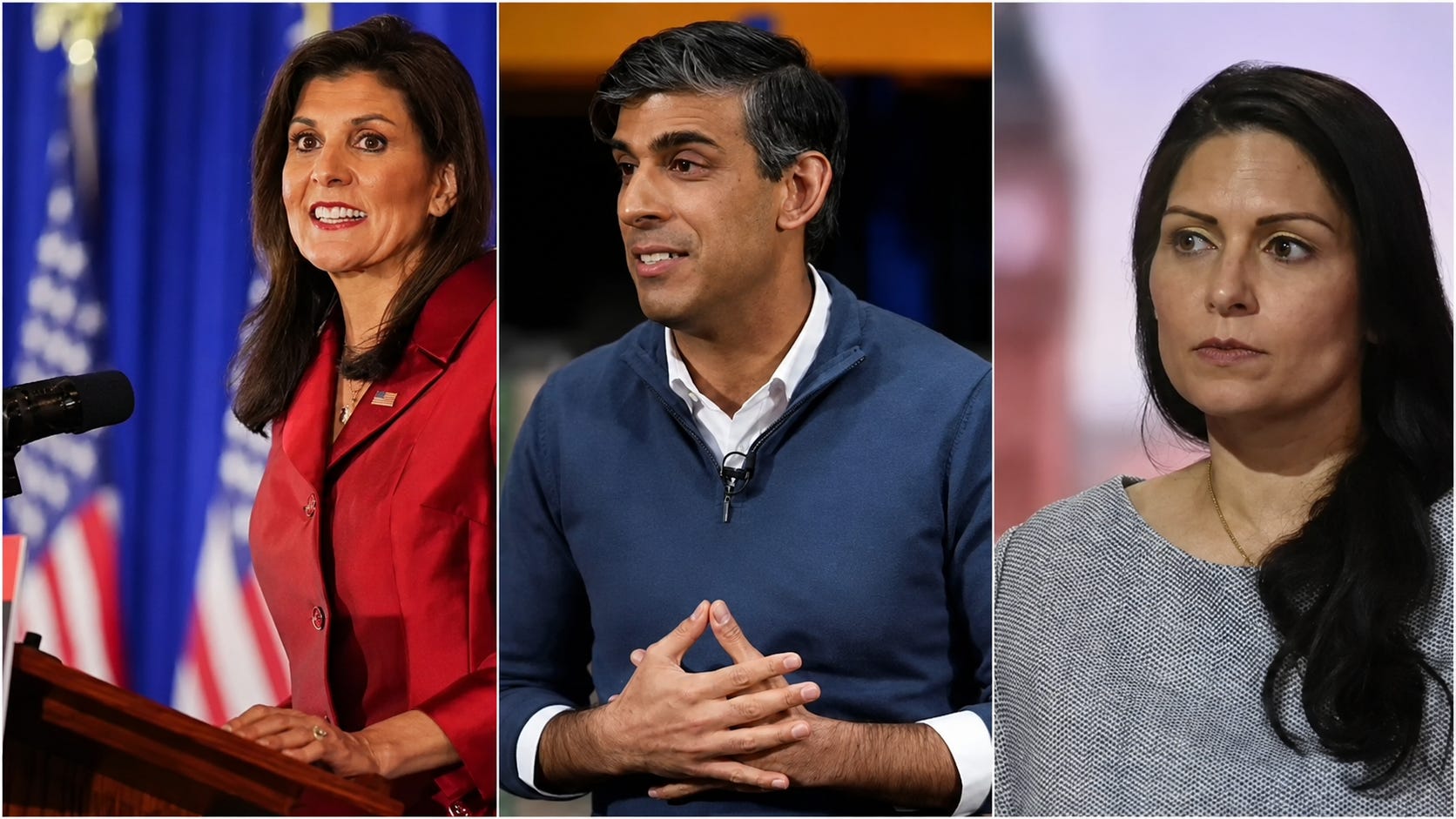
Indian-origin people seem to have found a way to “game” the system to rise up the ranks of existing Liberal or Conservative political hierarchies in their respective countries. In a politics increasingly marred by ideological polarization, identity essentialism and a decaying “Center”, Indian-origin people have somehow managed to strike a “neutral” chord among the various groups grasping for power and representation in a post-mass-migration world. They (mostly) don’t practice identitarian politics themselves and can present themselves as “neutral” managers or administrators of these increasingly shaky political equilibriums. At the same time, for a microscopic minority to be so visible in the culture and politics of these countries carries its own negative connotations among the native populations. It creates a feeling of resentment in the population getting displaced, especially as in this case someone has come from “the outside” to take what would’ve been “theirs” in a previous generation. In the minds of the native population, such a disproportionately high representation, combined with highly-visible instances of Indian nepotism (take the issue of the Panjabi influx in the North American trucking industry), violates a sense of Fair Play that these High-Trust societies are built on. It can sometimes even lead to threats of violence, as can be seen in news stories like these.
This is a process that’s definitely been made worse in the age of the globalized, single-platform internet. On platforms like X, YouTube, and Instagram, the monetization of content through clickthroughs has incentivized thousands of online creators in developing countries like India, for whom a monthly payout in U.S. Dollars is a fantastic deal. Combine this with the nature of anonymity and aggressive algorithms that reward controversy and anger, and you get a large cohort of “content farmers” from countries like India whose entire presence on the internet is aimed around getting White people in western countries to click on their content in a moment of rage.
Now, this itself wouldn’t have been too much of a hassle for the natives of the developed countries. But the completely globalized and seamless internet has created yet another problem. If you’re in an argument with an anonymous poster about your country’s internal politics, how can you even tell with certainty that you’re arguing with someone who is from your country, and consequently has actual voting rights and skin-in-the-game? Until platforms like X recently started revealing the geographical location from which a poster was posting from, there really was no way to tell a fellow citizen and a foreign voyeur apart.
This came to a head in the great Vivek Ramaswamy debacle of December 2024, when the mercurial Vivek - then at his high point with the American right wing - went on a critical rant about the “lack of hard work” and “cultural problems” among Americans leading them to become less hirable by companies. This led to a swift backlash from the native population of the U.S., and an increased antipathy against Indian Americans, whom Ramaswamy seemed to embody. In this backlash against Indian Americans, the largest voice that rose up on platforms like X was not the voice of Indian Americans, but of Indians living in India!
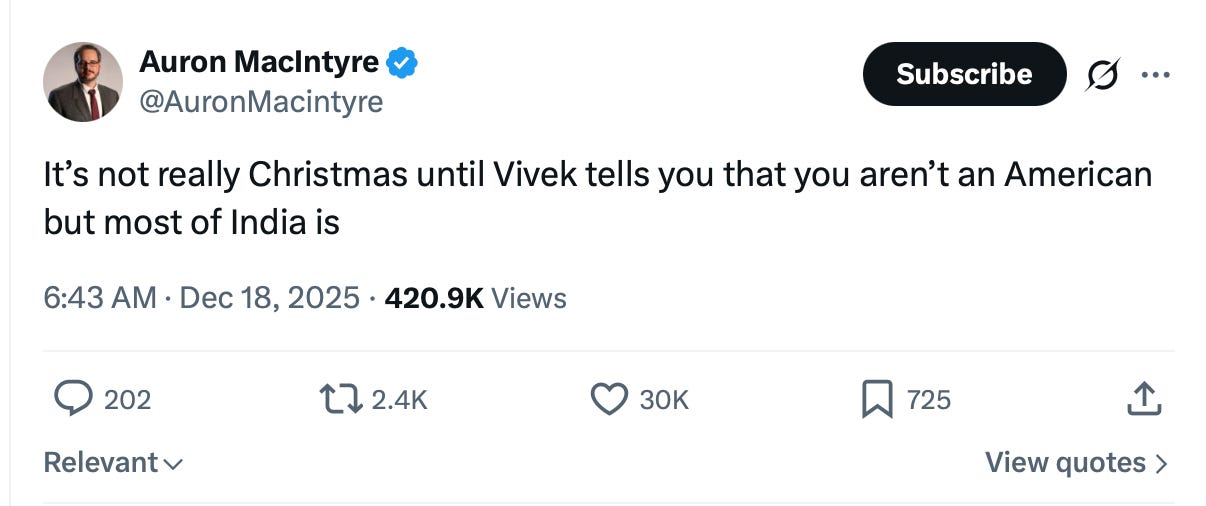
It is the kind of phenomenon only possible in today’s “global village” internet, when an internal political discourse in the United States became the subject of a backlash from the population of a whole country, a population that is on its way to becoming the single largest English-speaking population on the internet, something I wrote about all the way back in 2022. There are no real “geographical barriers” to the online discourse anymore, with obvious exceptions like the Great Chinese Firewall.
It doesn’t take a genius to see why this would be treated like an existential crisis by the domestic population of a country. After all, it is not really “normal” to have any person from any country in the world commenting on the internal discourse of your country. Indians “barging in” on the American internal discourse has gone down like a glass of sour milk in developed countries, and this combined with ragebaiting Indian “content farmers” has made Indians an increasingly hated group on the internet. While this phenomenon has supposedly happened “online”, the reality is that there is no such thing as something that is purely “online” anymore. The consequences of a highly visible and online Indian rowdy voice has been felt in real life by Indian Americans and Visaists, who, like we’ve already discussed before, are already a highly visible and vulnerable micro-minority.
The choice for Visaists and Indian Americans seems increasingly clear. While they obviously have a lot of affection for their “home country”, there is something increasingly asymmetrical and unsustainable about wanting to live in country X, while acting as “nationalists” for country Y (i.e. India). This is a reality that a neutral third-party will find incredibly easy to mock and ridicule. Especially when the new immigrant also starts to want to dictate how things should work in the countries they now live in. A foreign racist can easily say “You don’t even want to live in the country for whom you’re a nationalist”, and “why don’t you go back and fix your own country that you love so much?”
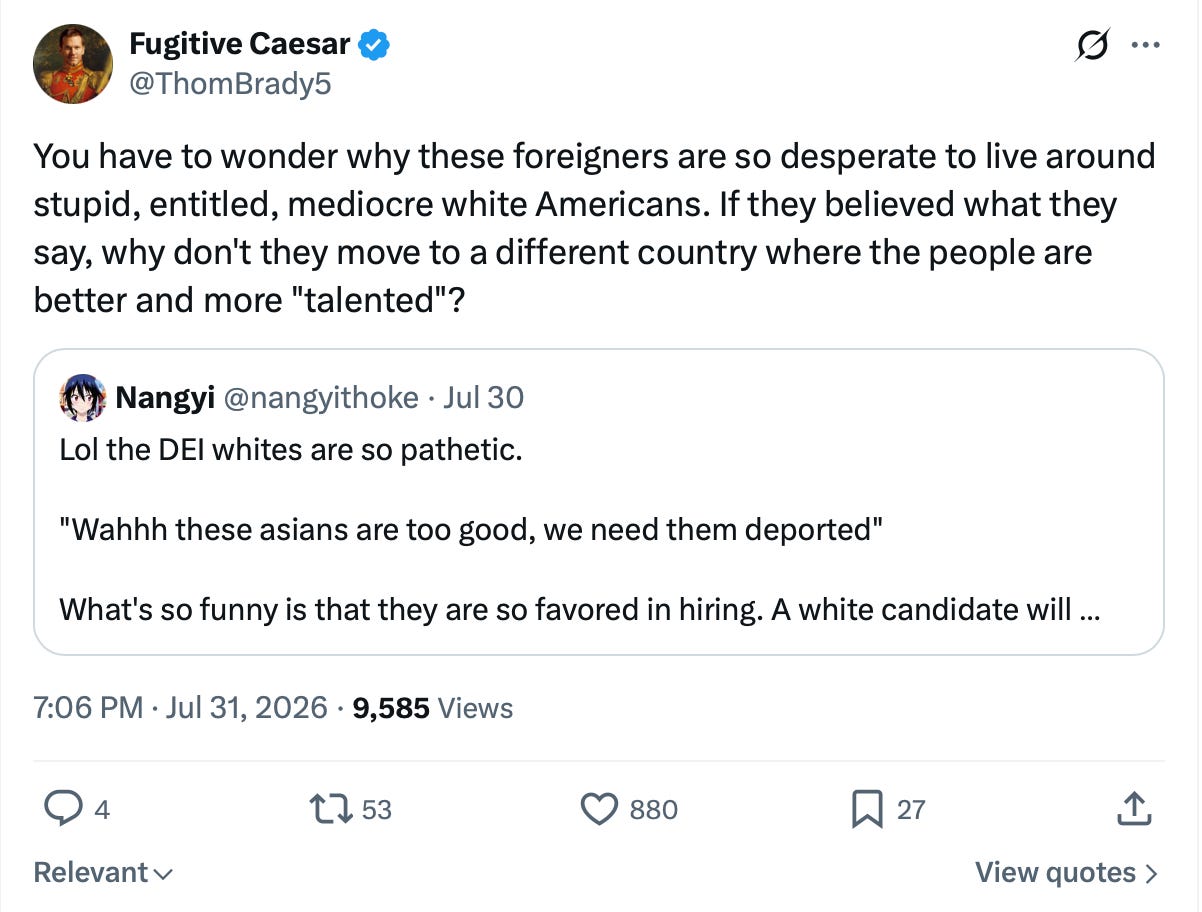
This desire for Visaists to want to live in the West and accrue the benefits of living in the West, while also paying lip-service to the supremacy of “Indian culture” is just a little too on-the-nose. It’s an argument that’s too easy to debunk. Hell, the Visaist himself debunks it through his own actions and revealed preferences. It reminds me overall of a line from V.S. Naipaul’s Among the Believers, which he said in the context of a Pakistani living in the U.K., but is equally applicable to Indian Visaists:
The West, or the universal civilization it leads, is emotionally rejected. It undermines; it threatens. But at the same time it is needed, for its machines, goods, medicines, warplanes, the remittances from the emigrants, the hospitals that might have a cure for calcium deficiency, the universities that will provide master’s degrees in mass media. All the rejection of the West is contained within the assumption that there will always exist out there a living, creative civilization, oddly neutral, open to all to appeal to. Rejection, therefore, is not absolute rejection. It is also, for the community as a whole, a way of ceasing to strive intellectually. It is to be parasitic; parasitism is one of the unacknowledged fruits of fundamentalism…
Therefore, as things stand, it looks like this resentment in these host countries will continue to grow. What will win out in the end? The political will of a large section of the Native populations? Or the future-looking Nomadism of Indian Visaists (and other like-minded peoples)? Western liberals seem to think that this issue will just “go away” when Donald Trump leaves office in 2028. But that’s not how these things work. This issue is likely to persist and simmer, as there is a real sentiment here that is independent of the individual politician. And ultimately, it is going to be a defining element of the Indian Visaist and PIO story in these countries.
Will Indian Visaists and PIOs continue to look towards India - the home country and the “Old World” - to define themselves? Or will they - as Vishal Ganesan has been arguing strongly - delink themselves from the home country and “chart their own path”. If (particularly) American history is anything to go by - every past immigrant group has eventually delinked itself from the Old World.
Perhaps the future is one where an Indian living in India looks at a Visaist and PIO and feels about them the same way an ethnic Englishman feels about an Anglo Australian or South African. There’s obviously a common Peoplehood there. But there is also a divergence - of priorities, of material realities, of immediate concerns and future ideals. As an Indian, I will always wish Visaists and PIOs well. But I also think that the future is one where their input on the internal affairs of India will be looked at with suspicion and mistrust.
Just take the recently-concluded Cockroach Janta Party (CJP) protests that were going on as I was concluding this essay in July 2026. So many of the “leaders” of this CJP front - like their face and leader Abhijit Dipke - are and were Visaists. So much of the online voice in this Scream of Madness was amplified by Indian Visaists living all across the world. The frustrations of these Visaists - who have “Escaped” India but still cannot forget about her - are similar to the frustrations of an upwardly mobile Indian. In an ideal world, this energy of Indians and Visaists could have come together to create an amazing synthesis of possibilities and potential. This could have been the generation that finally “fixed” India. Instead, writing in the immediate aftermath of the anarchic CJP protests and the internal primal rage they portend, the future of India looks vulnerable and up-in-air.

For Indians living in India, these images and events have reminded us just how close we are to slipping into a state of anarchy. For the Visaist and PIO, events like these are just an academic exercise, and at most, inconveniences in a place where their parents still live (until they can also be made to “Escape” permanently). If India falls into anarchy, the Visaist can just “change the channel” and focus on something else on the internet. Whereas for the Indian, this is a matter of the future of their children. This disparity is the fundamental unbridgeable gap in this relationship. And as we look into the second half of 2026, and beyond, it is going to continue to be an animating factor in the Indian discourse.
With this, my two part series on Visaism comes to an end. The total length of this article over the two parts has come out to be exactly sixty pages. Part 1 is already out, and I have honestly been humbled by the response. My hope with this series is that the reader will continue to take this conversation forward by adding their own voice to the various threads of this phenomenon of Visaism. Just in the feedback to part 1, I have received many tangents to this topic like Blue Collar Visaism, Visaism to Gulf Countries from states like Kerala, Visaism in Indian Academia, a desire to see more statistics and data to look into this topic, etc. If you are so inclined, please feel free to pull at any of these threads and add your voice to the topic. I will be happy to amplify it and promote it. Thank you for reading, and I hope you consider checking out my other writings on Substack or X!
No posts
Comments
Nothing yet. Say the first thing.
Sign in to join the conversation.