
As Mainers, it can feel like our state is separate from the rest of the country. Decisions made in Washington, DC can float in the background. For my Racisms column in the August edition of The Bollard, I discuss why that feeling is a luxury we can no longer afford.
Here’s the column in its entirety and, as ever, please let me know what you think.
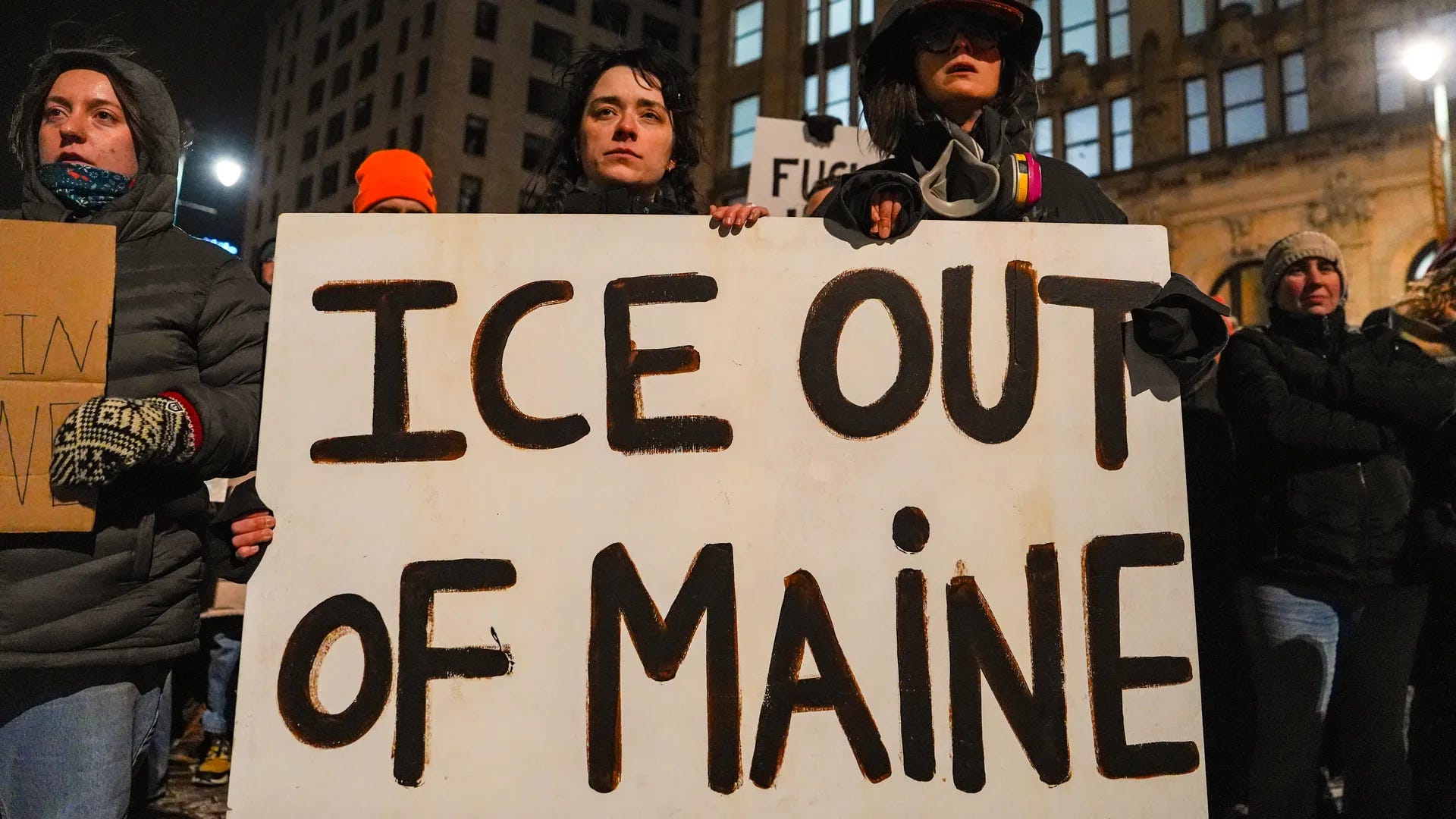
On the morning of Monday, July 13, 2026, a 26-year-old father named Joan Sebastián Durán Guerrero was killed in Biddeford, Maine. His killer was an ICE agent. This murder has brought calls for “ICE out of Maine” to a deafening roar. But it won’t happen. It can’t.
The first person of African descent to set foot in what is now Canada was a man named Mathieu da Costa. He was an interpreter with a French exploratory party and around 1604 he arrived on what was then the land of the Mi’kmaq, Maliseet, Passamaquoddy, and Abenaki peoples.
An important historical figure in Canada, da Costa has been the subject of history books and children’s books and even a graphic novel. In 2017 Canada immortalized him on a postage stamp. But, what most people don’t know about da Costa is that he was also the first person of African descent to set foot in what is now Maine. Even though he is widely celebrated by our northern neighbors, not only do most Mainers know nothing of him, it feels ridiculous to expect otherwise.
Why is that?
When Maine passed its original constitution in 1820, it granted Black men the right to vote. White women weren’t allowed to vote until 1920 and all Wabanaki people weren’t granted that right until 1967.
Throughout the mid-1800s, as Black people were escaping slavery in the South, Maine passed Personal Liberty Laws banning law enforcement officers, district attorneys and judges from aiding in the recapture of the Black people who’d found freedom here. This flew in the face of federal laws at the time, including the Fugitive Slave Clause in the Constitution.
During the Civil War, Maine sent a higher proportion of its men to fight the Confederacy than any other state in the Union. Since then, however, views have changed in much of Maine, as evidenced by the Confederate flags and decals on countless houses and pickup trucks across the state.
In 1911, our state’s governor decided to ethnically cleanse the Black and mixed-race community of Maine’s Malaga Island, tearing down their buildings, imprisoning the former residents in an asylum and uprooting the community’s dead from their graves.
At its peak in 1924, the Ku Klux Klan claimed in its membership more than one-fifth of Maine’s population. The KKK also helped elect Ralph Owen Brewster to the state’s governorship and they installed an anti-democratic, white supremacist form of municipal government in Portland, Maine’s biggest city. The city operates under that government to this day.
There used to be places across the state with names like “Nigger Hill” and “Nigger Brook.” The Honorable Gerald Talbot was the first Black man elected to the Maine Legislature, which didn’t happen until 1972. And it was up to him to fight tooth and nail to create and pass laws to change those racist place names.
Talbot’s daughter, Rachel Talbot Ross, became the first Black woman elected to Maine’s Legislature when she won her seat in the House of Representatives in 2016. Noncompliance with her father’s place-name legislation meant that Talbot Ross — now a state senator — had to introduce another bill, formalizing the place-naming process. In January of last year, Trump issued an executive order overriding the authority of the U.S. Board of Geographic Names and causing Talbot Ross to withdraw her bill.
On the morning of Monday, July 13, 2026, Joan Sebastián Durán Guerrero was killed in Biddeford, Maine by an ICE agent. But this agent wasn’t some random, faceless, out-of-state mercenary. This ICE agent is a Mainer. He was born in Gardiner. He was a member of the Maine Army National Guard. He has worked for the Maine Correctional Center in Windham and the Maine Department of Health and Human Services. He was on the Togus Police Department.
Maine is not the only state with a history like this. Not even close. But white supremacy has created ICE and its murderous infestation of our country. Failure to confront our nation’s history of white supremacy — including Maine’s — has led to this moment. We will not get ICE out of Maine because ICE is a part of us. We helped create it. We help maintain it. All of us. Federal tax dollars paid by Mainers go to ICE, sent there by politicians elected by Mainers on both sides of the aisle. And now a Mainer has joined the ranks of ICE’s killers.
ICE can be abolished. We can make sure nothing like this ever happens again, but not without first admitting who we are and what we owe each other.
“History is not the past. It is the present,” James Baldwin said. “We carry our history with us. We are our history. If we pretend otherwise, we are literally criminals.”
Thanks for reading Banned Histories of Race in America! This post is public so feel free to share it.
No posts
Comments
Nothing yet. Say the first thing.
Sign in to join the conversation.