
A new United Nations report has calculated that hunger among humanity declined for three consecutive years, in slow but sustained progress after the dire COVID-era regression! (Like “extreme poverty,” this is a formal metric more serious than common use of the term in developed countries: the UN FAO defines “hunger” as “undernourishment,” i.e. not having regular access to enough calories for a human’s minimum physiological needs).
An estimated 7.8 percent of humans (645 million people) faced hunger in 2025, down from 8.6 percent (688 million people) in 2022. Roughly 43 million fewer people are hungry in 2025 than 2022! Notably, Africa now has more people facing hunger (309 million) than fast-progressing Asia (292 million), despite Africa’s far smaller population. Despite murderous sabotage and climate chaos, we are still progressing!
Relatedly, a particular standout lately has been South America, which has substantially reduced hunger in the last two decades thanks to successful new social programs and farming techniques and despite disruptive climate change-induced weather patterns threatening agriculture. All countries on the continent except tiny Suriname saw undernourishment prevalence decrease from 2004-06 to 2023-25. A record-low 3.5% of humans in South America are now undernourished, and hunger is decreasing faster in South America than anywhere else in the world. Great work!
The epic world-first Solar Sharer Offer program, granting three hours of free electricity to Australian households thanks to a surplus of solar power around midday, has BEGUN! It started July 1, 2026, from 11 AM to 2 PM in New South Wales and southeast Queensland and 12 to 3 PM in South Australia. A similar program will begin in the state of Victoria this October, and other states may soon join in.
This is an ever bigger deal than it looks, as Australia is also a world leader in home battery adoption, so many homes can now fill up their battery for free during the three Solar Sharer hours and then use it to power the rest of the day! A bold new paradigm.
The last Australian financial year (July 2025 through June 2026) saw a new record-high in clean energy development, with 9.1 GW of new solar, wind, and battery capacity coming online. That’s more than double the 4.4 GW in the previous financial year!
Australia is now planning its first compressed carbon dioxide battery project from fast-growing startup Energy Dome, to be inflated in former coal country in Victoria.
The unique numbat (Myrmecobius fasciatus), a termite-eating marsupial native to Western Australia, is no longer considered endangered by the IUCN! They were once found across the continent, but were down to around 300 individual survivors in two small patches near Perth by the 1970s due largely to introduced foxes and cats. After years of work, including a decades-long captive breeding and release program by the Perth Zoo, there are now an estimated 2,000 to 3,000 individuals. Excellent work!
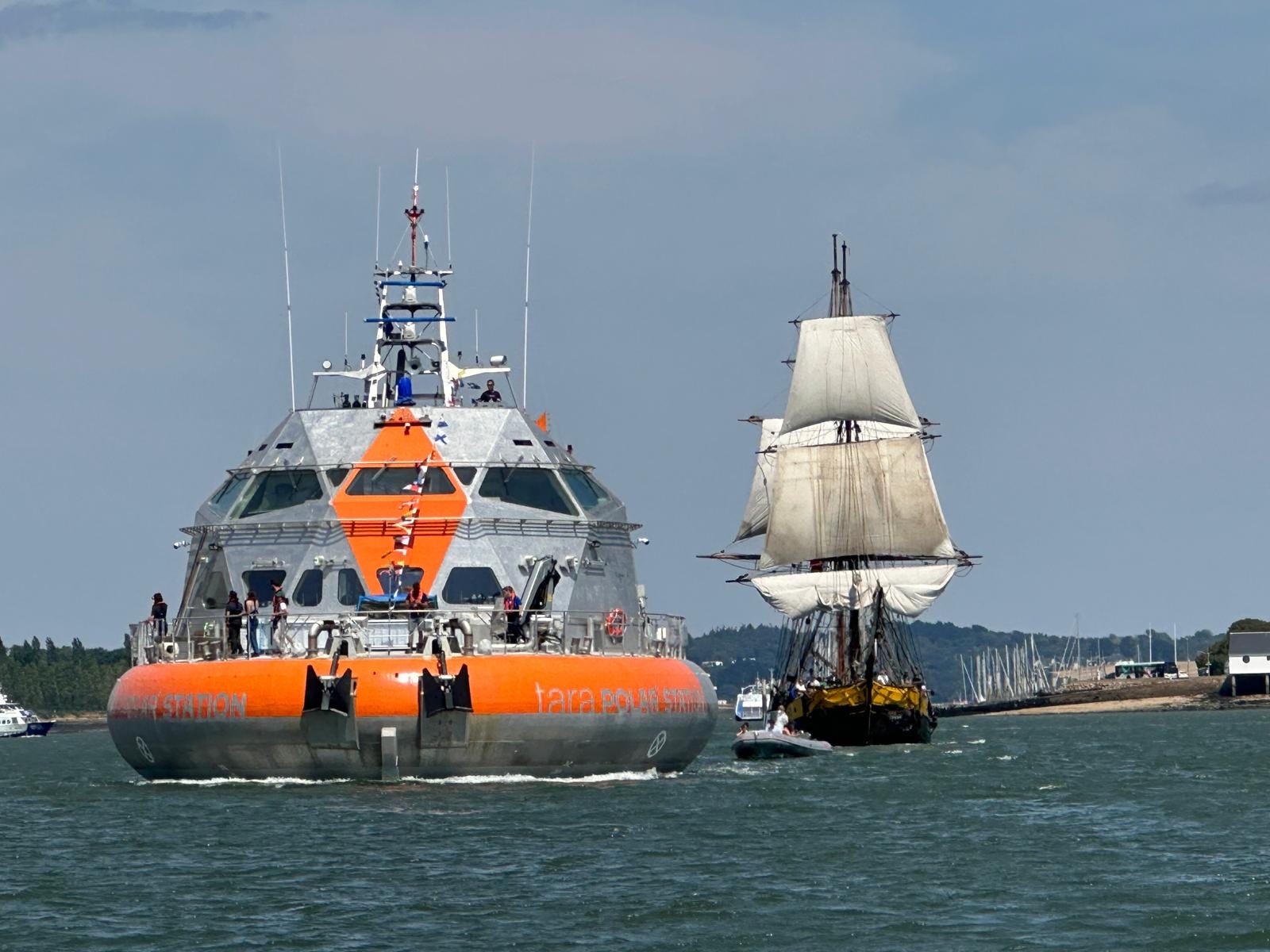
The Tara Polar Station, a custom-made research vessel built to be frozen into the Arctic ice cap for long dark winter months to study the ecosystems below, set out from its Breton home port of Lorient on July 19, 2026! It should be caught in pack ice by September and stay there for 350 to 500 days, leaving in 2027 for a resupply run. A crew of twelve people and one Lapponian herder dog will live aboard for five months of polar winter, growing to eighteen during the summer. An incredible mission!
Titanic work by firefighters has now contained the wildfires threatening the beautiful and historic Forest of Fontainebleau sixty kilometers southeast of Paris.
Buzzy electrotech startup Octopus Energy has announced a new venture to build 100 new “Zero Bills Homes” in the Breton village of Guichen-Pont-Réan, France. They will integrate rooftop solar, heat pumps, home batteries, and Octopus’ smart home energy management software, all to maintain zero net electricity costs over ten years. (“Net” as sometimes they’ll sell extra power to the grid, sometimes buy). Awesome!
An expedition led by local conservationist Gérard Zinzindohoué has rediscovered a coral reef off the coast of Benin, home to at least eight coral and eight fish species!
1960s surveys had suggested its presence but nobody had ever followed up until Zinzindohoué dropped a deep-sea camera system (provided by a National Geographic grant) from a local fisherman’s fragile wooden pirogue boat. The reef likely extends much further and is home to many more species than this glimpse showed, and it seems to be in good shape despite years of warming seas and bleaching events. Awesome cutting-edge low-resource scientific discovery work!
The traditional Vodoun religion of Benin is reportedly helping preserve vital coastal mangrove ecosystems, with a form of “spiritual regulation” leading certain forests to to be protected from woodcutting by belief in the deity Zangbéto. Fascinating!
A new Ember report calculates that across seven EU countries, the preexisting grid connections (power lines) of hydropower dams could be used to unlock 25 gigawatts of scarce connection capacity for new renewables (e.g. floating solar on the reservoir, or just nearby solar and wind farms) even after excluding protected areas. Clever!
After decades of rewilding work, since 2023 a reintroduction project has released forty cinereous vultures (Aegypius monachus, one of the largest birds in Europe with a three-meter wingspan!) to the Rhodope Mountains of Bulgaria. In spring 2026, there were new wild vulture chicks in the Bulgarian Rhodopes for the first time in over 30 years, with four mated pairs beginning incubation and three chicks hatching. Excellent!
Certified deforestation-free coffee is taking off across the Amazon region of Ecuador, thanks in large part to the new market-reshaping EU Deforestation Regulation set to enter into force by 2027. A satellite geospatial imagery-verified certification model was developed in 2019, and now 373 coffee producers have signed up. A cumulative 172.5 tonnes of certified coffee were grown in Ecuador since 2022, and it’s accelerating, with more produced in 2025 than in the previous three years combined. A key early buyer is Lavazza coffee, a major brand in Europe. Great work!
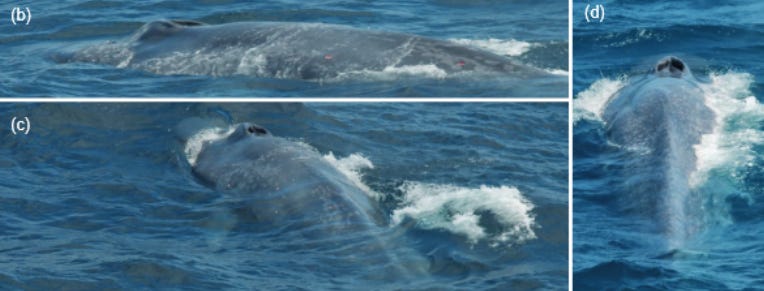
A new study has quantified a recent uptick in sightings of Antarctic blue whales (Balaenoptera musculus) and southern fin whales (Balaenoptera physalus) in the Benguela Upwelling, a patch of ocean in the Southeast Atlantic off the coasts of Namibia and South Africa. Reviewing records of 17 blue whale sightings and 76 fin whale sightings from 1964 through 2025, they found that 95% of the rare encounters were recorded since 2012, an encouraging sign suggesting post-industrial-whaling recovery in the area consistent with recent positive reports from the Antarctic and elsewhere.
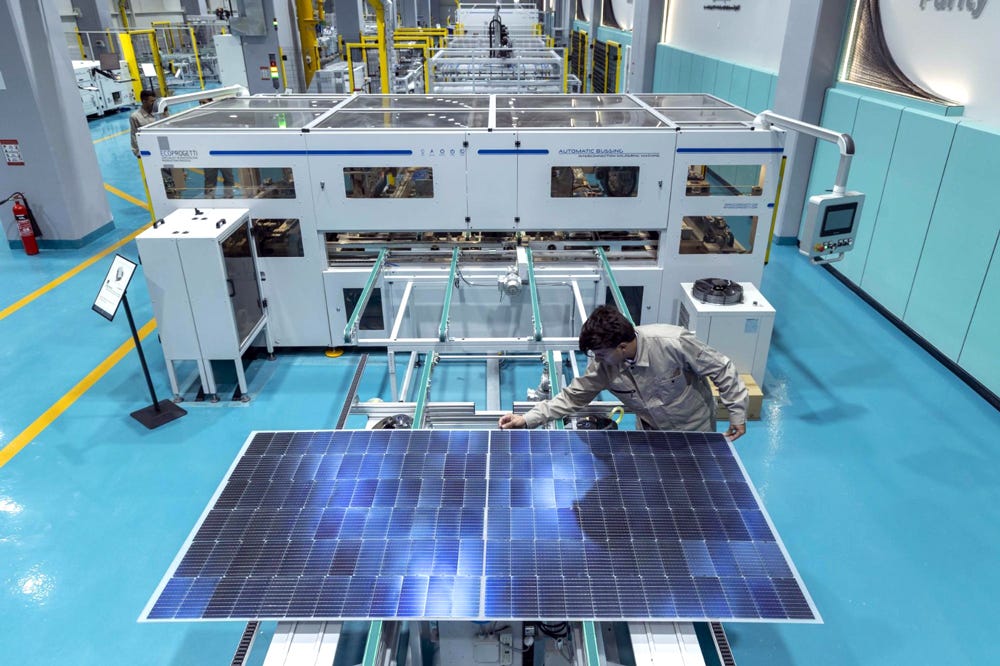
Iraq now has its first-ever solar module assembly production line, installed by Italian company Ecoprogretti for the Al-Abbas Holy Shrine (a religious institution that also runs a lot of development and social programs) in the Shi’a holy city of Karbala. It has assembly robots, has an annual capacity to make 200 MW of solar with plans to scale to 600 MW, and will serve Iraq’s fast-growing domestic solar market. Spectacular!
In 2024, Project Reconecta built eight rope bridges for several local monkey species to safely cross from canopy to canopy across a road near Alta Floresta in the Brazilian Amazon where rare primates had been becoming roadkill. Zero primate roadkill has been recorded in the area since then, and camera traps revealed that just these eight bridges have already been used for 15,000 successful crossings by arboreal animals Eight more rope bridges are set to be installed in Alta Floresta itself this August, and a bill before Brazil’s Congress might help extend the model nationwide. Epic work!
A new report finds that forest fires in the Amazon Rainforest of Brazil fell to a historic low in 2025! Just 3.1 million hectares (31,000 km2) burned that year: 31% below the historical average, the lowest burned area since records began in 1985, and down substantially from the horrific 15.8 million hectares burned in the Brazilian Amazon during drought-stricken 2024. Many fires in the Amazon are set for illegal deforestation purposes to clear land for cattle, so this decrease is also a function of President Lula da Silva restoring environmental law enforcement after President Bolsonaro’s vile incitement of organized forest crime. Brazil: re-elect Lula in 2026!
A student team at Eindhoven University of Technology in the Netherlands have built Stella Juva, a world-first experimental solar-powered ambulance and remote-area mobile clinic. It has 542 solar cells on its roof and extendable panels, powering a 50 kWH battery plus onboard equipment like a vaccine cooler, defibrillator, X-ray machine, and more. Its driving range is 715 km on paved roads and an average of 360 km in off-road terrain. The team plans to test it in Kenya this August. Brilliant work!
Despite the demented would-be autocrat in power and his vile cabal of cruelty, a bottom-up surge of sanity and freedom keeps fighting to build a better future!
As the 2026 state legislative sessions draw to a close, there are some encouraging signs that this newsletter’s preferred “abundance environmentalism” political philosophy is gaining ground! In 2026 so far, nine states have passed permitting reform bills of some kind expected to benefit clean energy build-outs to some degree, including major wins like Virginia and Illinois preventing local governments from passing nonsensical blanket bans on solar and Washington and Oregon streamlining their lengthy permitting processes as well as smaller-scale bills like Alabama allowing potential future conversion of oil and gas wells to geothermal. Only one state (Utah) has moved in the other direction this year, passing a restriction on use of state tax credits for solar on farmland. That’s a big shift from 2025, when just six states made it easier to build renewables and six other states made it harder. Onwards we go!
More balcony solar systems are going on sale in the United States (in addition to Bright Saver’s nonprofit at-cost offer!) as more states have passed de-facto legalization! German makers CraftStrom and EcoFlow are beginning to enter the nascent yet burgeoning American market.
The Charles River of Massachusetts flows past Boston, and like many other urban rivers worldwide it has experienced an epic ecological renaissance in recent decades thanks to dedicated local environmentalists! Once essentially a lifeless open sewer in the 1920s, it sustained a run of 300,000 alewives (“river herring”) in 2025, the highest in memory, and a concomitant abundance of waterbirds. Further progress is possible!
Comments
Nothing yet. Say the first thing.
Sign in to join the conversation.