
I’ve had this fantasy, of the figures we’ve read in Bootcamp, of putting them on a scale from happiest to unhappiest camper. Mark Fisher, of Capitalist Realism, will, I think, always be the Gloomiest Gus of all, but even if Postman seems like a friendly, smiling presence in the photographs I’ve seen of him, he is right up there in the sourpuss sweepstakes — if Allen Bloom managed to turn his full intellectual power against undergraduates, Postman is no less sour in going after television.
Most would consider television, even television in the ‘80s, to be at worst an annoying diversion. But not Postman. He sees it as essentially an existential threat to civilization and has a great deal of theoretical ammunition to support that assertion.
Most people, thinking about television, would say something along the following mollifying lines. Television (at least at the time Postman was writing) represents the new. If older professors and literary types don’t like it, well, there’s not much more point in railing against television than there is in going after undergraduates; television and screens in general are the future whether we like it or not. Then, TV especially at that bleak moment in 1985 may have been insipid but it was a maturing technology and art form. Film had basically been inane for the first forty or fifty years of its existence until a real flowering in the New Wave and the cinema of the ‘60s and ‘70s. Critics of Postman could point to television’s golden age and to series like The Wire and Mad Men that are as complicated as anything literature ever produced. Then, even if we accept Postman’s premise that television, and digital technology in general, is basically a cognitive dead end, they are far from coercive. Other communicative forms can thrive at the same time — the statistic everybody always points to is that more books are being published than ever before — and the better way to think about it is that television simply complements books, newspapers, magazines, film, and radio in an arsenal of expressiveness unparalleled in human history (this being before the Cambrian explosion of the web). And, lastly, television can, at the end of the day, always be switched off — meaning that there’s nothing inherently wrong with television but, at most, consumer choices can be questioned if television is favored over more edifying media.
All these objections feel suave and common-sensual and Postman would disagree with them categorically. What matters, he would argue, isn’t the sequence of media — television gets no points for being new — but their structure in how they affect the human brain and social exchange as a whole. Television’s golden age would be a reasonably strong argument against Postman, but, as we’re now discovering, there are limits to it — even high-quality television operates in an extreme I-talk-you-listen way where the individual is an almost completely passive consumer and where creative expression can be achieved only through an immense capital expenditure recouped through corporate advertisements or else predatory subscription plans. Then, television is always primarily visual and always assumes an attenuated attention span from the viewer; it is not conducive to deep reflection or the ‘cognitive delay’ that accompanies reasoned exchange. Postman makes a particular target of the ‘educational tv’ that was a fad at the time arguing that it amounted to putting lipstick on the pig — that the attempt to have reasoned ‘bookish’ discourse on TV was cutting against the grain of the medium. And it must be admitted, after several decades’ worth of CNN and Fox News-style TV bloviation, that Postman has a point. Then — and this gets to the heart of what Postman is really trying to say — what matters isn’t the bulk volume of what is produced but the market share. As he puts it, writing of the pre-digital era, “The influence of the printed word in every arena of public discourse was insistent and powerful not merely because of the quantity of printed matter but because of its monopoly.” If print is the dominant media form, then that generates an Age of Typography where, as Portman exhaustively documents, modes of print discourse not only predominate communications but saturate even non-written discourse and underlying modes of thought. Once the Age of Telegraphy is upon us, and with TV in particular dominating the public sphere as much as it does, the entire society gives itself over to a cast of thought that’s rooted in the structure of electronic communication. And as for the cable guy-ish suggestion that you can just switch it off, the answer Marshall McLuhan gave to W. H. Auden can suffice. When Auden extolled the benefits of not having a television, McLuhan replied, “You merely suffer the consequences of television without enjoying it.”
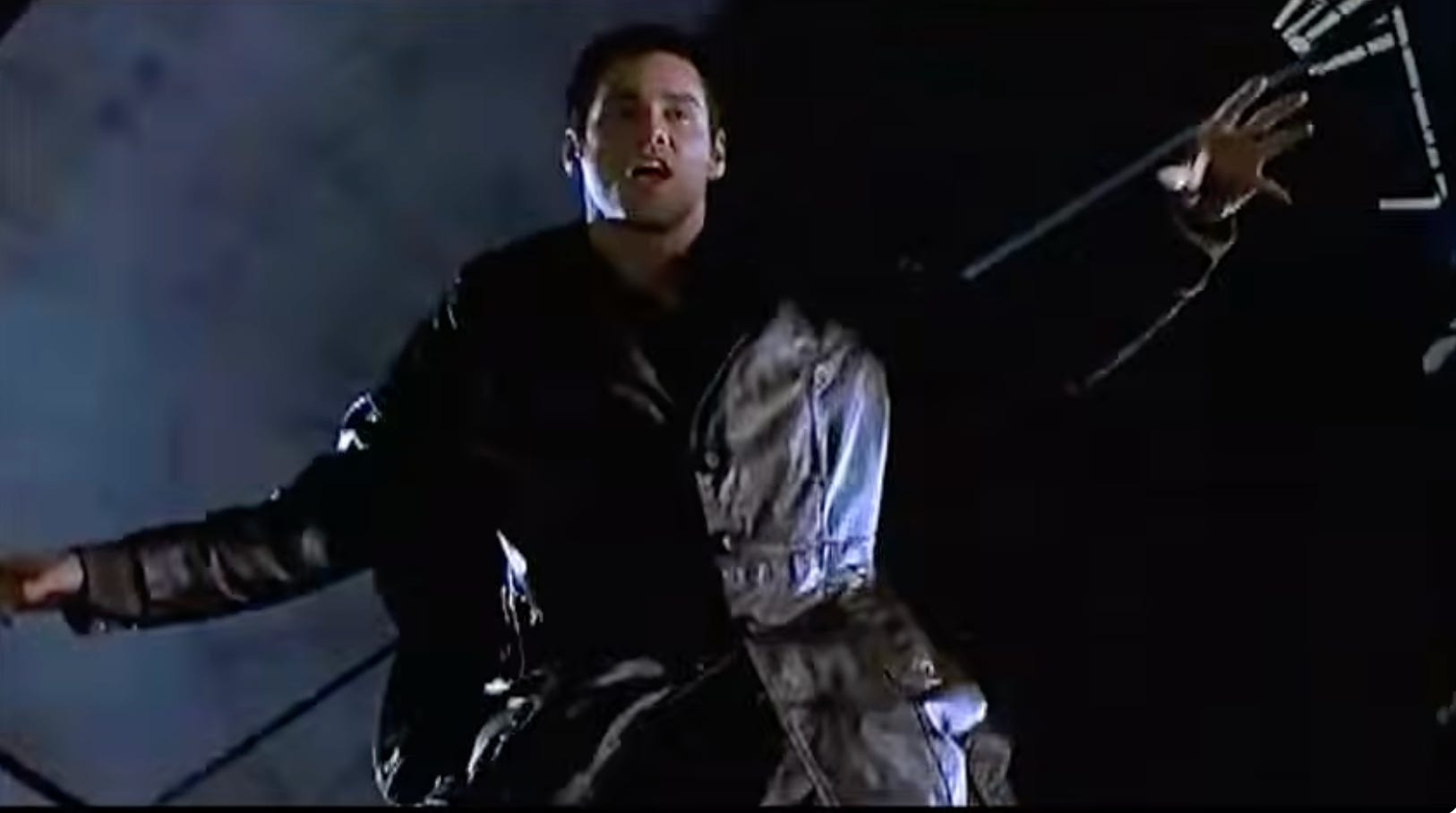
Postman is at pains to argue that the society of the Typographic Age — particularly when it peaked towards the Age of Enlightenment and before the advent of telegraphy and then the telephone and radio — really was a superior culture. We think of early Americans as a bit wild compared with European of the same time, but Postman contends with reason that there was something really remarkable about the public that attended the Lincoln-Douglas debates. “Who were these people who could so cheerfully accommodate themselves to seven hours of oratory?” Postman writes. The point is that they belonged to the Typographic Age and even as, by definition, regular people, they were able to hold in their heads the ornate syntax and complicated arguments of the debates — and, crucially, there was no TV for them to watch at home if the debates bored them. Postman’s argument makes a nice pair with that of Thomas E. Ricks in First Principles. The reasoned debate at the Constitutional Convention was really conceivable only in an age of typography, with the framers essentially cosplaying as Greco-Roman legislators and with Madison’s contributions in particular the fruit of deep reading. Had the framers been meeting in the era of cable news, it never would have worked.
If Postman is tough on television, he reserves his deepest scorn for the telegraph — which hasn’t really been abused in quite some time. For Postman, the telegraph is the forbidden fruit in the garden; once it’s bitten into, the entire structure of digital communications follows, which Postman describes as “a language that denied interconnectedness, proceeded without context, argued the irrelevance of history, explained nothing.” The point is that telegraphy, which fundamentally “annihilates space,” as one of the very first telegraph messages actually put it, separates information from context, creating a new world of ‘broken attention’ and ‘broken time.’ This ground was covered by Walter Lippmann in the 1920s who referred to the whole journalistic and the telegraphic landscape as “the pictures in our end,” a vast ersatz world of fantastical and largely irrelevant information. Postman more entertainingly calls it “the peek-a-boo world where this event, now that, pops into view for a moment, then vanishes again.” And if has an axe to grind against the telegraph he really goes after the poor crossword puzzle, which he views as something of the apogee of decontextualized information, generating “contexts in which otherwise useless information might be put to some apparent use.”
From the telegraph, of course, it is a one way street to the boob tube and then eventually to the balkanized consciousness that follows from social media, and unfortunately there is no rogue cable guy or the agency of any individual that can help. If the cable guy really cut the power, somebody would just restore it; reading wouldn’t make a sudden comeback. It is a grim philosophy — the vital health of the society broken through its own instruments of communication and no one with the capacity to do anything about it — but hard to argue with. It would be nice to think that we can just switch the devices off, but we would be lying to ourselves.
Comments
Nothing yet. Say the first thing.
Sign in to join the conversation.