
For my eighth birthday, my grandmother bought me a book of fairy tales, a book I still have to this day. The book was a hardcover illustrated haven for a kid, outlining some of the earliest stories I was ever exposed to, many of which dated back to the mid-19th century. It is not unusual to hear that these stories are most people’s introduction to storytelling. There is a reason that these stories continue to occupy the collective psyche centuries later.
Looking in the mirror, I look different from how I did when I first received that book. I am older, in every breadth of the word. Like many others, I have learned a lot about the world from stories like these over the years. As I get older, I wonder what these stories can still mean for me, how they inform my understanding of getting older.
In folklore and myth, we’re typically dealing with archetypes, representations of particular roles and characteristics. For the elderly, we’re working with relatively finite characters compared to the young; we’re working with sages, crones, and hags. For elderly men, we often find these folks as guardians of wisdom, associating age with the acquisition of knowledge, experience and opportunities to share that knowledge with the next generation.
This is a relatively optimistic angle for aging and demonstrates the flow of culture from generation to generation. This is knowledge transfer and cultural transmission. But for us ladies, the archetypes typically fall under one of two things: the crone or the hag. That is, the sage’s female equivalent, the knowledge keeper, the healer or the sinister, ugly, powerful antagonists, typically bitter or keen to cannibalize. Baba Yaga, a figure in Slavic folklore, is a great example of both, oscillating between a child-eater and a knowledge keeper, depending on the storyteller.
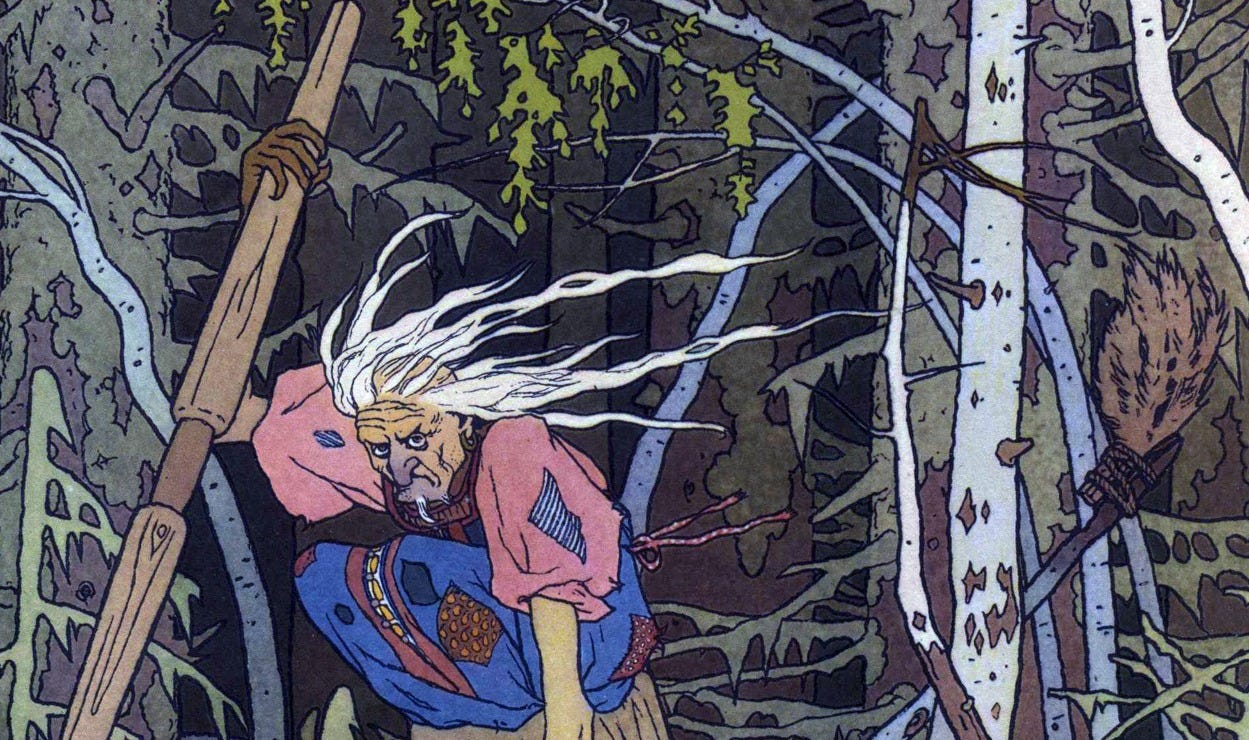
This doesn’t really address aging so much as it reminds us of how the symbol of age is crystallized through storytelling and in social texts. What comments on age directly is the Evil Queen, who becomes envious of Snow White’s youth and beauty, and must transform into an ugly hag to commit murder. Fuck you for your beauty, she says. It’s a totally normal and chill thing to kill someone over. If only the Brothers Grimm knew about retinol.
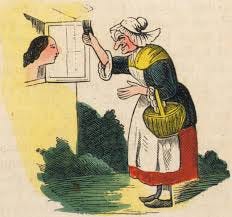
Despite the wise elder archetype, older women are still seemingly depicted as resentful toward youth, with antagonists often aiming to restrict the protagonist’s freedom, self-actualization, and ability to succeed. These intergenerational relationships are marked by resistance to getting older, the antagonism of the nature of time, and hatred toward the young for what they and the elder cannot control: aging.
Comments
Nothing yet. Say the first thing.
Sign in to join the conversation.