
Andy Burnham’s biggest challenge is a fiscal one. How is he going to find the money to cover budget gaps, made worse by the Iran war, while funding new commitments like improving social care? His options are limited given he has ruled out increases in income tax, national insurance contributions, VAT and corporation tax, while promising to stay within existing fiscal rules.
Taxes on wealth seem the only place left to find the money, and there have been plenty of hints from his advisers that this is their preferred solution. There are lots of ideas floating around about how this could be done - and the pitfalls to avoid. So we asked one of the country’s leading experts on wealth taxes for a plan on how to do it right.
Emma Chamberlain is a barrister specialising in tax and a fellow of the Chartered Institute of Taxation, as well as a visiting Professor of Law at the University of Oxford and LSE. She is the co-author of the Wealth Tax Report produced by the Wealth Tax Commission in 2020. Emma is writing for us in a personal capacity and these views are her’s alone.
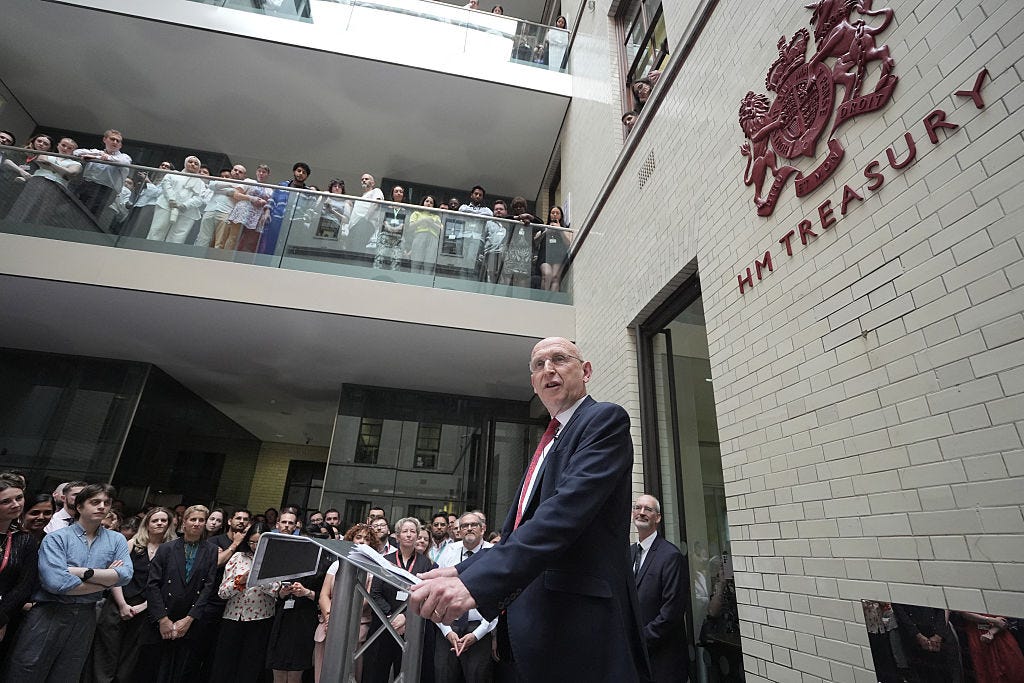
The case for a roadmap on taxing wealth
The debate on how to extract more money from the wealthy has already started in advance of Budget 2026: wealth taxes, land value tax, exit taxes, restricting lifetime gifts, capital gains tax (CGT) on death, higher rates of inheritance tax (IHT) on death. They are all being discussed in newspapers, think tanks and no doubt the Treasury.
This post argues that rather than redesigning the whole system or introducing a new wealth tax – expensive, slow and uncertain in yield – we should improve the existing taxes on wealth (CGT, IHT, stamp taxes, council tax) within a published ten year roadmap. This is also the best way to secure more revenue.
No successful company changes its financial objectives every year, yet Britain does precisely that with its taxes. We have had corporate tax roadmaps in 2010 and 2024; individuals and families deserve the same predictability. Pre-Budget speculation about taxes on wealth deters wealthy people from moving here or investing in the UK at all, reducing the available income for public services.
Major reform of capital taxes cannot succeed without some level of political consensus: if Labour taxed all lifetime gifts and the Conservatives promised to reverse it, people would simply wait for a change of government – exactly what happened the last time a Labour government tried to do this in 1974. The search for solutions on funding social care, and the suggestion of a 10% flat rate charge on death, may be the opportunity to build a better system more generally.
A roadmap requires a hard look at the capital taxes and their reliefs to see whether they achieve their purpose. Why must you survive seven years before a lifetime gift is exempt? Should inherited wealth be taxed differently from income? Above all we need coherence. CGT, IHT, the residence regime and property taxes interact, and reforming each in isolation – an exit tax here, a relief cap there – produces double and triple charges, and a sense of being “picked on” that drives mobile taxpayers abroad, and leads to protests outside Parliament.
Change can come in steps, but people need to know where they are going. I summarise at the end a possible roadmap for change.
Property taxes: fix what exists
Britain already taxes property more heavily than any other OECD country. The problem is not the quantum but the design: council tax is regressive and based on 1991 values; stamp duty (SDLT) is an economically damaging transaction tax with arbitrary cliff-edges; business rates deter improvement for fear of higher taxes.
The temptation is to sweep all three away and replace them with a land value tax (see this by Dan Neidle) under which only the value of land and not the buildings on it are taxed. Economists often like the idea because it encourages development and efficient use of land. But it should be resisted. LVT is conceptually clean but administratively hopeless.
Comments
Nothing yet. Say the first thing.
Sign in to join the conversation.