
As a non-Maine resident with relatives in the state, leftwing views, and an interest in politics, I followed the rise and apparent fall of Platner with the non-committal semi-closeness you’d expect (if not for the constant national coverage of it all). I didn’t support or oppose the guy, but some of his positions were worthy and he clearly has electrified much of the population there. Yet the whole discourse has left a pretty bad taste in my mouth all around, in particular the motivated reasoning. It’s important to put this issue to bed because of the serious issues we’re facing. Our government is murdering innocent people in Iran and triggering global inflation that could cause millions to die, Americans are struggling to afford housing and health insurance, and climate change is rapidly accelerating. Platner ran on a platform that promised to address some of these issues, which is why he gained such electric support despite his flaws. Whatever else we might say of the man, he never voted to finance genocide in Gaza. Now that he’s dropped out, the political elites in our country want to get things back “to normal”. If we are to counter these forces moving forward, we need to engage in some healthy self-criticism.
Now, I do not know for sure whether the rape allegations that led to his campaign suspension are true, but I do think its best to give plausible allegations the benefit of the doubt if we’re not on a jury about to convict a guy. After all she did bring receipts in the form of text messages she sent to friends at the time. Ultimately, based on the story told by the victim nobody can know for sure, not even Platner himself. The guy has obviously struggled with alcohol, and since he was blackout drunk during the event in question he can’t know for sure either (making his passionate denials immediately suspect, but that’s another matter). That doesn’t negate his responsibility, as we owe it to others to moderate our alcohol consumption. Granted, it sounds like he’s been working on his sobriety since, but less than half a decade of relative sobriety isn’t much distance from his earlier akrasia.
Yet the real issue here is the motivated reasoning surrounding the case. Let’s begin with the worst offenders …
The political center
The Democrats obviously had it out for Platner from day one. There are two obvious motives. The more charitable motive is that they had doubts about a guy with no track record of politics and little vetting, and with a background as not only a traumatized veteran but as a mercenary and an alcoholic. Political parties obviously desire narrative control, and such a candidate doesn’t offer much on that front. The other less charitable motive is that they didn’t want a progressive with an economic populist and anti-war platform. Both of these were probably a factor, but I’d bet money the second one was far more important.
This desire to tear him down led them to spread pretty much any negative story about him and seek such stories out like moths to a torch. They do the opposite with incumbents and with preferred candidates, which is how toxic philanderers who coerce their interns sexually like Bill Clinton get a pass. Ironically, this made any good faith criticism of Platner less palatable to the general public, his supporters, and leftwing or progressive voters across the country.
Initially, they wanted Janet Mills, an elderly septuagenarian centrist whose views are pretty obviously not with the public mood. Instead of reading the room, they did the old “it is the children who are wrong” Principal Skinner move. No, Platner wasn’t supported because of his platform, it couldn’t be that … what, they can’t afford bread? Let them eat 401ks. After Mills lost the primary, it became a case of pushing Platner to drop out so they could control his replacement. In both cases, their motivation was transparent however much they dressed it up in concern over Platner’s character or past.
Nor did they question how a man like Platner was made, and how their own policies were complicit in this. A majority of the political elite supported the Iraq War, financed appropriations for hiring Blackwater mercenaries, suppressed accountability over war crimes, didn’t challenge Trump for pardoning war criminals, and have done little to address the psychological damage inflicted in the men sent overseas to do this often-atrocious work. There is no interest really in analyzing why Nazi symbolism is popular among many in the military, and how our military culture reproduces the fascist aesthetic. None of this served the goal of supporting Mills or replacing Platner, after all, and it reminds us all that the Democratic party establishment is either guilty or complicit in war crimes from Iran to Iraq to Palestine. So it became all about this man as an individual, demonizing the demons they created.
Bernie Sanders and the party left
Bernie Sanders’s Our Revolution and other groups discovered Platner through his activism. From the sound of things, Platner was an effective organizer for issues his community cared about, so it was a fair choice to consider him as a candidate. Yet what really excited them, obviously, was his rural working-class white aesthetic. Winning the rural white working class is the great unicorn of the American political left, as this is a population which stands to gain a great deal from leftwing economic policies but generally is culturally conservative. Finding a candidate who codes “rural white working class,” has leftwing economic views and opposes war, but who still is willing to offer solidarity with minorities, women, and the LGBTQ population is that unicorn.
Yet to begin with, Platner is not working class, at least in any proper analytical sense of the term. The status of a soldier or mercenary is controversial enough … soldiers aren’t “working class” in terms of their economic relations, though they usually come from that cultural milieu. Today, he is a small businessman (an oyster farmer), and he comes from moneyed New England background. Though he was downwardly mobile for much of his life, he’s still running a successful enterprise today. The only reason he is classified as “working class” is his aesthetic … he chops wood, is burly, has a gravely voice, and looks like a logger. None of this is what it is to be a worker, however. Hence why Eric Trump doesn’t become working class by throwing on a flannel shirt and wandering around the pine forest.
This desire for a candidate with a working class aesthetic led them to overlook the real risks in Platner’s past. He suffers PTSD, he had an alcohol problem, and he spent too much time shitposting on the internet. None of these are sufficient reasons to exclude someone from office, of course, but they’re all red flags that there might be something that would exclude him in his past. Including, perhaps, something he was too drunk at the time to even remember. …
Platner’s leftwing supporters
Platner supporters clearly wanted him for the same reasons as Bernie’s Our Revolution organization. Again, he codes working class, and this prospect of a candidate who can electrify the rural white working class behind progressive causes is a real unicorn in American electoral politics. This led them to some unnecessary stances.
Consider the Totenkopf tattoo. Platner had it covered up before it became open knowledge, but not long before. It probably wouldn’t have been such an issue had he got it covered a decade ago, not last year. The Platner supporters defended this by arguing he didn’t know what the symbol was. I find this … very hard to believe. He was a soldier stationed in Croatia at the time, a country known for being an Axis power (albeit a weak one), and its hard to believe none of the men in his unit knew what it meant with them being US army soldiers. Then, he returns home and becomes an internet-brained shitposter on reddit at a time when one of the most popular meme formats features the Totenkopf. He talked about fascism, socialism, and all sorts of other exciting topics on the internet. It’s simply stretching credulity that he never would have come across the image and realized what was on his chest.
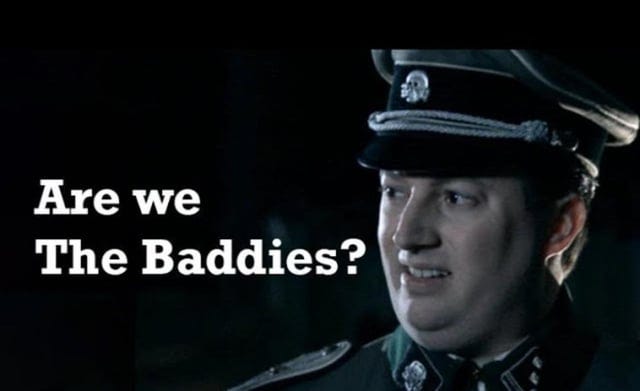
None of this is to say he’s a crypto-nazi. I am pretty certain Platner is not, seeing as how he was posting edgy anti-fascist arguments on reddit and had been active in his Socialist Rifle Association. If he were really a Nazi version of Fetterman, he’s really playing the long game. I imagine he rather just saw no reason to spend the time and money changing the tattoo when he was a nobody, and only bothered to alter it once it became an actual liability. Yet all this makes his story even harder to believe. The problem is rather that a bad story in this kind of situation just damages credibility. Inasmuch as people care about character, honesty is perhaps one of the most important virtues to expect out of a politician. It would have been better to simply admit the probable truth, that he knew but only got the tattoo due to unit camaraderie and procrastinated on changing it. This could have been leveraged as an argument against an imperialism and militarism that generates a toxic culture within the armed forces, but this would have complicated the argument about his character.
Platner’s leftwing critics
There was a lot to criticize Platner from on the left. Not only did he have the Nazi tattoo, but he worked for the mercenary group Blackwater and even had their magnet on his fridge. Years ago, he said on the internet that the violence was fun and exciting, which should be a huge red flag. He also made flippant comments about rape, which really didn’t age well considering this week’s Politico article. All of this could be accounted for had Platner’s campaign been a bit more proactive and explicit in utilizing this to say his experience and trauma led him to reflect, reconsider, and abandon his past. After all, veterans have often been the most effective critics of war precisely because they saw firsthand how dehumanizing it is.
Aside from these reasonable concerns, however, there was a lot of attention paid to his “vibes” and general masculine persona. Now with the events of the past week, there’s a lot of self-congratulatory and deeply unhelpful “I told you so” discourse. Rather than engaging in good faith discussion, there rather seems to be a rush to judge not only Platner himself but anyone who supported him or was inspired by his message.
None of this is constructive criticism and is a kind of divisive moralism that only harms future political projects for the sake of scoring points on social media. Moreover, it leans into a toxic culture war between a more “feminine” coded left (feminist, urban, pro-lgbt, pro-queer, academic, etc) and a more “masculine” coded left (rural, macho, vulgar, tough, outdoorsy). This culture war is entirely unnecessary when we should lean in rather to a diverse and cosmopolitan left where people of different lifestyles and cultures join together in solidarity. Rather, these folks just want to be right and demonstrate this to their ideological and political foes. It’s no less self-centered than the statement Platner’s announcement of his campaign suspension.
Platner himself
Graham Platner seems to have pulled a 180 since leaving Blackwater (or whatever the company changed its name to), becoming a grassroots activist, and cutting down on his alcohol consumption. Now he claims to stand in solidarity with women, the LGBT community, workers, immigrants, and racial minorities. All this is commendable. Yet it is also obvious he was struggling with PTSD and alcoholism until quite recently. While Americans always love redemption stories, as every other evangelical pastor plays on the fact they were once gambling, whoring, degenerate low lives before Jesus saved them, a good redemption arc needs time to be really credible.
Getting into politics and campaigning for senate seems to have been a useful way for him to solidify his new ego, no longer a soldier for hire but a grassroots activist and opponent of war. Yet there is a reason the vast majority of us do not run for senate. It is a high-visibility role, especially when you’re campaigning on a national platform. Even assuming he has been doing real work on his character and is no longer the man he was, the notion that one is ready to enter the national stage with all the attention it entails is exceedingly hubristic. If I was a friend or family member of Platner, I would be worried his current downfall with all the negative press could cause a relapse of his worst character traits (I know I’d want a shot of whiskey chased with a few beers after this past week). So, even assuming the most charitable reading of Platner and his character, his decision to run led not only to the disappointment of his passionate supporters and Maine progressives but perhaps real psychological harm to Platner himself.
Yet he obviously wanted to run. He wanted to be that guy who went from a mercenary and a drunk with toxic relationships with women to the feminist standard-bearer of an anti-war message. His desire to be that guy led him to overlook the obvious risks to his own supporters, the economic interests of Maine residents, and even his mental health.
Let’s be real, Maine residents and Americans more broadly need that economic relief that can only be achieved by tossing out the politican incumbents whether Democrat or Republican. Health insurance and housing are unaffordable, inflation is squeezing everyone, jobs are scarce, and our oligarchic elite just make off like bandits. This is why so many in Maine were electrified by his campaign. Platner’s hubristic belief that he could easily push aside the events of his dark past has only harmed the agenda he himself embraced.
The only way for him to win with his background would have been to more explicitly lean in to the damage his past has caused him. Fighting in Iraq damaged him, being an alcoholic damaged him, the inadequate options for mental health recovery damaged him. He had bad relationships with women that were toxic, and he put himself and others at risk. Now he’s reformed, he’s a new man, and he’s going to fight to utilize his experience to ensure that nobody in the US or abroad is hurt by American military adventurism. He knows better than anyone else why we need to throw corporate warmongering Democrats to the curb in favor of anti-war economic populists. Yet this narrative needs more than half a decade of character growth to play out. Cultivating virtue, as Aristotle argued, is a lifetime project. Had Platner started at a more modest place, like running for a house seat or local office, it could have been a more convincing basis to begin his narrative as a political radical. It would be easier for him to argue he was no longer that man, but that his experience as that man led him to political enlightenment.
In conclusion …
Now it seems like the Maine Democrats are trying a stitch-up to nominate a party centrist, though there’s no guarantee they will succeed. They would rather a Republican win than a person with a radical platform on the economy and foreign policy. After supporting Netanyahu and making excuses for Biden’s genocide apologia in Gaza, the party center really has no moral high ground over Platner. Yet they do not care about the moral high ground, they only care about winning.
To defeat those institutional forces, then the political leftwing in Maine and the US more broadly as well as Graham Platner himself need to learn the right lessons. They need to embrace a degree of humility and self-awareness. Additionally, they need to analyze strategic situations soberly. No, they should not be ruthless opportunists like Chuck Schumer or the rest of the Democratic elite, but they must avoid motivated reasoning and be self-aware about their own tendency to engage in it. Granted, it’s something we all do now and again, but with stakes as high as they are with a senate run the inevitable harms are significant.
Here’s the thing … we need to stop Trump’s imperialist wars, we must stop centrist Democrats who want to engage in the same wars but “more intelligently,” we must address climate change, and we must redress the economic grievances of Americans. We can only achieve these goals with a little bit of self-awareness and self-criticism. Engaging in aesthetic politics, culture war nonsense, and political sentimentalism will only help the party elites that do all these things better than we ever could.
No posts
Comments
Nothing yet. Say the first thing.
Sign in to join the conversation.