
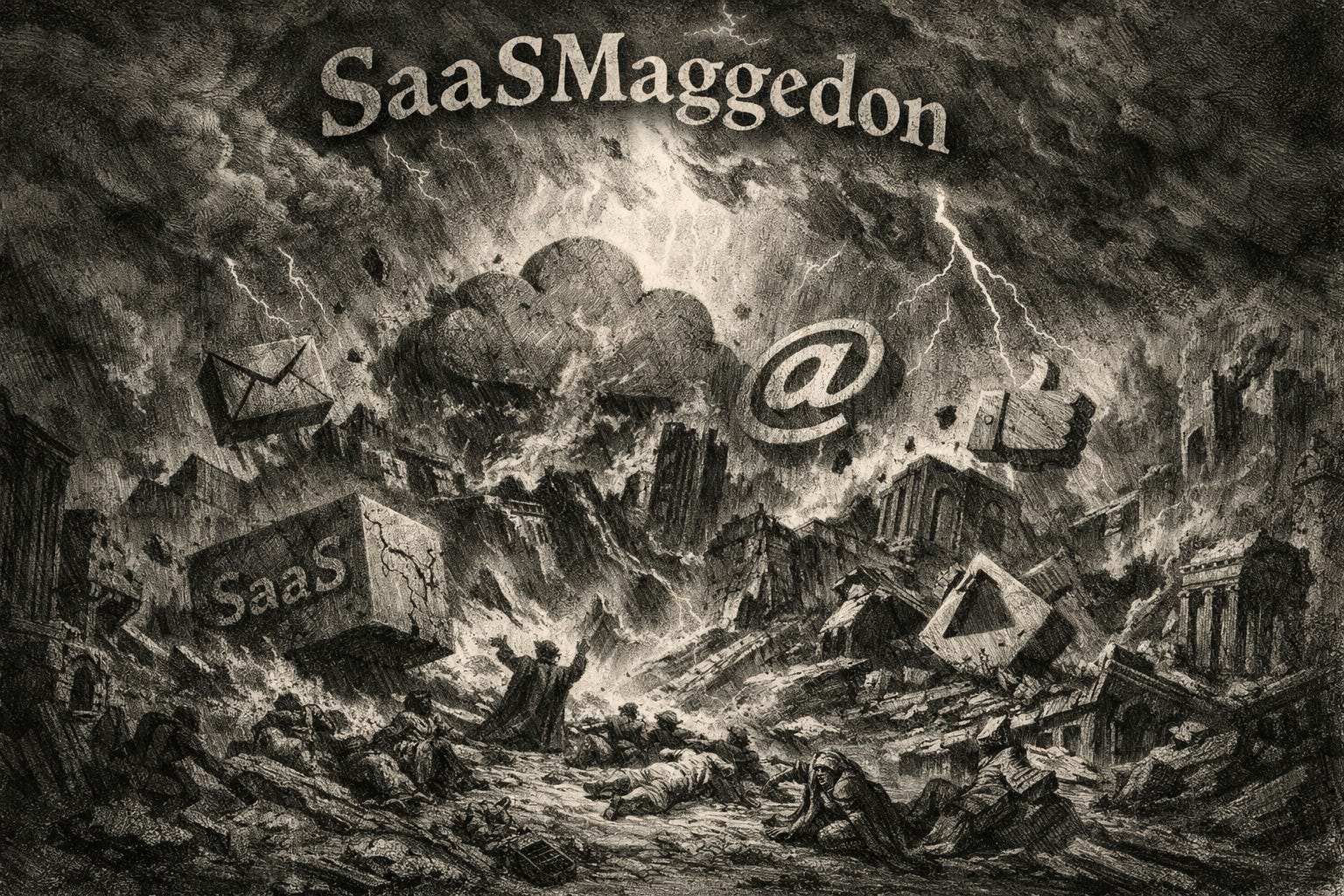
ClaudBot/OpenClaw? MoltBook? Saasmaggeddon? What the heck!
I told Hollywood that resistance is futile a week ago. While I was writing that newsletter, I was watching the beginning of the same phenomenon in the software business. So I had to tell Silicon Valley that it faces the same problem!
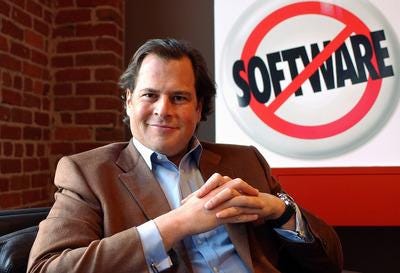
The angst bubbling up is related to the continuing validity of the SaaS (Software as a Service) business model. Most people credit Marc Benioff’s Salesforce with spawning the SaaS model: Renting software as a service rather than selling software as license with annual maintenance contracts. This became popular over the intervening years to the degree that the large majority of software is now sold as a service.
Now Claude Code showed that it is possible to create new applications through prompt engineering and OpenClaw showed how to use that ability to create your own agents through prompting. So… If anyone can create apps that do anything, why the heck would any company keeping buying software as a service? The result was a sharp decline in the share price of the leading SaaS vendors, including Microsoft, Salesforce, Oracle, Adobe and ServiceNow, among others.
The point here is that a combination of news events brought to the surface the idea that these veery successful companies may well face an extinction level event if everyone starts building their own applications without having to rent them. The Information quoted the Wall Street Journal: “The releases appeared to many to confirm a doomsday scenario for the $1.2 trillion software industry, in which companies will be able to 'vibe code' their own tools ... and cancel their subscriptions."
The stocks have largely recovered and analysts are being more sanguine about how important it is to keep track of inventory, product sales, accounting and other key enterprise data, not to mention how to secure that data. These key databases and applications aren’t likely to be vibe coded.
But, but, but: enterprise SaaS companies would be stupid to ignore the implications of the rise of “professional” vibe coding. There is emerging two classes of vibe coding: hobbyists building apps to deal with annoying tasks and professional programmers using it to reduce the drudge work of building systems. The latter category of vide coders could well change the fundamental dynamics of building and selling enterprise systems. That won’t happen overnight but it may well become a strategic issue for the existing players in the SaaS world.
This isn’t anything new for the computer industry. New generations of hardware replace old ones. New generations of software replace old ones. In Silicon Valley, the news eats the old. While it’s not clear today exactly how the impact of vibe coding will play out, the decisions made today will lead inevitably to change over the next 10 years.
No posts
Comments
Nothing yet. Say the first thing.
Sign in to join the conversation.