
Smith Square Hall, February 15, 2026, at 4:30pm
Conducted by Michal Oren, Pianist Misha Kaploukhii
Rachmaninoff - Piano concerto No 2
Ravel - Daphnis and Chloé
Bernstein - Symphonic Dances from West Side Story
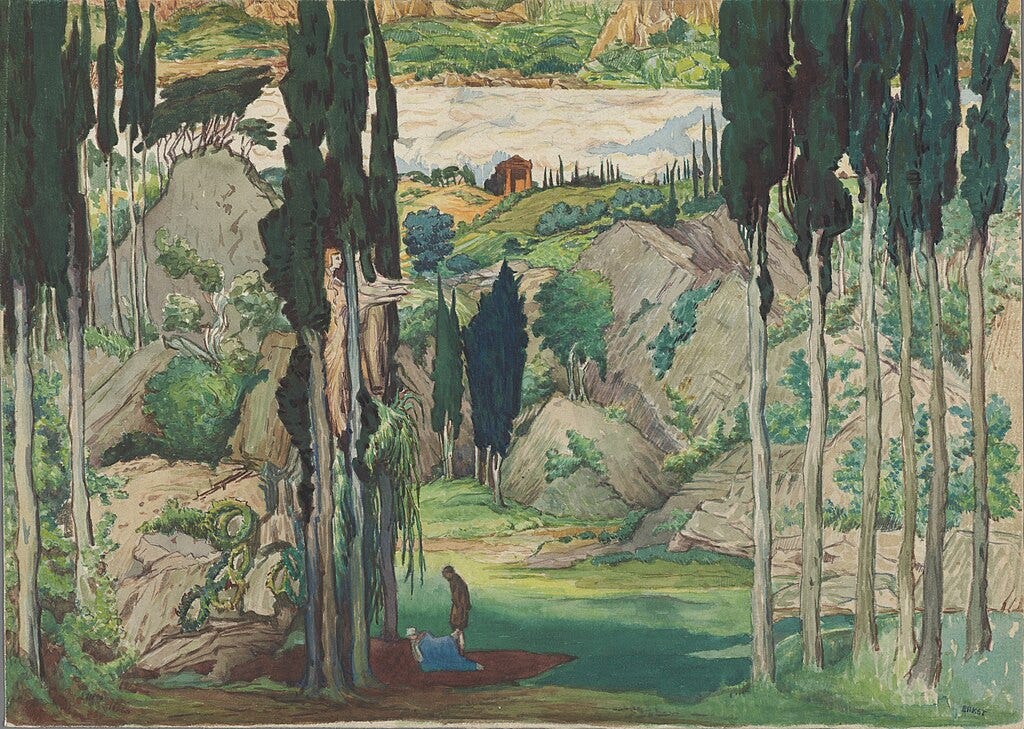
For the day after Valentine’s Day, there is perhaps no musical work more fitting than Maurice Ravel’s Daphnis et Chloé. Originally conceived as a ballet, the work is widely regarded as Ravel’s orchestral masterpiece—lush and impressionistic, it captures the essence of pastoral romance. While the full ballet spans nearly an hour, it is the Suite No. 2 that has become a staple of the concert hall, offering a concentrated dose of the most passionate and scintillating music ever composed.
The story is adapted from a pastoral romance by the 2nd-century Greek writer Longus. Set on the sun-drenched island of Lesbos, the story follows the young goatherd Daphnis and the shepherdess Chloé. Their love is one of profound innocence; having grown up together as foundlings, they are initially so naive that they do not understand the “kissing cure” for their heartache until a wise old countryman advises them.
The romantic arc is tested by worldly dangers, including a grotesque rival suitor named Dorcon and a terrifying pirate abduction. Chloé is eventually saved through the divine intervention of the god Pan, who is moved by Daphnis’s desperate prayers and his own memories of the nymph Syrinx.
The history of the Daphnis et Chloé ballet is one of clashing artistic titans. Commissioned in 1909 by the legendary impresario Sergei Diaghilev for his Ballets Russes, the project brought together Ravel, choreographer Michel Fokine, and scenic designer Léon Bakst. The collaboration was fraught with tension: Ravel was a painstaking worker, and the three years it took him to complete the score tested the volatile Diaghilev’s patience.
When the ballet finally premiered in Paris on June 8, 1912, it featured the great Vaslav Nijinsky and Tamara Karsavina in the title roles. Despite the star-studded cast, the production was overshadowed by the scandal of Debussy’s Afternoon of a Faun, which had premiered just ten days earlier. Nevertheless, Ravel’s music made an immediate impression.
Suite No. 2 comprises the third part of the original ballet and has three continuous sections: Lever du jour (Daybreak), Pantomime, and Danse générale.
1. Daybreak: This is perhaps the most radiant sunrise in all of music. Flutes and harps mimic the sound of bubbling forest rivulets, while the music builds into a massive orchestral burst that signals the lovers’ ecstatic reunion and embrace.
2. Pantomime: To honour Pan, the lovers mime the myth of Pan and Syrinx. This section is famous for its seductive, languorous flute solo, representing Pan’s pleading for his beloved.
3. General Dance: The suite concludes with a breathless Bacchanale. It is an exciting celebration of love, marked by irregular rhythms and a primitive, carnal energy that pushes the orchestra to its virtuosic limits.
Ravel is recognised as one of the masters of orchestration, and in this Suite he uses the large forces at his disposal in both dramatic, thunderous climaxes and transparently scored, ethereal passages of great calm and beauty.
If you would like to play with the Salomon Orchestra, then please
email admin@salomonorchestra.org with your details and experience.
We are always keen to find new players.
No posts
Comments
Nothing yet. Say the first thing.
Sign in to join the conversation.