
Smith Square Hall, Oct 11, 2026, at 7:30pm
Conducted by Christopher Stark
Britten - American Overture
Barber - Violin Concerto (Soloist: Charlie Lovell-Jones)
Adams - Harmonielehre
There is something quietly remarkable about a concert that brings together Benjamin Britten, Samuel Barber, and John Adams. One was English, the other two American — yet all three found themselves, at crucial moments, in a creative conversation with the same vast, energetic, and sometimes bewildering country. America runs through this programme not just as geography but as a state of mind: a place of possibilities, of unease, and of radical reinvention.
Britten: An American Overture (1941)
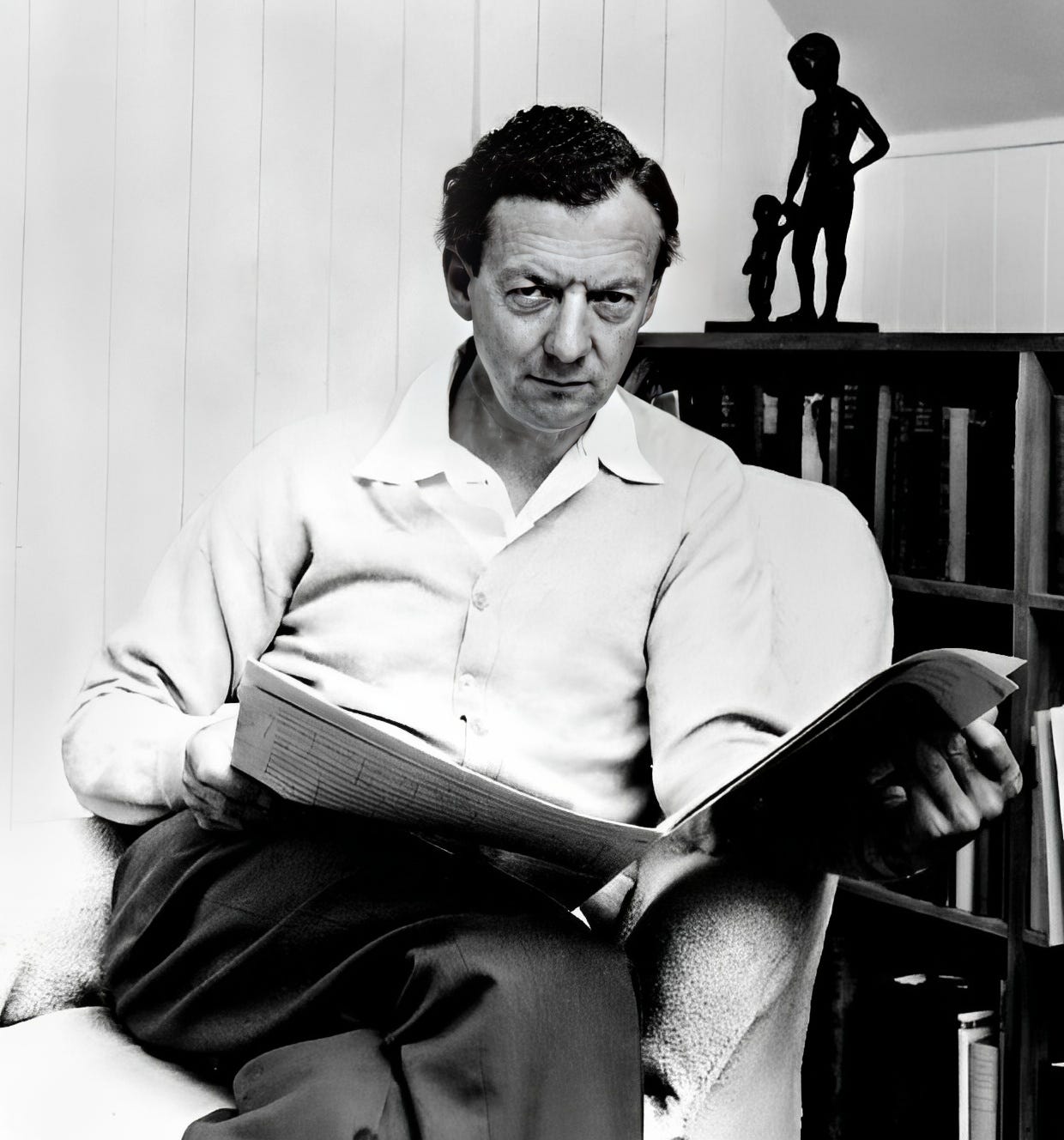
Benjamin Britten arrived in the United States in 1939, drawn by what he vaguely described to Aaron Copland as “a thousand reasons — mostly problems.” He was escaping the weight of English expectation, his complicated private life, and the gathering uncertainties of wartime Europe. For three years he lived an itinerant existence across the country, from the Catskills to Southern California. It was a creatively fertile, if personally turbulent, period.
An American Overture was written in 1941 at the request of conductor Artur Rodziński, who wanted something for the Cleveland Orchestra — and it reflects Britten’s American surroundings. Listeners familiar with Aaron Copland will hear a kinship in the music’s wide-open orchestral spaces, its habit of placing sounds at opposite extremes of the register, leaving a vast, prairie-like emptiness in between. The piano adds a percussive, urban bite; a central section crackles with New York syncopation. It is outdoor music, expansive and optimistic.
Britten himself later disowned the piece entirely — when the New York Public Library unearthed the manuscript in 1972, he claimed he couldn’t even remember writing it, and tried to have it destroyed. It was only after his death that it was published and finally performed, by Simon Rattle and the City of Birmingham Symphony Orchestra in 1983. That strange posthumous journey — American origins, English premiere, composer’s denial — makes it something of a curiosity. Come to it with open ears; it is more enjoyable than its creator ever gave it credit for.
If you would like to play with the Salomon Orchestra, then please
email admin@salomonorchestra.org with your details and experience.
We are always keen to find new players.
Barber: Violin Concerto (1939)
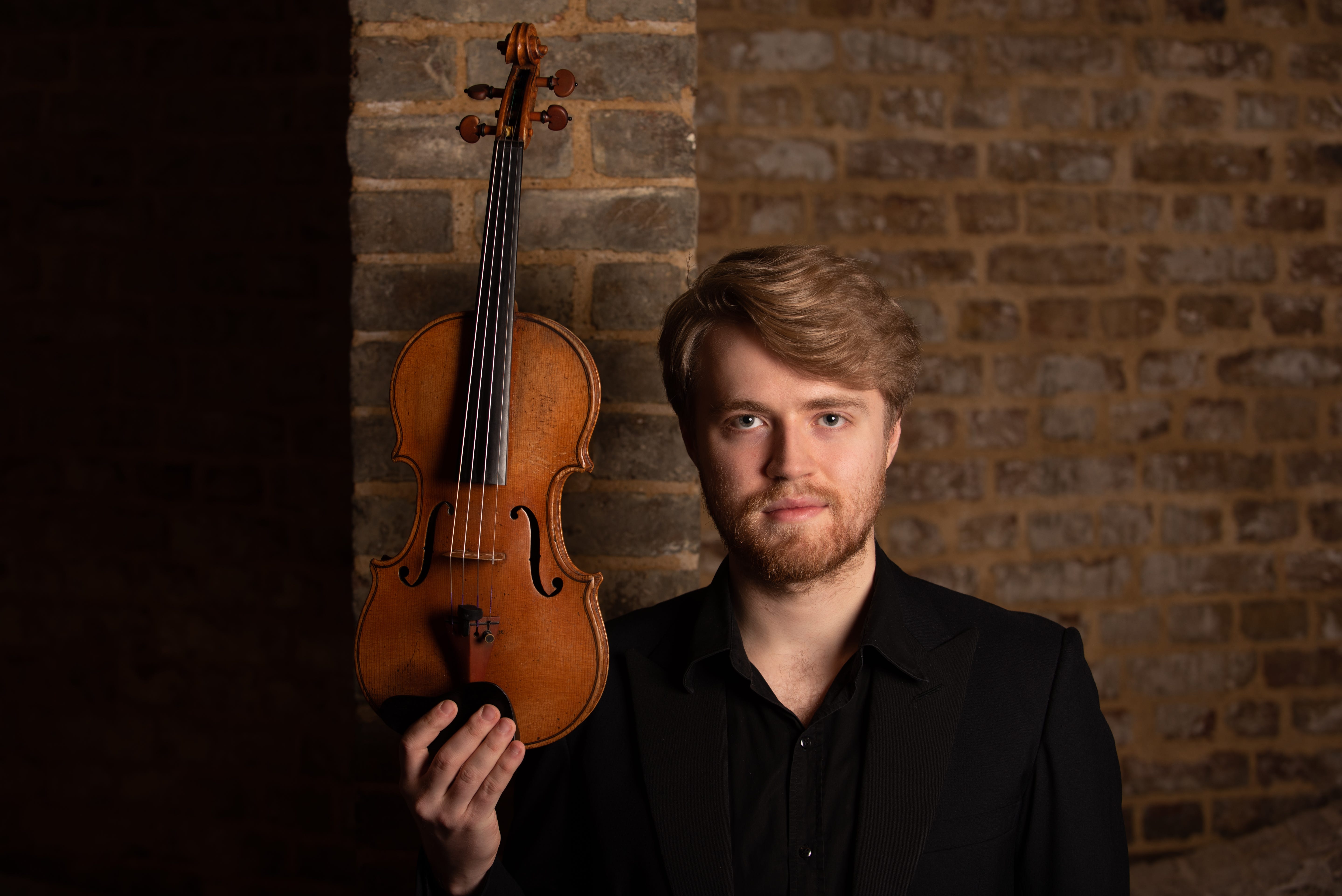
Samuel Barber composed his Violin Concerto in the same extraordinary year that Britten left England — 1939 — and it shares something of the same atmosphere: lyrical, emotionally direct, unconcerned with the modernist experiments convulsing the musical world around it. Barber was always something of an outsider in that sense, a romantic in an age of atonality, and he made no apology for it.
Barber began the concerto in Switzerland, on a commission from the Philadelphia businessman Samuel Fels for his ward, the violinist Iso Briselli. The outbreak of war forced Barber home mid-composition, and the work was completed in the United States. Briselli ultimately relinquished the premiere after disagreements about the finale. Quite what the disagreement was has been a subject of much conjecture, but surviving correspondence suggests the objection was to the movement’s brevity rather than its difficulty. Albert Spalding gave the first performance with the Philadelphia Orchestra under Eugene Ormandy in February 1941.
The concerto’s structure enacts a curious rupture: two expansive, lyrical movements in Barber’s characteristic late-Romantic idiom, followed a modernistic, compact perpetuum mobile finale . Barber, like Britten, was a composer of unapologetic melody working in a period that increasingly regarded such writing as regressive. The concerto, composed as Europe collapsed, makes no programmatic reference to the war, yet its elegiac slow movement is frequently heard as belonging to that moment.
Adams: Harmonielehre (1985)
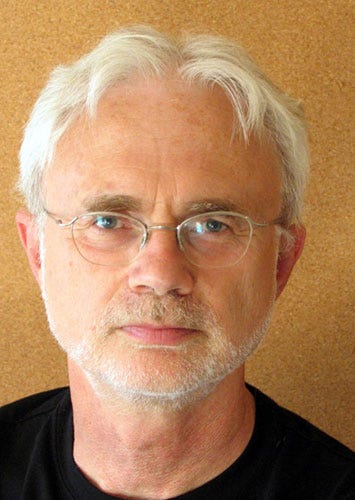
If Britten’s overture is America seen through English eyes, and Barber’s concerto is America in its most romantic self-image, then John Adams’ Harmonielehre is America in its full, churning, late-twentieth-century complexity. Running to forty minutes, it is a symphony in all but name.
Adams takes his title from Schoenberg’s 1911 treatise on harmony — written, ironically, just as Schoenberg was abandoning tonal harmony altogether. Adams’s work is a pointed response: a demonstration that the harmonic language Schoenberg declared exhausted could be renewed by fusing it with the pulsation of American minimalism.
The piece emerged from an acute creative block. Adams describes its release coming in a dream of an oil tanker rising out of San Francisco Bay like a rocket — translated directly into the pounding E-minor chords that open the work. The second movement, “The Anfortas Wound”, invokes the maimed Grail king as an image of creative paralysis, with climaxes recalling Mahler’s Tenth Symphony; the finale, “Meister Eckhardt and Quackie”, imagines the medieval mystic carrying the composer’s infant daughter, its harmonies gradually ascending towards a blazing E-flat affirmation.
A unity of creative crises?
What unites these three works is more than geography. All three were composed by men navigating creative crises — exile, rejection, paralysis — and all three emerged from that difficulty as affirmations rather than laments. All three, too, are works that resist easy categorisation: lyrical yet rhythmically driven, rooted in tradition yet reaching for something new. They reward the listener who comes without fixed expectations and simply lets the music take hold. That is, in its own way, a very American invitation.
No posts
Comments
Nothing yet. Say the first thing.
Sign in to join the conversation.