
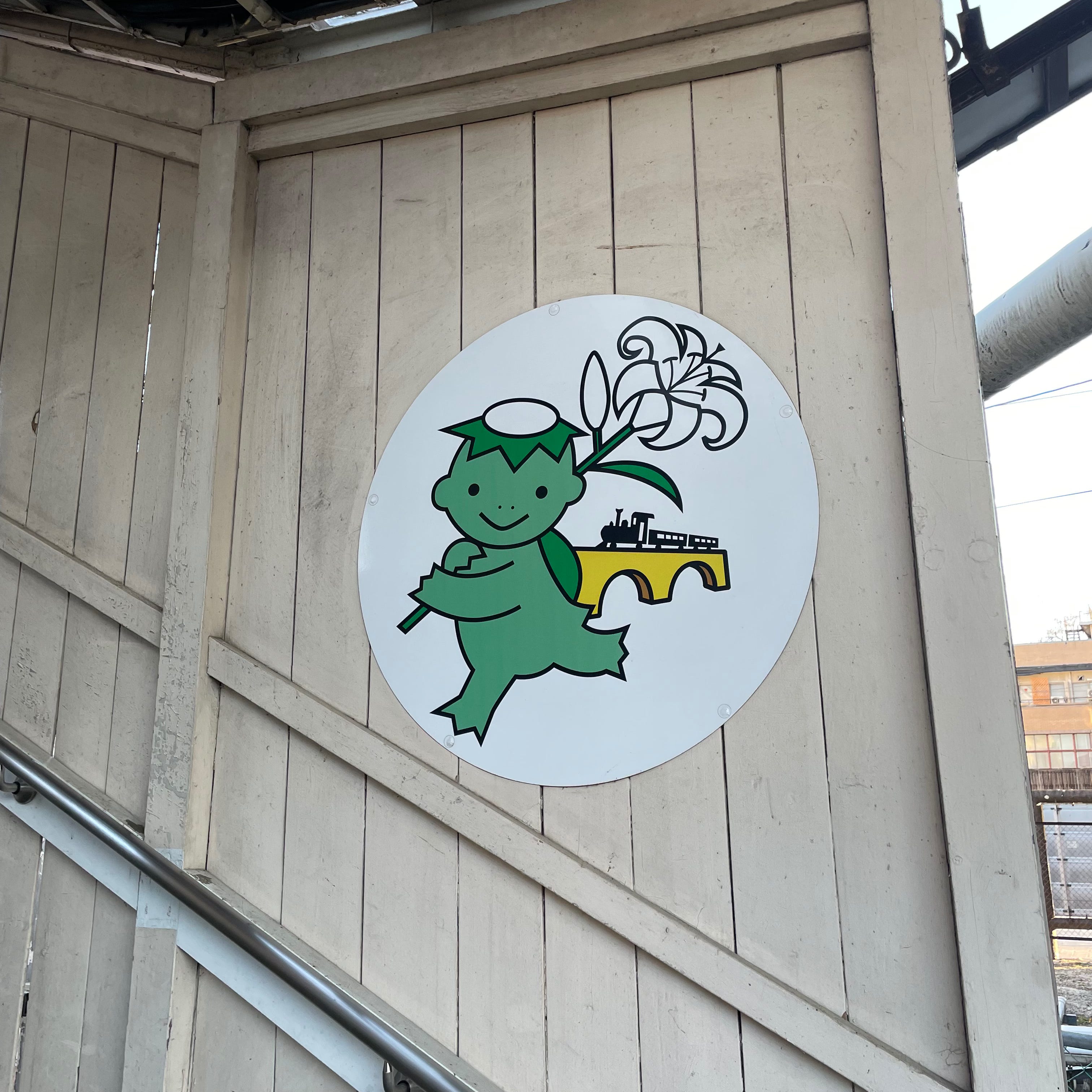
What do I and the mythical kappa have in common, you might ask?1
Well, we’re both fond of cucumbers. So crunchy and fresh, I was making simple cucumber salads long before Cucumber Guy made them the vegetable of the summer.2 And, we both have a certain fondness for Tōno, in Iwate Prefecture — famous for its folklore, including a certain famous kappa pool — around which this post is slightly based. I am, I would say, less likely to be found bathing in rivers, or indeed removing organs from adversaries or sumo wrestling.3
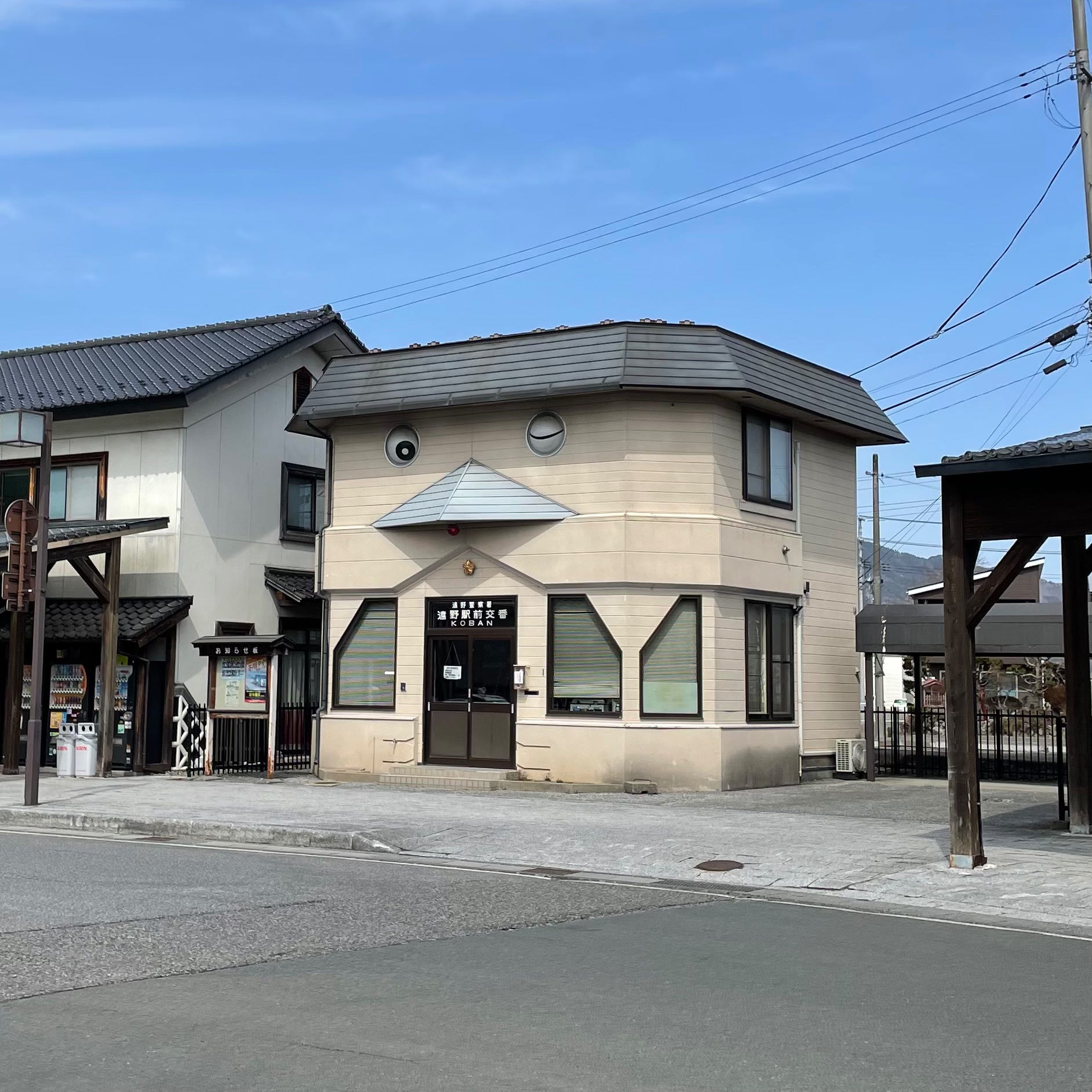
Perhaps less famously, but more importantly for this post, Tōno is also home to one of the more accomplished doburoku producers, producing the lovely liquid (or perhaps semi-solid porridge) that is non° — read ‘nondo’.
Doburoku is the unfiltered sibling of sake. All sake must be filtered! — the maxim I have my WSET students chant in unison, lest they forget. Of course, some sake is less finely filtered, giving us cloudy nigori styles, and indeed doburoku share certain qualities with the thickest within the nigori category. Sadly, doburoku was long reviled as tart and chewy moonshine, but happily some fantastic examples are now available commercially, my other go-to example being the fruity, moreish Niwa no Uguisu from Yamaguchi Shuzōjō based in Kurume, Fukuoka Prefecture. The texture might take some getting used to, but I think it’s a worthwhile endeavour to do so, if you haven’t already.
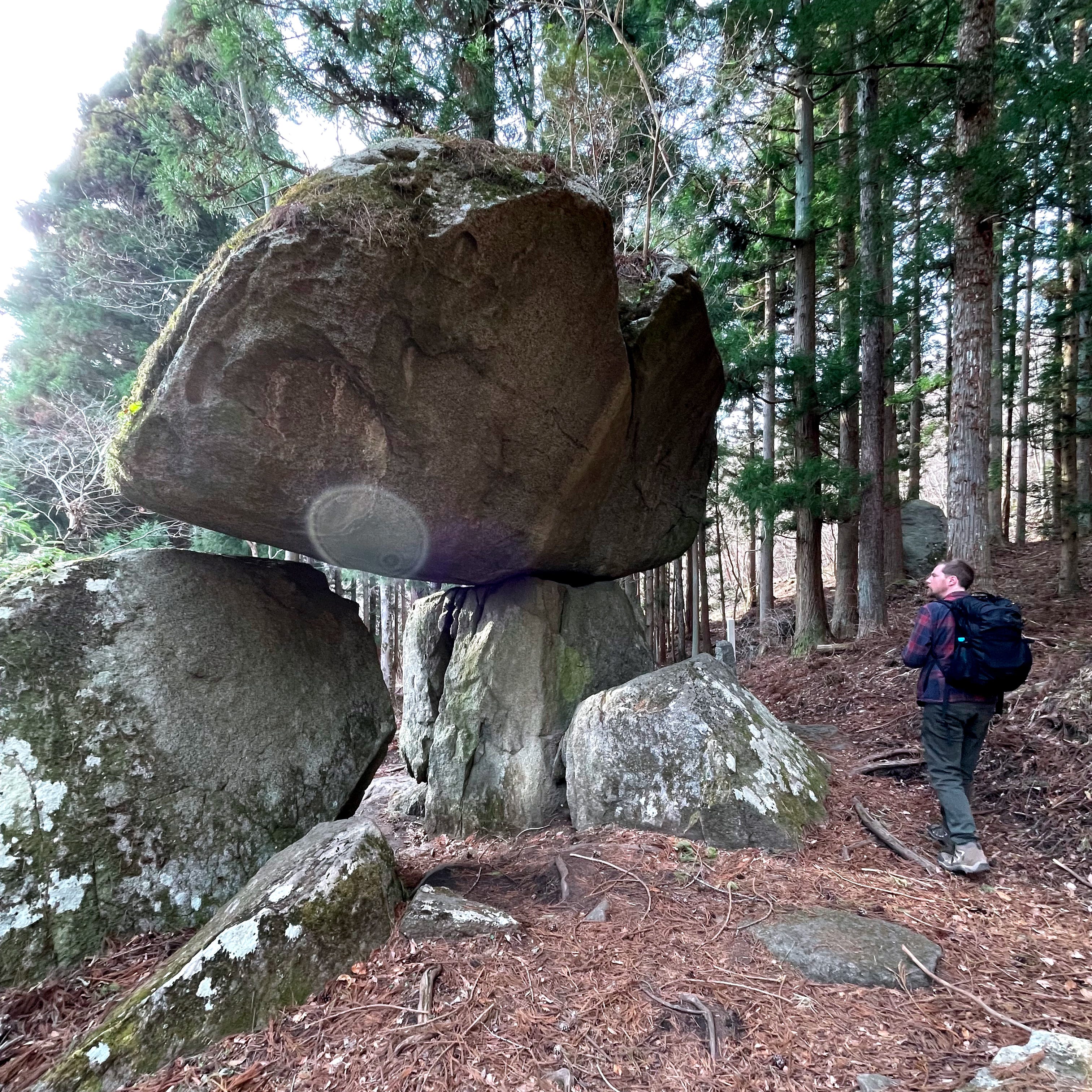
Back in the spring of 2023, I happily stayed at the auberge attached to non°. I was with my husband Patrick, about a third of the way into a train-based journey running the length of Japan: starting in a snowy Sapporo up in Hokkaido, stopping off at Tōno, Tokyo, Osaka, Fukuoka, and then finally Nagasaki, where we caught some of the first cherry blossoms of the year. We made some happy memories in Tōno in particular, whether it was looking at curious rocks4, or being treated to a very special meal at the perfectly appointed inn, where we were the sole guests.
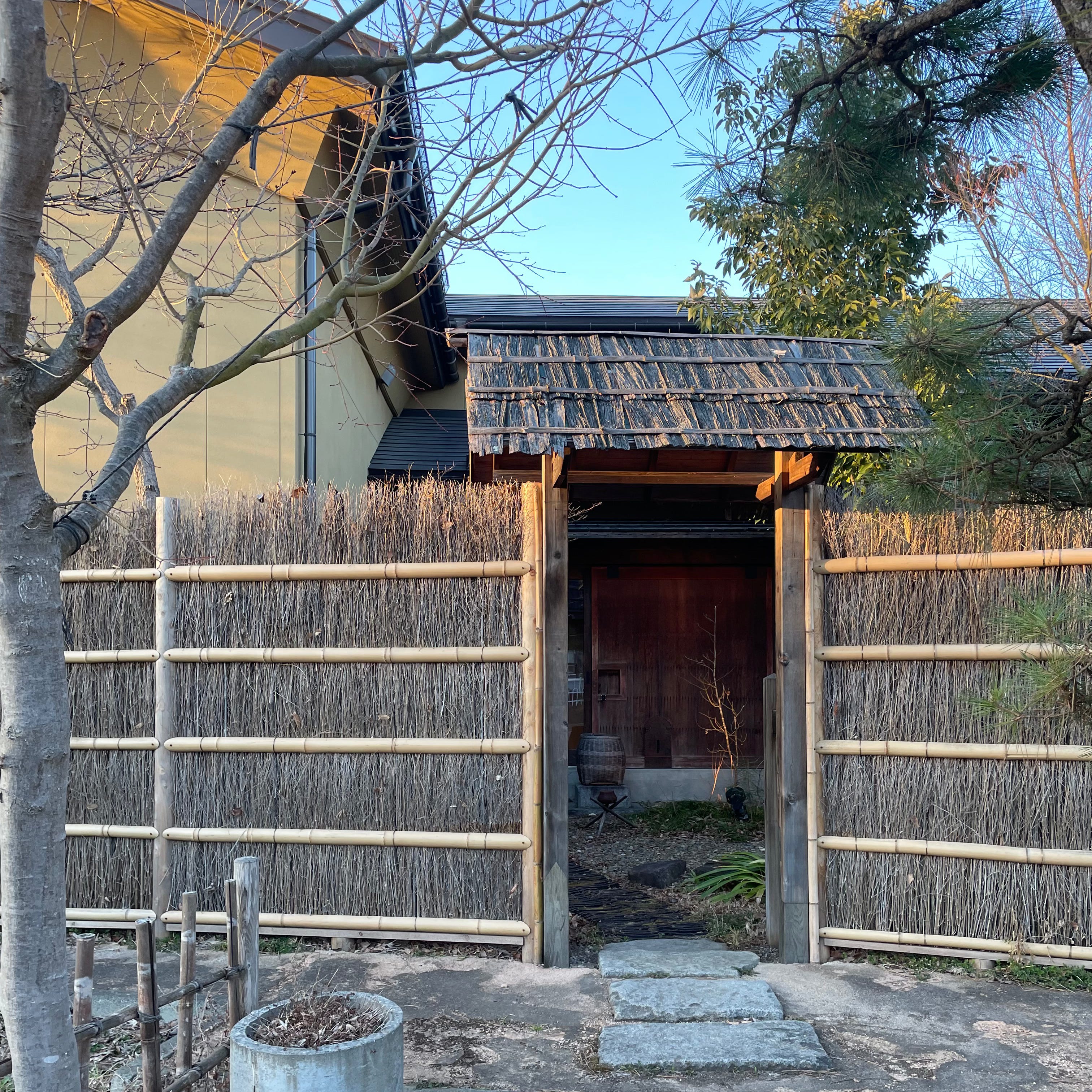
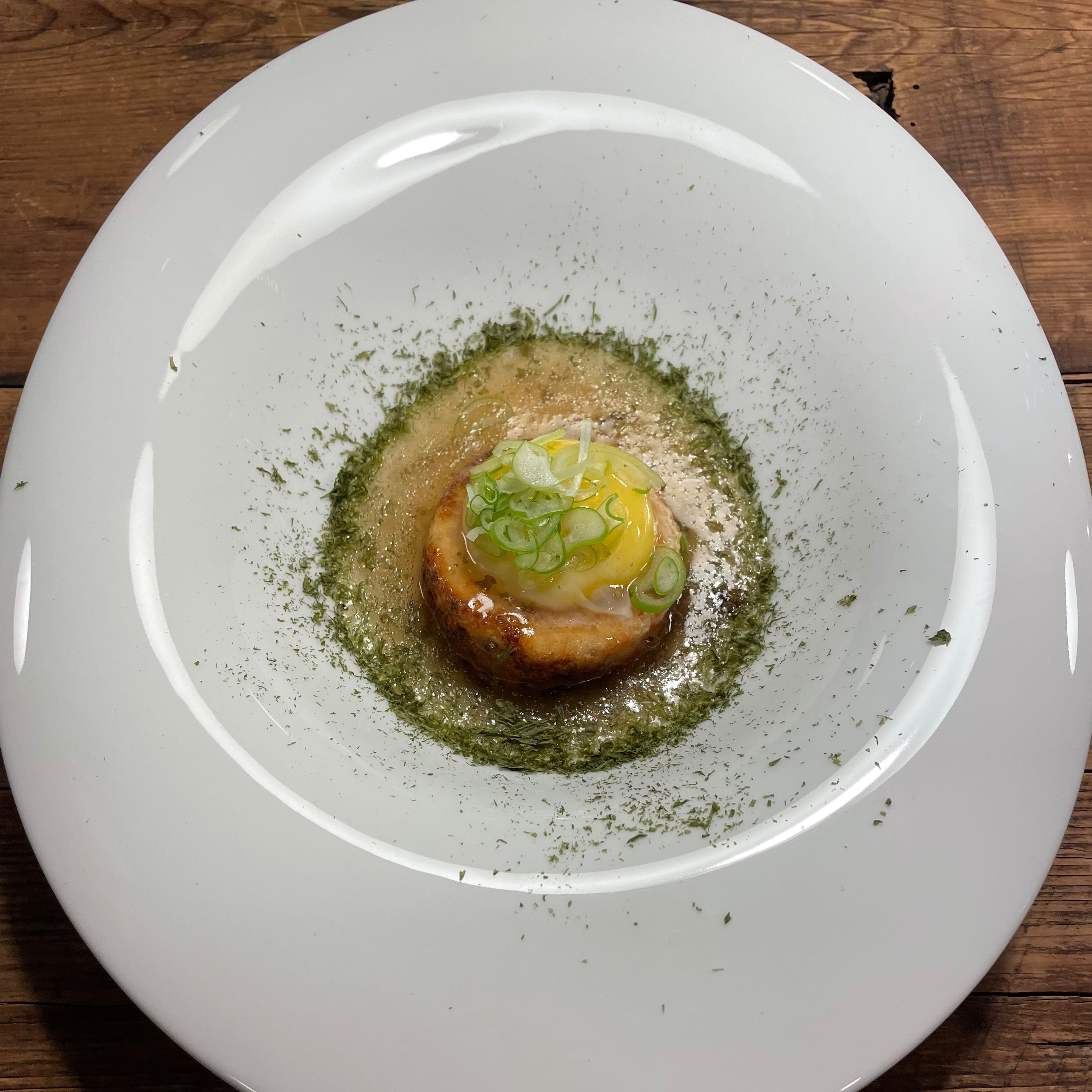
The most remarkable facet of non° is their natural, field to bottle approach. Rice is grown, just a stone’s throw from the brewery, pesticide- and fertiliser-free. Unsurprisingly, the same philosophy extended through the auberge also. The most memorable dish of the meal was a nattō cake of sorts (imagine a slightly more flavoursome hash-brown?) served with an egg. The nattō — homemade — was fermented in bundles of rice straw made from the fields we could see from our dining table, which our chef (also brewer and proprietor of nond°) had tended. Meanwhile, the egg came from the resident chickens, fed on the nuka of the polished rice which made the doburoku we were drinking. The nori which added colour, seasoning, and flavour, was harvested from a local river. A mindbendingly sustainable, near-zero food-mile dish.
Fast-forward twelve months, on my most recent trip to Japan, in of February this year, I’m doing my final shopping in Tokyo. I’ve popped into the wonderland that is Imadeya in Ginza, where I perform the obligatory last-day-sake-stock-up, utilising any whisper of space remaining in my suitcases. And it is here that I spy a couple of bottles of non°. Only slightly concerned about how they’ll travel, I pick them up as a special, meaningful souvenir5 to take back to London. One of the bottles, made with the rather more historical mizu-moto (an analogue to the bodai-moto method); the other, made according to the slightly more modern — but not totally conventional, at least by modern standards — kimoto method.6 Unpasteurised and — of course — unfiltered (and so, full of life!), these little bottles swiftly made their way into first the main fridge, and then the sake fridge, once I’d *ahem* made some space.
I finally got round to opening these two beautiful bottles last week. I will say, I was anxious. Partly because doburoku can be unpredictable at best, with significant bottle variation possible. Partly because I’ve been sitting on them for months, making them around 12 months old versus the stated release date. And partly because some precious memories were at stake here — I didn’t want to tarnish that special evening we had in Tōno.
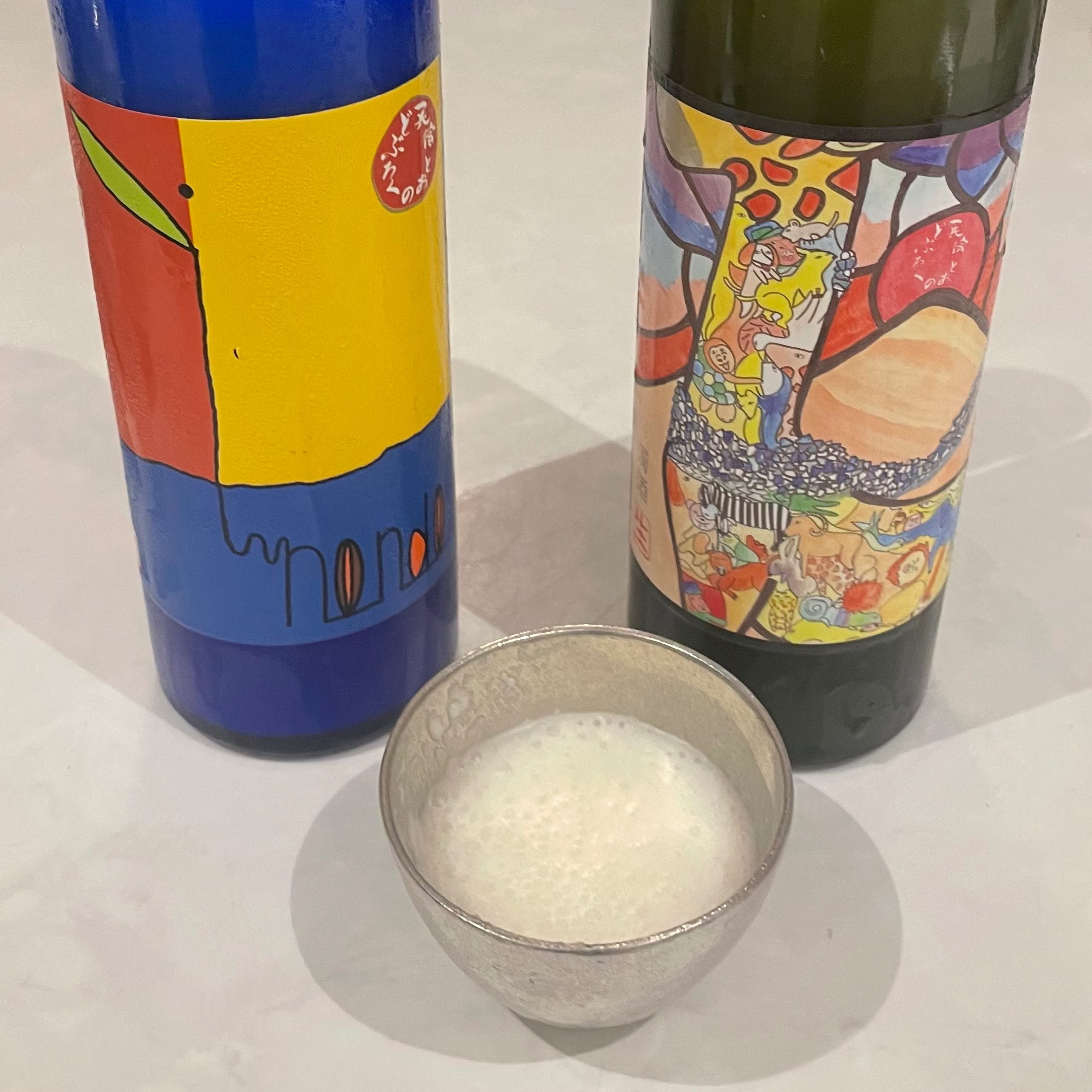
As instructed by the closure (a special one for potentially ‘active’ sakes, with a pierceable aperture to release pressure) I ceremoniously broke the seal on the first bottle — the kimoto — with a pin. The liquid fizzed gently, and the bubbly white porridge rose coolly into the neck of the bottle. Phew, I thought to myself — next! With what was apparently severe hubris, I nonchalantly repeated the same with the mizu-moto — and while most of the liquid did stay in the bottle, some evidence remains on the kitchen ceiling. Cue me shrieking and throwing the bottle into the sink before taking a more rational approach to the cleanup.
Excitement aside, I needn’t have worried. The kimoto was, I think, in perfect condition. Robust but round acidity, complex with spice, but still fruit dominant. The texture of the rice solids felt a touch pudding-like — still solid but yielding. Pleasingly thick, and rich, but not gloopy or cloying. And no negative signs of age, really. The fruit may have been a touch fresher in character upon release, but I didn’t mind the now ripe to stewed peaches, as this complemented the doughy rice and hints of cardamom.
The mizu-moto — perhaps portended by its unforgettable debut — I think had seen some evolution in the bottle at some point, as the alcohol felt a whack higher than the stated level — perhaps the yeast had continued to work for a while longer? And, maybe relatedly, the sake was far aromatically fresher than the kimoto! As one might expect, the acidity was different too: much crunchier, and more sour, with the brew having an overall impression of heightened purity and delicacy. Lean and refreshing, with flavours of fresh green apple and watery nashi. The rice was a touch more al-dente, while the texture of the liquid was both thinner than the kimoto, yet slightly more sticky in the cup. I wouldn’t have guessed any semblance of ageing based on taste alone.
The tin vessel was a good choice for both, emphasising the textural quality of the doburoku as well as being pleasingly cooling. I did briefly experiment in an ISO glass7, but this was rather unsuccessful, leaving the mizu-moto a touch thin, and bringing out a slightly unattractive oily nut-skin flavour in the kimoto.
Patrick — who has a staggeringly strong memory for taste and flavour, and frequently frustrates me in his ability to nail blind tastings — summed it up beautifully: “It’s taken me straight back to Tōno. It’s magical”.
So even one year after release, these lively bottles were a joy to drink. While each and every day, I’m more convinced of sake’s ability to age and develop pleasingly — should the product be of sufficient quality and structure — I was truthfully not expecting such a pleasant time with some not-so-freshly-made doburoku. So now I’m now wondering… how much longer they could have lasted?8 Perhaps as long-lived as our trusty kappa?
Maybe, there’s something in the water of Tōno…
I rather do hope this question hasn’t crossed your mind previously.
My limited social reach has not, as yet, caused industrial shortages of the vegetable on small, volcanic island nations. I’ll try harder in the future.
I do follow sumo with some regularity, however! The next tournament is coming up in a couple of weeks, with the banzuke just released. It might even be Takakeisho’s last tournament, from what he’s said in the past — one to watch!
Here, said curiosity, the tsuzuki-ishi 続石 — truly massive yet finely perched. Husband for scale (5’11’’).
Perhaps more of an apology to Patrick for disappearing for a month.
Thank you to Martin Sturma for catching an error I made here — happily updated!
I very much dislike ISO glasses, at least where the aim is to enjoy the beverage. I’m unsure why I didn’t try in a normal wine glass…
Maybe a future experiment and therefore Scribbling, if I can source more on my next trip!
Thank you for reading this far, my first real Sake Scribbling!
If you’ve had some aged sake or doburoku which surprised you, please share your story in the comments — I’d love to hear about it.
And, if you aren’t already subscribed to my Scribblings, please feel free to do so by clicking below!
Cheers!
Henry
No posts
Comments
Nothing yet. Say the first thing.
Sign in to join the conversation.