
Back in January, I made a Threads post about psychosexual projection and gendered dynamics in romance novels. I’ve not stopped thinking about it, and far from walking it back, I’m here to connect it to Jungian psychoanalysis, booktok dark romance, heteropessism, and gay narcissism.
Mercury is direct and so am I!
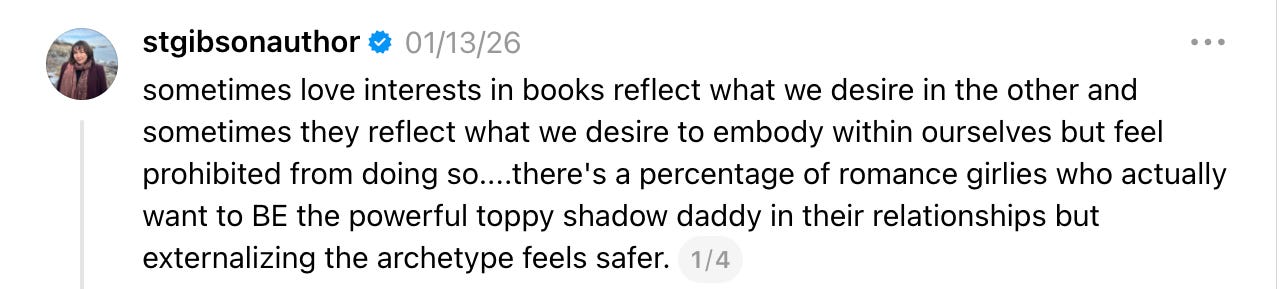
I pray we can all bring our smut and shadows to the altar of integration together, but before we undertake that great work, we must remember the Jungian axiom that has become my north star:
Until you make the unconscious conscious, it will rule your life, and you will call it fate.
What turns you on, what scares you, what flatters your ego, and what threatens it…All those things are the truth of you trying to break through to conscious awareness.
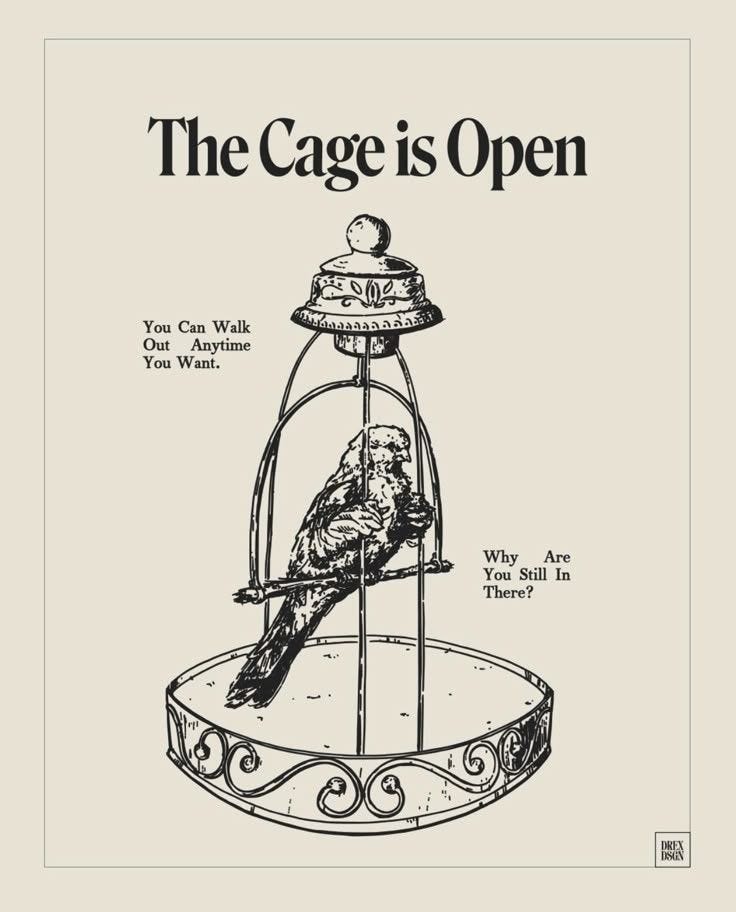
So what psychosexual secrets lurk within the pages of shadow daddy romantasy and mafia boss dark romance, and what the hell does it have to do with the dating crisis?
This is Metaphysical Girl, an interdisciplinary newsletter about psychoanalysis, literary critique, spirituality, and sexuality, and I’m Saint, esoteric sensualist and internationally bestselling gothic author. If any of your favorite words were in the previous sentence, subscribe here to get access to my entire back catalog.
Swiss psychologist, psychiatrist, and mystic Carl Jung conceptualized the animus as the masculine principle within every woman, which is often rejected, displaced, or unable to find healthy expression in her life. In a similar fashion, men’s psyches posses a feminine anima, a nebulous but persistent sense of the ideal woman shaped by his own experience of his femininity — or perceived lack of it.
We are limited in our awareness of the anima/animus, only perceiving it in glimpses, but it comes into sharper focus in other people. Often, those who date heterosexually are driven to find their anima or animus in the beloved, whether they know it or not.
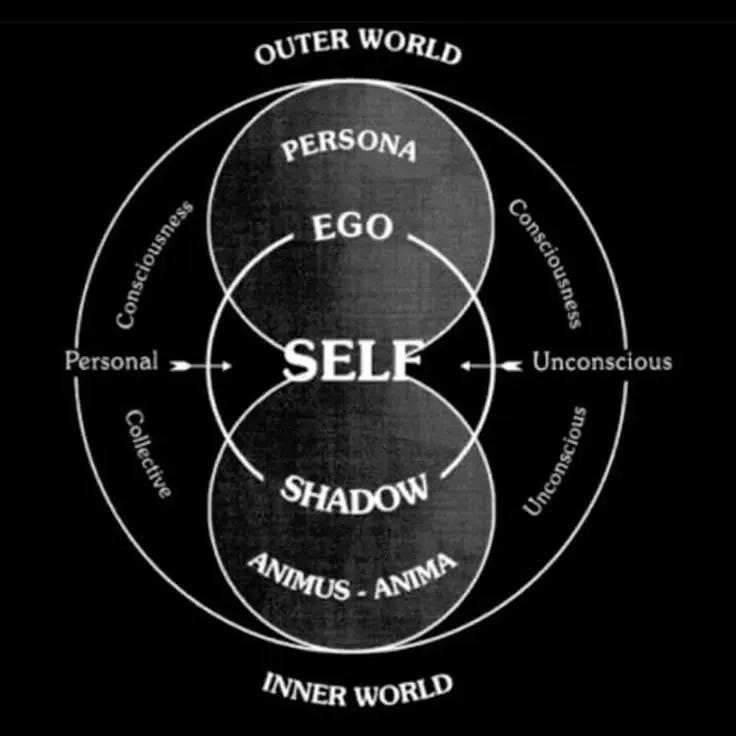
When someone feels right, familiar, or irresistible in a way we cannot pin down, it’s often because they’re an expression of those qualities society makes us feel we cannot express without jeopardizing our own femininity or masculinity.
Personality traits aren’t inherently gendered; we have simply learned to code them as such, and the coding makes them alluringly “off limits”. The coding, and the prohibitions around it, create a powerful magnetic charge.
You’ve seen those tiktoks of women reporting the phemenon of their boyfriends radiating a repressed envy towards them, particularly regarding those qualities the men see as intrinsically feminine? You’ve rolled your eyes at the hard launches of women dating similar men over and over again who act as bandaids over the parts of their own psyche begging for development?
This is Jung’s principle at work. The cycle that will always repeat until we become aware of its existence.
I believe this theory holds water in a queer capacity, speaking as a bisexual woman who dates women, men, and everyone in between. The dynamic can play out in queer masculine/feminine couplings, or in masculine/masculine and feminine/feminine ones, or in ones that defy the binary.
While many queer people choose to build relationship structures that do not replicate gendered dynamics, its worth remembering that the anima and animus are fluid, contextual, shadowy.
And let’s be honest, many people who would be happier in queer relationships keep pursuing straight ones because of the anima/animus expression they provide. It just feels like they fit with this other person, and that the fitting falls along gendered lines they couldn’t cross without holding another person’s hand, when in fact they are falling in love with the underdeveloped parts of themselves.

The psyche longs for wholeness as the spirit longs for full expression, and many people choose to only experience themselves through the safe degree of separation that is another person.
Which is of course, an impossible expectation for the beloved to fill.
When we see a woman not as the woman she is but as an expression of idealized femininity, or simply as the bearer of the “feminine” qualities we refuse to develop in our own life, we never enter into full communion with her. She is always on a pedestal she didn’t ask to be put on, and therefore always at risk of being dashed to the ground when she fails to live up to our ideal.
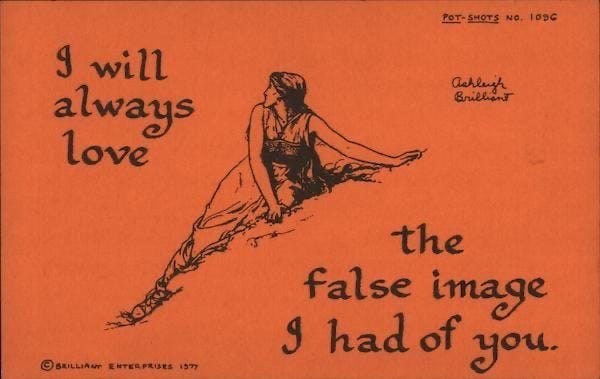
The magnetic charge that attracts us to someone else can also repel us, if resentment reverses the electrical current.
I’ve edged you long enough with social theory, so here’s my hot take: many romance readers who find themselves drawn over and over again to the same archetypal hero (or heroine!) are in fact being drawn to an expression of their own animus/anima. Hear me out I know how you girls like to tussle!
Comments
Nothing yet. Say the first thing.
Sign in to join the conversation.