
Note: this post might get cut off by Gmail, you can see the whole thing in browser at the link in the upper right! If you want to support our trip and buy a print from our adventure, check out the new print store.
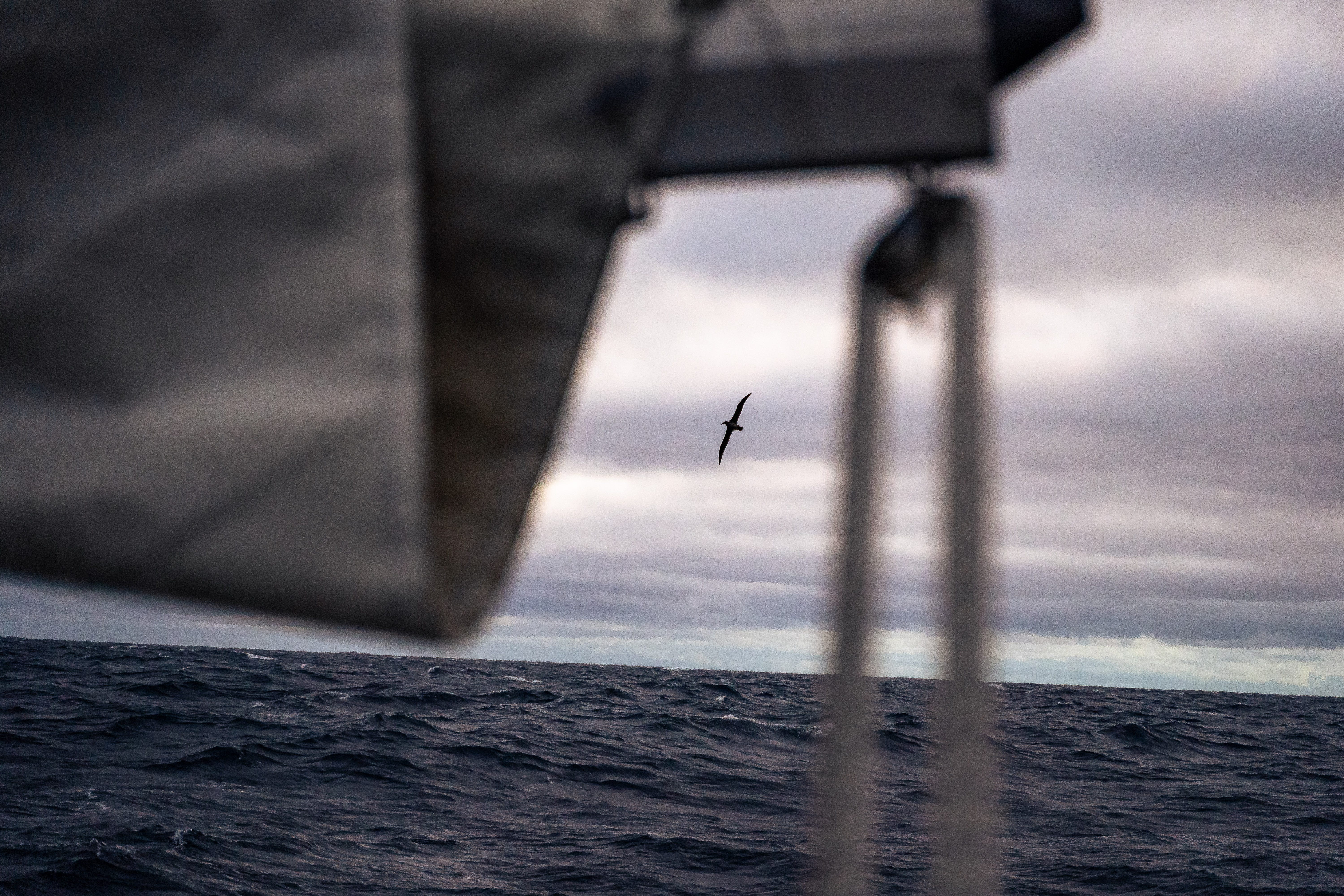
On Saturday we sailed back under the Golden Gate Bridge after transiting 763 nautical miles down the Pacific Coast on our most intense passage yet. When we set out on a passage, the world seems to both shrink and expand. On the one hand, it’s just us and our boat surrounded by ocean, tending to our immediate needs to sail, sleep, eat, and stay safe. On the other hand everything feels expansive: sweeping views of the horizon, otherworldly encounters with wildlife, and watching the miles peel away down the coast. In this post we’re sharing lots of journal entries, raw and as we wrote them in the moment, in an effort to bring you along with us into the day and night rhythm of a passage.
From Jeremy’s journal:
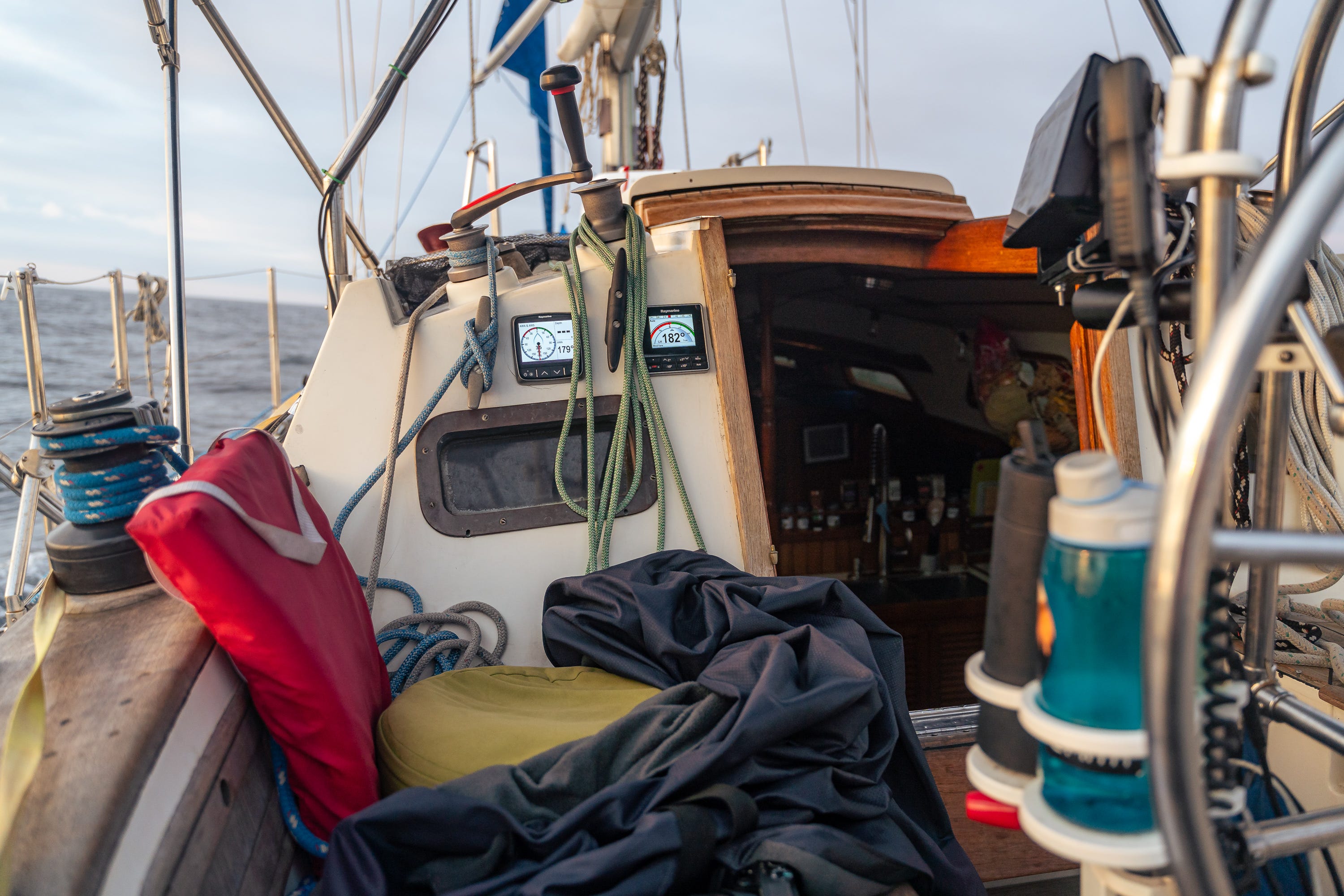
I wake up bleary, startled by my 4:50am alarm into the swinging red glow of the cabin, still rolling wildly in the following seas. It takes me a minute to remember what the alarm was for, pull myself away from the seductive urge to snooze for nine of the ten minutes I need to get ready for watch. I’m glad that I actually slept this time, but the rousing is much harder than it was from the 15 minutes of restless sleep I got on my last stint.
The world outside is deep grey, darker now than my last watch, I assume the moon has set somewhere high above the overcast clouds. As I step into the cockpit to get briefed by Maddie I see tickles of bioluminescence in the foaming wake over her shoulder, a small perk of the dark. Maddie points out a handful of lights on the horizon, a couple container ships waiting to enter the Columbia River, and a couple she thinks are land. That means visibility is up to almost 30 miles if she’s right, a welcome change from yesterday’s endless fog.
I position myself in her warm but damp nest in the port corner of the cockpit, surrounded by all the displays and in quick reach of the autopilot controls. Maddie has been beeping these in rapid trills all watch as she adds and subtracts degrees from our course to keep the sails full. My butt on the flotation cushion and wrapped in the picnic blanket, it’s almost comfy with the winch handle on the jib sheet positioned just so that it can form a rudimentary backrest between my shoulder blades. I notice this has the added perk of being a built in jibe alarm, as the handle starts to give whenever the jib collapses.
I settle in with my audiobook, too groggy to think of anything more stimulating or productive than fruity romantasy, and get happily swept away into the saucy caper. Slowly over the next hour I notice the light building again into a grey dawn. My stomach grumbles, queasy with nothing but the remnants of the three shortbread cookies I binged last watch. I chug the cold remnants of Maddie’s peppermint tea, too lazy to get up and fix anything more substantial.
Part of managing watches together is being able to check in on our stamina and capacity and communicate it to each other. Compared to what we were doing as a couple in our previous lives, ocean sailing together can feel like a mind-blowing expansion of our teamwork and trust. From Maddie’s journal:
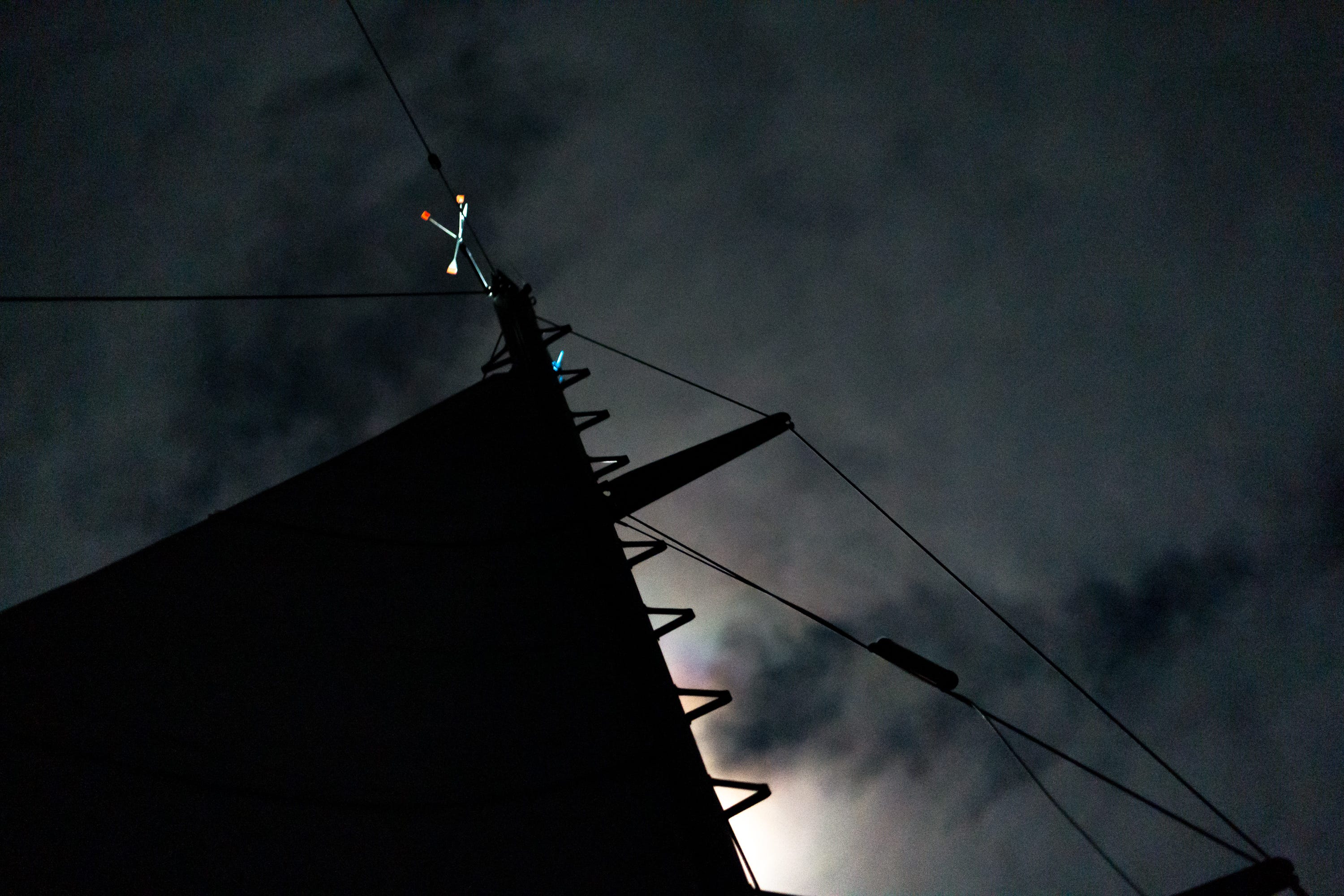
The fourth hour of my watch approaches and I’m feeling surprisingly awake considering it’s 4am. We reefed the mainsail at 1:30, an unfortunate hour and 30 minutes into Jeremy’s watch, meaning his sleep got interrupted right in the middle. I climb down the steps to try and catch Jeremy before he’s fully up and find him standing, swaying in the living room with his waterproof pants already pulled over his PJs. I tell him I’m feeling good and can go for another 30 minutes so he can go back to bed for a bit. It takes him a minute to process what I’m saying since his brain is trying to wake up. He squints at me in the dark, soft red glow around us, and asks “are you sure?” “Yes!” I reply. I’m jamming to Ariana Grande and definitely have another half hour in me.
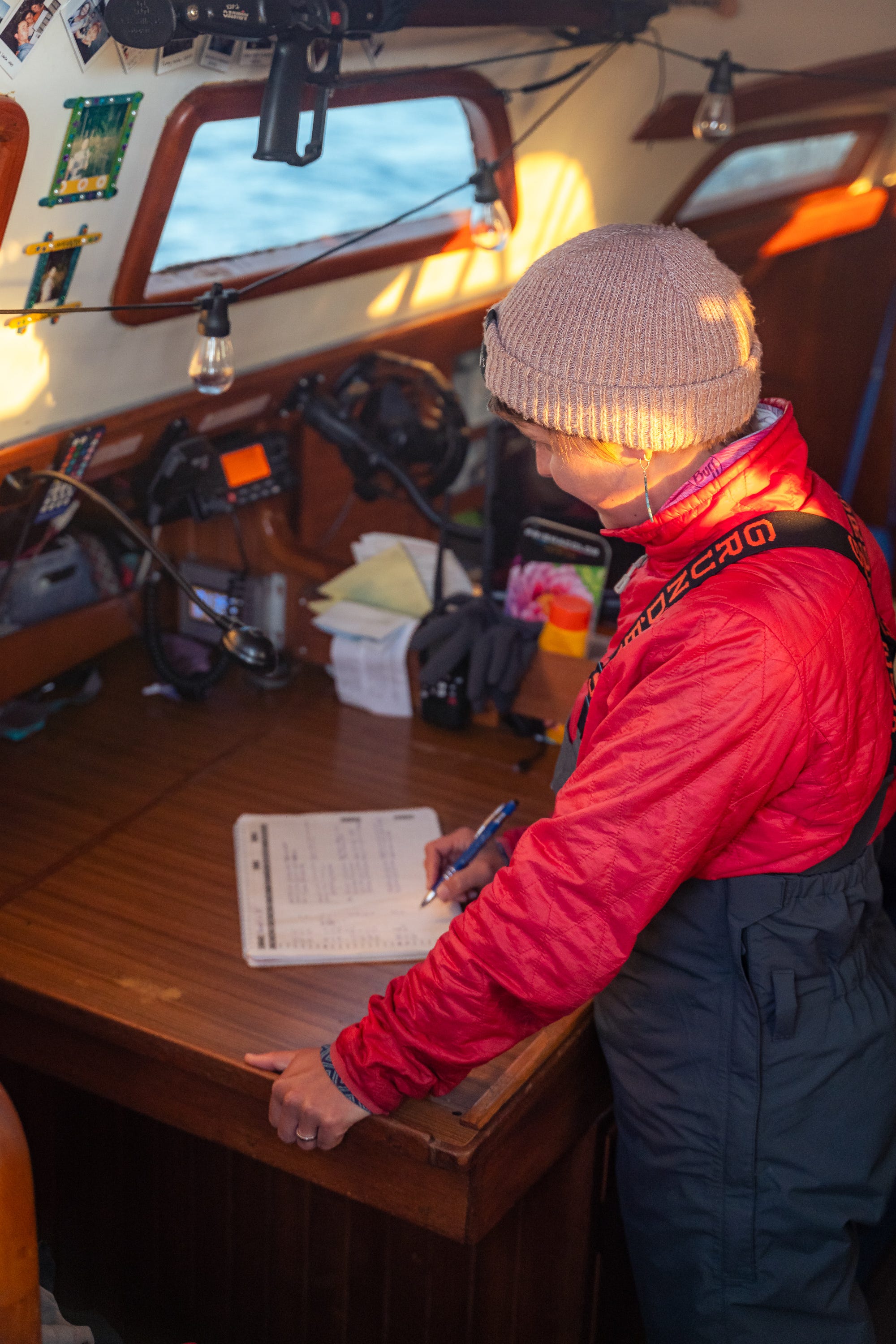
I’ve been thinking about all the ways I have to check in with myself about what I need out here. Asking myself: how is my body doing? How is my focus? My mental resilience? When did I last eat? And we have to ask for what we need from each other. Can you take over the helm so I can use the bathroom? My arms are sore from steering, can I cook dinner while you steer? I really need more sleep, are you okay being on watch for an hour while I try and nap? A four day passage isn’t that long in the scheme of people crossing oceans, but for us it’s the longest passage we’ve done and we’re building up our stamina and learning our rhythms.
Jeremy:
Maddie and I sit side by side in the cockpit, facing away from the punchy gold light of the sun setting clear and cloudless on the horizon. I tilt my head to rest on her shoulder, surprisingly comfortable with my flappy sun hat brim folded against the ridge of her PFD. We talk about AI and the future, stratification of society and what skills will be lost to ChatGPT, drifting in and out of just sitting and watching. We look out together through the frame created by the stainless bars and blue canvas of the Bimini, our “windowsill” adorned with jibsheet macrame and winches in place of potted plants. The ever-changing view rolling up and down, side to side as the autopilot tracks the wind and the waves pass under our stern.
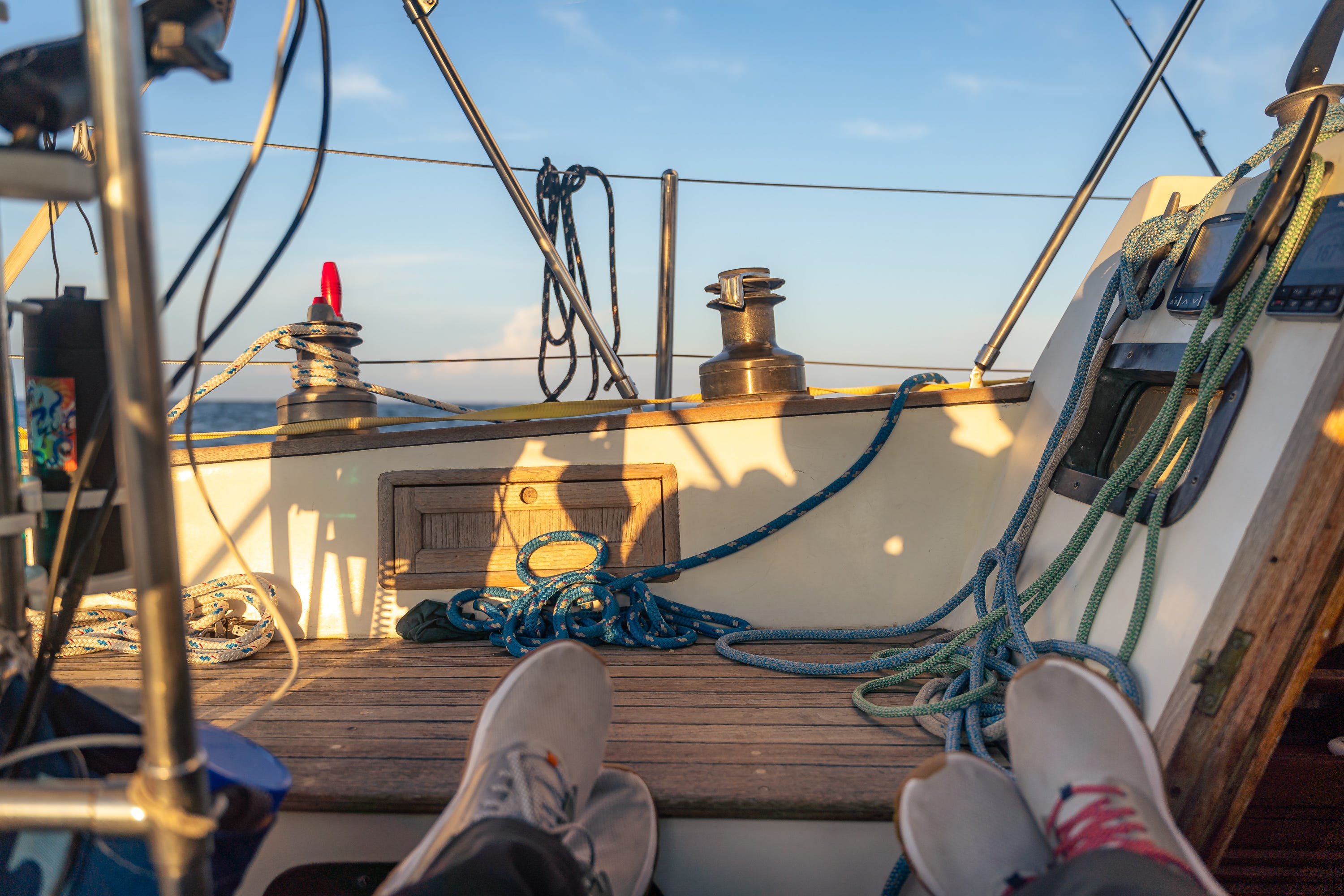
We talk about how much we’ve been appreciating each other recently, how I have been thinking about how so much of daily aggravation in a partnership can be related to gaps between how good you are at something and how good your partner is— resentment from wishing they’d catch up or buried shame wanting to be just as good. But that really, in order to maximize your collective potential in a relationship, you want there to be as big a delta as possible in a lot of categories; that’s how you know you are complementing each other.
We’ve been doing a good job of that recently, owning our shortfalls and the things we didn’t get around to, appreciating where the other is picking up slack or taking on something that we’re not good at. It occurs to us that offshore passages are kind of a useful forcing function for that, there’s really nowhere to hide your true capacity or what has gotten done and what hasn’t, and there’s also generally no question of whether something is necessary or it isn’t. The immediacy of need liberates you to be candid about what you can and did do, and work together on what needs to be done. The fact that there is never really any wasted time means you can always be sure the other is picking up slack in some way or another. All leisure is necessary rest, all action is necessary contribution to a shared goal.
The rhythm of a passage is dictated by nature. There can be hours of restful calm, where we’re mostly just chatting or staring at the water going by. There are late night hours of boredom and fatigue, where the minutes stretch long and you just want your watch to be over. Then there are punctuations of action where whales show up, or the wind changes direction, and you are whipped into a white-knuckle flow state, hours peeling by in the excitement of a challenge or the satisfaction of a task.
Jeremy:
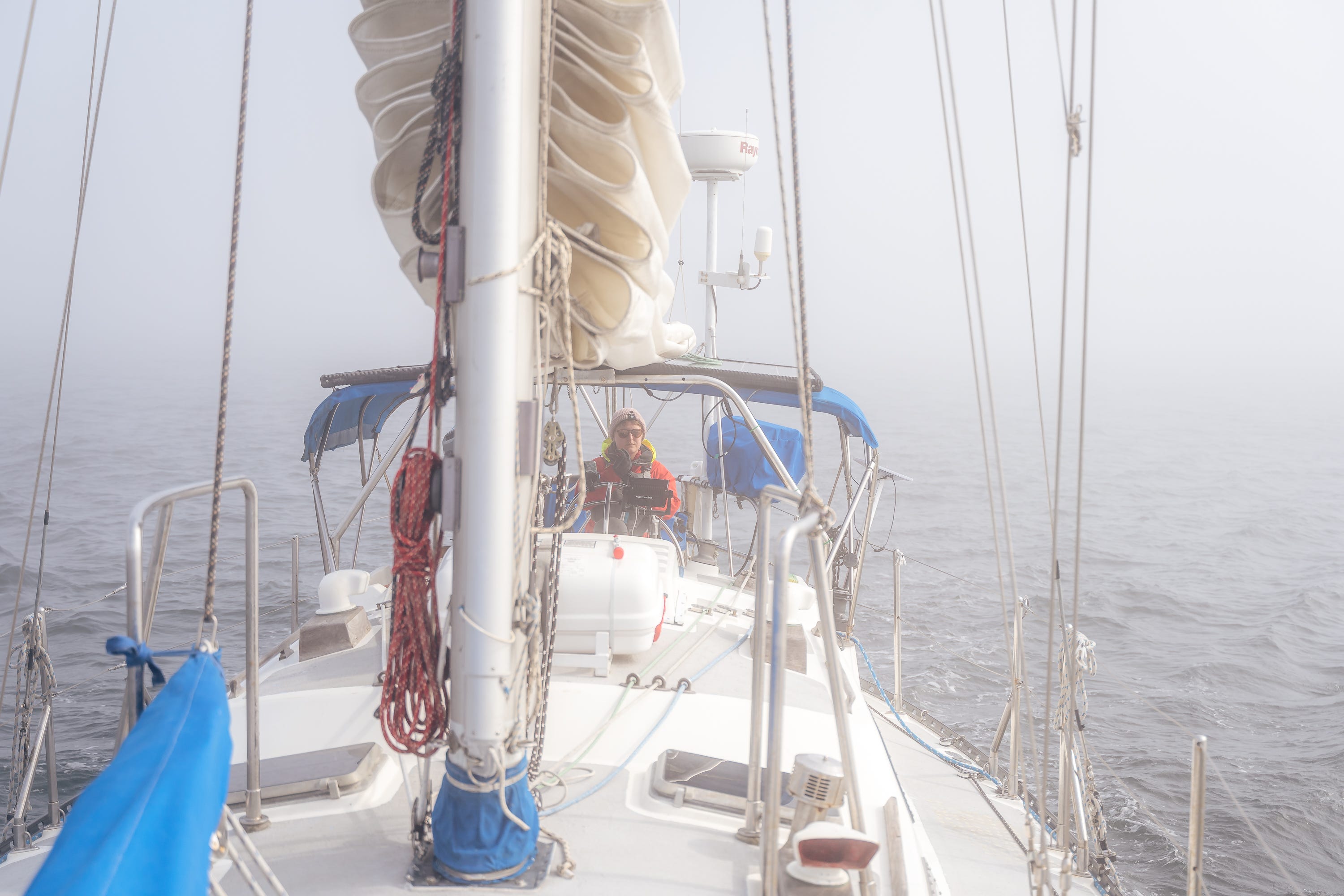
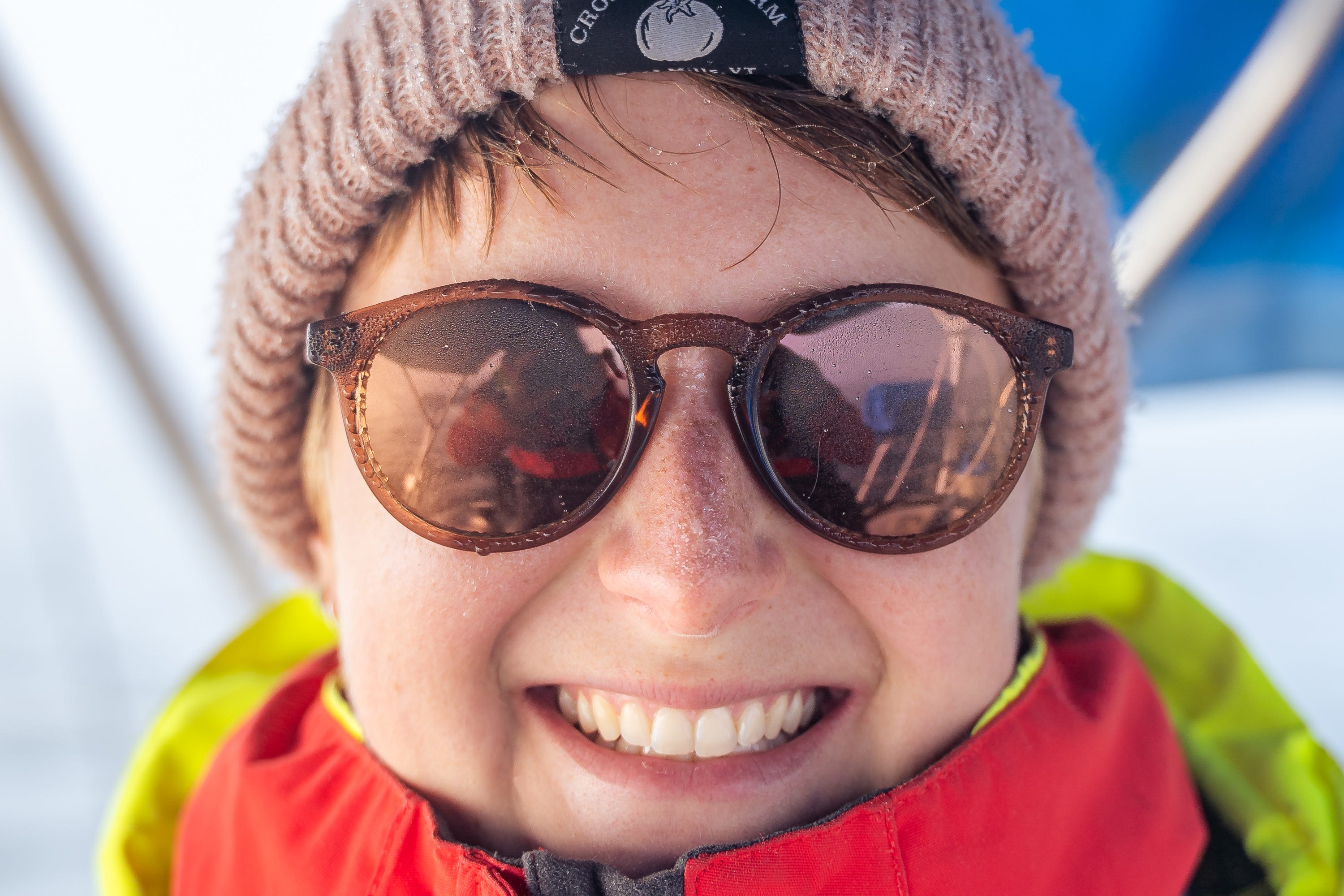
I emerge for the next watch into pea soup. The fog is so thick you can hardly see past the green and red haze of the running lights on the bow. Any exposed surface or body part gets quickly misted into a drench, so after a brief handoff with Maddie, I hunker on the steps and feel grateful to be short enough to keep my head out of the slipstream. We pass a seabird who warbles a comically human-sounding “waAAAaaohaah!” as we startle it away. The dawn light creeps silvery into the blue.
I recover the cushions from below and resume my spot tucked in the port corner of the cockpit to watch for crab buoys, but the first thing I see is the hulking black triangle of a whale back arching into a diving fluke. I hop up and try to smoothly throttle down without waking Maddie, trundling past slowly as two pods resolve only a couple boat lengths away. I scamper around the wet teak of the cockpit grinning wide, trying to watch and steer and drop the engine out of gear all at once. I notice the tight spacing of mothers with calves, tightly-packed mountain ranges of slick blubber erupting then subsiding into synchronized dives.
Once I’ve bid the whales goodbye and throttled up the engine, the silver morning rumbles away. The fog has mercifully dissipated but was quickly replaced by a gauzy haze of tiredness. I roll out the jib to try and catch the light tailwind, then watch alternately satisfied and bemused as it variously tugs us along and then collapses. Through the gloom I see the faint contours of land for the first time in two days. A crab pot buoy drifts by a boat length away, giving me renewed reason to battle my drooping eyelids.
Jeremy:
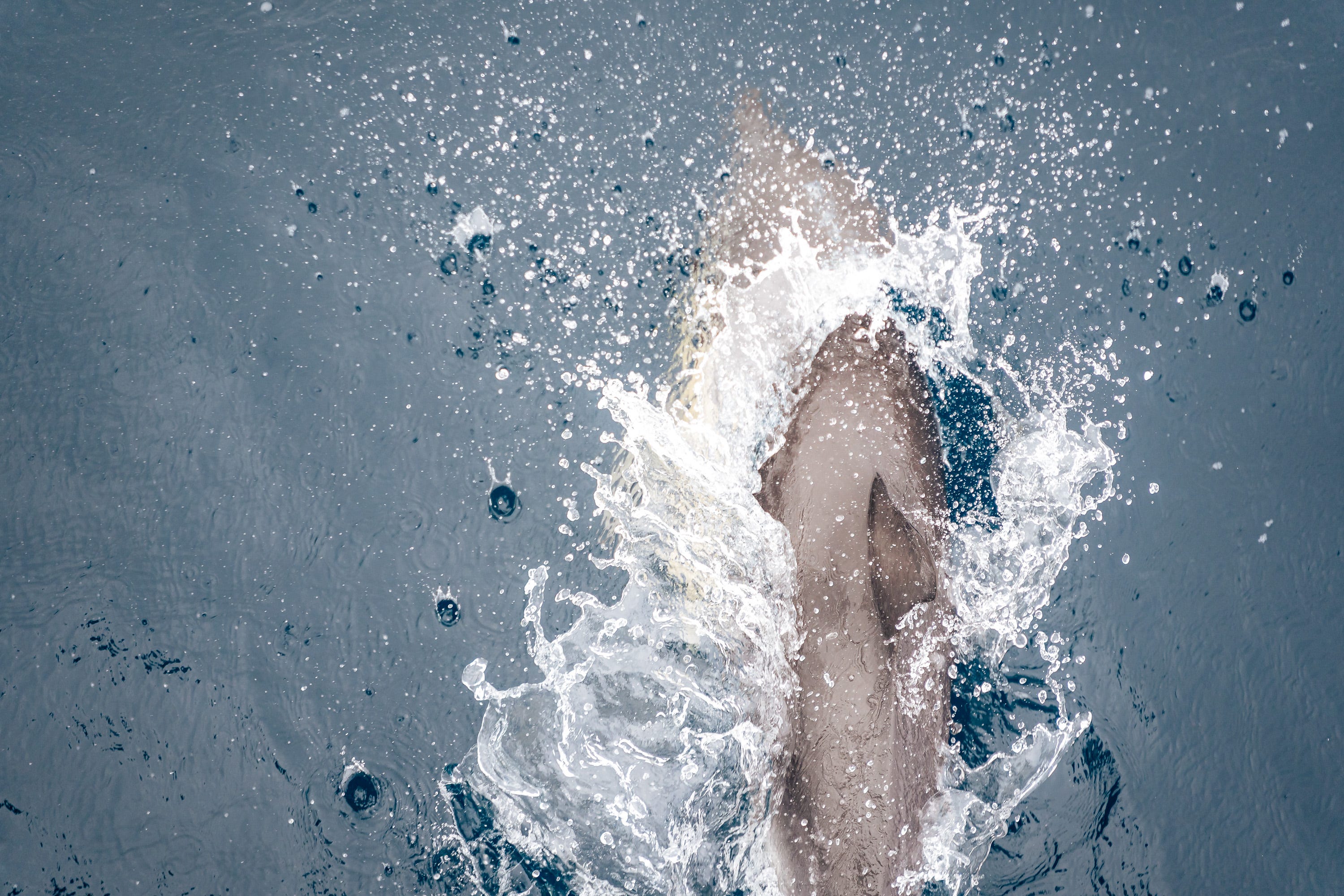
A chorus of puffs break through my morning stupor and I turn to see a dozen white-sided dolphins making a fast approach on our flank. They jump high with their full bodies airborne, arcing towards me in what looks like glee at the prospect of someone to play with. I whistle back and call my delighted hellos, then clip in my tether and pick my way forward and meet them at the bow. The pod is big and multigenerational, corgi-sized babies racing close alongside parents. Their white bellies flash up through the crystal blue as they pirouette around each other and swim sideways, seemingly to get a better look at me craning over the bow. More arrive, and I find myself in a cycling formation of more than 20 sleek dancers. To my surprise, I notice the darker tapered forms of right whale dolphins in the mix, seemingly totally at home in the group. Their smooth finless backs and round faces seem like elegant aliens among the more jovial and familiar forms of the others, propelled by blade-like flukes at the end of slim and springy stalks.
Many of these wildlife run-ins have started to become familiar sights, but on this passage we also got the chance to experience a new kind of encounter, which was decidedly less peaceful:
Maddie:
The wind is starting to feel spicier, and Jeremy suggests putting in a reef to make the mainsail smaller and get the boat more in control. I eagerly agree and move to the main halyard, uncleating it and easing it down a few feet. I turn to Jeremy and start to say “can I hand this to—“ when we hear ZZZZZZzzzz and the fishing rod bends and bounces. There’s a second where we’re both still, shocked that after weeks of trying to get a bite with no luck it’s happening now! But then Jeremy leaps into action, grabbing the rod and starting to fight. The boat is still moving fast, adding to the tension on the line, so I jump over to try and furl the jib. The furling line has gotten tangled, so it’s too hard to pull in on my own. Jeremy heroically keeps one hand on the rod while bending down and using the other to sweat the furling line. A few seconds later we have the jib put away and the boat starts to slow. With the first challenge out of the way, Jeremy works on reeling in the fish, sweating with effort. I scramble up on deck behind him, picking up the gaff and removing the protective cover off the sharp end.
Jeremy:
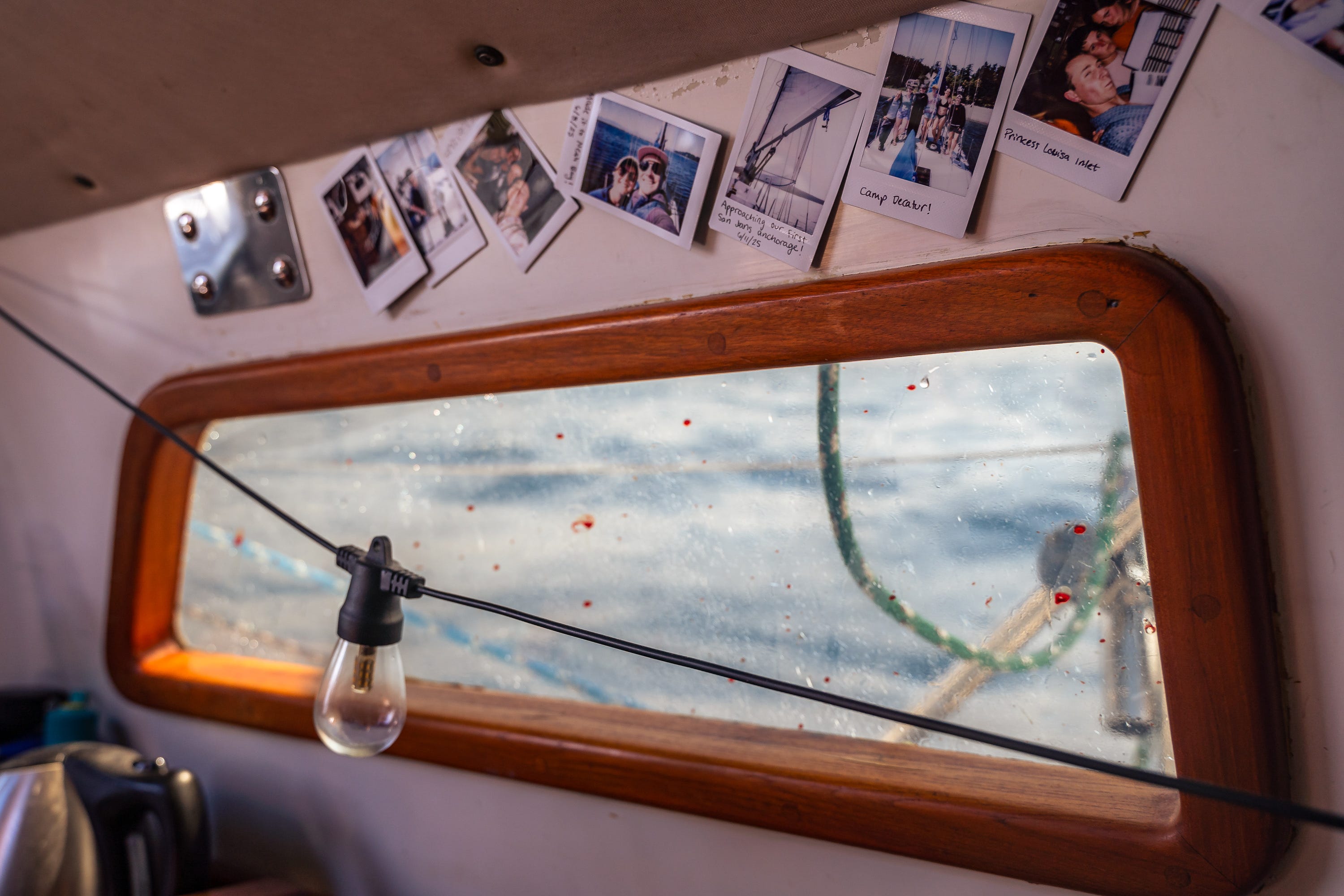
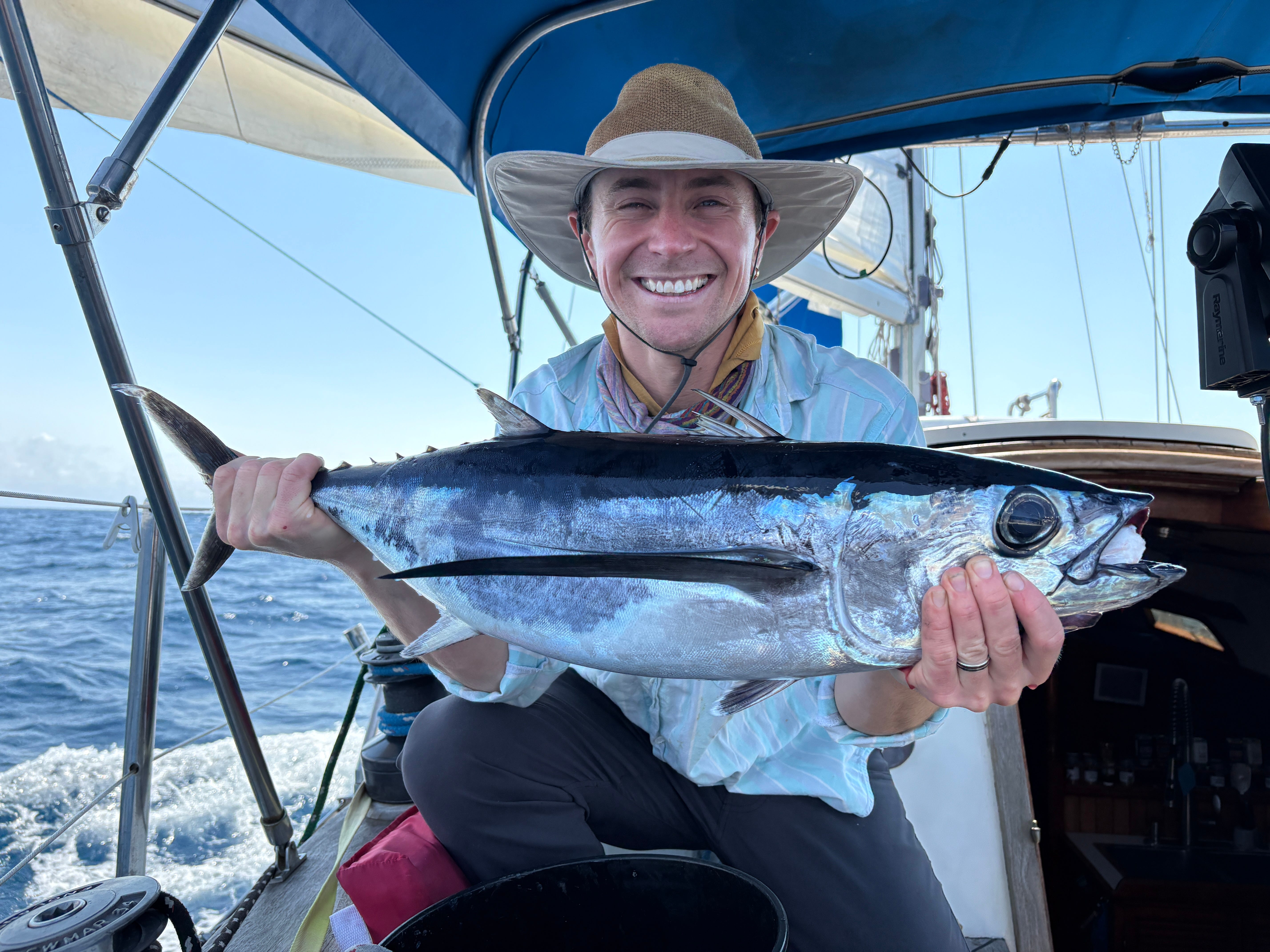
My left forearm is trembling and burning to hold the rod while I crank the reel in fits and spurts. Now that we’ve slowed down a few knots I’m able to heave the fish forward with the rod tip before winding in the line feverishly, hoping to not give any slack for the fish to shake the hook. We’re getting close now, the line starting to round back onto this side of the boat, then plunging suddenly as the fish sees the hull and dives hard. At last I see it, a sudden flash of bright silver through the luminous sapphire. A tuna! The fight is almost out of it, and I pull it up smoothly the final 10 feet, as it resolves from a diffuse oval of light into a detailed fusiform body with sweeping fins and wide eyes. The clasp on the line slams into the rod tip, and I barely register through the mental rush why my reel has stopped fast. It’s all I can do to hoist the fish up into the air by lifting the rod high above my head, as I half-encourage half-plead with Maddie to gaff it. “You got it! Nice and firm, up through gills! Just get in there! DO IT already!!” Suddenly she hooks it and the fish is up above the deck, blood streaming from where she has ripped through a gill raker. Startlingly scarlet droplets fly onto the deck, spatter across my shoes and pants, our windows and lines.
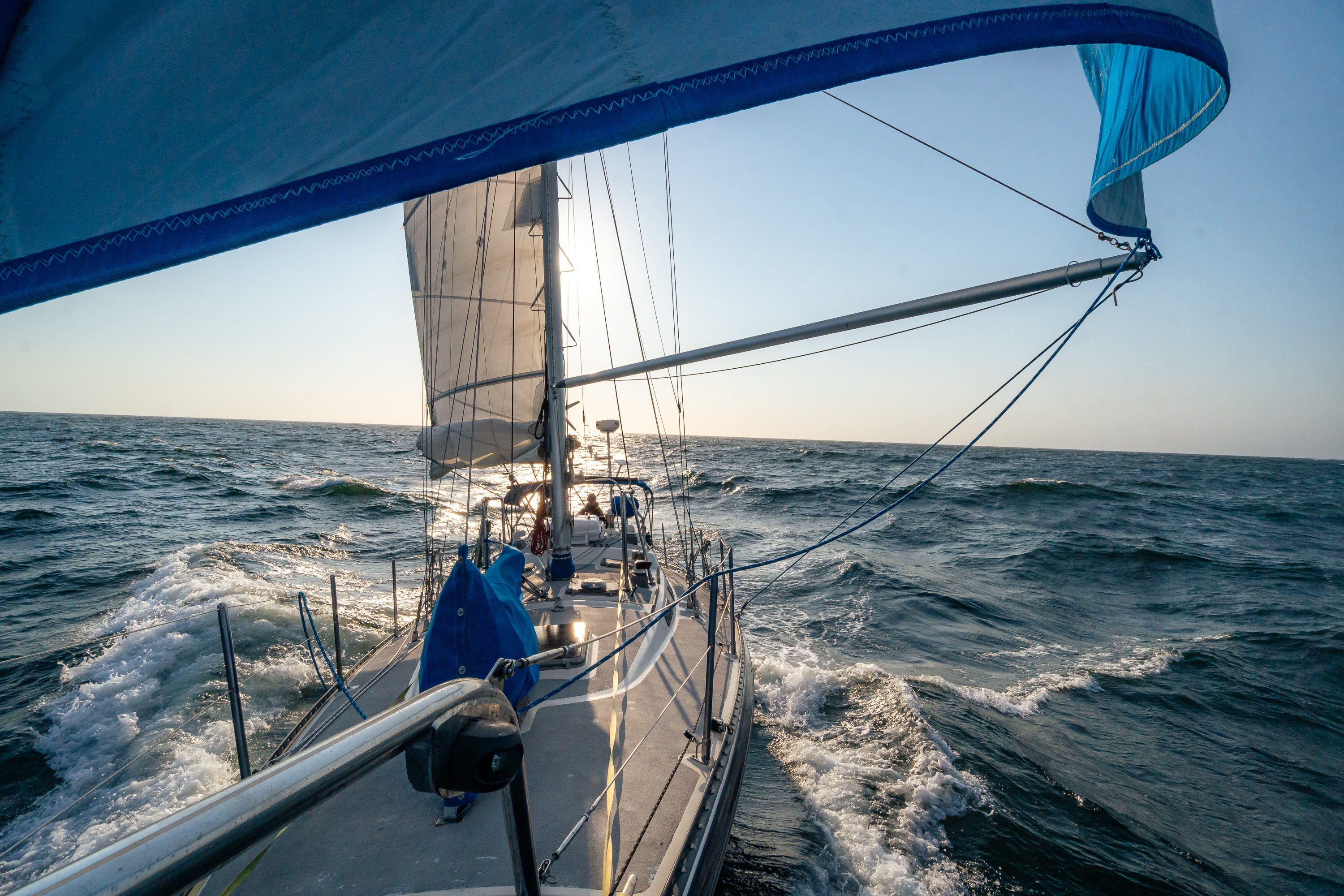
The second and third days of our passage to SF brought the strongest wind and biggest waves we’ve encountered on Tardigrade so far. It was exhilarating and at times terrifying to be pushing ourselves in these new conditions, but in the end we were grateful to have gained confidence in ourselves and a deep trust in what Tardigrade can handle.
Maddie:
Tardigrade is absolutely chewing up miles, flying down waves at 9 knots even with the main on its second reef and a scrap of jib. When I look behind the boat my stomach clenches as I see layers of churning waves, whitecaps cresting and whooshing. Tardigrade, on the other hand, greets each mounting wave like an old friend: familiar and solid. I’m shocked I’m not seasick, having forgotten to take more meclizine this morning, but the motion of the boat surfing down waves feels surprisingly smooth and in control. The boat is doing what it’s meant to do, and its limits far surpass our own. With the wind building to 30 knots the sails are taught and balanced, and Tardigrade seems to be saying “I’m just getting started!”
Jeremy:
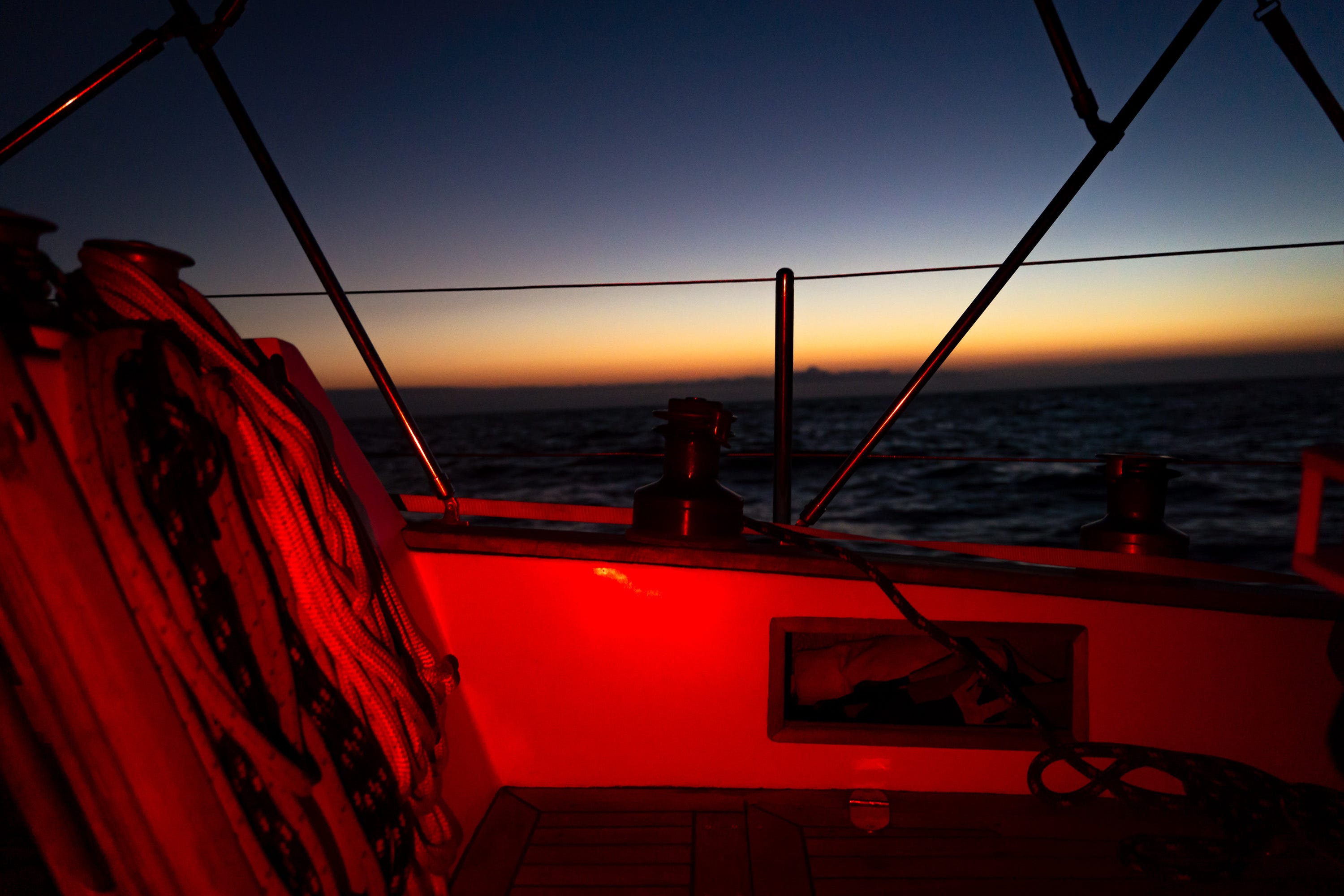
I stumble and sway through the red-lit cabin blinking away sleep and battling the world rolling beneath my feet. I didn’t sleep well, roused multiple times in the night by the shudder of heavy things sliding around in the drawers under the berth, the clang of pots and pans dashing against their cupboard walls in spite of the rags stuffed among them.
After catching myself multiple times from flying across the cabin while putting my foulies on, I claw my way up towards the companionway and pause to read the logbook. The notes on Maddie’s last entry just say “hanging in there.”
Curiosity gets the better of me as Maddie settles in to sleep, I move my tether to the side of the binnacle and step into position at the helm, place my hands on it to feel what the autopilot is doing, notice where I think I could steer better. I observe for a minute or two to make sure it’s nothing I can’t handle, then hit disengage and am thrust into some of the spiciest hand steering I’ve ever done.
The wind is gusting 27 behind us, meaning probably 33 true wind speed. waves are pushing 6 feet and steep, looming up like black walls capped in rolling whitewater as they crash behind the stern and surf us forward at 8.5, sometimes 9 knots. Sometimes the waves come close together in a one-two punch that first nudges the bow to the left, then picks the stern up and surfs it forward, wrenching the whole boat around until it is almost parallel to the swell and suddenly the marching black hills are coming from beside me rather than behind. On these I wrench the helm rightward, battling to correct the swing before the scrap of jib we have poled out to port gets backwinded and whips around with a thunderous smack.
I quickly get better at avoiding those, remembering how to feel for the lift in my heels as the wave starts to pass under us, and correcting early while it’s still easy. Most of the time the waves spill magnanimously around our pointed stern and the boat eases laterally into a buttery slide down the face of the wave, a thrilling surf amid the roaring crescendo of whitewater and wind.
The moon is fighting to break through the dense blanket of clouds. In my sensitive periphery I can see a faint silver patch on the water which is a welcome landmark to steer to, freeing me from fixating on the glowing red numbers of the compass dial. While I stare ahead and focus on the corners of my vision I start seeing the dark shapes flanking me, rounded haunches like roaming Buffalo muscling up from the black sea into the lighter sky. After a skittish double take I realize the waves have gotten big enough to pierce the horizon. For some reason that snaps me into a moment of intense presence and I look around wild and exhilarated, tuned into the hardy boat and sloshing sea. I relish being captain of my little home glowing red amidst the unruly and indifferent grey.
When we finally saw the cliffs of Point Reyes, it felt victorious. After four days and three nights at sea, surfing down waves and rolling all day and night, with 4 massive tuna fillets filling our freezer, we were proud and exhausted and ready for a night at anchor. The ocean wasn’t done with us quite yet though, and we were treated to the most epic possible greeting as we arrived:
OOOOH Maddie yells, pointing sharply off the bow, I saw a breach!! We both train our attention to scanning the waters between us and the tan cliffs of Point Reyes, bracing against the bucking boat and scanning the distance. Suddenly there is a whale, a shiny black behemoth seeming to blink into existence in a high arc above the water, then come crashing down with a detonation of whitewater. I barely have time to summon an OOOHOOH of my own before the whole thing is over, but the thrilling sight is burned undeniably in my eyes. I can finally, unequivocally, say I’ve seen a whale breach! I rush below and grab my camera, now that we know it is in an acrobatic mood and I don’t have to fear missing the big moment yet again. With my eyes locked on the horizon I thumb through settings on muscle memory— aperture to 8, shutter to 2000, drive mode high, AF continuous, focus zone to the top middle of the frame where it will hone in on the horizon and not the foreground. I sit with the camera poised next to my face, peering through the viewfinder briefly to check that everything is working as expected and train the horizon in the middle of the frame. I stand with my legs staggered and knees flexing to absorb the roll of the boat, but still need to have my left hand on the edge of the bimini for support. I try to zoom to a good middle-ground around 300mm, then hold the camera up and wait, watching with my wider view. The next breach comes like a charging bull, the bullet-shaped form erupting straight at us— twisting in the air in what looks like slow motion. It’s all I can do to hold the shutter down and brace for stability as the boat heaves and we both cry out in unison. As the whale comes down in another violent spray, we holler ecstatic into the wind “HOLY SHIT!!”
Later, as I scroll through the photos to see if they turned out, my heart quickens with hope to see the breach captured almost from start to finish. Some frames are a tad out of focus or blurred by motion, but as I zoom in on the peak of the jump, I grin, giddy with the thrill of the score.
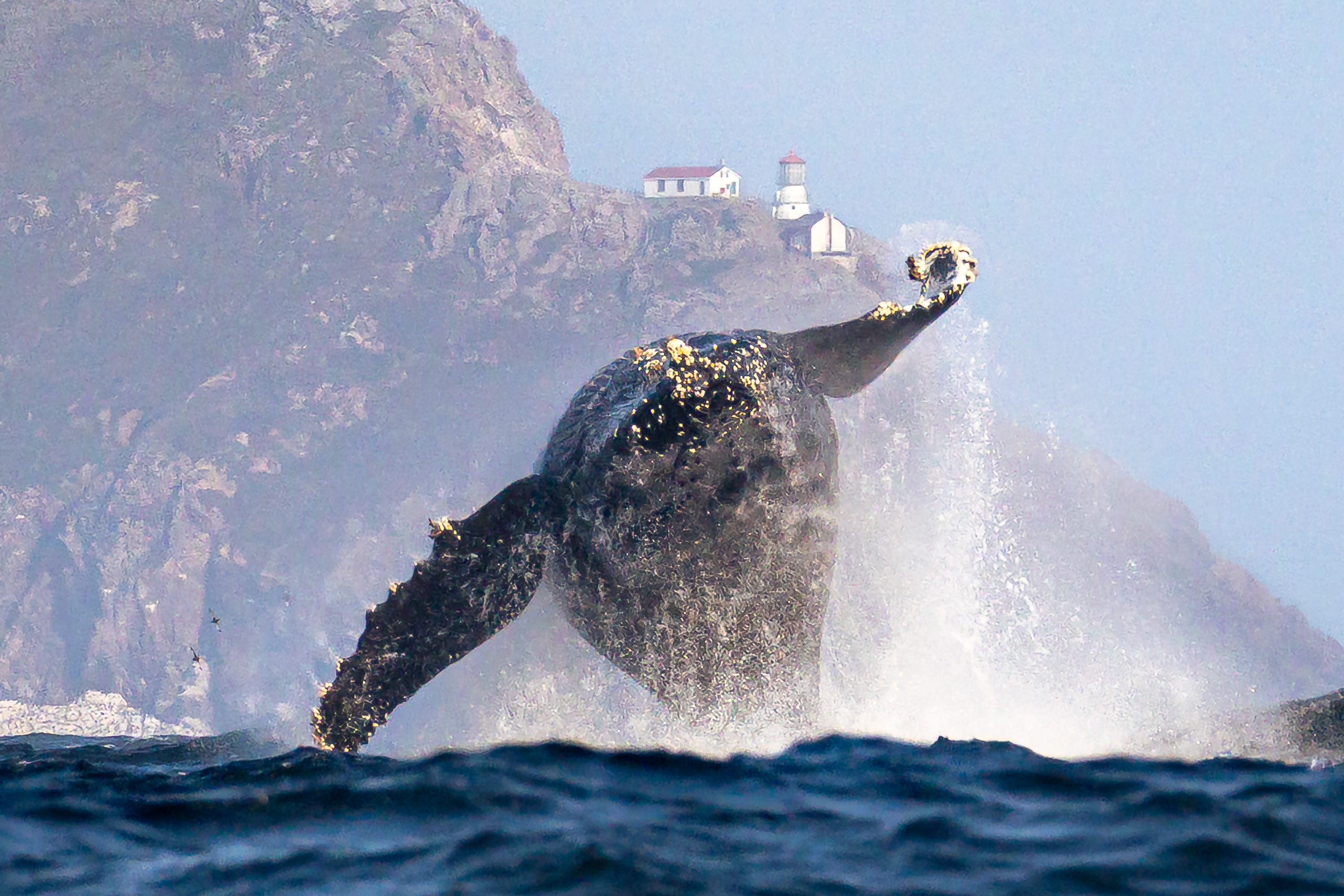
By the time we finally made it into the anchorage in Drake’s Bay on the South side of Point Reyes, the sun had set and we were both beat. Being at anchor never felt so stable and luxurious.
Jeremy:
My body feels wrung out and humming, fatigue and aliveness intermingled into an enjoyable sort of sore. Four days on end of stabilizing and catching myself, steering and hauling lines and simply sitting up straight on an endless slow-motion bull ride. When we finally set the anchor and cut the engine in Drake’s Bay, I walk down into the boat and close the doors against the howling 20 knot wind, and revel in remembering how it feels to stand on something approaching level ground. Outside the wind is whipping up whitecaps and the whole boat is rocking with wind and chop, but the movements are laughably mild compared to the ocean swell. What would under any other circumstance be an alarmingly spicy anchorage feels like a cozy cabin sanctuary to us in this moment. We remark to each other again and again how crazy it feels to be still, the luxury of relaxing almost all our watchfulness and being able to walk and sit and exist without bracing. Even as I sink in relief, part of me misses that rodeo. As we slip into the chores of making dinner and the flurry of trying to get my best whale pics edited and posted before bed, I feel the state of near-total enoughness that had been my default these last few days dissolving away into habits of craving and scrolling and thinking about what others will think. It’s tempting to mourn and cling, but I try to chalk some of it up to the post-passage crash, and revel in the swell of pride and excitement as I edit the full-breach shot, instantly one of the best I’ve ever taken.
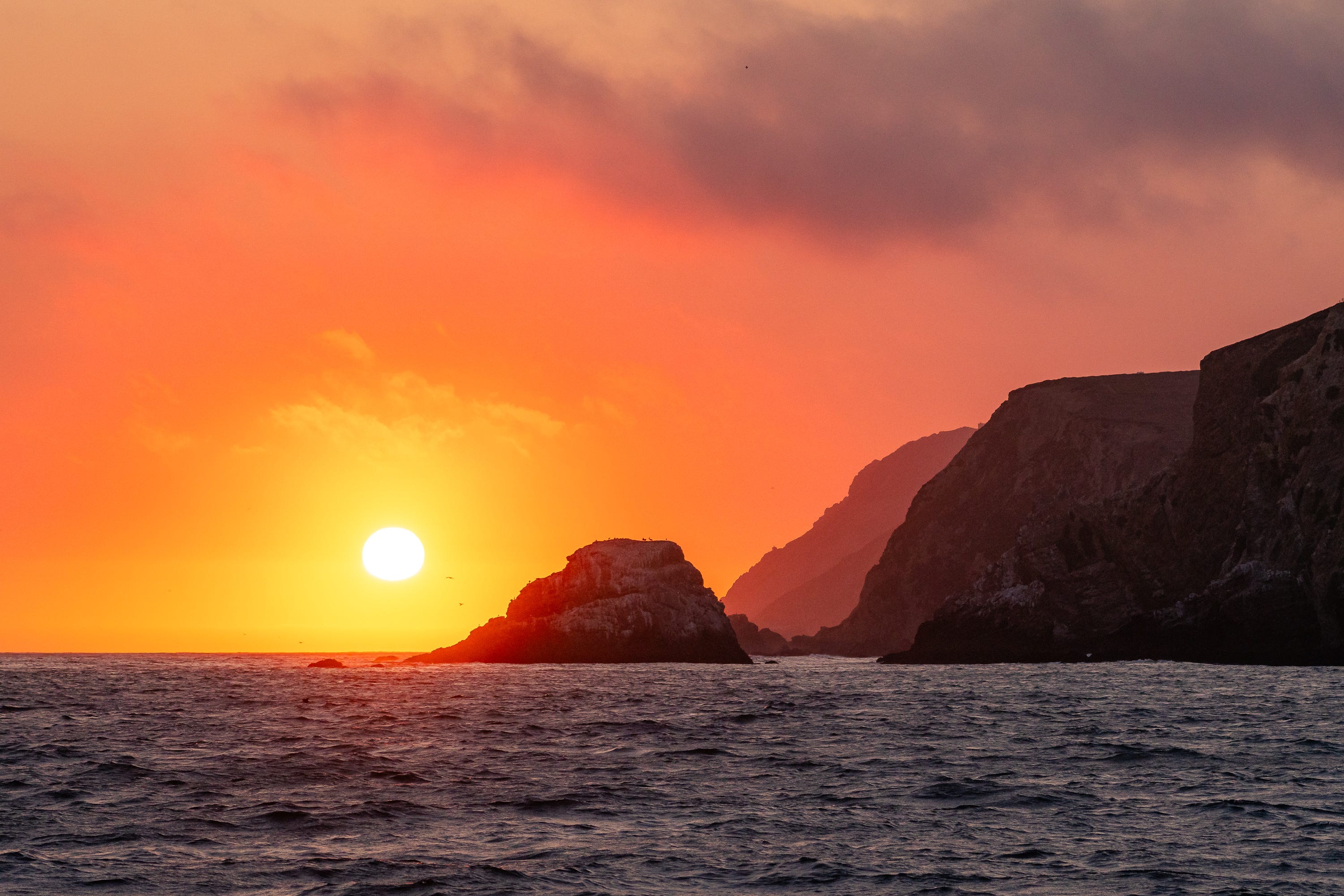
The next day’s sail to SF was a relatively chill 6 hour jaunt past familiar landmarks in Marin. We were treated to even more whale breaches and fins that morning, and as we glimpsed our first foggy views of the towers of the Golden Gate bridge we started to get giddy with excitement. We were almost home!
Jeremy:
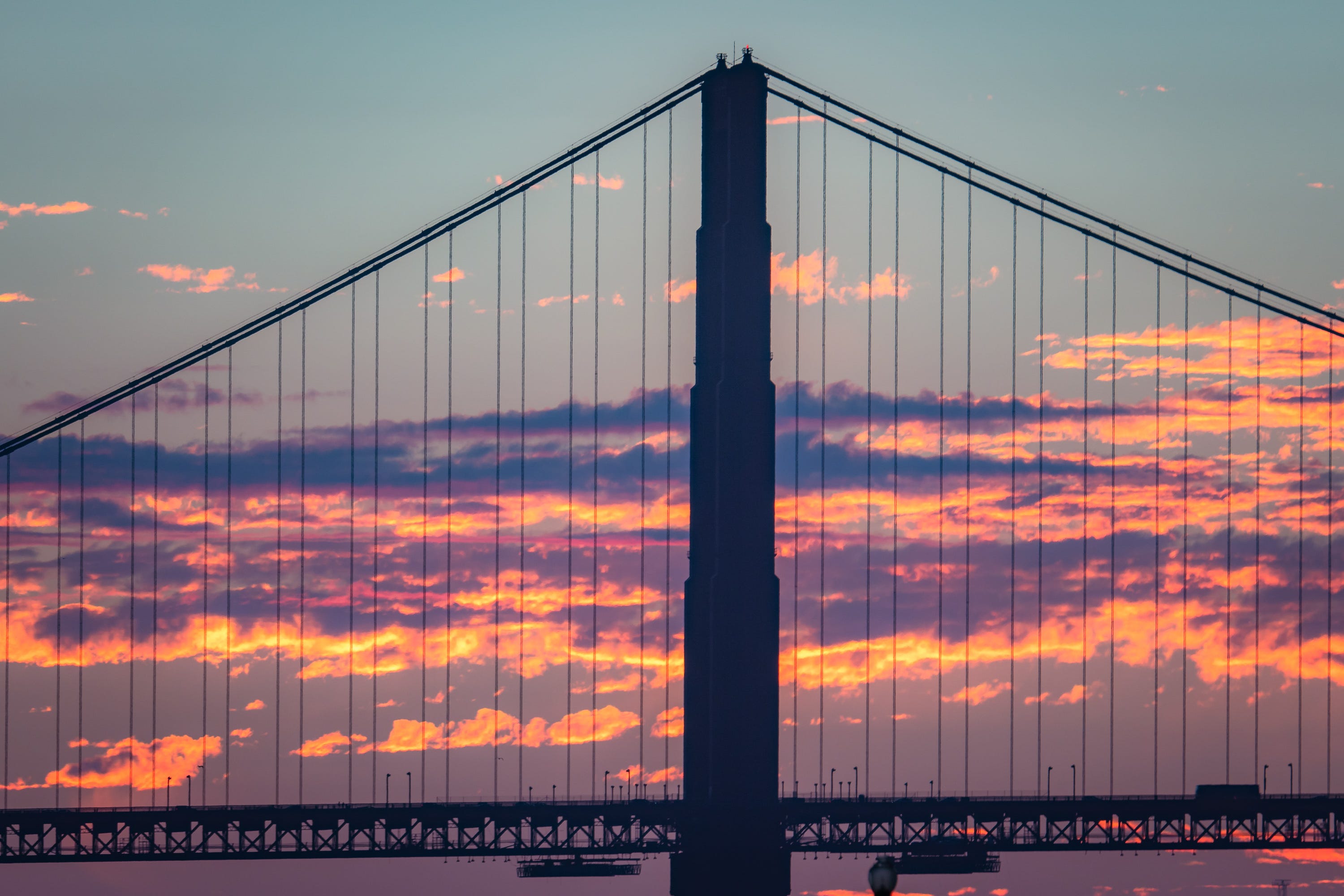
I belt a primal holler up into the dark underside of the Golden Gate Bridge, its traffic sounds suddenly like a rushing waterfall high above. The echo pings back a half second later, ringing in the moment that we have truly returned to the Bay. I’m scrambling to record the moment and also maintain some semblance of presence to this big arrival, but my mind is stretched taut over all the demands and stimuli, and I juggle my clinking cameras and highly droppable phone in a steady rotation of capture attempts. Tardigrade is flying over 8 knots under reefed main alone, with almost 20 knots behind us and 2 knots of flood current helping out. I usually love going fast, but this time it’s bittersweet, knowing that the momentous occasion of passing under the span of the bridge will have come and gone in a blink.
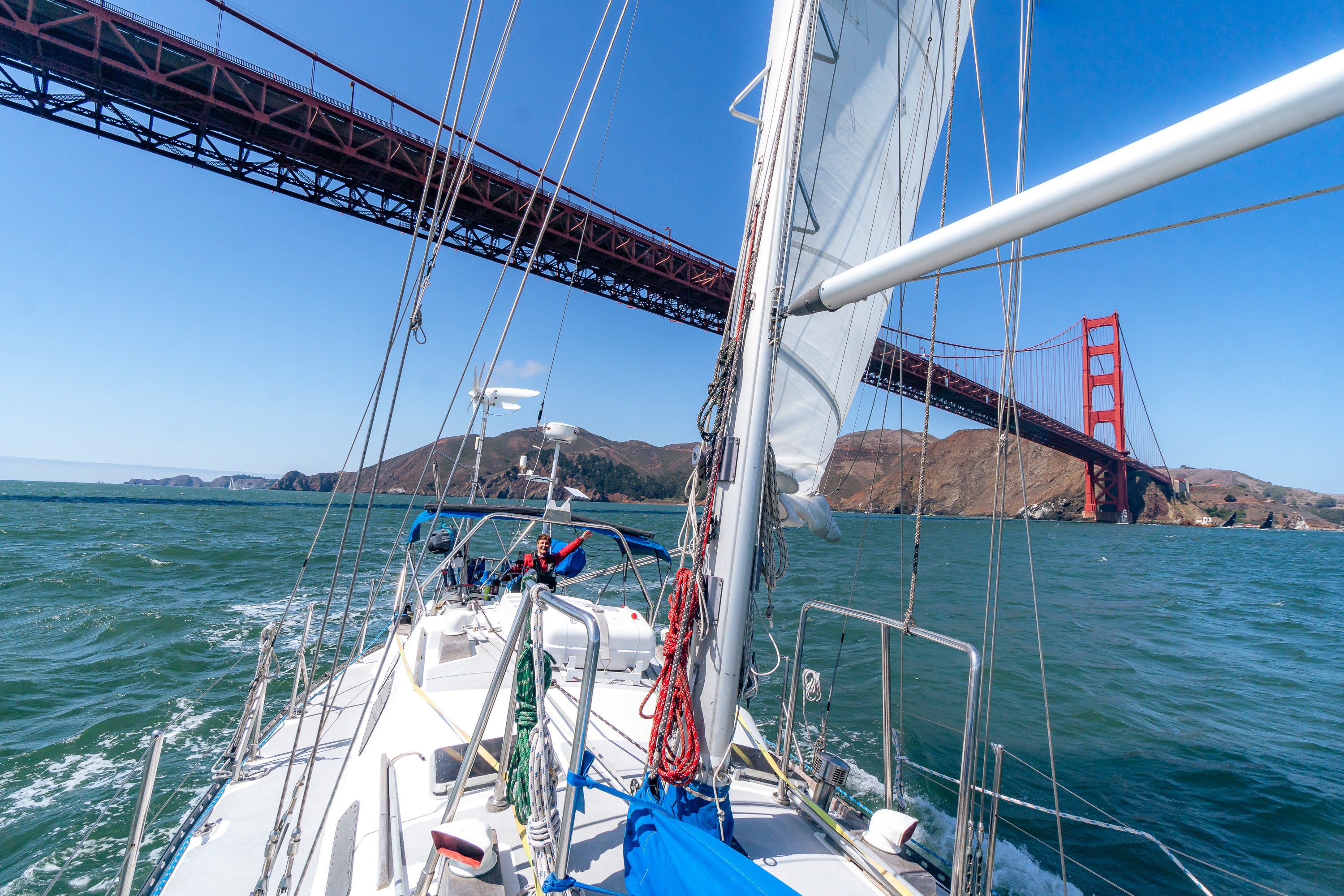
Now that we’re back in the Bay, it feels like so much has changed, and also like everything is just as we left it. We hosted an “open boat” party on Sunday, picking a rotating cast of friends up from the beach and dinghy-ing them over to Tardigrade to catch up and see how we’ve lived for the last 4 months. As we swapped stories and updates, numerous people remarked on how they couldn’t believe we had left more than four months ago, it had all gone by in a blink of an eye. Part of us feels the same way, but another part feels like those four months were a small lifetime. We’ve sailed more than 2500 miles and gained so much experience, skill, and confidence in that time. We’ve adapted to a slower pace of life and different definitions of success. Coming back to this place we called home for five years carries both the sweetness of returning to an old familiar version of yourself and the slight sadness of noticing how the current you doesn’t quite fit into those old shoes the same way.
That same change can also feel good, of course. We’re currently anchored at Aquatic Park by Ghirardelli square in San Francisco, and it’s been remarkable to spend days here in perfect ease despite the buffeting winds and fierce currents coming through the Golden Gate. We’ve thought back on how the first time we anchored here for Maddie’s birthday two years ago we were terrified, unsure that our anchor would hold and overwhelmed by the rolling waves. As we re-immerse in this place that we’ve long called home, it’s clearer than ever that Tardigrade has come to feel like our true home, wherever she is.
We’ll be in the Berkeley marina for the next two weeks getting boat work done and spending time with friends before continuing our sail South to Mexico. Lots more ocean passage time and night watches to come, but in the meantime we’re looking forward to having some stability and a moment to catch our breath.
Until next time,
Maddie & Jeremy
PS- if you want to support our journey by buying a print of any photos from our adventure so far, check out the Sailing gallery on Jeremy’s print store:
No posts
Comments
Nothing yet. Say the first thing.
Sign in to join the conversation.