
If you’re just joining us, we’ve been sailing our way up the Pacific Coast from San Francisco on our sailboat, Tardigrade. You can read the other posts from the journey so far on the archive here to catch up, or find us on Instagram @sailing.tardigrade for more!
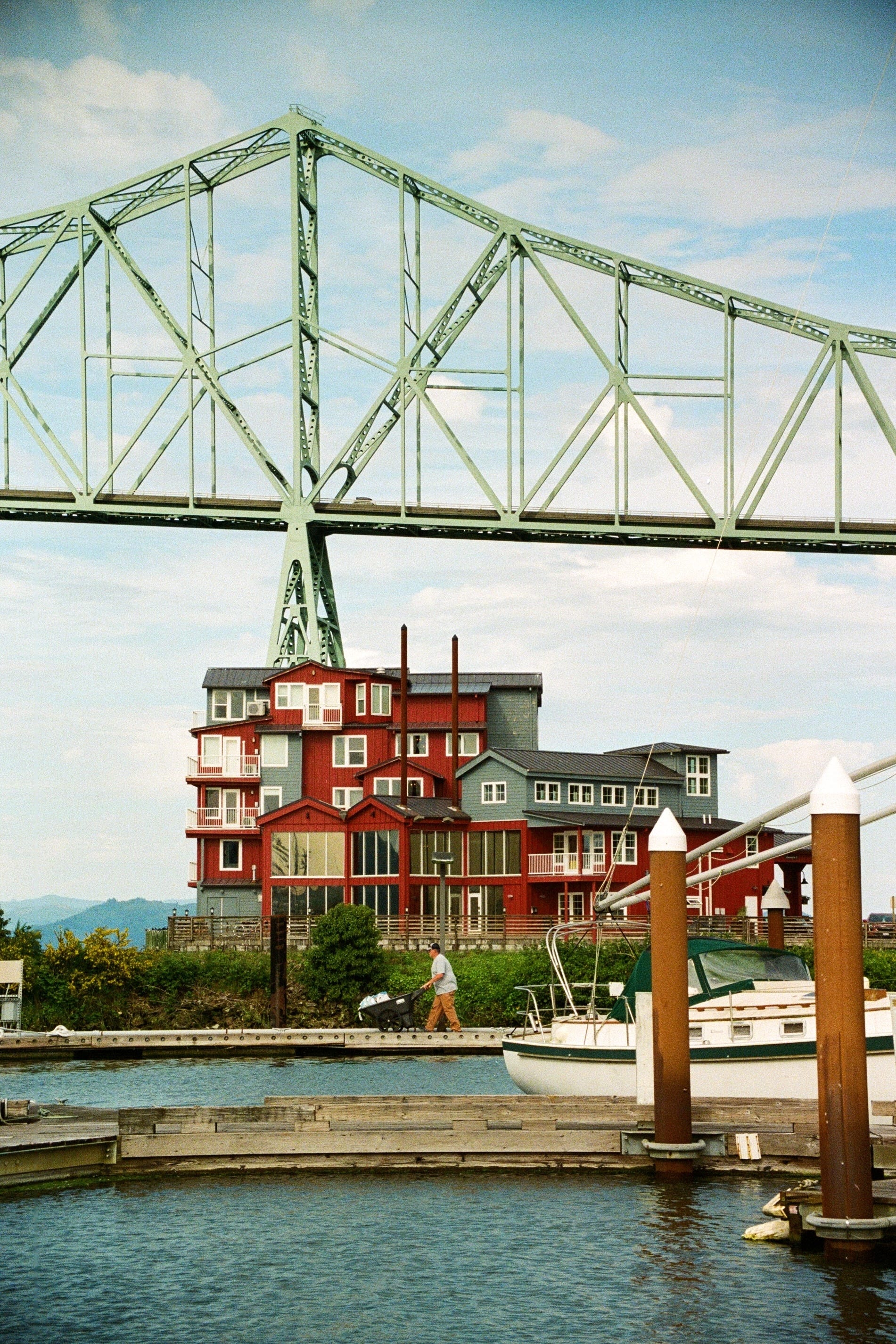
After a week of seeing friends and family in Portland and recovering from our Oregon Coast passage, we got another window to continue our progress North. The next goal on the horizon was making it to our friend Sara’s birthday party, a camp-themed extravaganza on Decatur Island in the San Juans where we’d be able to sail right up to the event! Sara is an incredible event planner with a flair for cultivating beautiful, meaningful gatherings, so getting up there in time to attend was great motivation for the final stretch along the Washington coast. We planned for an early morning departure in order to get across the Colombia bar with plenty of time, but as we did our final checks and prepared to get fuel the evening beforehand, we went to start the engine and… nothing happened.
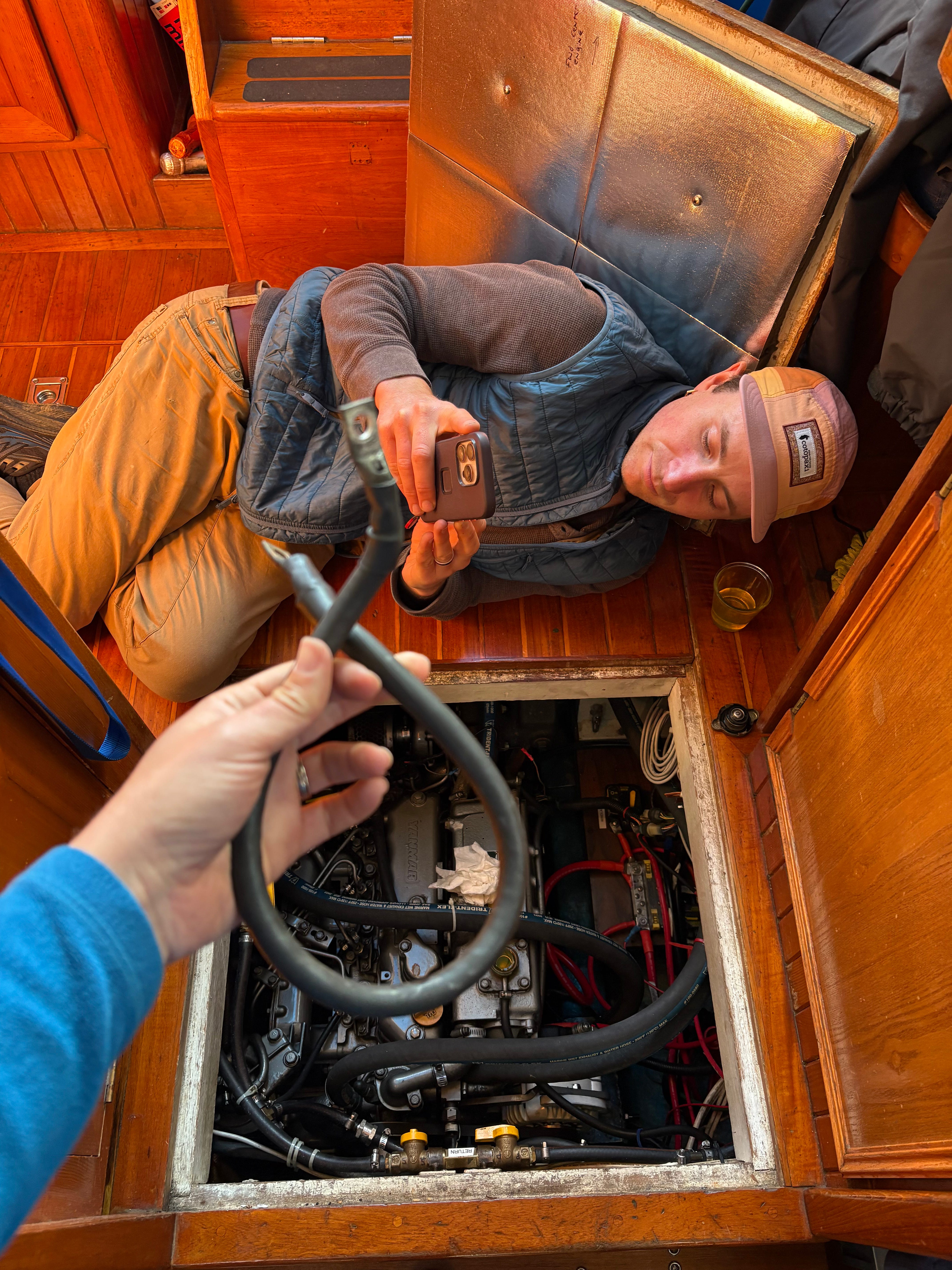
We looked at each other with the dawning dread of a problem with unknown scope, realizing that this could mean we miss our weather window and be stuck in Astoria for another week, which in turn meant we’d likely miss Sara’s birthday. Swallowing the possibility of worst case scenario but not losing hope yet, we got to work figuring out the problem. We started ticking possibilities off the list— faulty wire on the ignition switch? Nope. Corroded leads on the starter battery? Nope. Is the ground wire loose? Is the solenoid clicking into place to deliver fuel? Is there voltage across the starter motor? With a diesel engine troubleshooting book in one hand and a multimeter in the other, we dove into problem solving with a can-do attitude that has been coming easier and easier as the trip goes on.
In spite of our dread and frustration at the problem, we were also marveling under the surface at all the learning and growth this scene represented: playing diesel mechanic, marine electrician, engineer and janitor, not to mention keeping our cool and even having a little fun here and there. We narrowed down the problem to a handful of possible culprits and Jeremy (the designated courier of the team) took off on a brisk jog to get to a nearby marine supply store to pick up some parts and and get advice before they closed. By the time Jeremy returned, Maddie had taken apart and cleaned the connections on all the wires powering the starter motor and gotten the engine to start! Once back together we cut, crimped and heat shrunk a couple new cables to replace some old ratty ones (the old owner of the boat had a very creative interpretation of electrical safety) and try and prevent similar problems from arising in the future. We finished making preparations and went to bed as early as possible, hoping we could get fuel first thing in the morning and still catch the back end of the tide window without another bar fiasco.
This engine saga was the latest in a long series of mishaps and repairs on the trip so far, but this one really struck us with a sense that we were getting the hang of the problem-solving that is such a crucial element of living on a boat. There’s a reason that seasoned cruisers describe the lifestyle as “fixing your boat in beautiful places.” When we first got the boat we were terrified of doing something wrong any time we embarked on a repair or upgrade. Only after a dozen reps of painstakingly researching, combing through forum posts of crotchety old-timers insisting on completely contrary positions, and watching hours of youtube videos did we start to realize the underlying secret behind all successful projects: having the gumption to start, the awareness to notice if something was going wrong, and the flexibility to change tactics if needed. We started referring to this as the “just do it” mindset (apologies to Nike), and it’s been one of the most substantial elements of personal growth that this adventure has given us. Turns out the same is true for most things in life. Overcoming the fear of getting started is often the hardest part.
With our starter motor fixed, the next morning we made it over the bar without issue. Turns out it’s much easier to go down a river than up it! But by the time we were out in the open ocean and away from the soothing power of the rising tide, we started realizing we were in for a bumpy ride. The swell was about 6 feet and uncomfortably short period, meaning waves were close together and the motion of the boat pitched and rolled dramatically between each peak. Our course had us going pretty much directly into the waves, meaning we would periodically crash into a steep set, losing half our speed and making the boat (and ourselves) shudder with impact.
Given that this was our fourth leg, we’d been feeling pretty confident before leaving the dock and hadn’t taken any pro-active motion sickness meds like on previous legs. Both of us made the mistake of spending a little too much time below decks, and soon we were both battling nausea and feeling consumed by the bleary dullness of seasickness.
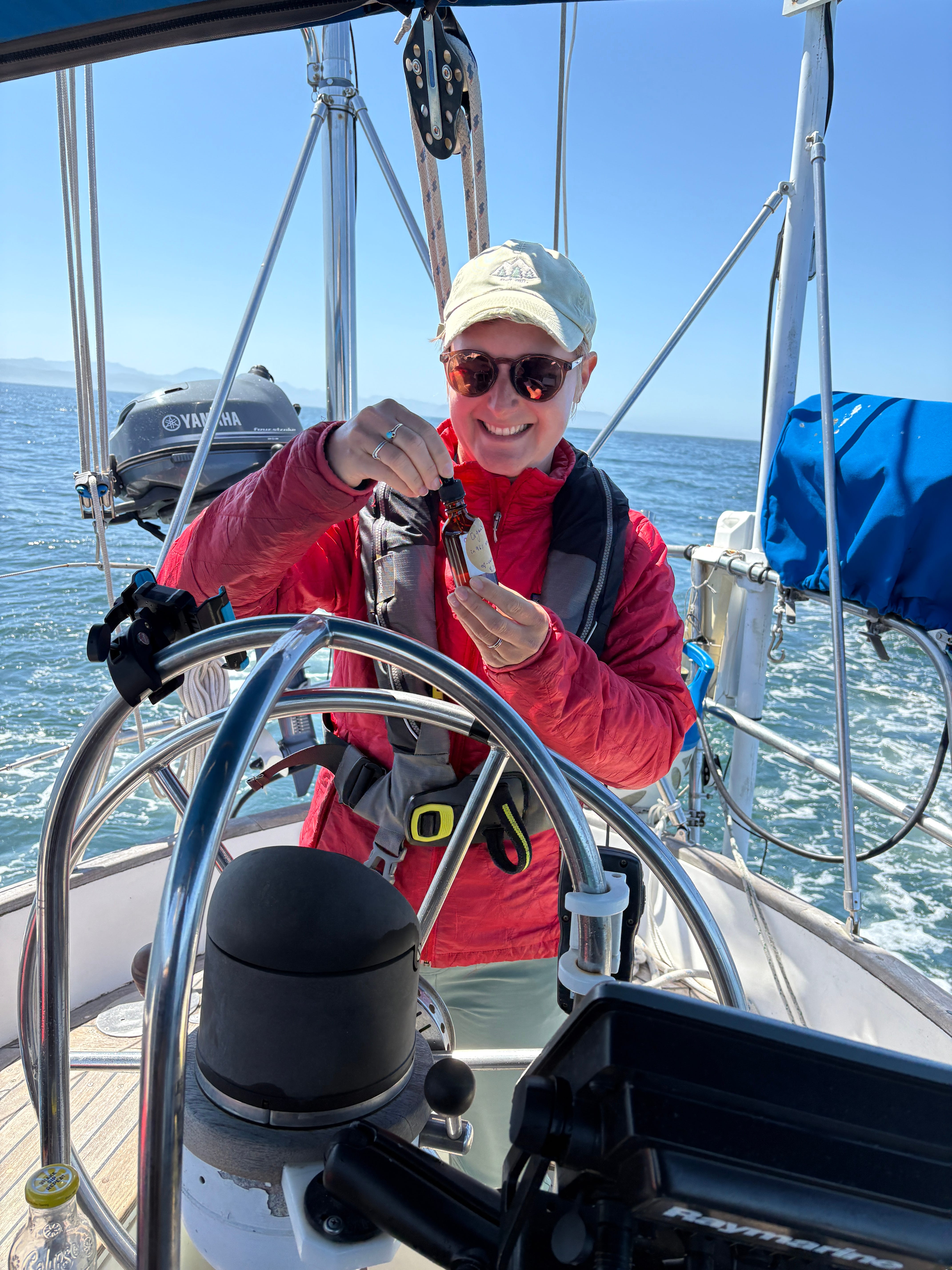
It was in this state that we tried to take advantage of the rising wind and get a sail up, which usually has the beneficial side-effect of stabilizing the boat and preventing it from rolling side-to-side in the waves. Jeremy went forward to clip on the halyard and raise the mainsail, but in our mental fog we were too slow to pull the slack out of the line and the rolling of the waves looped a section of rope tight around a radar reflector high on the mast. The halyard proved impossible to untangle from the deck, so we had no choice but to retreat back to the cockpit and resign ourselves to miserable motoring indefinitely.
Before long, Maddie's seasickness had worsened to the point she was throwing up over the side, a first for both of us. With no ability to raise sails and afternoon slowly approaching evening, Jeremy decided to head back to shore to try and regroup in Gray’s Harbor, a natural bay about 50 miles north of the Columbia. As we turned and put the swell direction off to our left, Maddie’s meds finally started kicking in and she slept for two hours in the cockpit while Jeremy hand-steered through the rolling waves which baffled the autohelm. When Maddie woke up she was feeling much better, so we decided to power through. There wasn’t much sailable wind in the forecast so it didn’t feel worth losing the hours it would take to get in and out of a harbor to unwrap the halyard.
At this point it was getting late and we turned back out to sea to try and get past the 50 fathom line— the depth (300ft) where fishermen mostly stop placing crab pots. We had been passing crab trap buoys all day and heard that Gray’s Harbor was a hub of commercial fishing, so we wanted to minimize chances of a run-in before night fell and they became much harder to see. Unfortunately, being close to the coast had also brought thick fog, and we spent most of the afternoon and evening passing through pea soup. The undifferentiated grey of the ocean quickly faded out around us, making it hard to tell how far visibility actually was unless there was a passing ship to reference. Sometimes we’d pass through a light pocket and see fishing boats thousands of yards away, other times we’d descend into the soup and have no idea how close anyone was or how much warning we would have on a collision course. The situation was made much worse by the fact that many fishing boats don’t use AIS, the radio-based technology which broadcasts your location to other boats. This practice started to feel criminally negligent as night fell and it got even harder to see. As we prepared to eat dinner we had a scary close call when Maddie took her eyes off the horizon for just long enough to receive a plate of food, and looked up just in time to narrowly dodge a trawler that materialized silently from the gloom less than a hundred feet away.
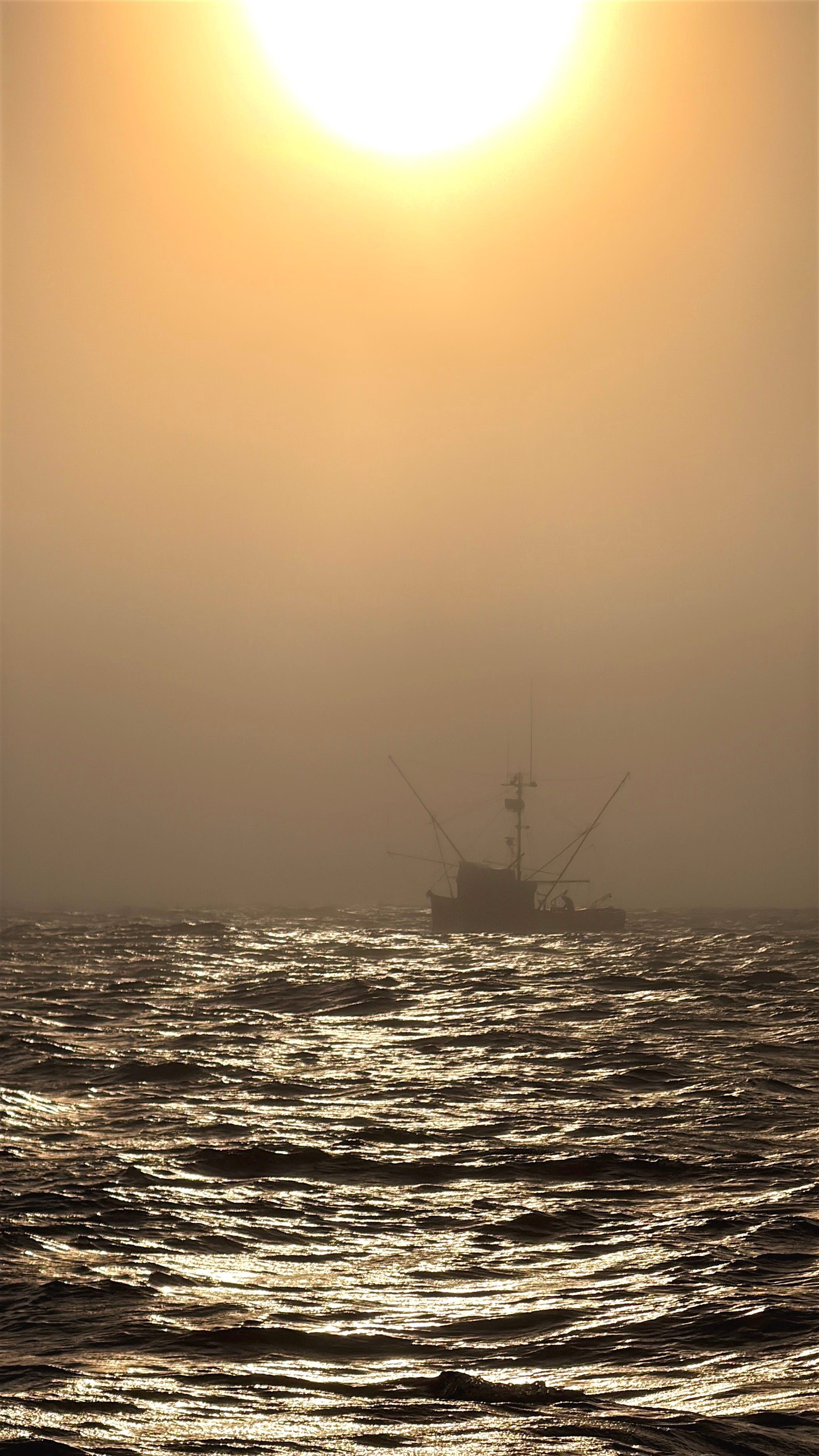
Both of us were shaken and exhausted from the long day of heaving stomachs and battered bodies, so as Jeremy prepared to take the first night watch it was with a grim mood, bracing for a brutal night of straining into the gloom and praying for good luck. But just as the dim sun slipped out of view, some trick of convection or divine intervention started to cause the fog to clear rapidly, revealing a magnanimous orange horizon that hummed with relief.
Bands of the sumptuous gradient from blue to orange gleam on all the wet white surfaces of the boat as we buck in the confused swell, miniature sunsets along every corner and curve. The evening feels blessed in its comfort, an invitation to breathe easy after the long day of hammering seas and rebellious stomach.
After our most brutal day yet, we were treated to the smoothest night watch of the trip, motoring through calm seas under clear starry skies. When dawn broke the next morning it was over the snowcapped peaks of the Olympic range in northern Washington. We could see for miles through the crystalline blue morning, and realized that the furthest land off our bow was our first glimpse of Canada.
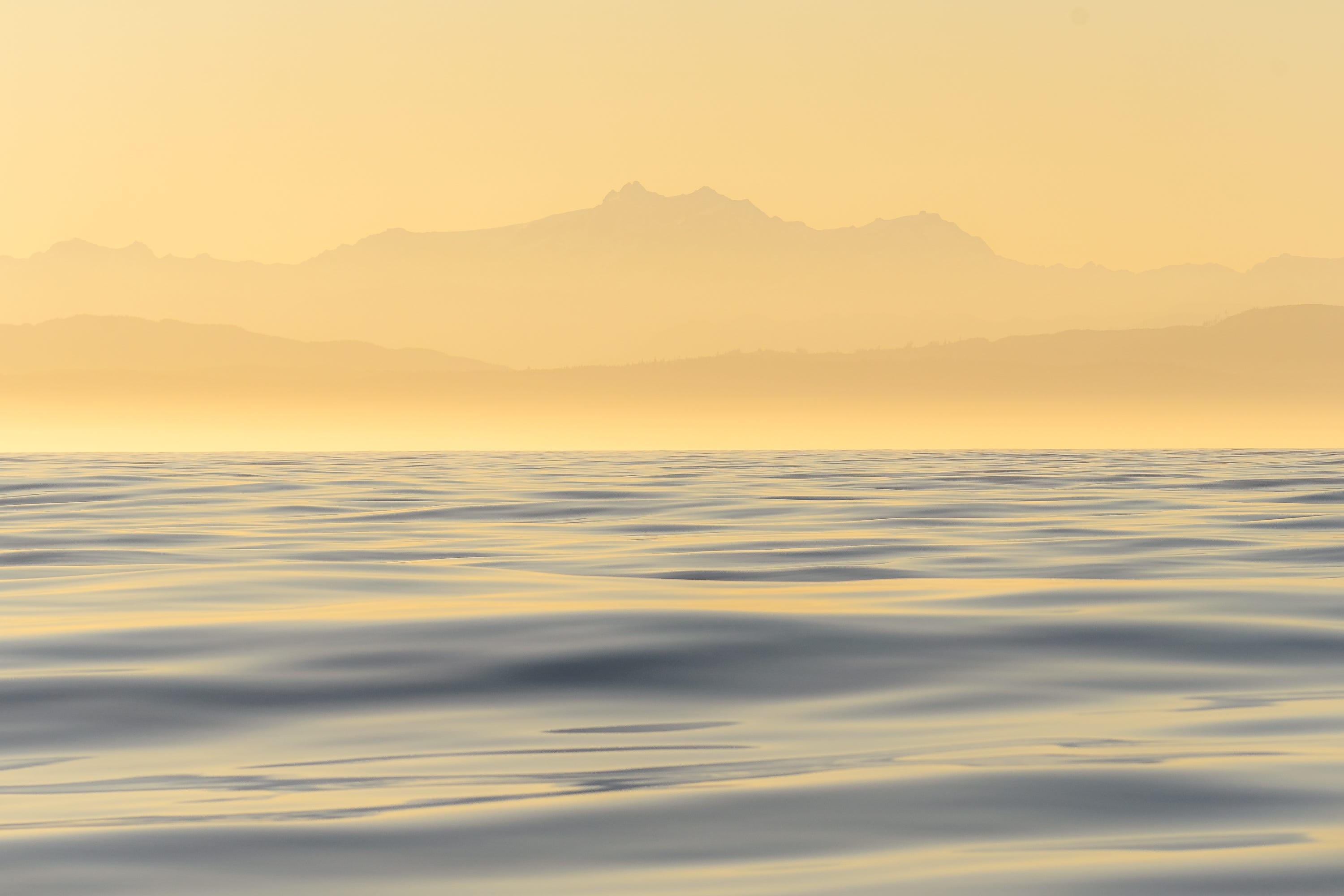
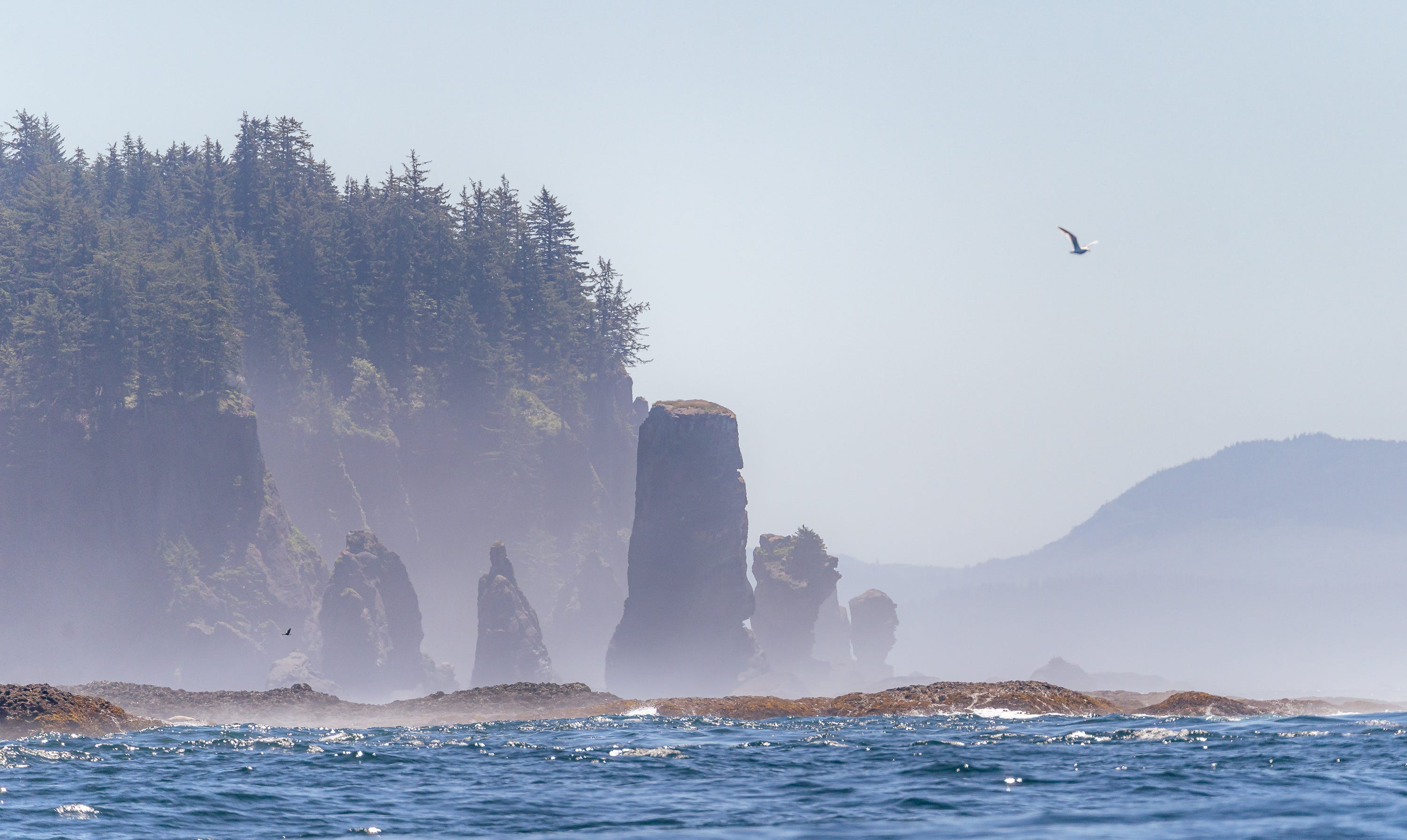
The morning was jubilant and eager, sailing through sapphire past the misty stacks of the Washington coast with our destination in sight all the while. Before long, the green hills of Vancouver Island were dead ahead of us, and the small lighthouse that marks the northwestern-most point of the contiguous US was fast approaching our starboard side. We joked about making “the second right turn” of our journey: having turned north out of the Golden Gate almost a month ago to start our trip up the Pacific, with a final spin of the wheel we were headed back East, into the Strait of Juan de Fuca and towards a new chapter of calmer waters.
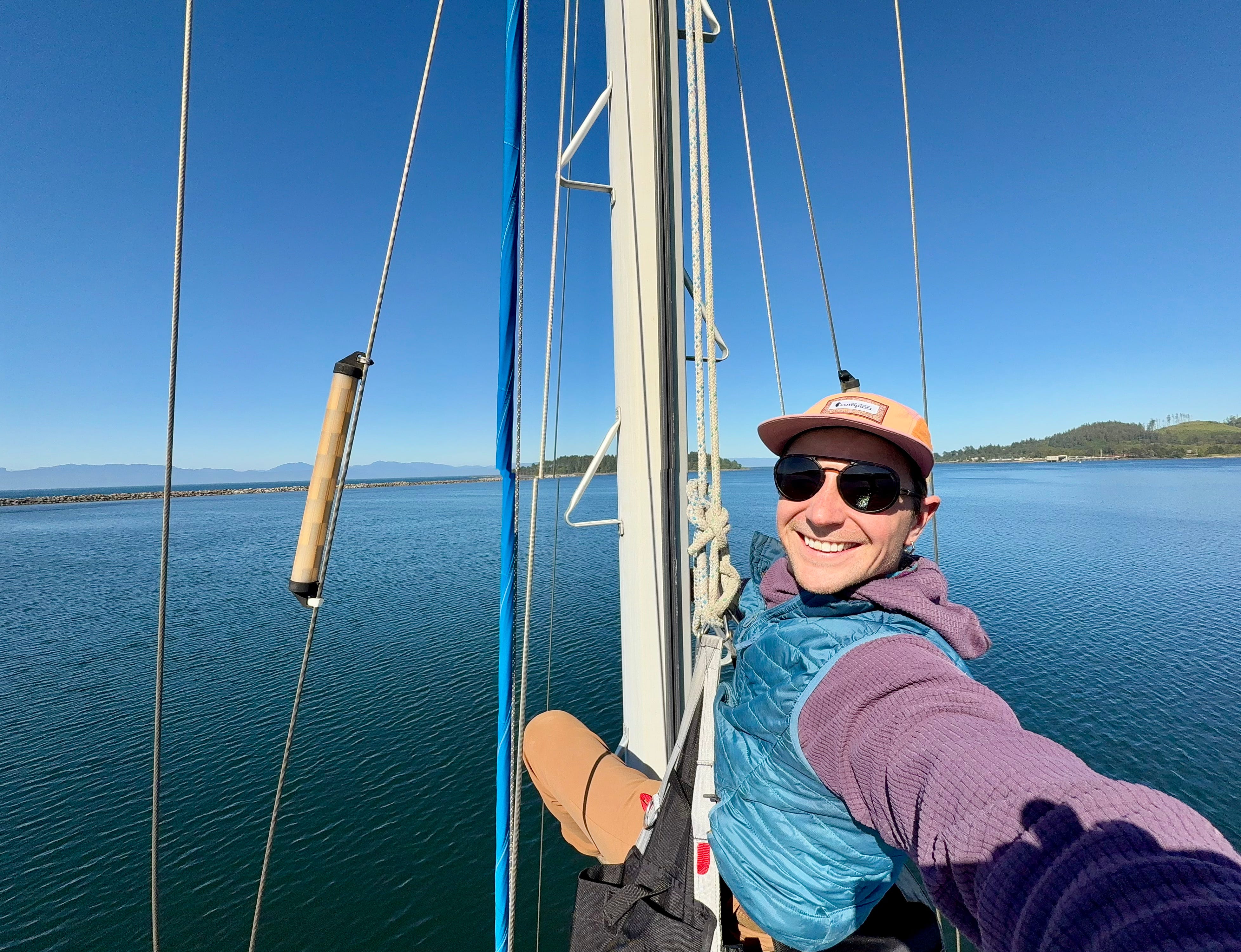
We anchored that night in Neah Bay, the first protected cove inside the Strait. As Jeremy went up the mast to finally unwrap the stubborn halyard, it was a marvel to look out across the Strait at the green hills of another country, and think that we had effectively moved our home half the length of the US and could now see Canada from our porch.
Despite feeling like we were practically home free, many miles still stood between us and our eventual destination, the San Juan Islands. The Straight of Juan de Fuca is a major waterway almost 100 miles long, and on top of that it is similar to Golden Gate in that it is a sluice through which the entire Salish sea (including Puget Sound and the waters around Vancouver, Victoria, and the San Juan and Gulf Islands) empties and fills with the changing tides. As a result, the whole 15 mile-wide channel is filled with fierce currents. We lucked out and happened to have a flood tide through most of the next day, so as we nosed out of Neah bay we accelerated to over 10 knots (about 12mph) as the current shot us inland towards Port Angeles. We were also surprised to still be experiencing big swells rolling in from the ocean, but now for the first time they were at our back, lifting our stern and generating a rush of bubbling wake as we surfed slightly down the face of each one.
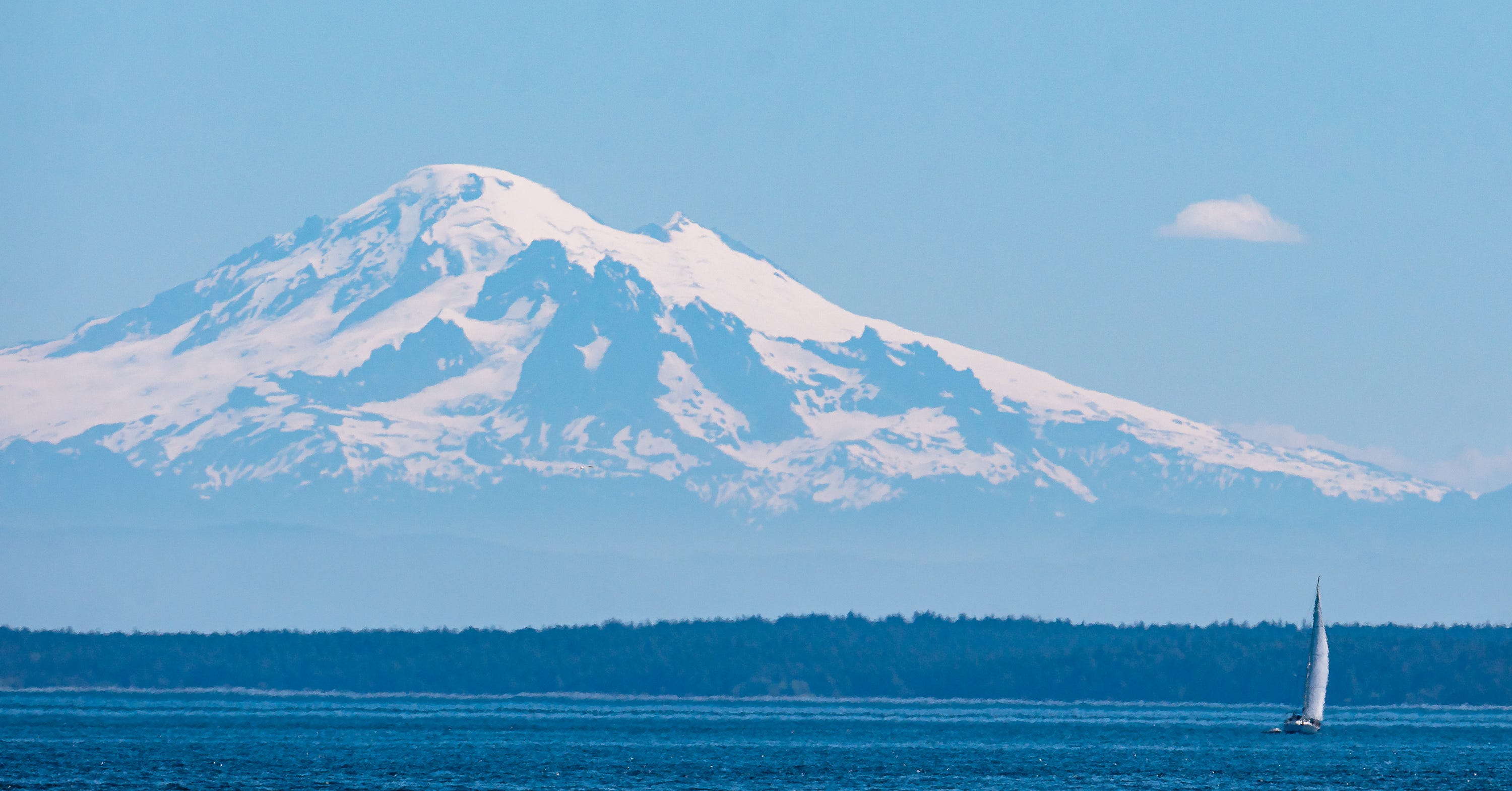
As we traveled the wondrous new landscape that we had entered began to reveal itself. What first seemed like a cloud on the horizon slowly materialized into the glacier-capped cone of Mt. Baker, a massive volcano more than 100 miles inland. On the right side of the strait, more rugged snowy peaks of the Olympics emerged, their flanks swathed in rich blankets of evergreens that ran right down to the water’s edge. It was giddying to be in such a dramatic landscape which had filled our imaginations for so long.
We got into Port Angeles several hours ahead of schedule thanks to the tide and waves at our back. We docked in front of another tough-looking old boat outfitted for cruising and soon ran into the captain, a lone guy in his early twenties who had single-handed his boat up from Oregon. He had blown an O-ring on his engine and was in a flurry trying to find a local supplier in town. We offered to let him browse the little variety pack of O-rings Jeremy had picked up for such an eventuality on our boat, and happily, one of them worked! It was our first foray into the famously neighborly culture of cruisers helping each other out, and it felt good to be able to make someone’s day with such a little thing.
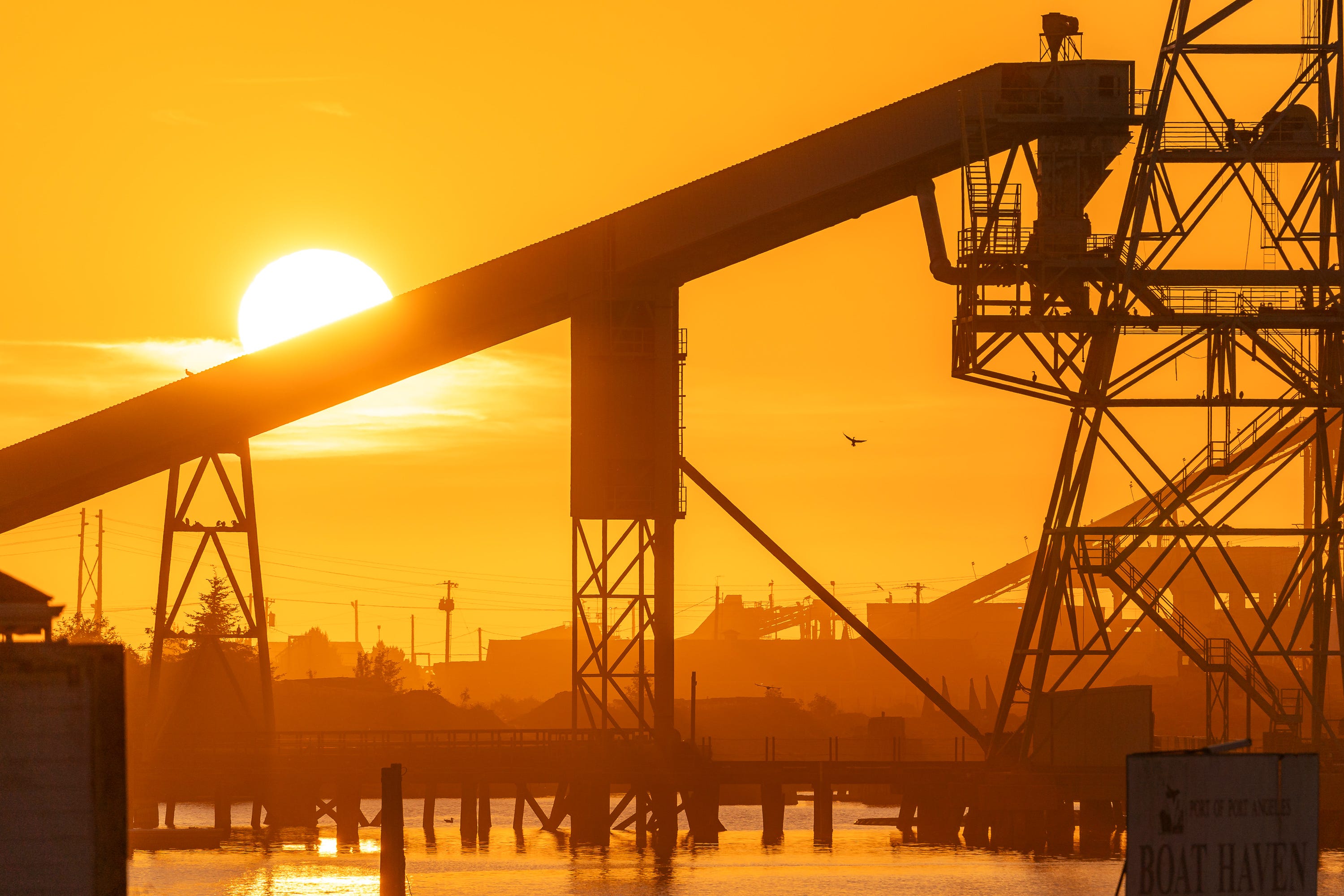
The final day of our trip into the San Juan islands started with a different kind of trial. We had a 9am couple’s therapy session that covered some pretty intense ground. From Maddie:
It turns out that when you really slow down after running for years, things have a way of coming out. I’ve been dealing with the gradual healing process from trauma that started with a sexual assault and emotionally abusive relationship in college and got complicated and exacerbated by my work volunteering on a rape crisis hotline during the pandemic and then at Apple preventing technology-enabled abuse. Basically, thinking about gender-based violence has been a significant part of my life since I was 18, and quitting my job to focus on sailing and preparing our boat for this journey felt like the first time in almost 10 years that I let that go and gave myself permission to have something else be my purpose. And WHEW has that process of letting go been way harder than I expected.
For so long after I quit my job I kept asking “why now?” Why, after all these years of thinking I had this all figured out, is all of this pain coming to the surface? I think the deceleration and distance I’ve gotten after quitting has made it possible to finally start to unpack and feel some of the complex feelings from those experiences. All this has predictably been very challenging, both individually and in our relationship.
Healing from sexual trauma can be a long, winding process, and so much of it happens behind closed doors. Even after working with survivors for years I find myself without many examples of what to expect from the experience. It doesn’t help that the concepts of “trauma” and “healing” often get diluted through social media and pop culture to mean a wide variety of things. And I’m learning that most of this process doesn’t happen when or how I expect it to, or on the timeline that I think it should. My body goes rigid with a freeze response when woken up on night watch, or a benign conversation about how to navigate the boat around an island suddenly makes my heart race with a feeling of loss of control. I’ve been experiencing intrusive thoughts and nightmares. Some weeks I’m finding it difficult to feel any joy or motivation. And then I feel guilty because I’m living my dream! I’m supposed to feel nothing but happiness and gratitude, right?
When I conceptualized this sailing dream and started orienting my life towards it, I don’t think I realized how badly I needed it. In order to keep doing my job I forced myself to be numb for a really long time. But now that I’m here, it’s clear how vital it is to have this opportunity to slow down, challenge myself, be surrounded by the ocean, see what bubbles to the surface, and try to meet it head on. Right now the process is feeling messy and exhausting and rage-full but also hopeful and transformative.
I debated whether I should write about this and include it here because it’s really vulnerable. I’m scared of worrying our friends and family. I feel embarrassed that I can’t wrap this up with a nice conclusion about how I know how I’m going to fix everything and feel better. But that’s kind of the point. We’re trying to be real about the highs and the lows of this journey in our writing, and it would feel wrong to leave this out because it has been a significant part of the experience, both for me and for Jeremy. It also feels important to share to try and make a little dent in the shame that exists around these topics, both for myself and for others. Maybe someone reading this will feel less alone. <3
After getting off our therapy call Maddie turned to Jeremy and deadpanned: “I can’t fathom crossing the strait of Juan de Fuca after that” which made us both laugh out loud when we realized how the absurd ring of it captured the weird life we were living— mixing crazy physical adventure with personal and relationship challenges. All part of the messy grab-bag of growth we’ve set up for ourselves by embarking on this voyage at this stage in our lives.
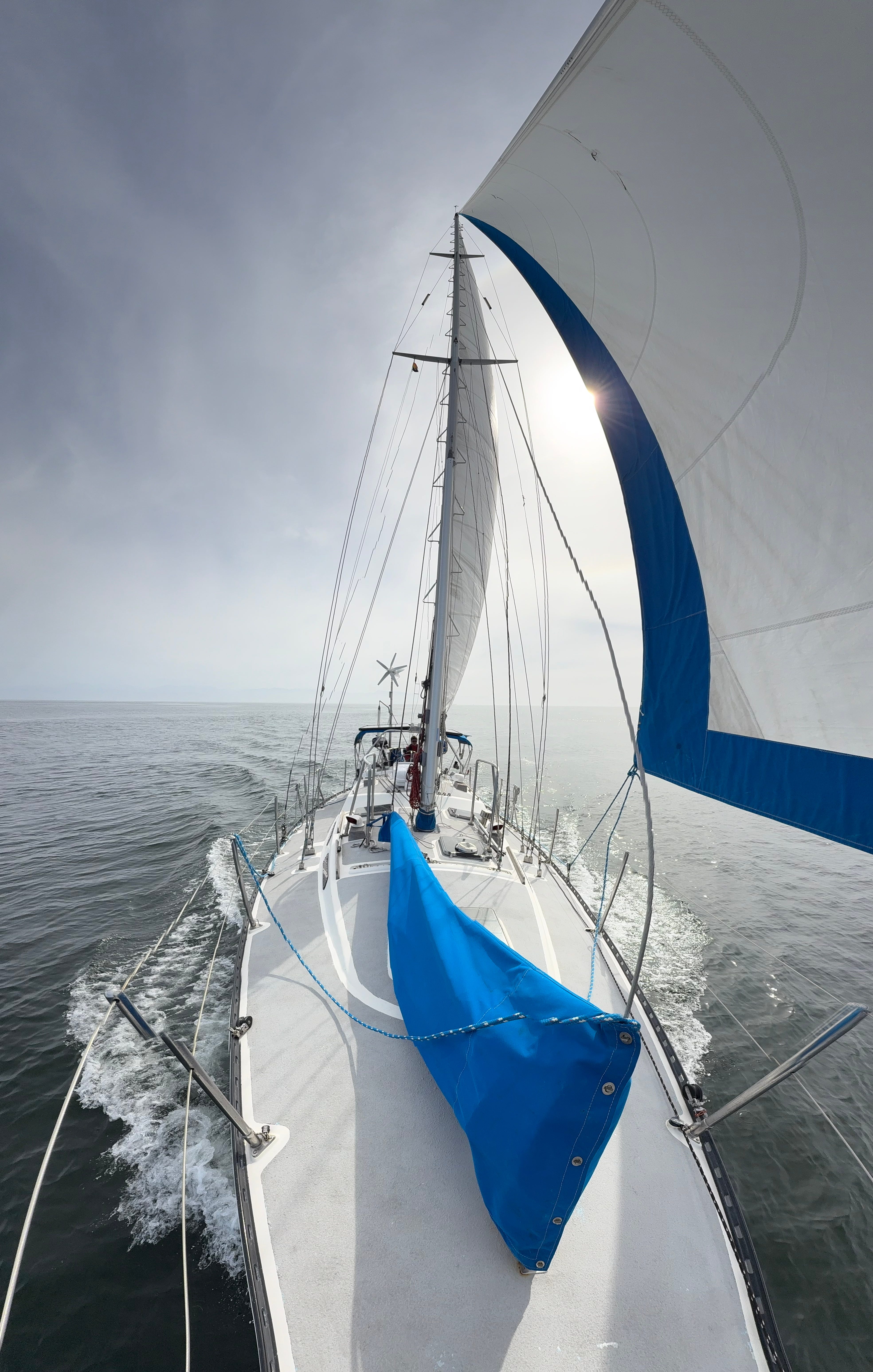
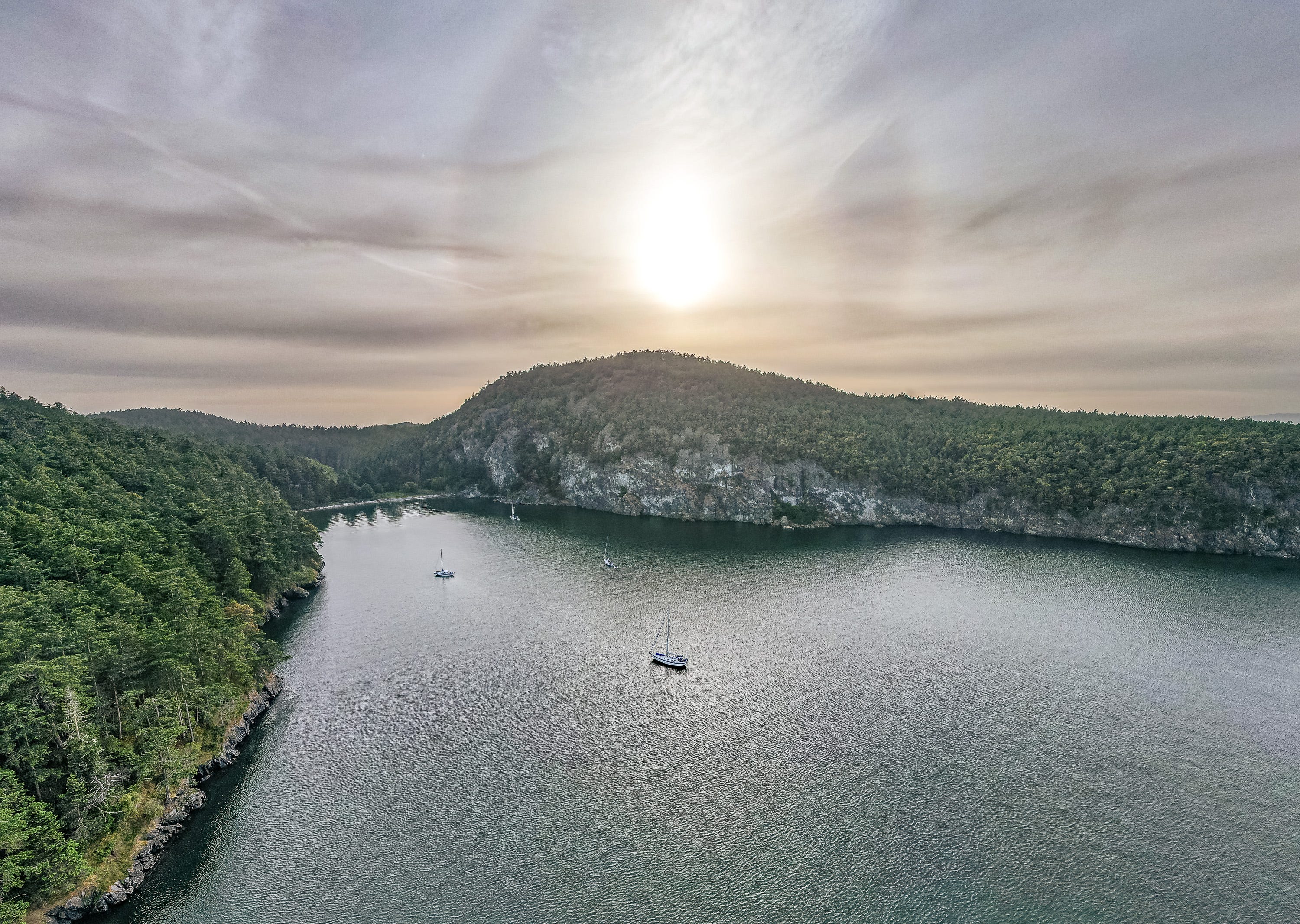
Nevertheless, we did cross the Strait of Juan De Fuca that day. The wind was barely whispering but the ocean swell and a helpful push from the current helped us make reasonable time. We drifted through the glassy silver day without another boat in sight, distant islands slowly materializing under a sun halo beaming through the wispy cirrostratus clouds. When we got into Watmaugh bay on Lopez Island, we were giddy to be finally dropping anchor in the San Juans. When the chain went taut and the hook dug into the soft mud, we turned off Tardigrade’s rumbling engine and soaked in the silent peace of arrival. Exactly one month from the day we left SF for the San Juans, we were here.
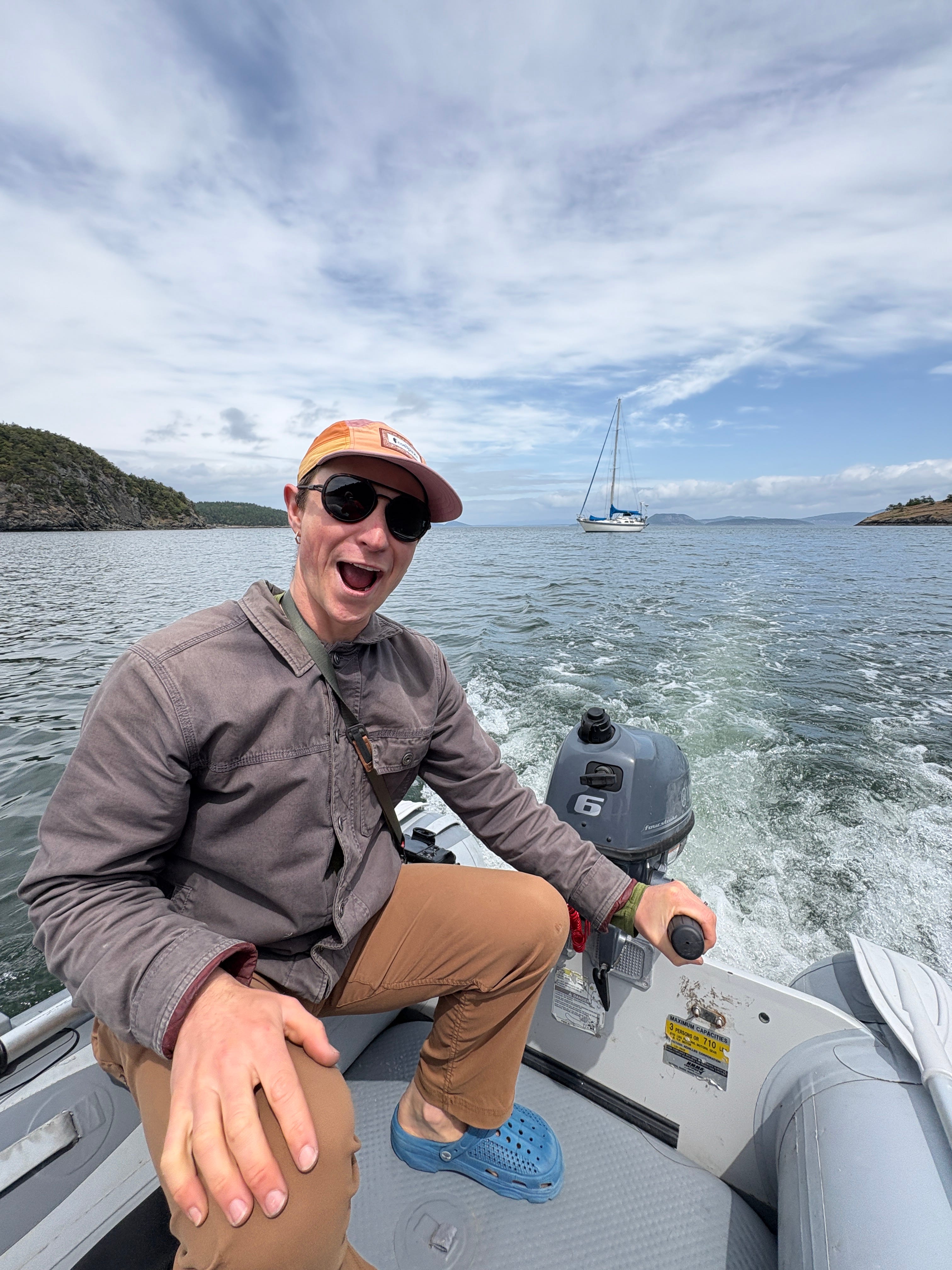
Once we were anchored, it was time for another big first: using our new (used) outboard motor! Jeremy, as the designated “buyer” of our partnership, had been on the hunt for an outboard for months before we left, and had finally scored a great deal on exactly the model we had been looking for just days before our departure. For some reason Jeremy has always been a little boyishly thrilled by outboard engines, so the prospect of having our own and getting to jet around with it was the cause of much excitement. We carefully lowered it from the mount on our rear railing down to the back of our inflatable dinghy, and went through the motions of starting it with a close eye on the instructions given by the kind man who sold it to us. After a few pulls of the ripcord the engine sputtered to life and we had our first-ever powered dinghy ride, flying along at a speed that felt positively thrilling after so many days at Tardigrade’s plodding pace.
Actually setting foot on the beach and walking along a lush forested path was one of most joyful and present moments of the trip so far. We felt like we were descending into wonderland, made so rich by the fact of this being literally the moment we had been dreaming, planning, and working towards for so many months. At last, the long-held breath could be let go; we could finally, unambiguously, without any fear of catastrophically jinxing it just before the finish line, say we had made it.
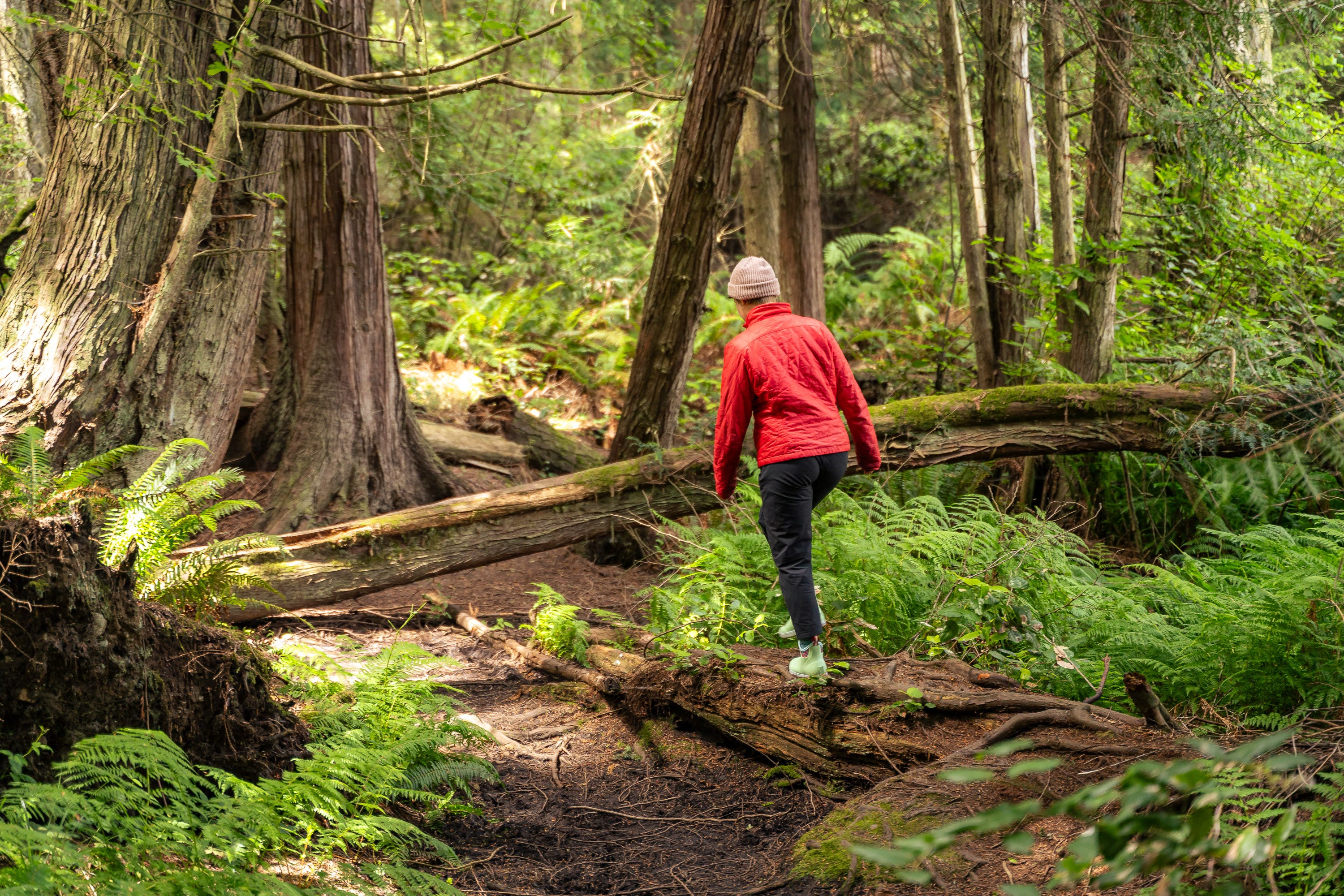
Our hike around Lopez Island was gorgeous, full of slightly unfamiliar vegetation that was made so much more delightful by having watched the slow progression of biomes as we moved up the coast. We topped out on an exposed rock face high above the bay where we could see Tardigrade framed on teal water between the spindly red fingers of Madrone tree boughs. We also came across a magical rope swing tied to a towering oak tree, and soaked in sweet summer as we swung out through the warm air over the sparkling Salish Sea.
After a jubilant night at Watmaugh, the final step of this chapter was a quick jaunt around Lopez Island to the neighboring Decatur, the site of our friend Sara’s birthday weekend. The sail over was so flat and relaxed it reminded us of sailing on Lake Fairlee in Vermont, the first place Maddie ever took Jeremy out sailing on a tiny Sunfish, back when this lifestyle was little more than wistful joke between us. We picked up a mooring ball in a quiet crescent bay, so close to shore we didn’t even bother with the outboard.
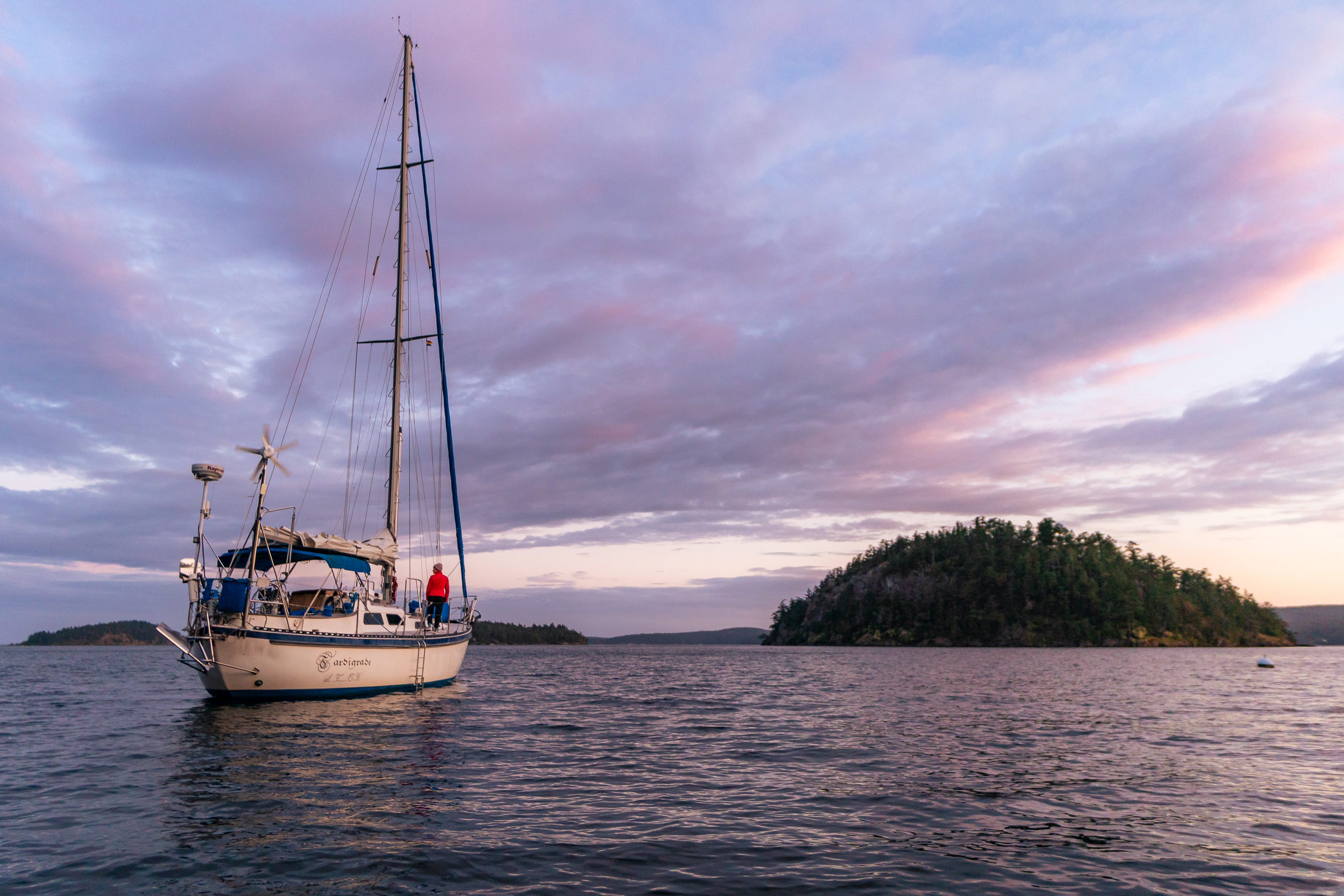
The following weekend was a blur of beauty, silliness, and fun connection with friends old and new, and writing about it could easily fill another post. So we’ll leave it here, happy and proud to have finished this epic chapter of sailing North. It was hard, genuinely unpleasant at times, and also so beautiful and meaningful and confidence-giving. We have so much left to learn to become better sailors and better partners, but it feels good to take a brief moment to pat ourselves on the back for pulling off something big.
Thanks for tagging along on the voyage so far, it’s been wonderful to have a reason and a means to record and share this adventure with the people we love. ❤️
Until next time,
Maddie and Jeremy
No posts
Comments
Nothing yet. Say the first thing.
Sign in to join the conversation.