
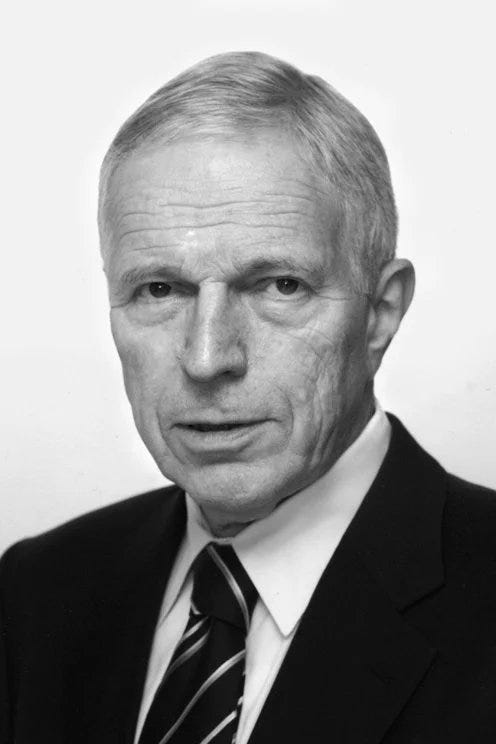
Edmund “Ned” Phelps, winner of the 2006 Nobel Prize in Economic Sciences, died in Manhattan on May 15, at the age of 92. The world has lost one of its most consequential economists. I have lost a friend and mentor who was pivotal to my professional and intellectual development.
I first came to know Ned in 2008 at Columbia University, where he had taught for decades as McVickar Professor of Political Economy. I was in the final year of my PhD and increasingly disaffected by my growing disagreement with much of what I was being taught. He was a Nobel laureate at the height of his fame, only two years after Stockholm had called.
I attended one of his talks and enjoyed his perspective. We chatted briefly afterward, and I followed up by email. In the conversations that followed, I finally found someone at Columbia who had the time and interest to listen to my increasingly heretical ideas. We connected over our shared interest in Hayek, whose work was hardly fashionable at Columbia. We enjoyed many lunches and long email exchanges. The distance between our stations could scarcely have been wider, yet it never once entered into how he treated me.
Soon afterward, he appointed me a visiting scholar at his Center on Capitalism and Society. It was my first academic research appointment and allowed me to spend the summer of 2011 with him at Columbia. He later made me a Foreign Member of the Center, and we remained in contact and worked together on various papers and projects.
He took my ideas seriously when practically nobody else did. He opened doors that a young economist could not have opened for himself. Whatever I have achieved in this profession began with Ned Phelps taking a chance on me.
What I will remember most, however, is not the professional generosity but the conversations. Ned was that increasingly rare figure in academia: a man genuinely happy to discuss ideas and genuinely happy to be disagreed with.
We found much common ground in our interest in free markets, while our disagreements over macroeconomic methodology produced many memorable, pleasant, and challenging discussions. They were never contests and never quarrels. He engaged every objection on its merits, pleasantly and patiently, with the confidence of a man who had nothing to prove and everything still to learn.
In 2018, when I first published The Bitcoin Standard to little interest from the academic world, I wrote to ask whether his Center might host me to discuss it. A book on the economics of Bitcoin was not, in 2018, an obvious subject for a Nobel laureate’s research center at an Ivy League university. But Ned was delighted to host the event. An idea was on offer, an argument was to be made, and that was reason enough to open the doors. Bitcoin itself never quite persuaded him. But he was always happy to discuss it, with me and with others. He did not need to agree with an idea before considering it worthy of serious attention.
Ned’s impact on modern economics was momentous. He was pivotal in demolishing one of the central conceits of postwar macroeconomics: that governments faced a stable and exploitable trade-off between inflation and unemployment.
According to the crude version of this doctrine, governments could increase employment by tolerating more inflation and suppress inflation by accepting more unemployment. This offered politicians a seductive menu of supposed policy choices. Unemployment could be cured by debauching the currency, while inflation could be blamed on excessive employment and fought by putting people out of work.
In work dating to the late 1960s, Phelps showed why this supposed long-run trade-off could not survive. Workers and employers form expectations about inflation and incorporate those expectations into wages and prices. Once they adjust, the apparent employment stimulus disappears. Attempts to hold unemployment below its equilibrium level therefore produce not permanently higher employment, but ever-higher inflation. Alongside Milton Friedman, Phelps transformed how economists understood the relationship between inflation, expectations, and employment.
The stagflation of the 1970s made the old mythology impossible to sustain in full view of the world. If inflation reliably purchased lower unemployment, why were inflation and unemployment rising together?
Governments have spent much of the period since trying to forget the lesson, while Keynesians have devised increasingly elaborate stories to explain away its implications. But Ned’s central conclusion remains intellectually devastating: there is no permanent prosperity to be purchased through inflation. He helped kill the fantasy of a stable long-run Phillips-curve trade-off, and economics is better for it.
That alone would have constituted a historic career, but Ned’s range was remarkable. In 1961, while still in his twenties, he formulated the Golden Rule of capital accumulation, identifying the savings rate that maximizes sustainable consumption across generations. He performed pioneering work on the microfoundations of macroeconomics, efficiency wages, statistical discrimination, pricing, and structural slumps.
In his later decades, he turned increasingly toward the deepest economic question of all: what makes human beings and their economies flourish?
His answer, developed most fully in Mass Flourishing in 2013, was that prosperity does not originate primarily in ministries, plans, or a handful of celebrated inventors. It grows from the grassroots, from ordinary people imagining, experimenting, innovating, and taking risks. This dynamism is not merely materially enriching. It gives people challenge, purpose, self-discovery, and the opportunity to exercise their creativity.
He lamented the corporatism, conformism, and short-termism that smother this process. In developing this account, he drew on and added to the work of thinkers such as Hayek, connecting economic progress to the dispersed imagination and initiative of ordinary individuals.
Ned practiced the dynamism he preached. At 86, he published Dynamism with Raicho Bojilov, Hian Teck Hoon, and Gylfi Zoega. That same year, he began writing his memoirs. My Journeys in Economic Theory appeared from Columbia University Press in 2023, when he was 89. It became the final book in a career that included twenty-four books and more than 180 articles.
Ned was born in Evanston, Illinois, in 1933, during the Depression that helped shape his lifelong preoccupation with unemployment. He studied at Amherst and earned his doctorate at Yale under James Tobin. After appointments at Yale and the University of Pennsylvania, he joined Columbia in 1971 and made it his intellectual home for more than half a century.
He was the only American of that great generation whom I came to know closely, and he will forever leave me with a favorable impression of it: classy grandeur, relentless ambition and confidence, a towering physique, and a beaming, charismatic smile. I always thought he looked a little like Frank Sinatra, and his wit sometimes reminded me of him too.
Over the years, our families grew closer, and I would visit him whenever my travels took me to New York. My wife and daughter came to love him like family. He was unfailingly warm, charming, and caring, and I will remain forever grateful to him.
I am very proud to have called Ned Phelps my friend. He was a true scholar and a true gentleman, and the two qualities were inseparable in him.
I will miss the conversations most of all.
Rest in peace, Ned. And to the lovely Viviana, my deepest condolences.
If you enjoyed this article and would like to be kept up to date with my work, you are welcome to subscribe:
No posts
Comments
Nothing yet. Say the first thing.
Sign in to join the conversation.