
By Sadie St. Lawrence | Human Machine Collaboration Institute
There is a map of the AI economy that almost everyone is using.
It has three or four pins on it. San Francisco. The South Bay. Maybe Seattle. Maybe Austin if you are being generous. The rest of the country is treated as a market for the things being built in those pins, not as a place where the building itself could happen.
I have been thinking a lot lately about how wrong that map is, and about why it stays wrong.
For the past year, my team and I have been working to build something the dominant narrative said should not work. We set out to bring the right partners together and hold real momentum in a region that almost no one in the industry would have predicted as the next place worth watching.
Sacramento, California.
And what I learned has very little to do with technology. It has almost everything to do with fear.
Going in, I assumed the hard part would be capability. Access. Lining up the infrastructure and the talent and the institutions. Those things were work, but they were solvable work. You make the calls. You build the partnerships. You find the people who say yes.
The hard part was something I did not see coming. The hard part was fear.
Not my fear. Everyone else’s.
Because the moment you try to build something new in a place that is used to being told it cannot, you discover how many people have quietly organized their lives around the old way of doing things. And new things threaten the old way. So the resistance rarely shows up as outright opposition. It shows up as doubt. As “that will never work here.” As the meeting scheduled to slow you down rather than move you forward. As the people who would rather be right about why it is impossible than be part of making it possible.
Here is something it took me a year to fully understand.
Most of the people who resist something new are not resisting the new thing. They are protecting an old thing. They have a system they know how to operate. A way of working that makes them feel competent and safe. And anything new, even something obviously better, asks them to be a beginner again. To not know. To risk looking foolish in front of people who watched them be the expert.
That is a real loss for them, and I have stopped pretending it is not. But it cannot be the thing that sets the pace. Because if you let the people most invested in the old system decide whether the new one gets built, it never does.
Momentum.
Boring answer. True answer. The single most important thing we did was protect momentum. Not perfection. Not consensus. Momentum.
That meant bringing the right people into the room, the ones who wanted to build, and giving them enough air to actually build. It meant being honest about the noise without letting the noise steer. The haters get a vote, not a veto. You hear them, you take whatever is real in the criticism, and then you keep going.
The communities that win the next decade of AI will not be the ones with the most talent or the cleanest infrastructure. They will be the ones that learn how to hold momentum against the people who would rather they stayed exactly where they were.
A few things I thought I knew when I started this work, that I no longer believe.
The biggest obstacle to innovation is access. I used to think this. Access matters enormously. But I have watched communities get access and still not move, because the people in charge of the old system would not let go of it. Access is necessary. Courage is what is scarce.
Innovation happens at the frontier of capability. I used to think this too. Now I think innovation happens wherever someone is willing to be a beginner in public, and to keep going while everyone around them explains why it will not work.
The unlikely places are behind. I no longer believe that. The unlikely places are not behind. They are guarded. Guarded by good people who are afraid, and by old systems that work just well enough to defend. Move past the fear, and the building starts almost immediately, because the talent and the questions and the drive were there the whole time.
I will say this part personally because it shapes everything I do.
I grew up in rural Iowa. There was no AI ecosystem where I was. There were no tech labs, no networks, no one around me building the future. For most of my early career, I assumed that meant the future was being built somewhere else, by other people, and my best path was to figure out how to migrate toward it.
I no longer believe that.
What I have watched in Sacramento is convincing me that the migration model is the wrong model. The talent is already there. The questions are already there. The drive is already there. What is missing is not capability. What is missing is enough people willing to push past the fear long enough to build before the doubt wins.
If you are reading this from a place that is not one of the four pins on the map, please hear this from me. You are not behind. You are early. And the thing standing between your community and what it could build is almost certainly not the technology. It is the courage to keep moving while people tell you it cannot be done.
If you are trying to build something new in a place that does not fit the dominant map, I want to hear from you. What are you building? Who is telling you it will not work? What would it take to keep your momentum going? Hit reply. The research I am building at HMCI depends on these stories, and yours matters.
If you are working on AI in a place that does not fit the dominant map, I want to hear from you. What are you building? What are you stuck on? What would change if the compute showed up tomorrow? Hit reply. The research I am building at HMCI depends on these stories and yours matters.
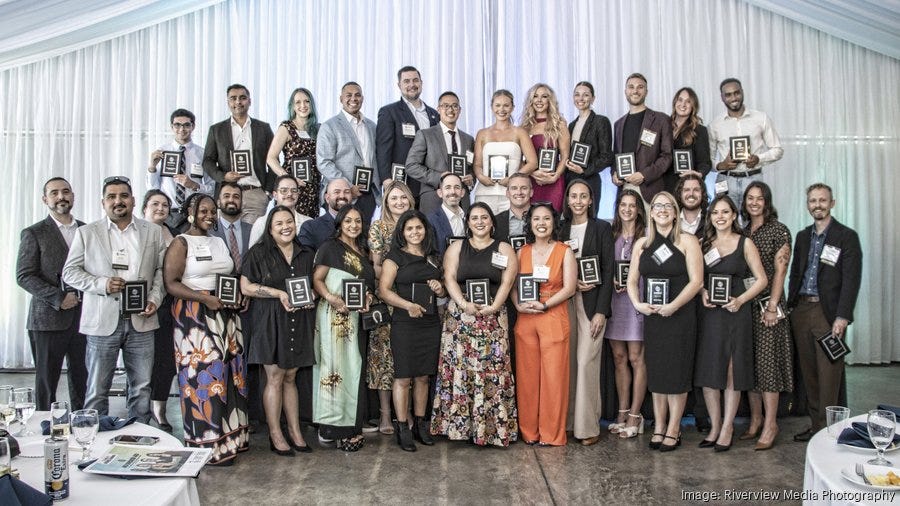
Sadie St. Lawrence is the Founder & CEO of the Human Machine Collaboration Institute and author of Becoming an AI Orchestrator. She writes weekly about the future of human-machine collaboration, AI in practice, and what it actually takes to build at the frontier.
No posts
Comments
Nothing yet. Say the first thing.
Sign in to join the conversation.