
A website is a strategic asset in the B2B landscape. Integrating it into the overall business strategy—as a tool for sales, marketing, internal communication, and customer purchasing support—has become a necessity.
Modern businesses operate in an environment characterized by high volatility, uncertainty, complexity, and ambiguity—commonly referred to as VUCA. In such conditions, effective business strategy planning and agile decision-making become critical, and organizations that can quickly adapt to changing market conditions gain a competitive edge.
A website is a tool that enables immediate adaptation to changes within the organization. In this context, it serves as a central element supporting sales processes, marketing activities, and customer communication alike.
A well-designed and effectively utilized corporate website can significantly boost sales, enhance customer loyalty, and strengthen brand credibility in the B2B market.
Key Marketing Functions Your B2B Website Should Deliver
How a Website Serves as a Sales Tool and Boosts Sales Team Performance?
Why a Dedicated CRM and a B2B Website Are Key Components of a Company’s Digital Ecosystem?
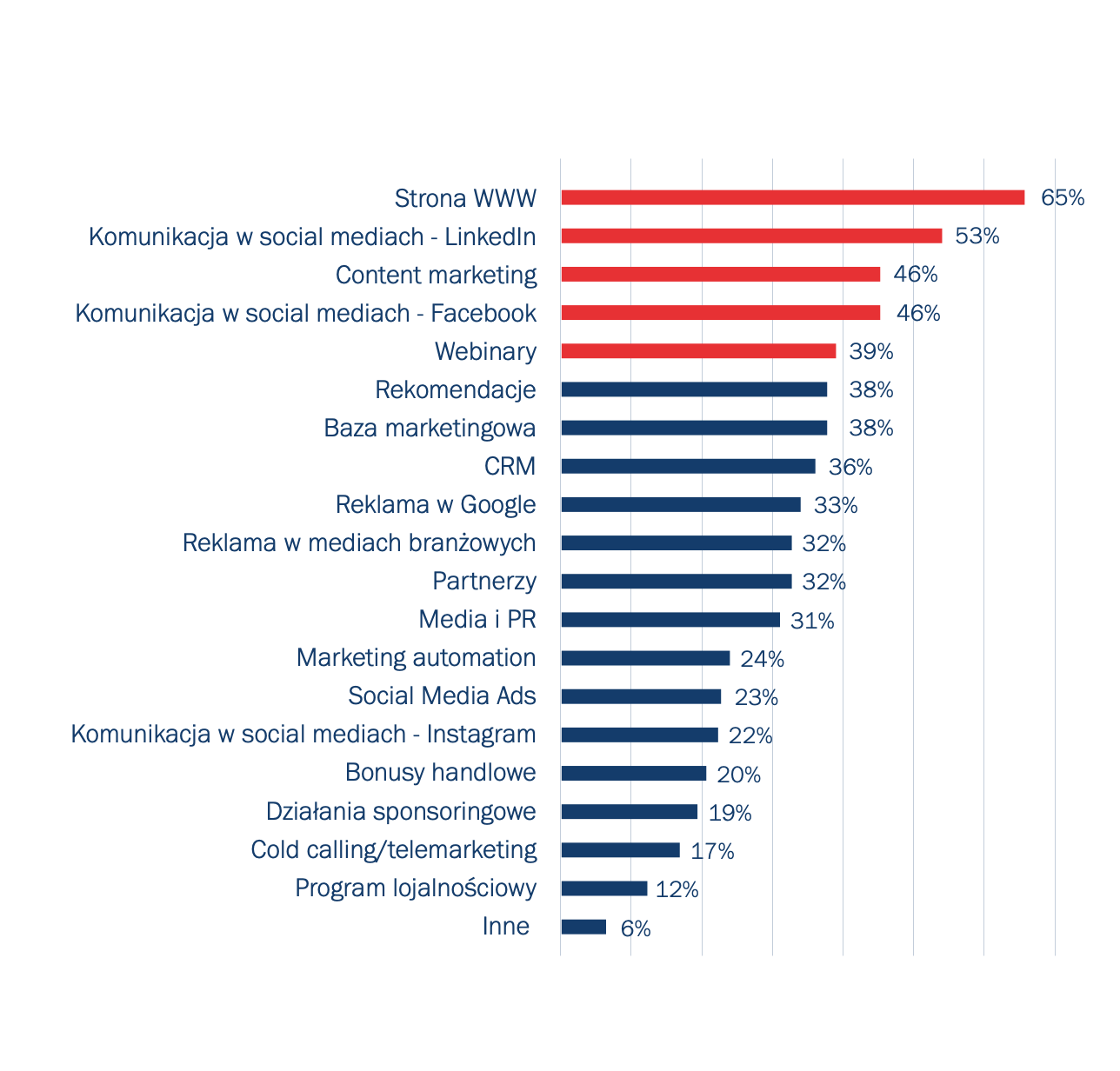
According to a BUZZcenter report on B2B marketing, the website ranks first as the channel for delivering offers to B2B clients, with 65% of respondents indicating its importance. A website is therefore not just a company’s digital business card—it is a strategic tool that supports business growth.
Lead Generation and Attracting Potential Clients – A well-designed website functions as a self-sustaining lead generator. Strategically placed CTAs (calls to action) and thoughtfully designed forms integrated into the site’s structure are essential.
Education and Establishing Thought Leadership – Blogs, guides, industry reports, and educational materials help a company strengthen its position as an expert in its field.
Building Brand Awareness and Reputation – “About Us” sections, portfolios, case studies, and client testimonials enhance trust among potential customers and facilitate their purchasing decisions.
A website built as a dedicated solution with flexible modules allows marketing teams to independently create landing pages with unique URLs without involving the IT department. This enables rapid deployment of, for example, lead-generation campaigns using forms, layouts, and visual elements consistent with the corporate website. Such ergonomic content management allows companies to respond swiftly to market needs while maintaining full alignment with their established marketing strategy.
Another example of leveraging a dedicated, modular website is the integration of a product catalog, which can serve as a foundation for creating targeted promotional campaigns. Thanks to the site’s flexible structure, the marketing team can independently prepare product pages, highlight specific offers or collections, and create visually consistent promotional materials without external support. This approach not only enables efficient operations but also effectively strengthens marketing communication.
A website also plays a key role in customer retention and building long-term loyalty. According to a report by the Sales and Marketing Development Institute, one-third of companies believe that their products “sell themselves” thanks to recommendations from existing customers.
To fully leverage this potential, a B2B website should enable:
Showcasing Credibility and Effectiveness to Build Brand Trust – through testimonials, track records, case studies, partner logos, or videos such as customer feedback clips.
Supporting Relationships with Existing Clients – providing selected materials, webinars, reports, loyalty programs, or newsletters increases customer engagement and satisfaction.
Reducing Churn – easy access to support, contact options, FAQs, and educational materials lowers the risk of customers switching to competitors.
Combining positive customer experiences with brand ambassador recommendations or expert testimonials strengthens the company’s credibility and enhances the effectiveness of acquiring new clients.
Lead Qualification – Through contact forms, CTAs, and educational content, the sales team receives better-prepared leads, which shortens the sales cycle.
Reducing Customer Acquisition Costs – Inbound marketing generated through the website is significantly more cost-effective than traditional prospecting activities.
Performance Monitoring – Key metrics include the number of leads acquired, their quality, effectiveness in moving through the sales funnel, and the cost of customer acquisition.
Through strategic planning and the functionality of a B2B website, it is also possible to significantly reduce sales costs. Leads acquired via the website are typically more valuable than those obtained through prospecting methods (such as cold calling or mass email campaigns), which increases the efficiency of the sales process.
A dedicated website with ergonomic content management is a modern sales tool. By enabling the creation of login-protected areas for employees, a company gains a secure space for sharing materials, utilizing a unified resource database, and creating offers or documents. This streamlines the flow of information between departments or between the sales team and clients.
Integrated analytical modules allow for data collection, providing valuable insights that support business decisions. Such a website strengthens the B2B sales team, enables a better understanding of customer behavior, and allows for quicker responses to client needs. As a result, it becomes a tangible tool that enhances the effectiveness of sales processes and helps build stronger relationships.
Modern businesses are increasingly realizing that effective digitalization is not just about implementing individual tools. The key to success lies in an integrated approach, where all systems—from the website to CRM and ERP—form a cohesive ecosystem that supports every area of the company’s operations.
Sales, marketing, customer service, and administration departments, while performing different functions, have their effectiveness closely tied to the smooth flow of information. This is why an increasing number of companies are implementing dedicated CRMs tailored to their operational specifics. Why is this so important? Every organization has a unique operating model, decision-making process, and approach to building customer relationships. Standard, off-the-shelf solutions rarely allow companies to fully leverage the potential of data and automation capabilities. A dedicated CRM, designed to meet the company’s specific needs, enables:
Integration of Sales, Marketing, and Service Data
Personalization of Customer Interactions
Automation of Repetitive Tasks
Full Transparency of Activities Across Departments
As a result, the company operates faster, more efficiently, and with greater internal consistency.
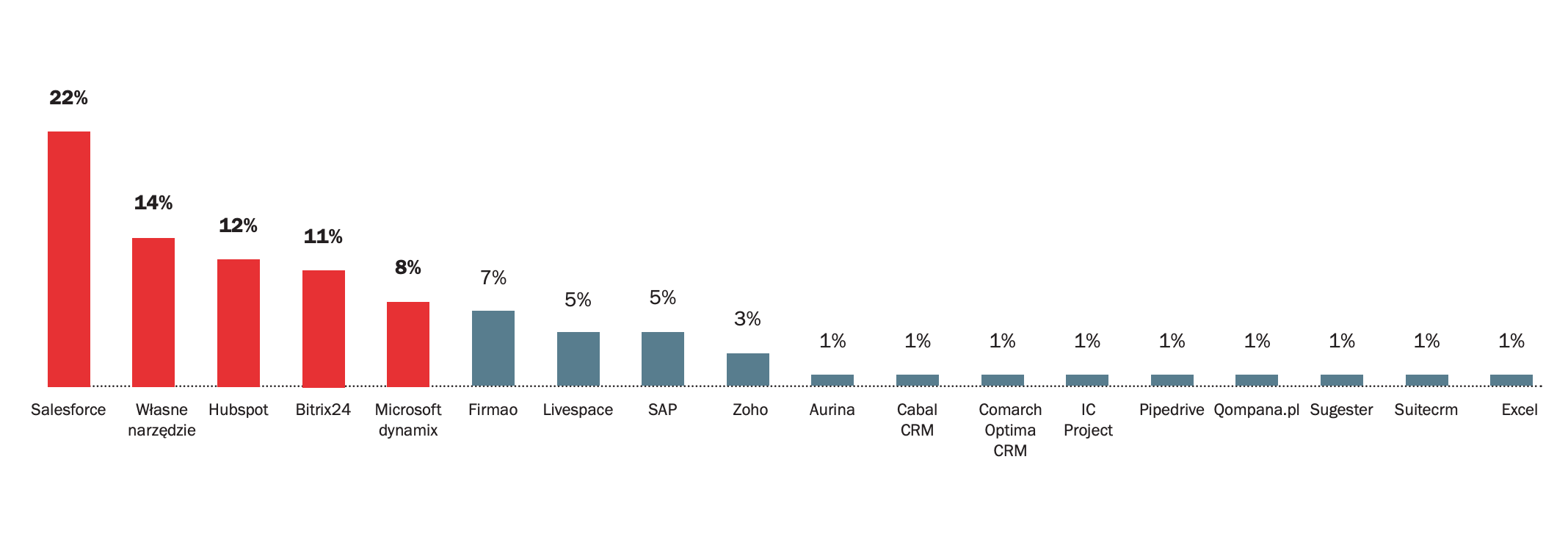
According to the report “B2B E-commerce – Business Online” by Santander Bank Polska (Business and Corporate Banking), companies can be classified according to different levels of digital maturity. The most advanced adopt an integrated (holistic) model that encompasses all processes, systems, and data within a single digital strategy.
Importantly, 56% of companies that considered their digital solution implementation a success cited the integrated approach as a key factor. This clearly demonstrates that technology is effective only when it operates in connection with the entire organization, rather than in isolation.
A B2B website is no longer just a place to publish offerings; it has become an active business tool that collects data, analyzes customer behavior, and supports every stage of the purchasing process.
For a B2B website to become an effective component of a company’s digital transformation, it should be:
Integrated
Aligned with business objectives
Strategically managed rather than ad hoc
Up-to-date and data-driven, not solely focused on promotional content
Rytm.Digital. Based in Warsaw. Working Globally.
No posts
Comments
Nothing yet. Say the first thing.
Sign in to join the conversation.