
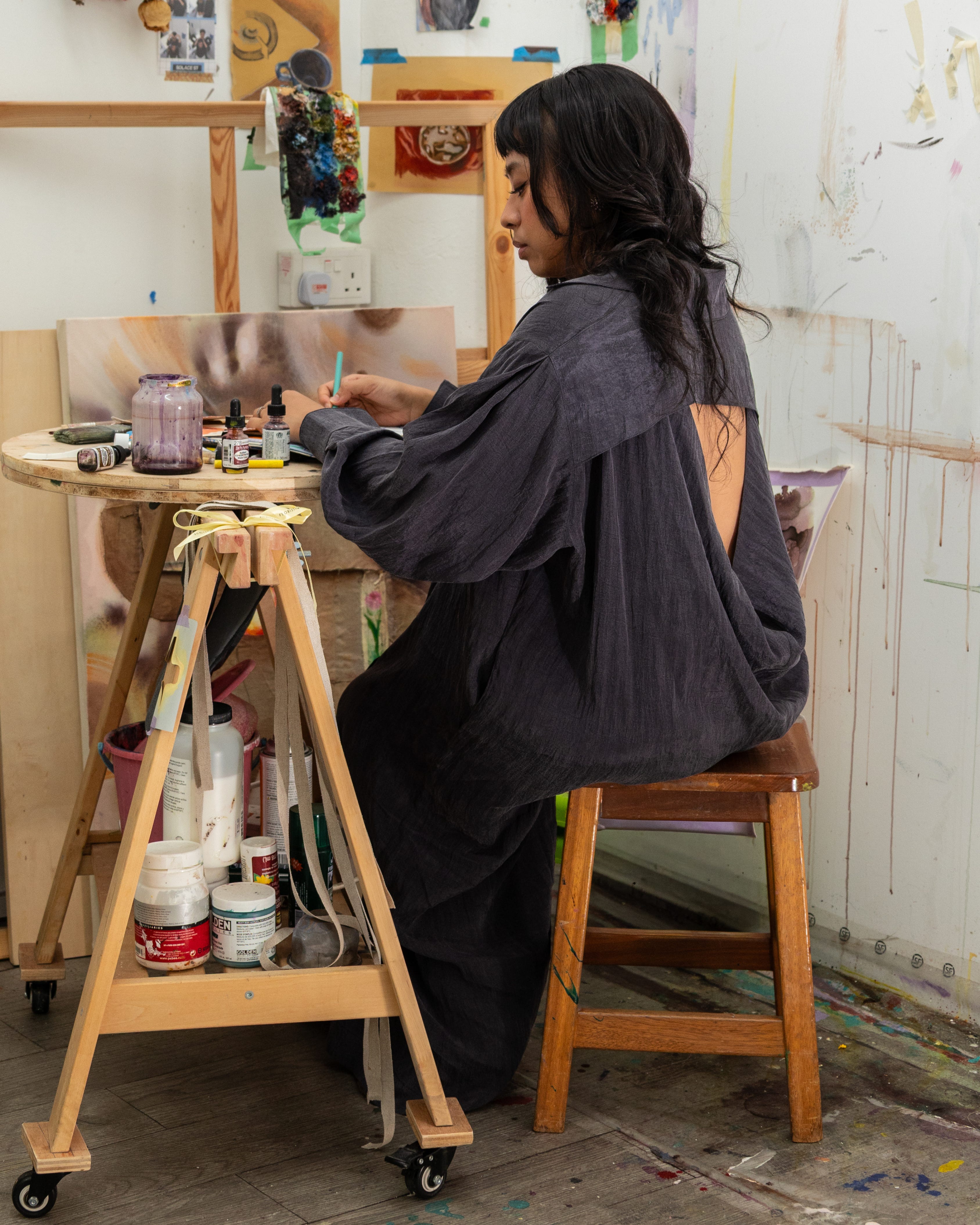
Aisha Rosli is a Singapore-based painter whose practice centers on the body, moving through themes of solitude, concealment, and desire. Her works unfold through layered gestures and recurring forms, where figures inhabit spaces that feel both intimate and unsettled.
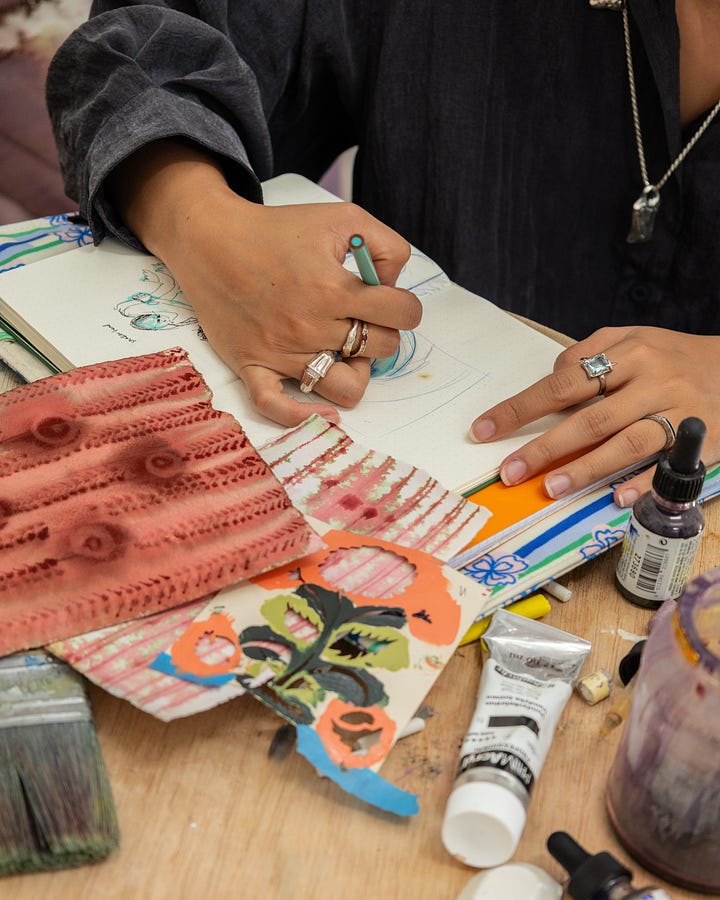
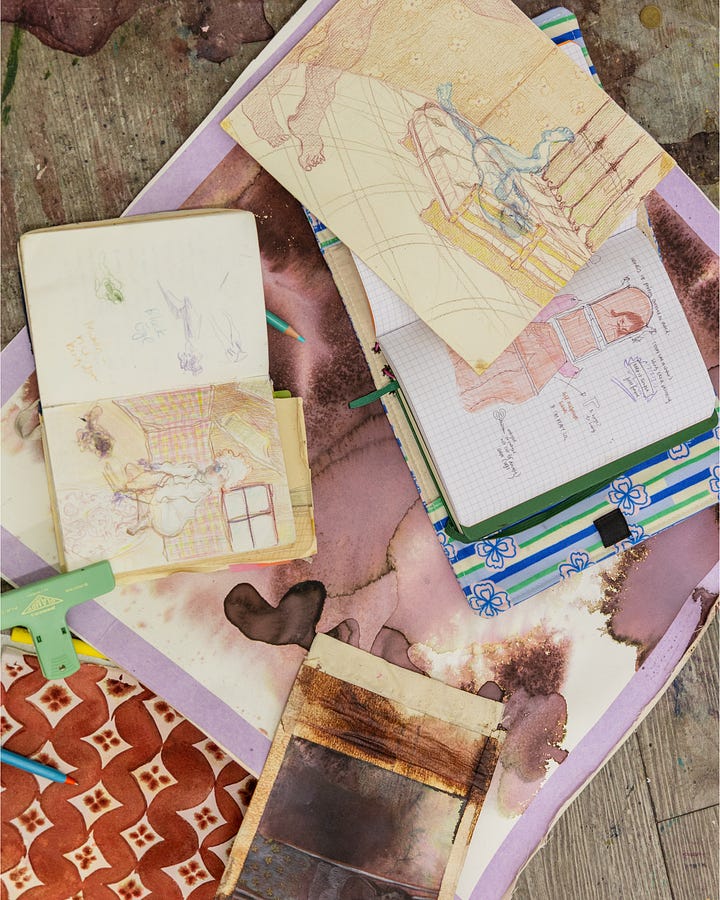
In this edition, we turn to the process behind her practice. The notebook becomes a site of quiet negotiation, where forms surface, shift, and take hold, holding, in part, the movement of a creative consciousness.
Q1. What role does a notebook play in your practice? AR:
Q2. Is your notebook where ideas take shape, or do they only truly reveal themselves once you begin painting?
AR: I think it only truly reveals itself once I’m painting. I don’t usually do a complete sketch in my book and transfer it to my canvas exactly as I sketched it. My notebook is used to guide my paintings. Most of the time, my final work is slightly or mostly different from my sketches.
Q3. When you begin a painting, what is the first thing you listen for — the body, the feeling, or the image?
AR: The feeling. The image will come after as a reimagined “version”. Putting different images into one to create an uncanny visual.
Q4. Are there recurring images, patterns, or thoughts that seem to return again and again in your notebooks? A:
Q5. What does the notebook allow you to do that the canvas does not?
AR: I love how the notebook is small and intimate which allows me to be raw and free. It’s easier to create beautiful unintentional marks with a smaller surface area. With the canvas, not only is it a different medium, I tend to see it as I’m painting an image I’ve planned for, unlike the notebook, which I can just carelessly make out an image.
Q6. Is there something about the physical act of writing or sketching in a notebook that changes the way you think about an image? AR:
Q7. If someone were to read through your notebooks without context, what do you think they might understand — or misunderstand — about your practice? AR:
Q8. Do you think of a notebook as a private space of the mind, or as a kind of parallel studio where paintings begin to exist in another form?
AR: I think it’s both. It works hand in hand.
No posts
Comments
Nothing yet. Say the first thing.
Sign in to join the conversation.