
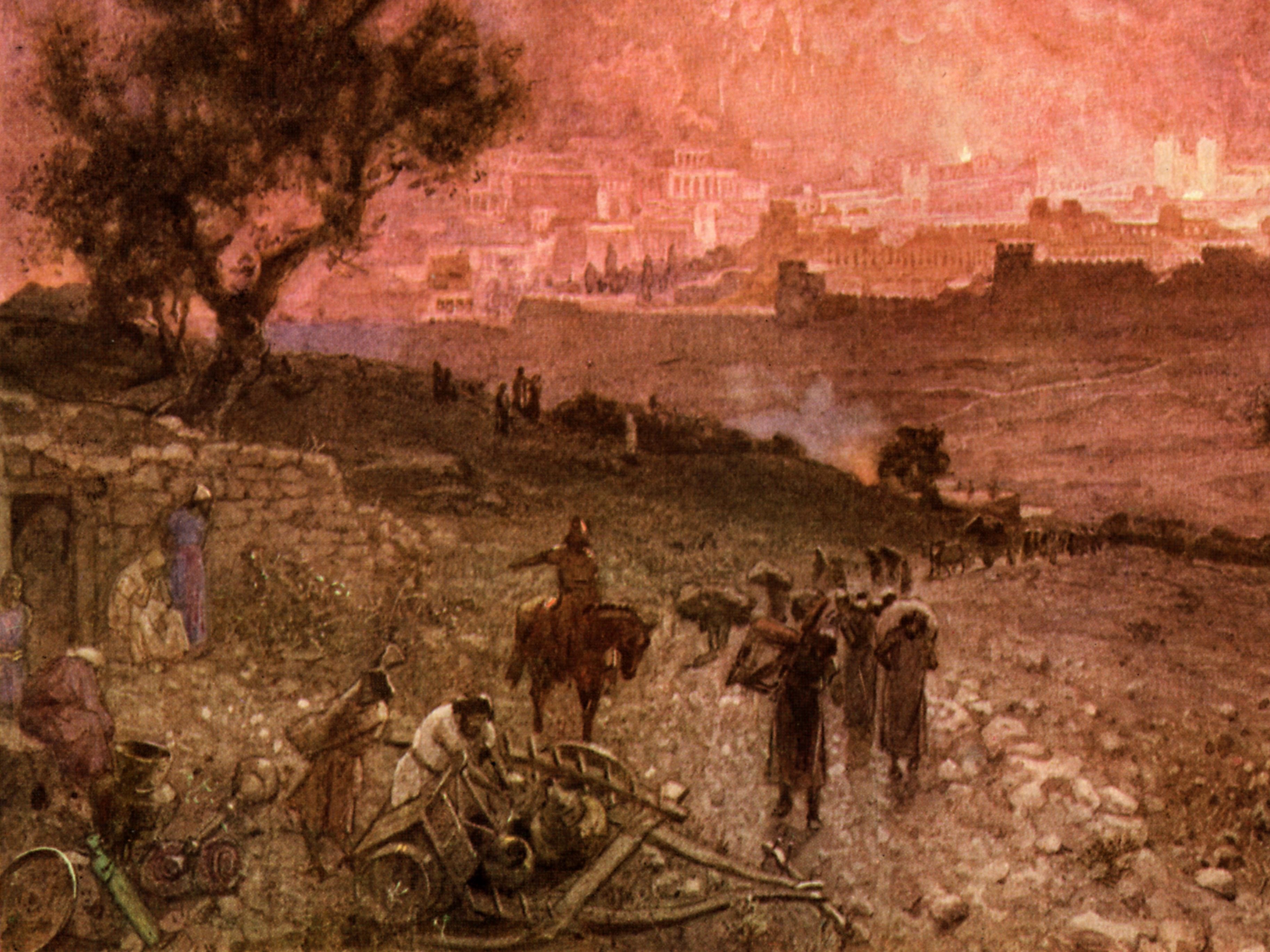
The LORD, the God of their fathers, sent persistently to them by his messengers, because he had compassion on his people and on his dwelling place. But they kept mocking the messengers of God, despising his words and scoffing at his prophets, until the wrath of the LORD rose against his people, until there was no remedy.
~ 2 Chronicles 36:15–16
In any English translation of the Bible that I have ever read, the order of the books is the same. It starts with Genesis and ends with Revelation; the New Testament begins with Matthew and the Old Testament concludes with Malachi. There will be different word choices, even on occasion a verse included that other versions exclude,1 but in terms of the ordering of the library of histories, prophecies, gospels, and epistles that together constitute the Scriptures there is unanimity.2
There is one notable exception to this rule: the actual Hebrew text of the Old Testament. And it makes for a fascinating difference in approaching the New Testament.
Before I go any further, let me be clear that this is not some sort of Da Vinci Code-style conspiracy about a shadowy cabal trying to manipulate the Bible. The reason for the difference is much more mundane. Without getting into the weeds, the text of the Hebrew Bible (the Christian Old Testament) followed the traditional Jewish ordering of the Tanakh: an acronym for Torah (the Law = first five books), the Nebi’im (the Prophets), and then the Ketuvim (the Writings). English Bibles have generally followed the more generic and chronological ordering of the Septuagint (the Greek translation of the OT), with some alterations.
What difference does this make? In the final analysis: not much. All the same books still make up the Bible, some of them are just in a slightly different spot. And yet—the way the Old Testament concludes in English Bibles versus how it does in Hebrew Bibles does present a tantalizing contrast.
English Bibles end with the book of Malachi. This ending that Christians are accustomed to is suggestive in its own right. Malachi chapter four is a prophecy of the great day of the LORD, when “for you who fear my name, the sun of righteousness shall rise with healing in its wings”—an anticipation of the coming of the Messiah (cf. Luke 1:78). What’s more, the very last verses speak of another Elijah, who will “turn the hearts of fathers to their children and the hearts of children to their fathers” (4:6). This is understood already within the Gospels themselves as speaking of the ministry of John the Baptizer (see Matthew 11:14). Ending the Old Testament with these promises provides eager anticipation for the new day that will dawn with the coming of the Son.
This is not where ancient Jews were accustomed to the Bible leaving off, however. And the subtle but significant difference can highlight even more the urgent need for the coming of Christ.
Hebrews Bibles end with what we call the book of 2 Chronicles. Essentially a retelling of much of the material from the book of 2 Kings, 2 Chronicles is easy to pass over. It doesn’t appear in the lectionary for Sunday.3 Bible reading plans rarely include more than a handful of its thirty-six chapters. Its Greek title in the Septuagint is literally “the Leftovers” (Paralipomenon). This is understandable, but don’t skip the book entirely—and especially not its closing chapter.
In 2 Chronicles 36, the author recounts the tragic decline of God’s people in Judah, the failure of King Zedekiah, the invasion of Babylon and its wicked King Nebuchadnezzar, and ultimately the exile of the people of God. It’s bleak.
Then we read these sobering summative verses:
“The LORD, the God of their fathers, sent persistently to them by his messengers, because he had compassion on his people and on his dwelling place. But they kept mocking the messengers of God, despising his words and scoffing at his prophets, until the wrath of the LORD rose against his people, until there was no remedy” (2 Chron. 36:15-16).
And...scene. How’s that for a cliff-hanger?4
Imagine you were an ancient Israelite reading (or, more likely, hearing read) the Scriptures, and this is how things leave off. Hardly a glimmer of hope, much less a “happily ever after.” What weight does that leave upon you? How do you feel about the future?
These closing verses from 2 Chronicles encapsulate the sad history of God’s old covenant people and make even more acute the desperate need for the Savior. Time and time again, in His great compassion God sought His people out. As He says through the prophet Isaiah, “All day long I have held out my hand to a disobedient and contrary people” (Isaiah 65:2; cf. Romans 10:21). There was no balm in Gilead: “There was no remedy.”
Until the One would come who said, “Those who are well have no need of a physician, but those who are sick. I came not to call the righteous, but sinners.” The One who took our illnesses and bore our diseases. The One who endured the despising of His words and the scoffing of the crowds. The One who suffered the wrath of the LORD that rose against His people.
Indeed, that’s how the Old Testament actually ends: with the last Word, Jesus.
The King James Version, using a different manuscript tradition than most other translations, is notable here. See, e.g., 1 John 5:6-7, Acts 8:37, etc.
This sets aside the topic of the OT Apocrypha, which is a related but separate question. I’ll let my good friend and now colleague Dr. John Genter sort that out in his forthcoming book on the Apocrypha, due from Concordia Publishing House next year.
2 Chronicles 28 shows up once in the One-Year Lectionary on Trinity 13.
To be fair, the book does continue for seven more verses, five of which detail the destruction of Jerusalem. There is a faint trace of hope hinted by the proclamation of Cyrus (2 Chron. 36:23), though even that would be tempered by the disappointment of the 2nd Temple (see Ezra 3:10-13). The overriding impression from the book as a whole and especially its concluding chapters, encapsulated in 36:15-16, is doom.
No posts
Comments
Nothing yet. Say the first thing.
Sign in to join the conversation.