
Jars of Clay broke onto the alternative music scene in the mid ‘90s at just the right time. Their sound was unique—drum loops and samples coupled with folk rock acoustic guitars, string and orchestral arrangements, and haunting, delicate vocals—in a sea of harder rock. Their breakout hit was “Flood”, a Billboard hit that became the title track for the movie “Hard Rain”.
Lyrically, the band shone. Band members Dan Haseltine (vocals), Charlie Lowell (piano, keyboards), Stephen Mason (lead guitar), and Matthew Odmark (rhythm guitar) from the get-go had a particular approach to artistry that they stuck to throughout their career. It’s one that’s so needed in our time.
Yet it is one that is often exceptionally difficult to succeed with commercially.
The early ‘90s to the very early 2000s were an incredibly stimulating time in the music scene. It was the time of the Last Great Rock Revolution. From about the mid-2000s, things change, and for a host of factors, including the rise of the mp3 and the industry thrown into turmoil.
Each member of Jars of Clay were outspoken Christians. They were just around the age of 20 and 21 on average when they won a prestigious competition, giving them an opportunity to get a record deal. They were one of the few bands at the time that had all the elements young Christian music fans (like me) were looking for: excellent musicians, creatively authentic, and capable of making spiritual, contemplative rock that spoke of both the joys and the difficulties of a life of faith. This is the “in-between” space—not Christian music but open, honest music about faith.
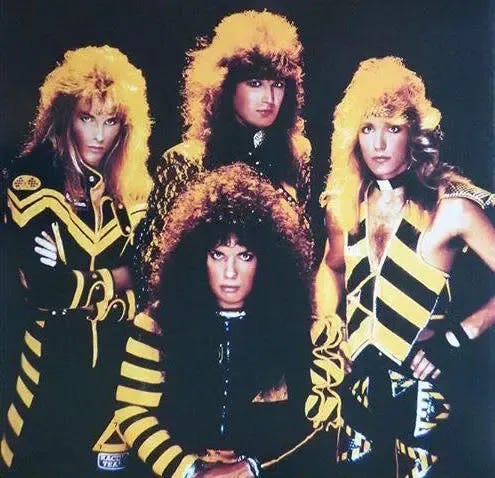
This was turning into an incredibly successful formula. Amy Grant, Stryper, Larry Norman, Keith Green—these were functioning on the fringes of the church and of music culture, and each for different reasons, and yet it was working. The Christian Contemporary Music (CCM) scene was being filled with independent record labels that could take risks and explore different approaches. Jars signed to Essential records, a smaller label that gave them the freedom they were looking for.
Every Christian musician I personally knew wanted to make music in this space. It was quite exciting and liberating for Christian artists, because in the ‘90s, the general artist scene (music, visual arts, and more) was very anti-Christian. You could be just about any religion or believe just about anything except Christianity. In his book, The Faithful Artist, Kevin J. Anderson does an excellent job of tracing why this was the case (and still is, but I think it might be less aggressive today). It stems from the beginning of the modernist movement.
As nineteenth- and twentieth-century secularists jettisoned religion, they embraced aesthetics as their means to establish a cultural foothold. In service to this cause, a struggle for creative emancipation ensued, during which time-honored virtues such as truth, goodness and beauty were subject to considerable scrutiny and then either relativized or discarded. Whether by design or default, this position left twentieth-century artists operating at the forefront (hence the term avant-garde) of cultural chaos. The artists’ aggressive dismissal of absolutes—in every form—anticipated the social and intellectual realities of the postmodern condition that would follow.
It was hard for your art to be taken seriously if it was connected to Christianity, which was seen to be attached to absolutes and representative of an oppressive establishment. A space where you could exist as an artist while still keeping your faith, or at least not having to hide it, was sorely needed. The CCM scene was diversifying and seemed to be moving into operating in that space. Musicians were finding commercial success in that space and were able to make a living—something that very few people expected.
It’s fair to add, though, that the antagonism from the art scene was not one-sided. Christians since the Reformation have been notoriously suspicious of what comes out of the art world, and frequently never understand it. This growing divide has only gotten deeper. This is something every Christian artist has experienced: well-meaning Christians who don’t understand any art unless it is explicitly and obviously Christian, and preachy. It’s generally easier to market something that does that.
The CCM scene in the ‘90s, however, saw a rising tide of artists like Jars of Clay choosing the path of most resistance, which I describe as the Johnny Cash way—a Christian man who wore his heart on his sleeve, and was open about his questions, hurts, and even difficulties with his own faith. A man who many musicians of all stripes consider to be a legend.
The Johnny Cash way appeared to be working. Until it didn’t. The whole idea fell out of favor with everyone quickly. I’ve written about this before, and it’s ended up being my most popular article here:
The Day When the (Christian) Music Died
·
February 3, 2025
I was about 20 years old when DC Talk, the “Christian supergroup” (as it was called) were making waves into the “mainstream” upon the release of their Supernatural album. I recall watching the Supernatural Experience Tour (1999) with friends when one of the DC Talk m…
I don’t want to repeat what I wrote there, but to summarize, the reasons why I think things changed was not only because of the pressure on the music industry as a whole due to rampant piracy, but because contemporary worship music in the Church became a safer bet for the CCM industry—one that both catapulted the industry’s commercial success but has, in the long run, resulted in it becoming very myopic. Keith Green used to rail against CCM’s complacency and lack of purity, but ironically, it may be that as CCM became more purist it also became more shallow, learning how to paint the right veneer over what really happens inside.
Despite Jars’ incredible artistry, they were never quite able to reach the same heights of their first album—1.5 million units on their debut, with their second album “Much Afraid” reaching no. 8 on the Billboard Top 200 (Washington Post). Album after album was nevertheless critically acclaimed. Not one of them sounded exactly the same as the other. The band pushed their creative limits. They remained active for almost twenty years, touring extensively. But it was never secular enough for the larger music market to truly grasp, and it was never safe enough for both the Christian music industry and many Christians to understand, particularly pastors who can hold a lot of influence over their congregation’s listening habits. Simplistic answers to life’s problems can often be frustrating, but a lot of pastors resort to simplistic answers not because they’re unloving, but because they genuinely care. Music addressing the faith in a complex way is not seen as helpful. They want to see their flock happy and not bogged down with complicated things. The Johnny Cash way is exceptionally difficult to market to people who really do want absolutes and for things to always remain positive.
Jars of Clay - “Frail” from “Much Afraid. An absolute masterpiece! You have to listen to this one!
But yet it’s such a necessary art. And it is, in fact, perhaps the true spirit of rock ‘n roll.
It may surprise you to know how much rock ‘n roll was influenced by Christianity. Chuck Berry, Little Richard, Elvis, Jerry Lee Lewis—these guys were all influenced by early gospel music, in particular, and what they saw in the black Baptist and Pentecostal churches of the American South. The controversy over rock ‘n roll was not because it was some brand new music style that people couldn’t understand (that’s the myth) but because it was a secularization of what was already going on in church. These singers spent their youth in the church, and many church-goers felt cheated when these young guys took the church music of the South and made it into something else.
Music journalist Steve Turner (Rolling Stone, NME) frequently traced this little-known part of history, showing how early singers and performers took the energy and style of black churches, replaced God with girls, and found a winning formula. In his book Hungry for Heaven, Turner provides one clear example:
“Soul pioneers took the church experience with them in the way they ‘worked’ audiences and in the pleading tones of their voices. They preached and exhorted, they called for congregational responses, they orchestrated their shows to take audiences down to the depths of sorrow and up to peaks of ecstasy. Church phrases like ‘have mercy,’ ‘oh Lord', ‘I wanna testify’ and ‘can I get a witness?’ turned up, with new meanings, in songs by James Brown, Johnnie Taylor and Marvin Gaye.”
In his book, Turner continues to trace the Christian themes in the music scene up until the ‘90s (when the book was last revised and published). Sometimes they’re more obvious, such in the case of U2. Other times, it’s more obscure. But throughout, “secular” music (whatever that really is) artists have frequently moved from girls back to heaven—realizing they wanted to write something deeper, and trying to understand their own longings and the meaning of life. It seems to happen as artists get older. Coldplay, Justin Bieber, Twenty-One Pilots are fairly recent examples, and I guess we have to wait for some of our younger artists today to grow up before we see the same themes pop up.
In other words, mixing heavenly longing, the difficulties of understanding who God is, grappling with suffering in our world and longing for justice, are all mainstream themes that have always been explored in music. For a person to sing about God is not something new. We’ve been singing about God for a long time, in and outside of our churches. Why a band like Jars of Clay had to be treated as if they’re something strange has nothing to do with their lyrics or their faith but everything to do with expectations when a band is labelled CCM.
“River Constantine” from the album “If I Left the Zoo” - the production on this is wonderful!
Johnny Cash famously said that he wasn’t a Christian musician but a musician who was a Christian. This distinction can sometimes be splitting hairs, but it mattered a lot to me growing up. I, too, wanted to be a musician writing honest songs about my faith and my struggles with my faith and the strength I get from my faith. It was a distinction that a lot of Christian artists wanted to follow, and many still do today.
But the Christian music marketing machine doesn’t really know what to do with this. The K-Love radio crowd are not signing up for that—it’s not family friendly and positive. And that’s okay. We should all have the freedom to listen to what we want. The irony, however, is a lot of the CCM industry is filled with people who live in the gray zone—or the struggle zone—that the music itself often makes no space for. Even more, there are many in that industry who don’t even believe in Jesus, but are happy to take the paycheck.
“Crazy Times” from the album “Much Afraid” - such a great folk alt rocker!
The in-between space for Christian artists is still an opportunity waiting to be properly explored. The in-between space does not just have to consist of songs that explore the struggles and disappointments of life and faith, and the questions of what it all means, but also a space that can bring us hope.
Not in a cheap, sentimental way. Not in a preachy way. But in a way that also acknowledges love in the world and that God has come to change it all. Artists are called to inspire our imagination in a way that lets us see beyond the suffering and the darkness and the longing we all experience, and to lift our head to look beyond the horizon.
“The Edge of Water” is one song from Jars that I think begins to touch on this theme. It’s a longing for Jesus to come back and set everything right—to truly bring the justice, peace, and future He promised long ago.
This is honest struggle with a glimpse of hope. It’s the in-between space. Working here is risky and difficult, but yet it’s the space where so much of the world’s best art has come from.
Jars of Clay’s last album, Inland, was released in 2013. Blake I. Collier wrote a review at the time at Mockingbird:
At the end of the day, Inland represents something of a manifesto for Jars of Clay. It is the siren song for a band that has come from CCM roots to independent labels to self-production while never losing that unique sound and witness in the world. This is a manifesto of love “as the ruins fall,” as C.S. Lewis so aptly put it. Jars of Clay attempts, with this album, to answer the question of what love looks like in this present age and its status in contemporary American society. It is still broken because humanity is still broken, but as with every era, it is never incapable of being redeemed because the promise delivered in the ancient days and fulfilled two thousand years ago still finds a foothold in the embattled and bloodied remains of our relationships and everyday existence. It is the message delivered to our lonely, disconnected islands from the inland, calling us to come back to port.
“Fall Asleep” from the album “Inland” - I love the story of this song and think it could probably make a whole movie of its own!
Safe art provides no vision. We need the vision of the kingdom of heaven to come through in our art. And as listeners, we need to allow artists some space to work out the difficult things. Part of the problem with the CCM industry is it tried to make young people into heroes of the faith—into celebrities. That kind of pressure was never fair on them. Many have “deconstructed” or left the faith altogether because you could see they were put into a pressure cooker and given nothing to help them. Of all the music “industries”, it should be more than that.
When Jars stopped releasing albums, I was very sad about it. But sometimes it’s for the best to leave a legacy as it is. I always hoped they would explore more of the world music sound in this song below from their album Good Monsters, inspired by their African missionary work to provide running water to the many beautiful people of that continent who don’t have it.
“Light Gives Heat” from “Good Monsters”.
I wanted this post to be something of a tribute to the band and its artistry. I’ve not always agreed with what the band members have had to say outside of their music—as much as I’ve not agreed with many of my other favorite artists, either. But in those cases, we can look at the humanity behind it and remember we’re all “good monsters”—broken people failing, but loved by God, who came to die for us, bring peace to our consciences, settle our raging hearts, and give us a wonderful future.
Thanks for reading Just One Beautiful Thing! Feel free to share this post!
This post was inspired by Christian Music Archeology who published a deep dive of Jars’ discography this last weekend.
If you’ve never listened to Jars, I recommend you do! Or if it’s been awhile, I recommend firing them up again! Last week I went through their music again. It had been years since I listened to them. I realized this weekend that I stopped listening to them at about the same time I gave up on my own dreams to exist in the “in-between space” with my own music. I’ve only started publishing songs again this year after a long hiatus—one that I intend to unpack in more detail at some stage here at Just One Beautiful Thing. Listening to them has been a reminder to me to keep picking up the guitar and just singing.
Comments
Nothing yet. Say the first thing.
Sign in to join the conversation.