
Recently, I delivered a speech at my brother’s wedding and, afterwards, one of the wedding guests approached me by the bar on the back deck while I watched the heat lightning pulse above the ocean and asked me how my training as a lawyer might have informed the writing of the speech. There was a clear structure to it, he remarked.
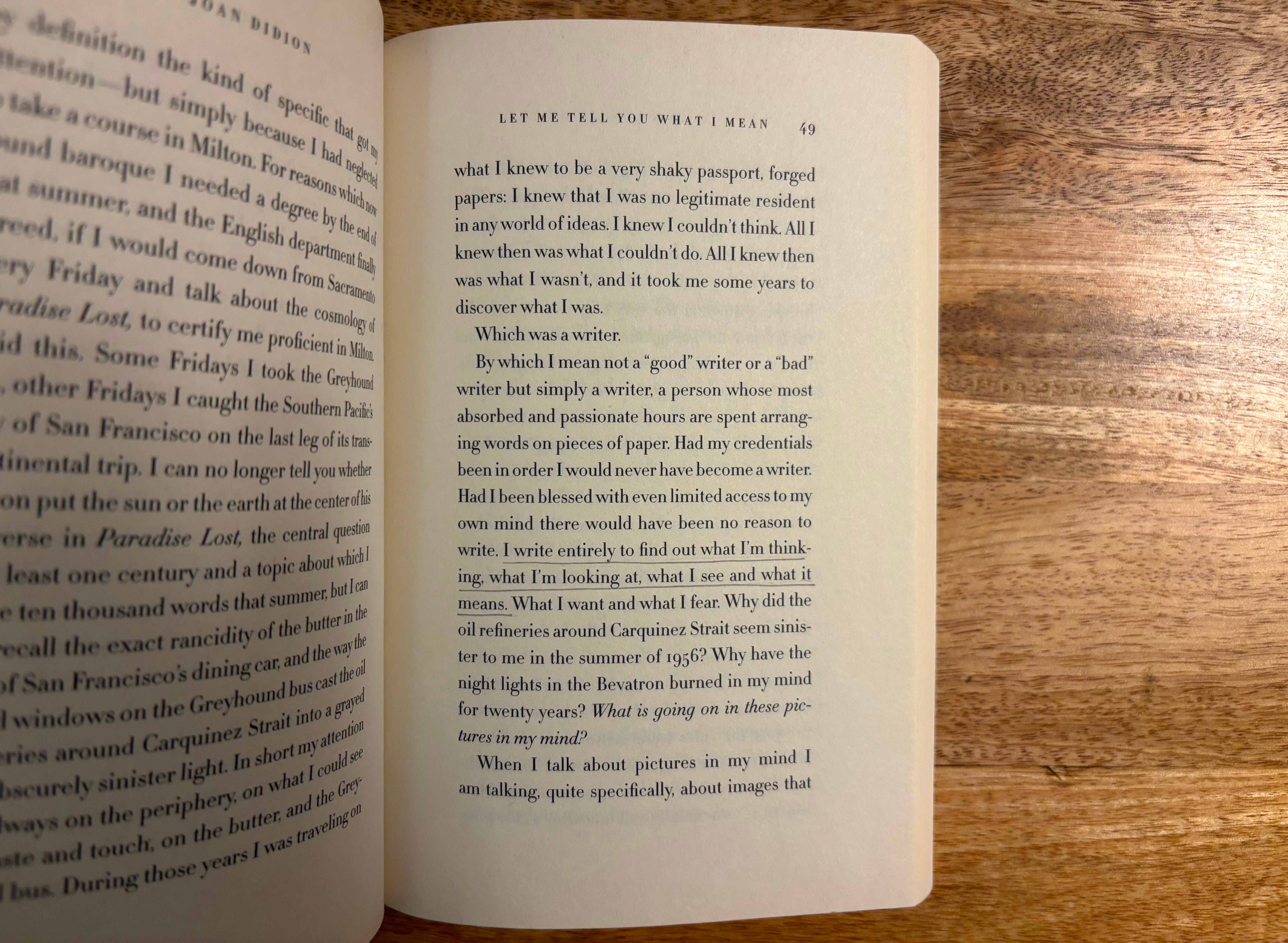
It was an eerily prescient comment—not only because I started Terms of Art to explore the ways in which my lawyering has informed my writing (which I have no reason to believe this guest knew anything about), but also because I had been planning to write next on structure. I intended to open this piece with a quote from Joan Didion, in her essay Why I Write:
“I write entirely to find out what I’m thinking,
what I’m looking at,
what I see, and what it means.
What I want and what I fear.”
While writers write to know what we think, I had planned to quip, lawyers know what they think through structure. In law school, we were taught to write legal analysis and argumentation through the pneumonic “IRAC” method:
Issue - the question you are trying to resolve.
Rule - the applicable legal rule(s).
Analysis - as your math teacher once instructed, show your work by showing how the facts fit your interpretation of the rule(s).
Conclusion - always state what comes out of the interpretive funnel of your analysis.
Whether it is because law professors tattooed this mantra onto my mens, or because this is simply how I think best, I typically cannot begin a piece of legal writing—or any kind of writing, for that matter—without first knowing its structure. What legal concept do I have to explain first? Which element of that concept is most important for my reader to understand in order to accept (ideally, agree with) my argument on the matter?
In much the same way, Chekhov’s gun cannot go off before it is introduced.
Structure gives the writer a checklist to tell a story the right way, or at least the best way.
On the one hand, structure carries a certain practicality: You cannot reveal the element that wins your case without first describing the legal framework in which that element sits. It is perhaps for this reason that some creative writers—and even other lawyers—have told me that they find structure limiting.
On the other hand, structure (in the Western sense, that is, beginning-middle-end) also exists to lend a story its narrative power. The gun is introduced; the anticipation builds; the gun goes off. Structure enables that device to have its intended effect.
As with my legal arguments, I almost always know the ending of a story before I begin to write it.
I was delighted when I learned I am not alone in this need for storytelling structure.
Truman Capote, impish sage that he was, divulged in the preface to Music for Chameleons that, in writing his unfinished novel Answered Prayers, he “began work on this book by writing the last chapter first (it’s always good to know where one’s going).”
Years earlier, he had imparted a related truth to Pati Hill in an interview for The Paris Review (The Art of Fiction No. 17):
“Finding the right form for your story is simply
to realize the most natural way of telling the story.
The test of whether or not a writer has divined the
natural shape of his story is just this: after reading it,
can you imagine it differently, or does it silence your
imagination and seem to you absolute and final?”
Capote says a lot here. Regrettably, this interview is typically referenced only to attribute Capote’s thoughts on style.
But his comments hold a more granular and actionable truth for writers wondering where to begin. Step one on the checklist: Determine whose perspective will tell the tale. When you discern which character will lead the reader through the thicket of the plot, you’ve found the structure, the narrative “shape” of the story. Follow the character, and the story will unfurl before you. Structure can help you write a story because it can tell you how to write the story. Bit by bit. From the fundamental framework of the protagonist’s perspective, an elemental truth.
And then, sometimes, structure is imposed upon a piece to make sense of a stream-of-conscious babble. To make the protagonist easier to follow, easier to understand.
The speech for my brother on his wedding day poured forth from me one night in the spring, waking me from that liminal semi-consciousness before sleep and demanding to be written down. It stayed remarkably constant over the ensuing months, with some inserts and redactions here and there in the immediate days and weeks after I’d first risen to write it.
The thunder rolled. I sipped my drink. The wedding guest appeared vaguely unsatisfied with my answer.
Disclaimer: This post contains Ryan R. Migeed’s own thoughts and opinions, which do not necessarily reflect those of his employer, his clients, or any organization of which he may be a member.
Comments
Nothing yet. Say the first thing.
Sign in to join the conversation.