
Currently, I’m sharing a series of articles about thinking that prevents us from writing. The first article was 3 Reasons We Hide Our Stories. Then, I wrote Write Anyway: When Fear Tells You to Stay Silent. Last week I shared a story about my lawn and how shame tries to silence us.
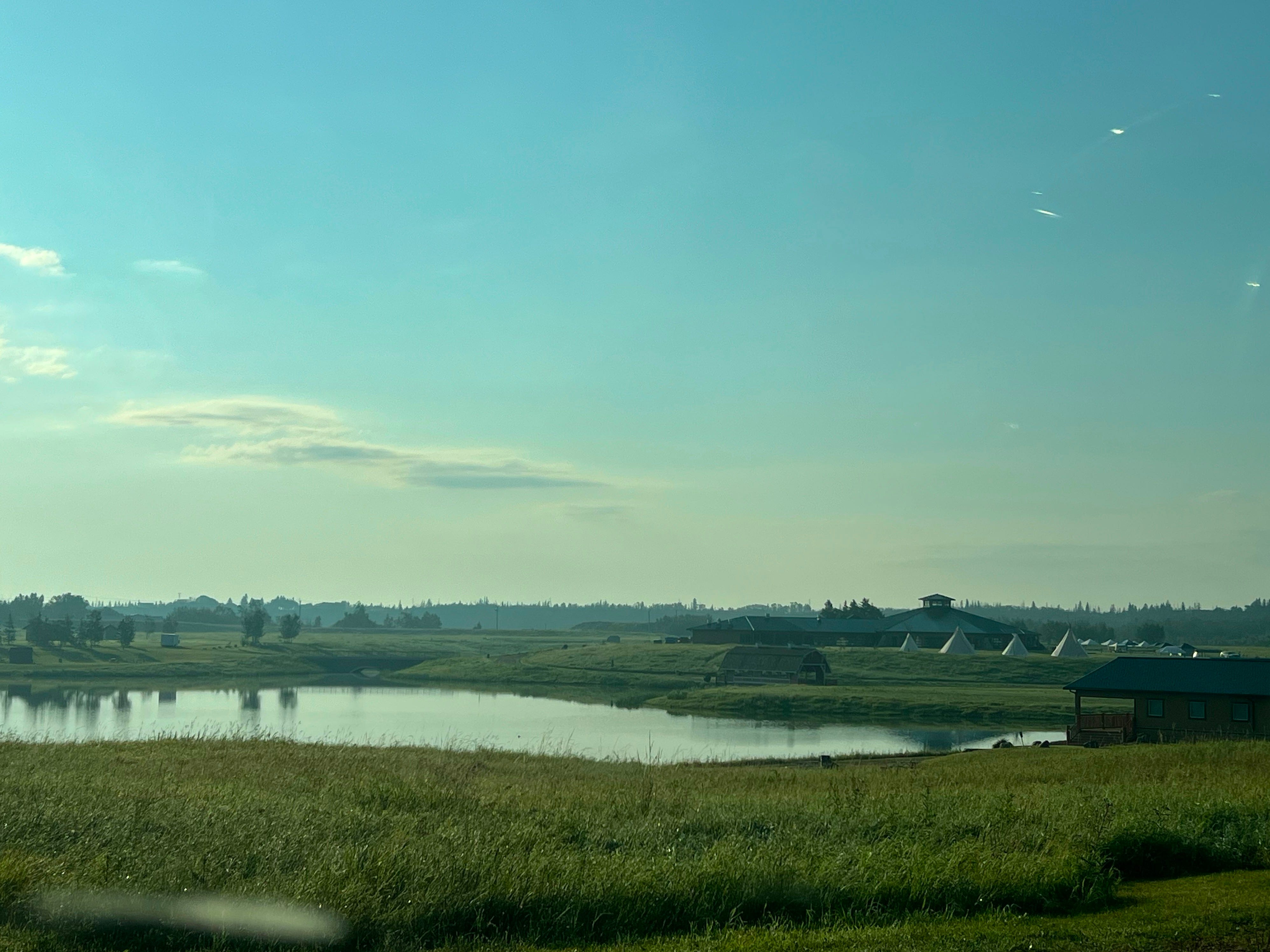
This week, I had the privilege of attending a youth teepee summit aimed at encouraging Indigenous youth to become leaders. I took the above photo as I arrived at the summit, preparing to host a booth to share public legal education resources with attendees.
The organization I work with aims to share legal information in plain English (through both information sessions and printed resources) so that people can understand their legal rights and responsibilities and figure out next steps to resolve problems they are facing. Over the two days I spent at the summit, I had conversations with almost two hundred individuals.
One conversation still haunts me.
A thirteen-year-old girl listened as I explained how public legal education could help someone. She cheerfully participated in my legal trivia quiz and politely thanked me for the small prize I offered.
“Have you ever struggled to get the help you needed?" I asked. (We are currently conducting a legal needs assessment to identify the barriers and gaps people experience.)
She gazed steadily into my eyes. “Yes, I had to change schools because I was being bullied.”
“I’m very sorry to hear that.”
Head down, she spoke softly. “Yes, it’s been hard. My brother was bullied more than me because he has long hair that he braids. Even the teachers told him he should cut his hair.”
“I’m sorry you and your brother experienced this.”
“Me too, but I’m glad people are nicer at our new school.”
I don’t know what long, braided hair meant to her brother personally. But I do know that for some Indigenous people, long hair carries cultural significance. This story stayed with me, not only because other students bullied him, but because even adults, who should have helped make school safe, apparently told him that changing himself was the solution.
Unfortunately, this young woman's story isn't the first time I've heard an Indigenous person describe experiencing racism.
If this post made a difference in your life, please share it with a few of your friends.
In Canada, there has been a lot of talk about truth and reconciliation for many years. We even have a National Day for Truth and Reconciliation every year on September 30th.
Racism and reconciliation are issues we need to address daily, not just once a year. The colour of someone’s skin should not dictate how they are treated, where they are allowed to live, or what kind of job they can have.
Schools should be safe places where children learn the skills they need to be successful in life.
Indigenous people should not need to fight for their rights.
I’ve heard the word reconciliation many times. But sitting across from a thirteen-year-old girl reminded me that reconciliation isn’t primarily a word on a calendar.
It happens, or fails to happen, in classrooms, workplaces, communities, and conversations.
It happens in what we say.
It also happens in what we’re willing to challenge when someone else says it.
When we see injustice, we have a choice to make. We can turn away, pretending these events are not happening, or we can speak up.
Sometimes, it’s tempting to think that our voice is powerless. That one story, one conversation, or one person speaking up couldn’t possibly change anything.
But change has always begun with people willing to stop looking away.
I could have written about other topics this week.
I could have chosen not to write at all.
However, I believe that knowledge brings responsibility.
If I don’t share this story, no one else will. Others may share similar stories. However, God has given each of us unique experiences, unique writing voices, and a unique audience.
God doesn’t ask us to write the most extraordinary story. He asks us to be faithful in telling the story He’s entrusted to us.
Maybe the story God has entrusted to you doesn’t feel extraordinary.
Maybe it’s simply a conversation you can’t forget. Something you’ve witnessed. Something you’ve learned. An injustice you can no longer ignore. A truth someone else needs to hear.
Write anyway.
Not because your words will solve everything.
But because knowledge brings responsibility, and faithfulness sometimes looks like refusing to stay silent.
What is something you've seen, heard, or experienced that you feel a responsibility to speak or write about?
Some stories are easier to write when we don’t have to figure everything out alone.
If you’re ready for more support as you develop and share the stories God has entrusted to you, consider becoming a paid subscriber. You’ll receive subscriber-only writing tools, monthly group coaching, and a community where we can keep taking the next faithful step together.
Keep taking one simple step at a time. Every story matters, and I’m grateful we’re walking this writing journey together.
Until our next Story Byte,
Ruth
No posts
Comments
Nothing yet. Say the first thing.
Sign in to join the conversation.