
I’ve been trying to think about what I should say at Michael’s memorial… and to be honest, I haven’t a clue.
So I decided to look at what I said the last time I spoke at a memorial for someone who was very important to me. I thought you might like to read what I said at Jonathan Gold’s memorial in 2018.

It’s been a horrible week. But the one thing that has given me comfort is the huge, international outpouring of grief and love for Jonathan. I knew he was famous and beloved in Los Angeles, but I had no idea how much he meant to so many people all over the world.
A few days ago I was in Italy speaking at a conference on social gastronomy. We were talking about how food can change the world. But when I stood up in front of all those chefs, academics and journalists who had come from every continent, all I could talk about was Jonathan. I worried that the people from Asia, Australia, South America, Africa and Europe might not know who he was, but the minute I mentioned Jonathan’s name, a huge wave of applause erupted in the room, and people burst into tears.
I shouldn’t have been surprised. This year, as I was sifting through the articles for Best American Food Writing, one theme kept recurring. Over and over young writers began their pieces by saying, “I want to be the next Jonathan Gold.”
And no wonder; nobody ever loved language more or had a better way with words. He even spoke carefully, choosing each separate word as if he were tasting it. And so instead of telling you about the rich, strange, and often maddening relationship I had with Jonathan, I want to talk about him as a writer.
All the articles have spoken of the enormous impact Jonathan’s unique brand of cultural anthropology had on Los Angeles. As the proprietor of a small restaurant wrote: “He treated us and our food with respect and love. And saw us as equals. Our food trucks, our holes in the walls, Mom and Pops – that was the true identity of Los Angeles. He saw it, he loved it, and he wanted us to succeed. He believed in us when many did not.”
And yesterday I got a note from a young woman who has nothing to do with food and never met Jonathan. She said she needed to tell someone how much he had meant to her. “Wherever he is now,” she wrote, “I know that if I ever end up there he’ll be the first person I ask to show me around, right after I thank him for teaching me how to live in this city I call home.”
But Jonathan did something much more important than offer us a new way to experience LA. And his legacy goes beyond expanding the borders of food writing. Jonathan proved that - even in this age of computers - words still have power.
We live in a time when we all spend far too much time worrying about the impact of the internet and the power of television. But Jonathan didn’t have a tv show. He wrote nothing that was clickbait. He did not indulge in any of the stupid antics that most food people participate in. And sadly he never wrote that book he kept promising to write. But he was a bold, ferocious, generous, passionate writer – and he made every word count. He proved, beyond any doubt, that those little black characters on paper can still change the world.
And here’s the thing: Jonathan never thought he was good enough. Even winning the Pulitzer didn’t quell the little voice inside his head that was constantly doubting what he wrote. His overwhelming desire to make every word perfect kept him from meeting deadlines or writing for the publications he most admired. He never sent in the articles the New Yorker had commissioned, because they didn’t meet his own stringent standards.
But Jonathan, you won! It kills me that you’re not here to see it. Because I don’t think you could ever have imagined how many people would mourn not only you, but your words. You made us all see that in the hands of a great writer even the smallest stories can make a huge impact.

A few years before he died, I mentioned that Jonathan’s words had inspired me to cook.
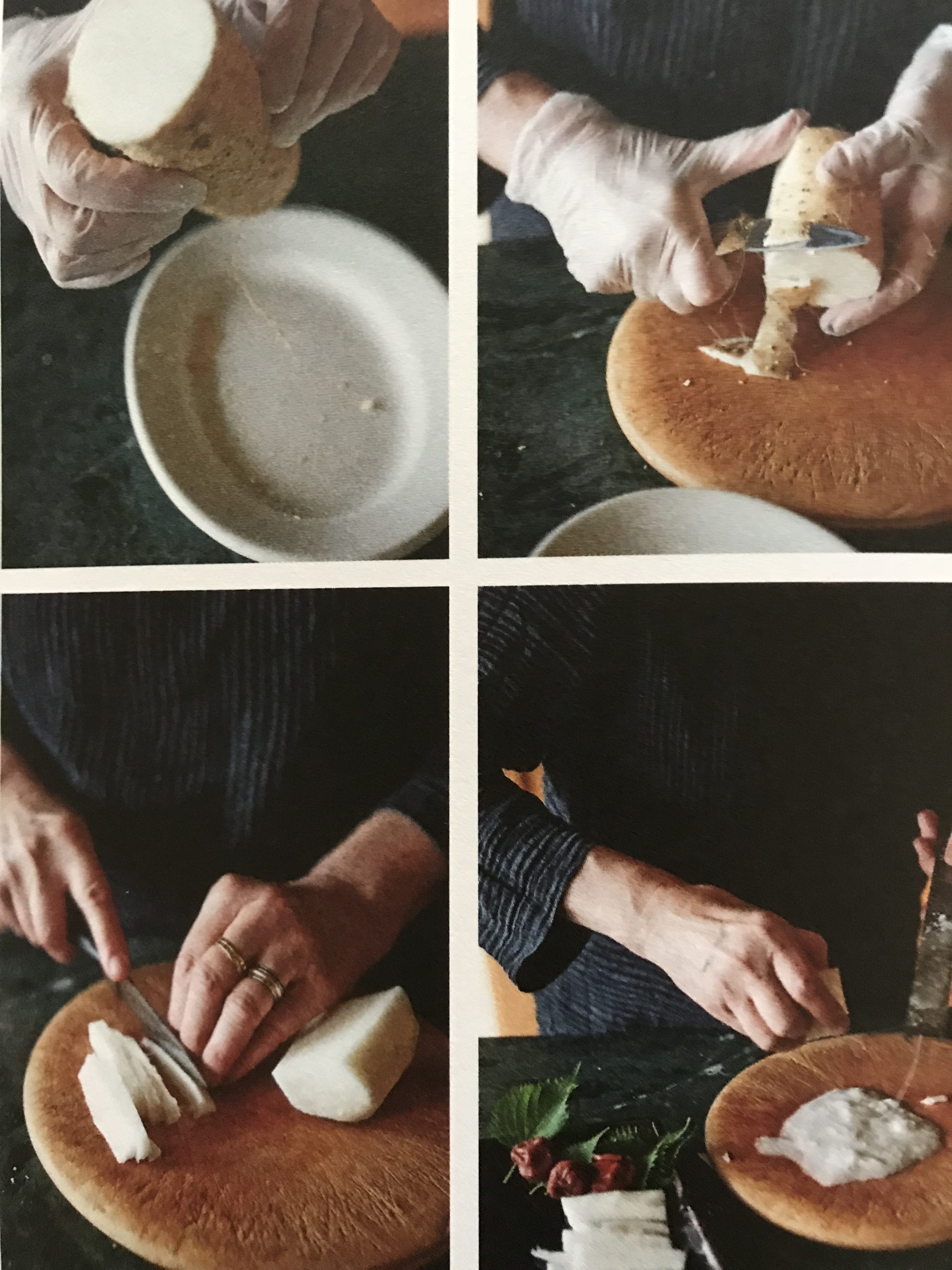
Reading Jonathan Gold’s description of a Sichuan dish in today’s LA Times made me really hungry. Partly because it’s such a lovely description; partly because he was writing about yama imo - Japanese mountain potato - which is one of my favorite foods.
Yama imo looks like daikon, and it begins with a crunch. But it quickly transforms itself into a creamy paste and as you chew it keeps changing - a little circus of the mouth - until it has become liquid. It’s a transformation that always delights me. I often eat it for breakfast, rolled up in sheets of nori with a bit of umeboshi, the pickled plum-like apricots of Japan.
But I don’t have any yama imo on hand at the moment, and I’m now desperate for some Asian flavors. A quick search through the refrigerator reveals the squid I bought yesterday, some chiles, a bottle of Shaoxing wine and a package of Chinese noodles; that, I decided will be lunch.
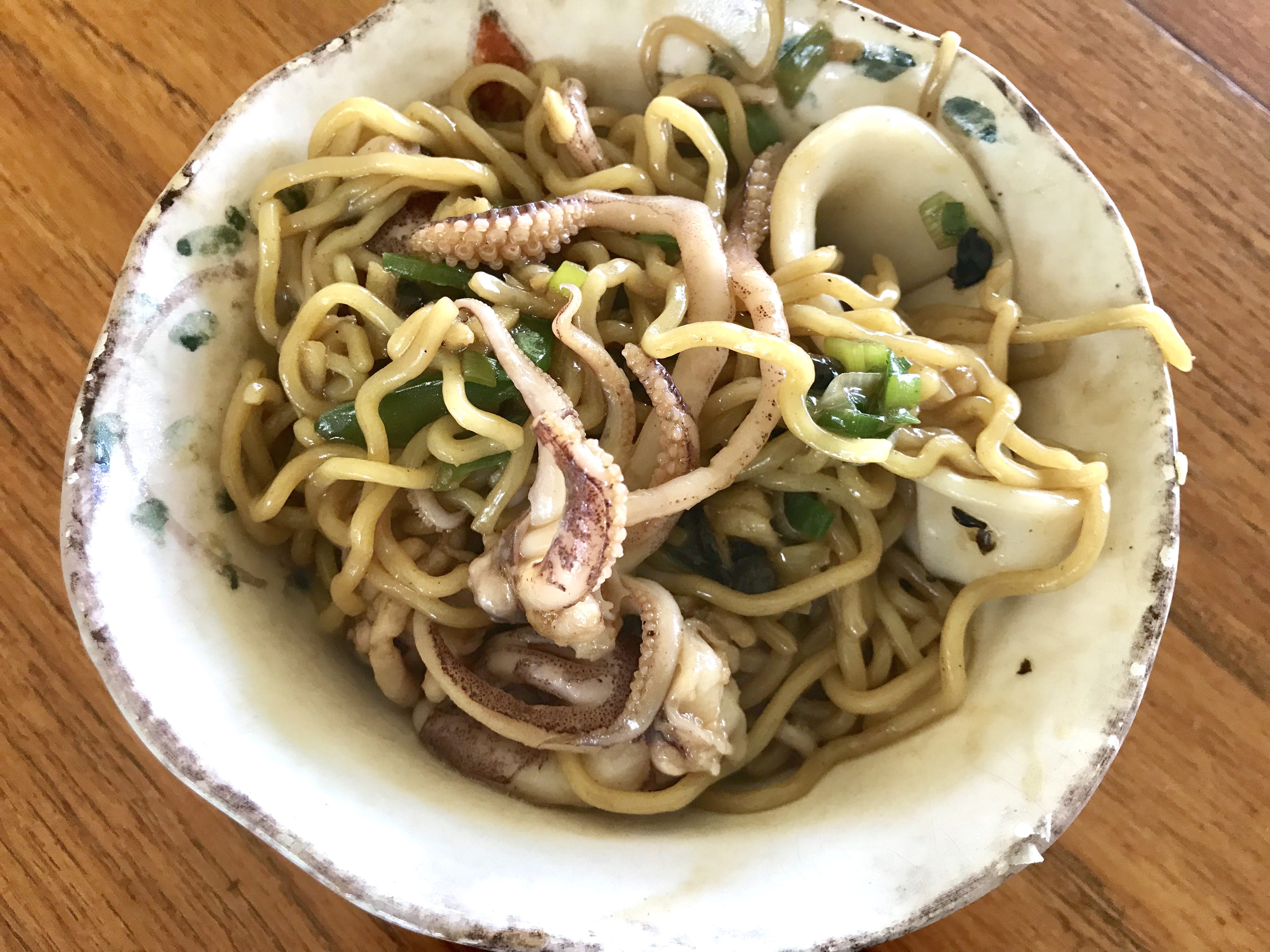
This recipe is based on the one in Bruce Cost’s Big Bowl Cookbook.
Slightly Spicy Chinese Noodles with Squid
1 pound cleaned squid
8 ounces Chinese noodles
1/2 teaspoon sesame oil
1 tablespoon neutral oil
2 tablespoons shredded ginger
5 scallions, sliced
1 jalapeno, thinly sliced
1 clove garlic, smashed or minced
2 teaspoons Chinese black beans, rinsed
1/2 cup chicken stock
1 teaspoon sugar
2 tablespoons oyster sauce
1 tablespoon soy sauce
2 tablespoons Shaoxing rice wine
Bring a pot of water to a boil.
Cut the squid into 1/2 inch wide strips, and if the tentacles are very large, cut them in half. Throw the squid into the boiling water, let it come back to a boil and cook for about half a minute. Drain and immediately run under cold water to stop the cooking. Set aside.
Cook the noodles according to package directions; Chinese noodles take about 3 minutes. Drain, rinse under cold water and toss with the sesame oil to keep them from sticking together. Set aside.
Prep the other ingredients: shred the ginger, slice the scallions, slice the jalapeño, mince the garlic and rinse the black beans.
Mix the chicken stock with the sugar, oyster sauce and soy sauce.
Heat a wok or heavy skillet over high heat. When it’s hot, add the neutral oil, allow it to get hot and add the ginger, scallions, jalapeno, garlic and black beans; toss and stir until the aroma floats over the pan. Add the chicken stock and cook for a minute or so, until it boils. Add the cooked noodles and toss for another minute. Add the squid and the wine and cook for another minute or two, until it’s all heated through.
Serves 2-3 people.
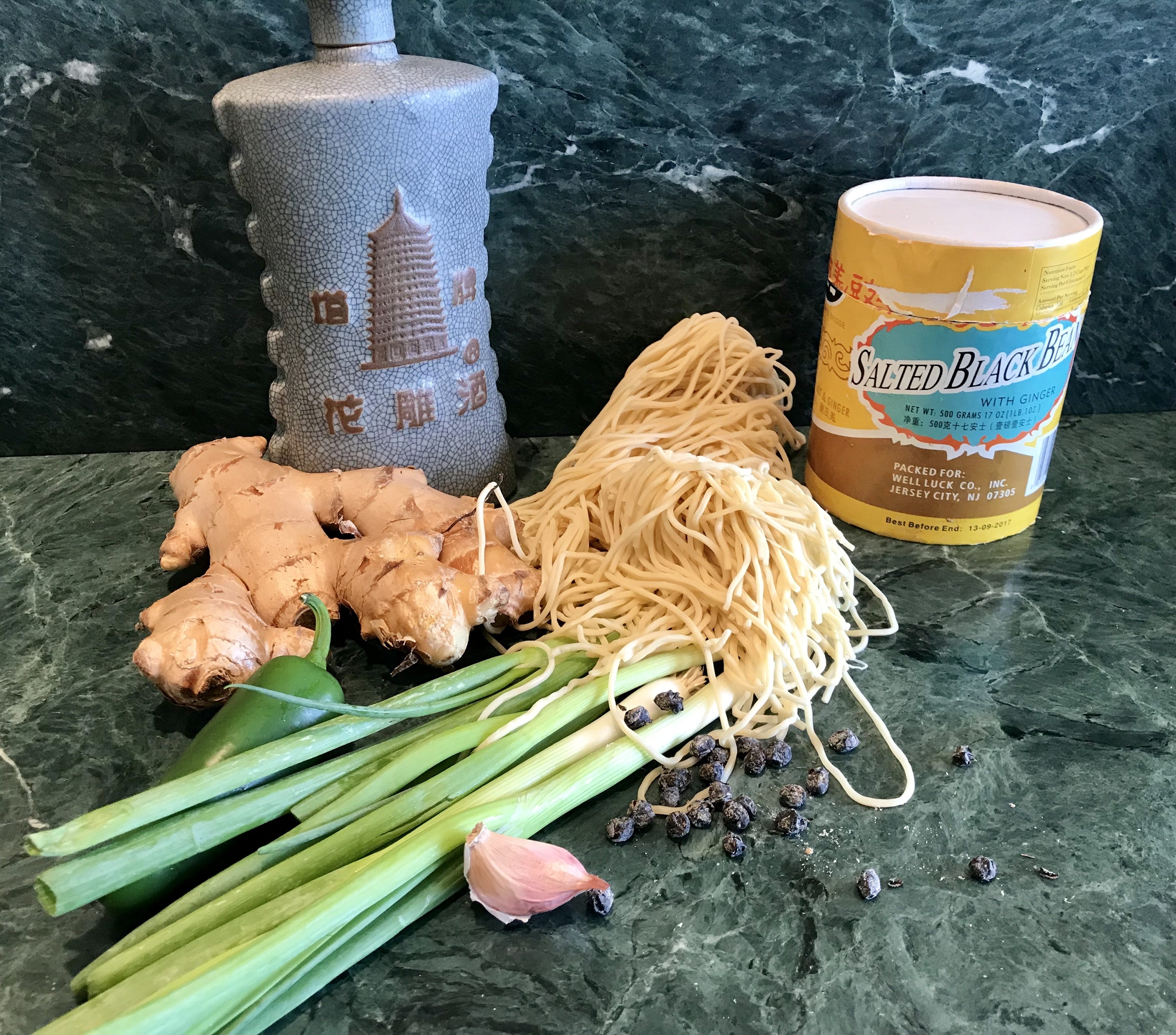
(I wrote this when it was much more difficult to find good Chinese ingredients than it is today. I now source most of my ingredients at Ma La Market. )
The Chinese black beans are really necessary for this; they cost very little, you can get them at any Chinese grocery store and they last virtually forever. They’re a classic umami ingredient, and a great pantry item.
Shaoxing is harder to find, but it’s flavor adds a lot to Chinese dishes. In a pinch, substitute dry sherry.
Try to get a brand of oyster sauce that is actually made from oysters; Ma La Market has two excellent brands.
If you don’t have fresh chiles, you can substitute dried chile flakes. Or a dollop of Chile Crisp. Or simply forego the bite of heat.
If you don’t have scallions, a small diced onion will do.
And if you don’t have Chinese noodles, you can substitute any other kind of noodle.

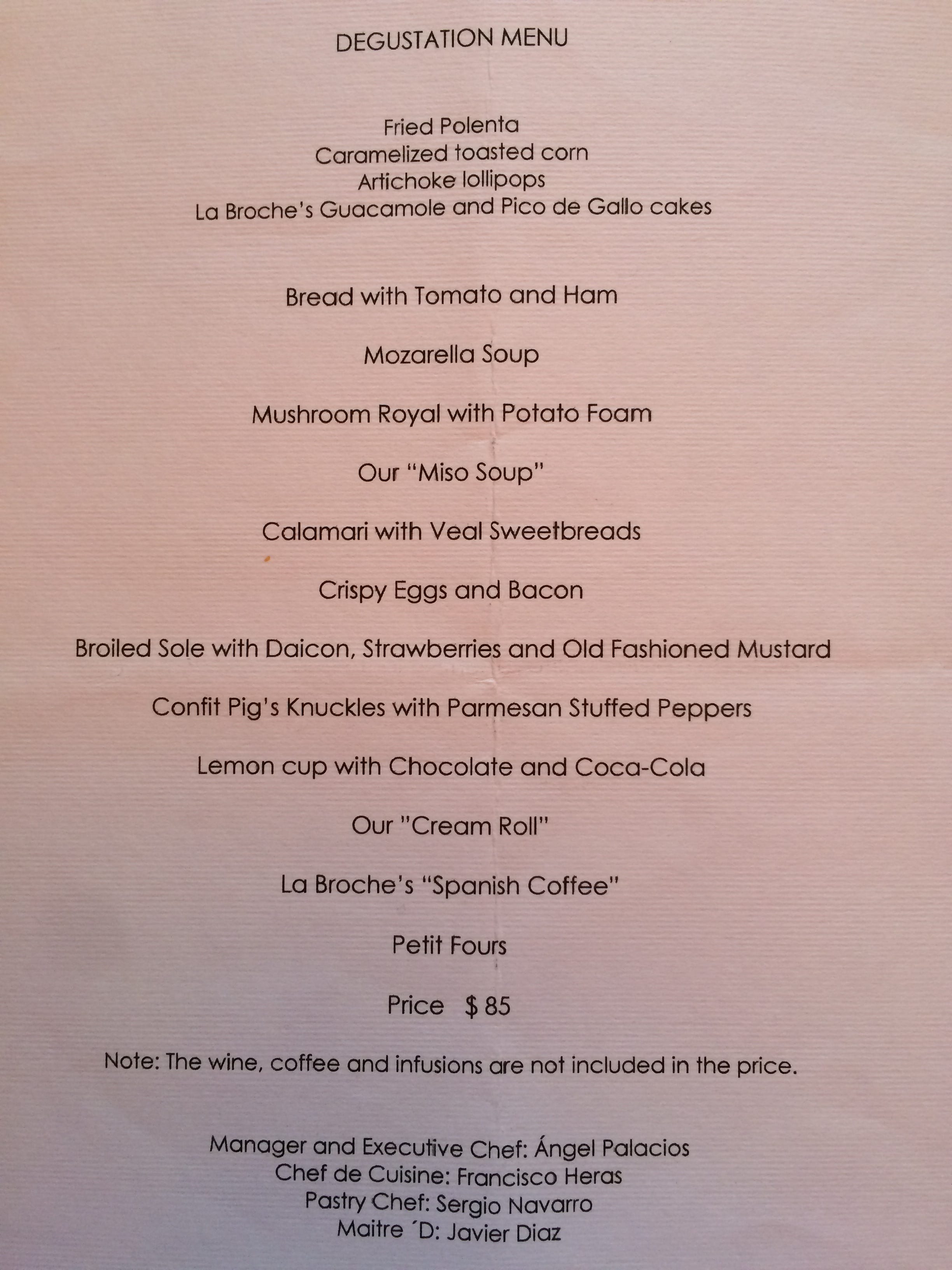
I just found this menu from La Broche, which was at the time the most avant garde restaurant in Miami. I loved the food at this outpost of Sergi Arola’s two Michelin star Madrid restaurant, but Miami was not impressed with molecular gastronomy and the restaurant had a very short run in the early 2000’s. (The Madrid restaurant closed in 2010.) The chef was Angel Palacios, who is now at Curate making tapas in Asheville…

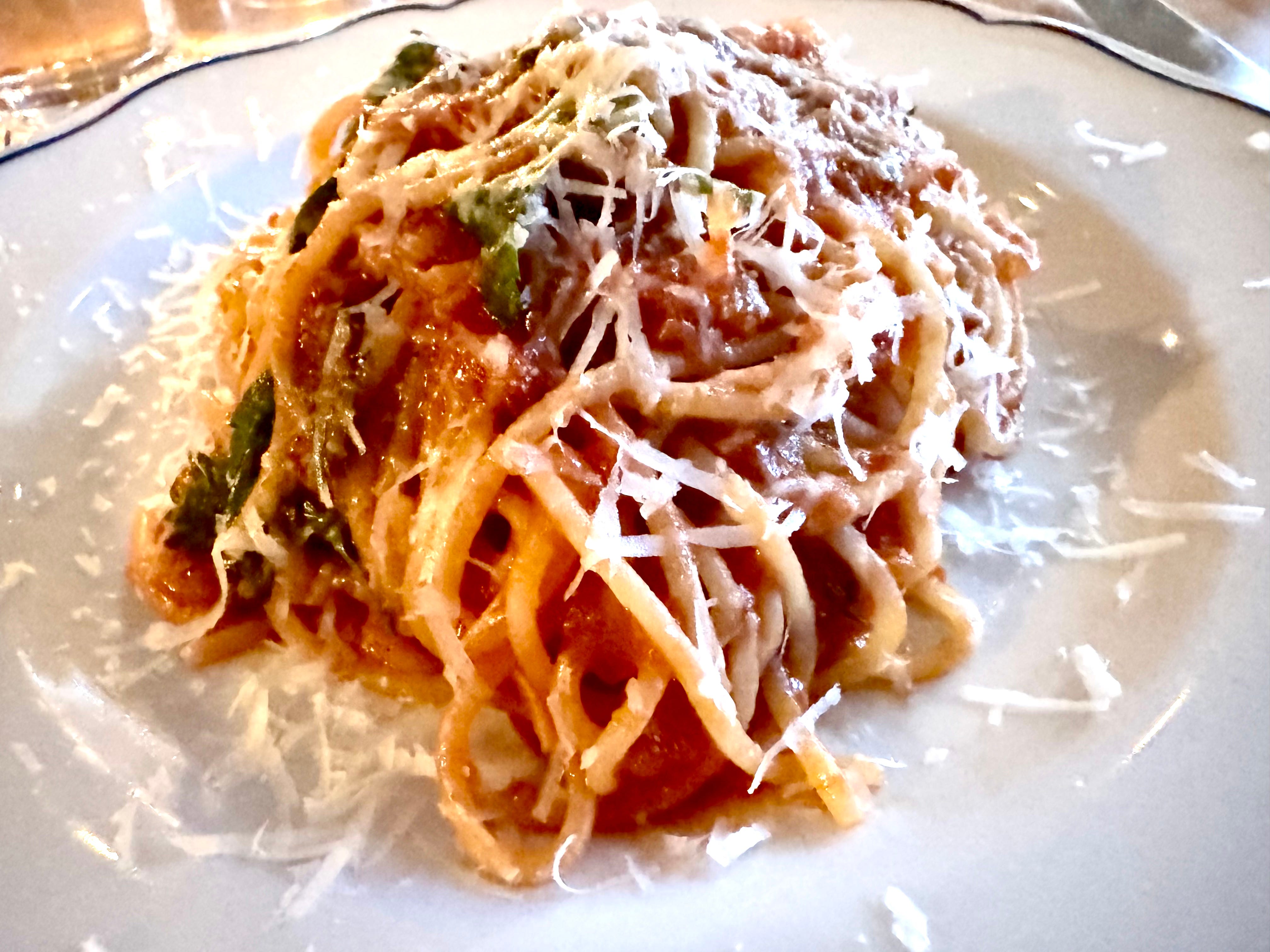
Gaetano Arnoni has quite a pedigree; he was chef de cuisine at Babbo, worked with Dario Cecchini in Panzano Italy and then cooked in Tuscany for 4 years. Now he and his wife Meigan have Via Cassia, their own small (15 tables) restaurant in Hudson.
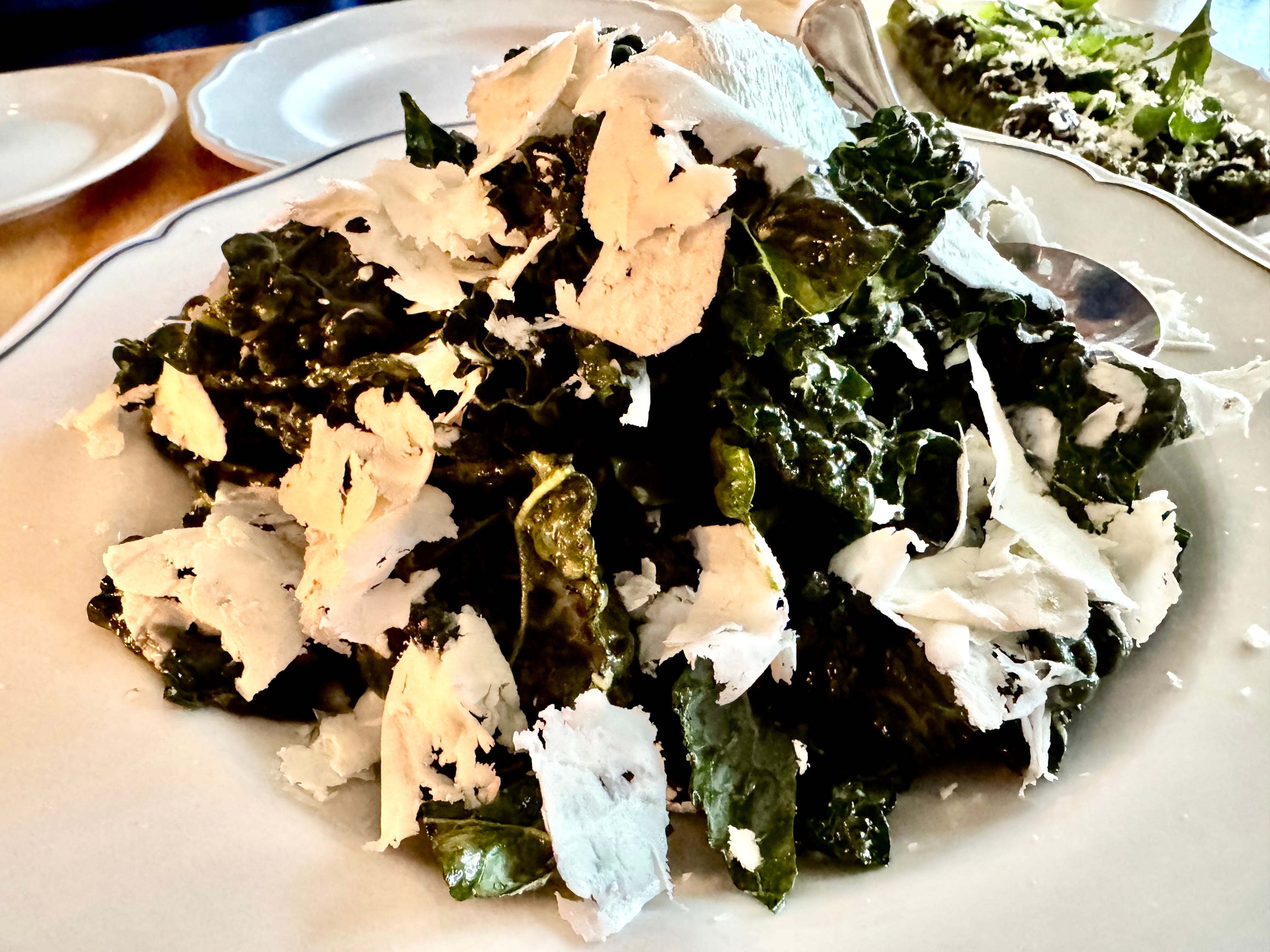
I’ll be eating there often. I loved this huge black kale salad with its sheaves of ricotta salata (despite the fact that there is honey in the dressing). The pastas are homemade, mostly classic, always excellent.
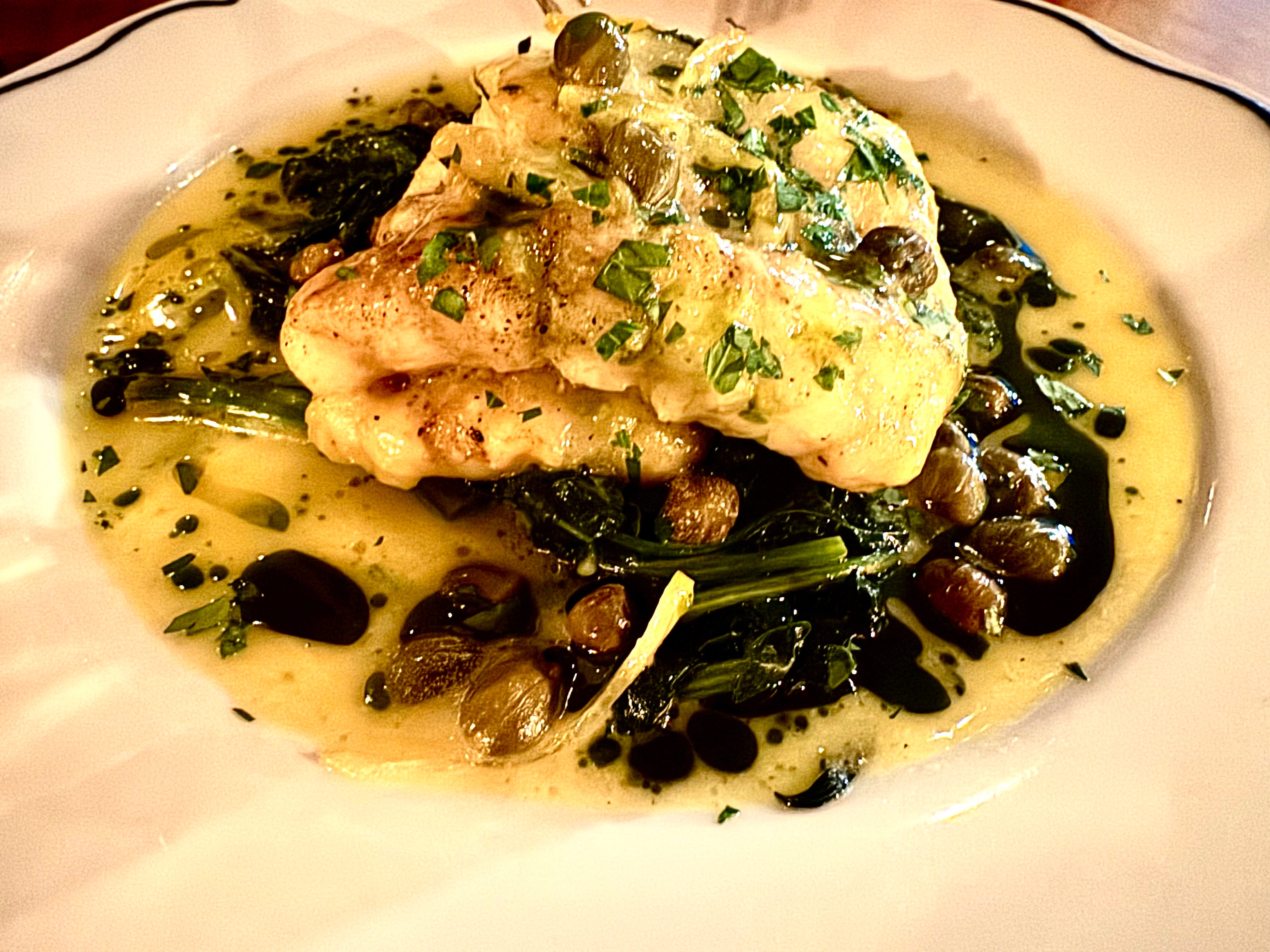
And this monkfish picatta was a textbook version: the sturdy fish with its gentle flavor snuggled happily into that buttery citrus sauce.
The service has a lovely small town quality, with Gaetano and Meigan stopping to say hello to every table. Via Cassia is a serious addition to the neighborhood.
(If you’re going to be in the area, you should know that the much-loved Lil Deb’s Oasis plans to close in October, so go now while you still can. The equally beloved Cafe Mutton now serves dinner Wednesday, Thursday and Friday nights. And Efren Hernandez, who has another beloved restaurant, Cafe Susanna across the river, is transforming Rivertown Lodge Tavern into a Mexican fish restaurant called Pez. It is slated to open late next week.

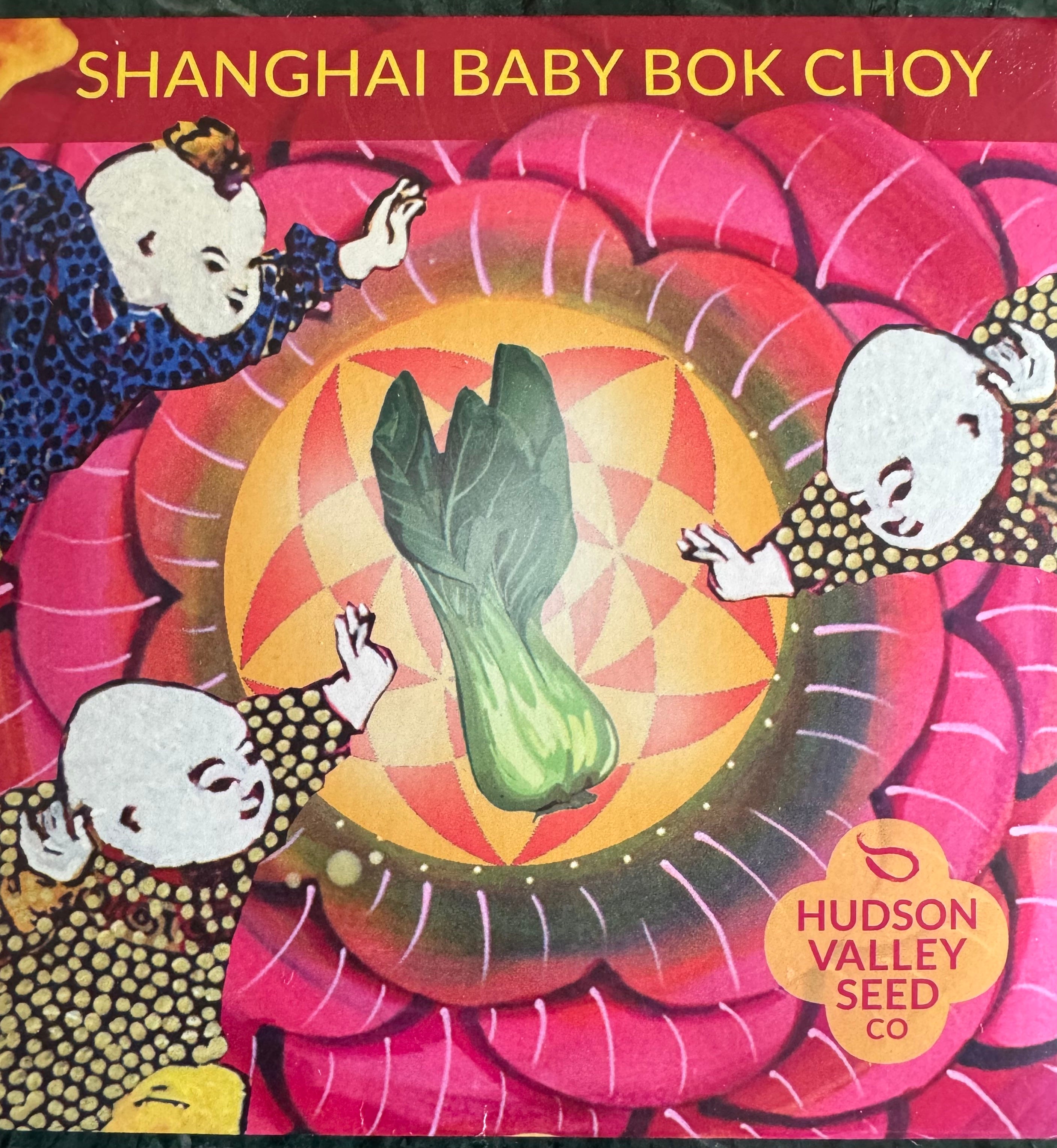
And speaking of Hudson… I am always charmed by the artistry of the seed packets from Hudson Valley Seed Company. (They open up into a flowery shape, perfect to hang on your walls.) This is, notably, the one place where you can buy the seeds to grow my favorite sauce tomatoes, Cesare’s Canestrino di Lucca.

No posts
Comments
Nothing yet. Say the first thing.
Sign in to join the conversation.