
It would be convenient, for the purposes of an exciting launch post, to have a clean origin story for this Substack. A big fight with my publisher, another censorship row with the BBC, a transatlantic-flight epiphany that I’d been writing for the wrong audience all along.
I’m afraid the truth is more boring though. I'm starting a Substack because I've been writing things that don't fit anywhere else. Emails to myself, lots of notes on my Google Drive and iPhone, an unpublished manuscript about the history of abolitionism. These writings are too long for op-eds, too rough for books and perhaps too earnest for the parts of the internet that monetize cynicism (read: Twitter). So I was looking for a place to publish some of it, and right now, Substack seems like the best option.
Here’s the less boring part. For most of my career, I’ve made one basic argument: humans are better than we think, and our institutions (and leaders!) are worse than we deserve. Humankind made the case that we are, on the whole, a decent species. Utopia for Realists was a case for taking our better nature seriously enough to build institutions worthy of it. Moral Ambition was a call for the most talented among us to redirect their lives toward problems that actually matter. If you squint, the through-line has always been hope – not as a feeling, but as a reason to act.
I still believe in all of that. Don’t worry, I’m not here to recant. But something has shifted in me over the last few years, and it’s not just because of the resurgence of fascism.
For most of my life, I thought writing books was the work. You spot a pattern, you read everything you can about it, you spend years polishing sentences, you publish – and if you’re lucky, people actually read what you wrote. ‘Stronger than a thousand armies is an idea whose time has come,’ was always my favourite Victor Hugo quote (although baby-Rutger, in his first TEDx talk, confidently attributed it to Oscar Wilde.)
I vividly remember the first time I saw a well-thumbed copy of my first book, and thinking: someone actually spent hours reading me? My thoughts? What an incredible privilege. People even started emailing me to say I’d changed how they thought about their lives and their fellow humans. For a long time, that was more than enough. Being a full-time writer is the ultimate dream, and here I was, living it!
Then, somewhere in the middle of writing Moral Ambition, I started to feel a thing I didn’t have a word for. I was interviewing people who had walked away from lucrative careers to work on the most pressing challenges we face as a species – pandemics, lead poisoning, factory farming, extreme wealth concentration, you name it. I expected to admire them, and admire them I did. But there was something else as well: envy. I envied the moral seriousness of their lives. I envied the fact that they were actually in the arena. That when they got out of bed in the morning, they were measurably making the world better.
I think this feeling is more common than we admit. A lot of talented people walk around with a low-grade version of it: the feeling that they are spending their one life on something smaller than they’re capable of, and that the people who aren’t are accessing a kind of meaning that money can’t buy.
That feeling is what I wanted to act on. So, with a small group of friends, I co-founded The School for Moral Ambition. Our premise was simple: a huge fraction of the most capable people in the world are stuck in jobs that don’t make the world a better place (BS-jobs, as the late David Graeber called them). Consulting. Corporate law. The parts of finance that exist mainly to extract rents from other parts of finance. My friend Simon van Teutem calls it ‘the Bermuda Triangle of Talent’: a gaping black hole that sucks up so many of our best and brightest.
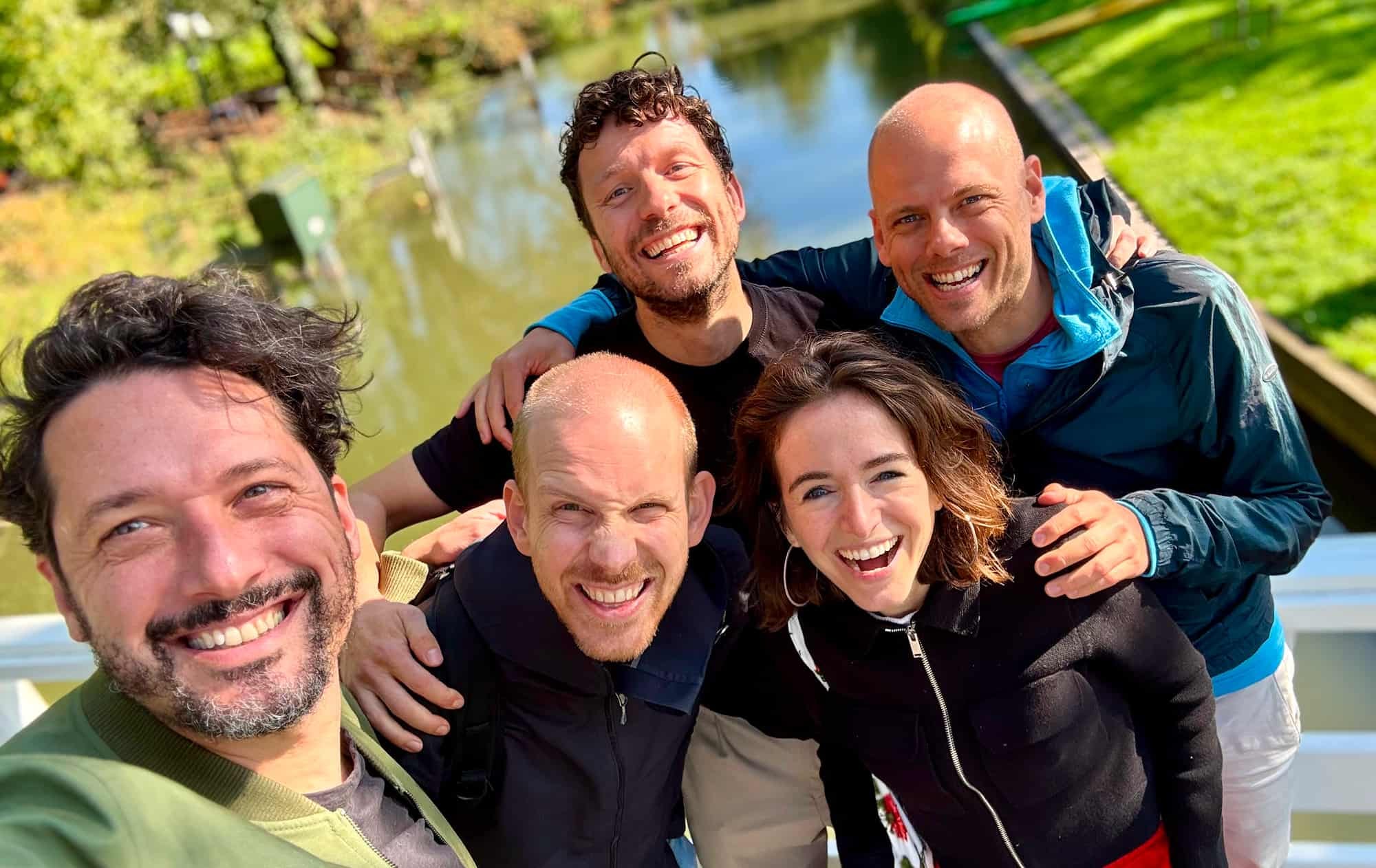
What if we could open an exit?
Well, that’s what we’ve been building. We started in Europe, with fellowships taking on the food industry and Big Tobacco. Then we crossed the Atlantic: first with a fellowship at Harvard, where nearly 10 percent of the junior class applied, and more recently with a US food fellowship and a Global Tax Fairness Fellowship placing people inside the institutions actually trying to fix global tax avoidance and to tax billionaires. We’ve just confirmed we’re expanding to Princeton, we’re in talks with Oxford and actively looking at universities like Stanford, Brown, Georgetown, Yale and Vanderbilt.
None of this was in my five-year plan a few years ago, because I didn’t have a five-year plan a few years ago (I had books to write!).
To be honest, building an organization is much harder than writing about one. Fundraising for it is humbling in ways I didn’t expect (even though the required skills overlap more with book promotion than I'd have guessed). Watching brilliant young people quit their corporate jobs to work on problems we helped point them at is more emotionally complicated than I’d anticipated – there is pride, but also a constant low hum of am I sure I’m right about this?! My books were confident. I am, in real life, a bit less so.
So this Substack will be, in part, where I try to think out loud about what moral ambition actually requires once you stop writing about it and start doing it.
It will also be other things.
I’ll write about AI, which I’ve come to believe is the defining moral and political question of the next decade – and which the left, my own tribe, is getting strangely wrong. The long version of that argument will be one of my next essays.
I’ll publish chapters from a manuscript I’ve been working on for years, on the history of the abolitionists – the men and women who, against every cynic of their day, actually did manage to end one of the greatest moral catastrophes in human history. They have a lot to teach us.
I’ll write about the inside of The School for Moral Ambition: what we are learning about why smart and privileged people do or don’t change their lives.
And of course I’ll write about the best books and articles I’m reading.
One promise I’ll make: I will try, harder here than anywhere else, to be wrong out loud. Books punish revision and op-eds punish nuance. Substack, as I understand it, punishes none of those, and rewards what each of them suppresses: the writer thinking before he is finished thinking.
A note on the practical stuff. Most of what I write here will be free, but some of it will sit behind a paywall. So you might wonder:
Why subscribe?
Free subscribers will get the bulk of what I publish: essays on moral ambition, AI, just how evil the tobacco industry is, and whatever else I’m thinking about that week.
Paid subscribers will get more, and a different kind of more. Chapters from the abolitionism manuscript as I write them. Drafts of speeches and essays before they’re finished. Recommendations of the podcasts, essays, and books I've been reading. Notes from inside The School for Moral Ambition that I wouldn’t put in an op-ed — the conversations with insiders, the fellows who surprised us, the things we got wrong.
The other reason to become a paid subscriber is the community chat, where I’m easiest to reach. I want this place to feel less like a broadcast and more like a long, ongoing argument with my readers. I’m hoping to lean on this community for sources, corrections, counter-arguments, the books I should be reading and the people I should be talking to. Some of my best writing has come from being told, politely or otherwise, that I was wrong. I’d love more of that.
If you can afford to subscribe, please do. It funds the work, and it keeps most of it free for the people who can’t.
Thanks for being here. I’ll do my best to earn it!
Rutger
No posts
Comments
Nothing yet. Say the first thing.
Sign in to join the conversation.