
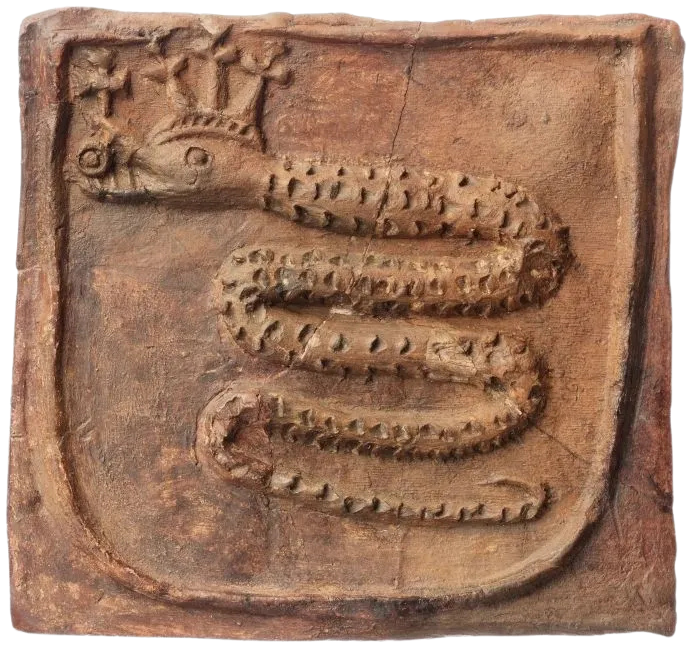
On the Sacred Day of Snakes (Kirmių diena, Lith.) I am sharing an edited essay I wrote a while ago for Advaya. This is what Marija Gimbutas writes about this day:
“The Sacred Day of Snakes was celebrated around the 25th of January, when snakes [serpents/grass snakes] symbolically awakened and abandoned the forests for the houses [Lithuanians kept grass snakes as pets for good luck, prosperity, fortune. The sacred serpents were fed milk and lived among humans.] This special day marked the beginning of everything, the awakening of nature. On this day, farmers shook apple trees so that they would bear fruit, and knocked on beehives to awaken the bees.
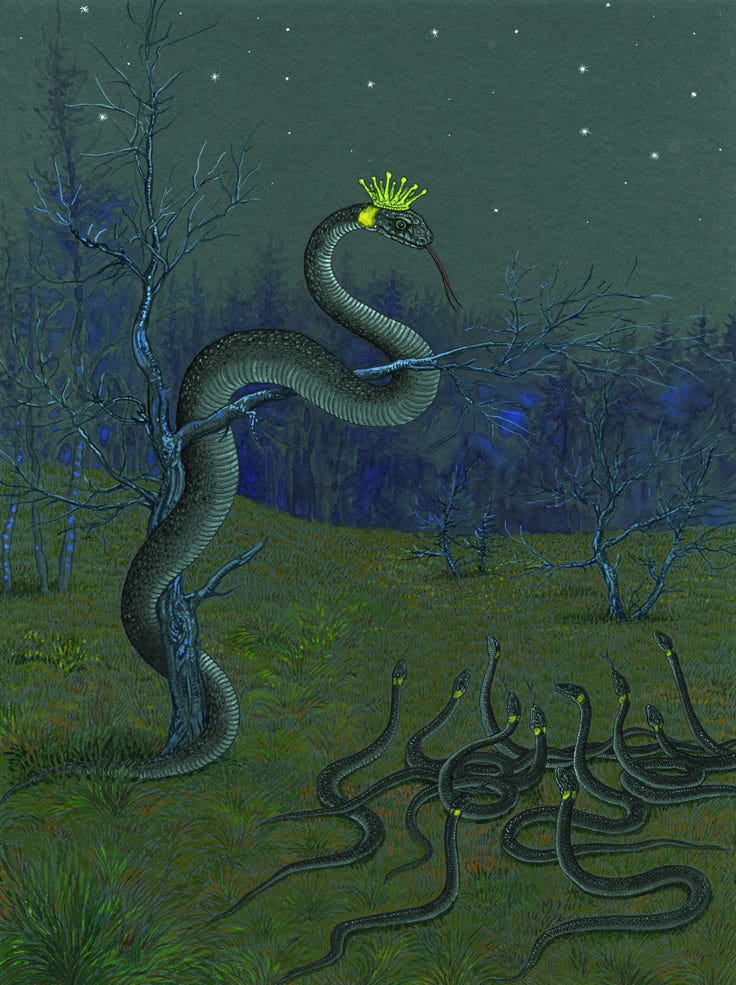
During the Neolithic, portrayals of the snake goddess consistently featured crownlike headpiece. This feature lives on in Baltic and other European folklore in the belief that some snakes will appear crowned; these crowns are the symbol of wisdom and wealth. Folktales narrate that a person who struggles with a huge white snake will acquire the crown. The crown enables one to know all, to see hidden treasures, and to understand the language of animals. The crowned snake is the queen; fairy tales recorded a hundred years ago recount the meetings of hundreds of snakes ruled by the crowned snake.“
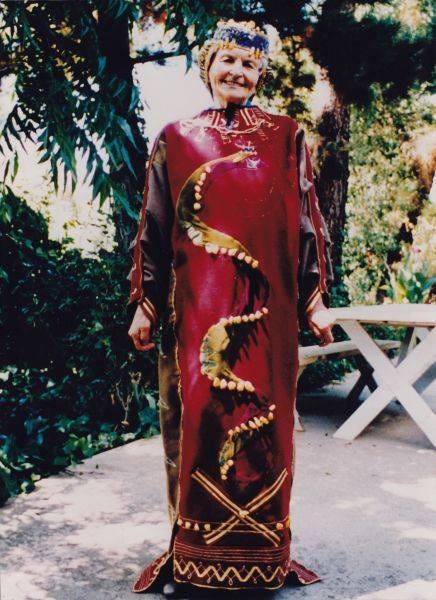
As a child, I still feel the deep impression of Marija’s embrace: so wide, warm, as if she would hug not only me as a child, but also, my grandparents, my great grandparents, those who will be my children, my descendants. She would embrace everyone, gifting her warmth, her close kin, as well as Lithuania’s clouds, valleys, trees, grasses, lakes, and birds.
— Julia Ikamaitė, remembering Marija Gimbutas’ visits to Lithuania.
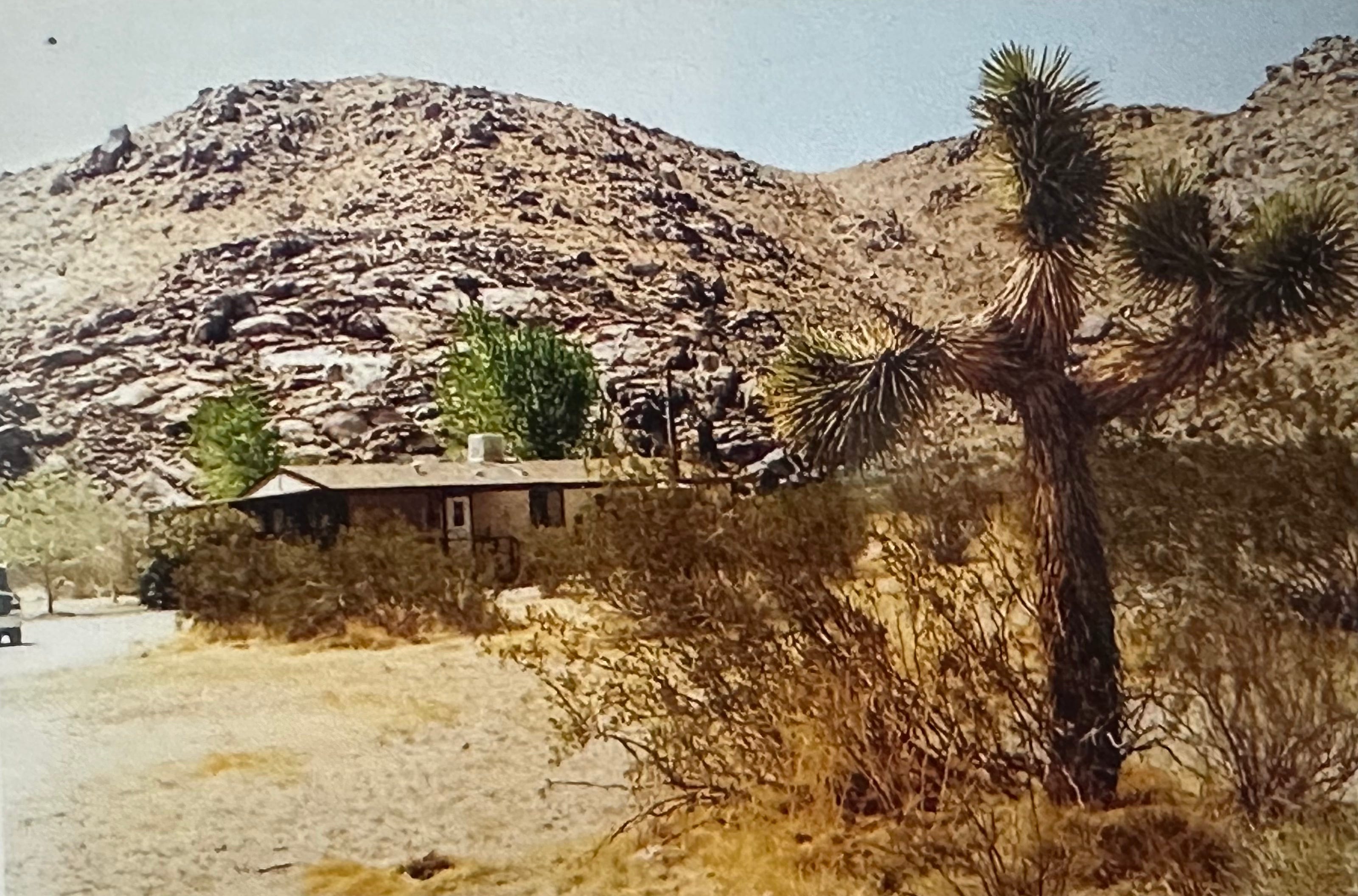
The sun rose over the Lucerne Valley, Nevada’s desert. Every rock, pebble, and red grain of sand absorbed it with each passing minute, getting ready to radiate this heat into the air and sustain the harsh elemental life in the red desert.
In such a place, Marija Gimbutas, a pioneering anthropologist and archaeo-mythologist, had her second home (first, in Topanga Canyon), planted a garden. She surrounded her cabin with various native trees, including stone fruits such as white peach. However, there was one tree that did not fully belong in her garden — the apple tree, connecting Gimbutas to her homeland, Lithuania. Apple tree, a primordial being housing tiny seeds of ancestral information around its fleshy body.
Here, Gimbutas wanted to build a Baltic pagan temple, a sanctuary in the arid landscape for the gods and goddesses who had never seen a desert.
I see Marija as my heretic grandmother; she passed away the year I was born. Just like her, I too longed for a “Lithuanian” kind of apple during my 10th year of living outside my homeland. Two summers ago, I visited a Lithuanian village during my trip back home and stumbled upon a sensuous memory. One that can only be revived in a place from which the sense originates: a paper apple, plentiful in my grandmother’s garden. I picked up a couple of beaten fruits lying beneath abandoned trees in someone’s front yard. I chewed up the apple with an open mouth, devoured it, carefully wrapped the seeds, and placed them in my pocket. With the hope of one day planting these seeds on my own patch of land.
Marija Gimbutas was the Lithuanian apple tree in the desert — rooting in new soil, using the unfamiliar mineral compositions (even toxins) beneath her to bring new work to life. She blossomed in a foreign land and in a misogynistic, male-dominated archaeology climate. And as the myth goes, she bore a fruit. Once bitten and digested, the fruit would shake the somatic memories of the Great Goddess and expel the accumulation of 5000 years of patriarchy within the body. The apple of her knowledge was Regeneratrix.
For the final book, Civilization of the Goddess, Marija spent 17 years researching and excavating, reading over 3000 papers, and always encouraging everyone to read the primary sources, as she did.
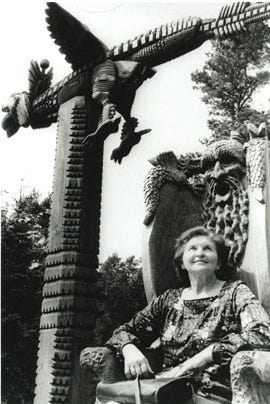
Apart from wielding a deep and prolific knowledge of archaeology, Marija also had the mind of a poet. Poets are prophets, able to access universal truth, one that collapses past, present, and future. They synthesize the invisible, they translate truth into tangible. Using the language of symbols and abstraction, Marija has built a door into the prehistoric civilizations where thousands of people would walk through, incorporating her archaeological findings as well as theories into second-wave feminism.
But most of all, Gimbutas justified the longing so many women felt for hundreds of years. Longing that whispers before it wails: there’s more to life than this. The society that you live in today, daughter, was not built for you. It was built atop you, and then against you. This society will ultimately collapse, because it hurts its most valuable being: the creatrix.
Marija Gimbutas affirmed that our ancestors, for most of our known human history, lived in reverence to the Great Goddess. Five thousand years of patriarchy against hundreds of thousands of years of Her.
I can feel her heart beating in mine as she sets the rhythm. The blood is hers, perhaps, lacking iron in my modern diet. My hair is hers too, long, wavy, brittle under the hard water of Berlin. It’s her skin that expands and contracts. The rush of a kiss. The longing for another culture where women are not below men, and animals and plants are not below humans.
Life in the hands of the goddess became a sacred path of devotion. She lead us with her visions, she walked thousands of paths through caves and mountains passes, through bogs and dense forests, through snow and desert dunes ahead with her strong legs, her belly swinging, her breasts giving moistures of life, her wings lifting her up above the fields, rivers, forests, she transformed once again into the cuckoo and landing upon the linden tree. Life in the hands of the goddess allowed us to affirm the eternal cycle of love, expressed in the regenerative cycle of life.
Marija Asleikaitė (later Gimbutienė → Gimbutas) was born in Lithuania in 1921, during the interwar period. From an early age, her personality was shaped by songs, folklore, arts, and crafts, as well as nature and sacred places, water bodies, and stones that survived the turmoils of the occupations (German, Polish, and later, Russian). All of them wove deeply into her memory, feeding the luster, curiosity, creativity, and a desire to bring back the sacred culture to the modern psyche. She not only studied archeology but also folklore and mythology, the Lithuanian language, and comparative linguistics. She was a folkloric collector and before emigrating to Germany and later the US (Boston and Los Angeles), Marija traveled across Lithuania to write down disappearing songs and stories from small villages.
“When I’m asked why it’s me who deciphered the messages from the past and read the symbols”, she said “I inherited it in my childhood, from my special home in Lithuania. During the years of my childhood, there were still sacred rivers flowing, and sacred stones standing.
<..>
I grew up in Polish-occupied Vilnius. However, I still felt a strong connection to Lithuanian origins since I was 2, 3, 4 years old. Childhood is a vital, extremely important period, perhaps for everyone. But to me, this is the ultimate foundation, and without it, I cannot stand.” —
— Marija Gimbutienė, (Lithuanian chronicle, 1993 - 16 (1674)).
The energy in Marija’s home was always steeped in culture and preservation of the ethnic depth. Her parents were doctors, founding and running the first hospital in Vilnius. Her father was also an editor of an independence-leaning cultural magazine, and her mother was the first woman doctor in Lithuania, gaining her doctorate in Berlin. Marija’s work ethic developed at home, where values were centered not on domestic matters, but culture and political milieu. The family was always surrounded by the intelligentsia of the time.
Marija’s father died when she was 15 years old. The threshold of her father’s passing turned the page of her childhood and ushered her straight into adulthood. This left her asking: What is life? What is death, and what happens after it?
The topic of human relationship to death captured Marija’s path. She started her studies by researching Lithuanian and pagan funerary rites and monuments. One of the first articles she wrote at age 19 was about her ancestors’ beliefs about the afterlife: what is soul and what is death. This was the formation of the intuitive capacity; to read the symbols and mostly — to feel the story and history that stands behind the physical form.
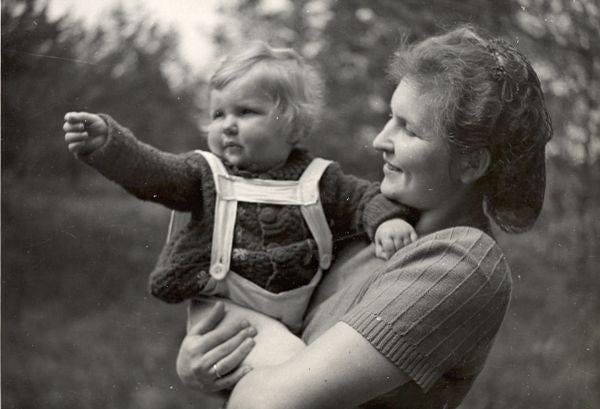
During the Second World War, she had to flee to Germany: with a baby in one hand and her PhD in the other. From there on in the 1950s, Marija, together with her family, immigrated to the US. There she worked for three years as an unpaid researcher at Harvard University’s Peabody Museum before accepting a professorship at UCLA, a position she kept until her retirement in 1989.

During her move to California, she and her husband separated. In this new era, Gimbutas and her work flourished. There she lived in Topanga Canyon. Although she travelled to Europe regularly for exhibitions, excavations, lectures, etc, Marija was not permitted to return to the Soviet occupied Lithuania.
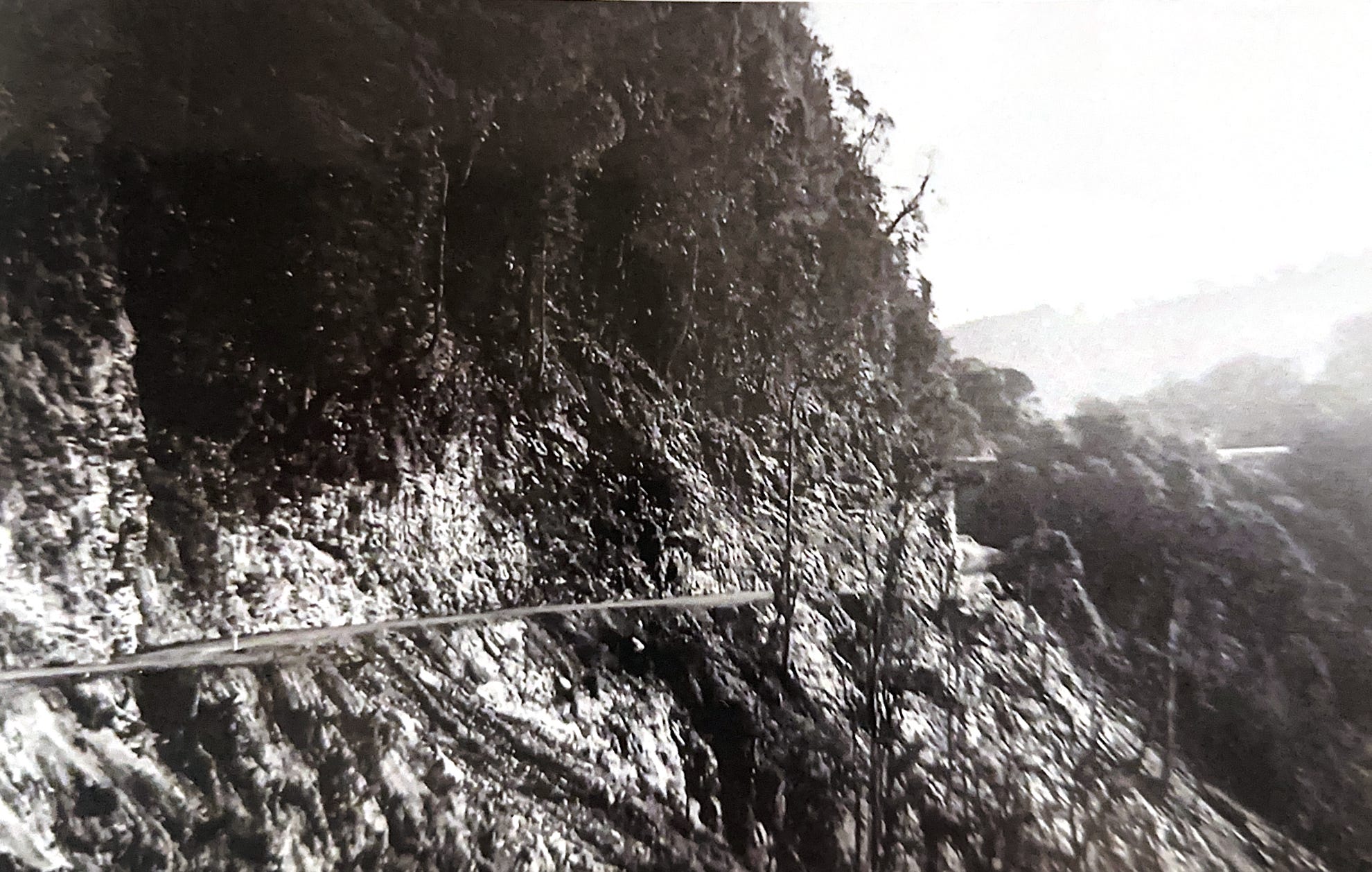
In her later years, in the letters to her mother, she would mention being able to see beyond the veil: somewhat of clairsentience or claircognizance that Marija used for peering into the past. Intuitively synthesizing thousands of years’ histories into theories that would later be proven correct through aDNA testing and forever change the course of our known history. She knew, like other visionary prophetesses, that the world would sooner or later catch up, if not in this generation, then the next. She perceived time like an archaeologist does — truth resurfacing to the surface in its due time.
As much as Marija was a scientist and archaeo-mythologist, she was also an intuitive seer, a mediator between our ancestors and us, between the Great Goddess and the modern human psyche–not fully forgetting the reverence and worship of the regeneratrix. Her legacy is fully alive, pulsing, and living, the same way as the goddess, to whom Marija has devoted her life to truly understand and translate.
For my Lithuanian audience:
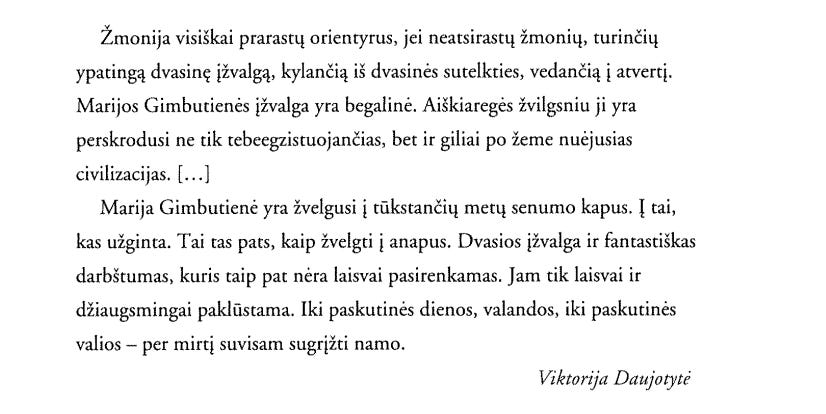
Thank you for reading. This was a small sliver from my research about Gimbutas’ life. She continues to inspire my work, and I cannot wait to share more.
Comments
Nothing yet. Say the first thing.
Sign in to join the conversation.