
To expand and rewild your own writing and reconnect with the inner writer, join my Headwaters 8-week online writing course, designed to deepen your authentic writing practice and unblock your creative life force energy.
We start in April 2026.
Join Headwaters Writing Course
Last week I returned from the Scottish highlands, where alongside my fiance Niels Devisscher I attended a rewilding course, lead by Alan Watson Featherstone and his partner Pupak Haghighi.
We lived in a bothy, situated at the top of Loch Affric, within one of the most beautiful glens in Scotland, Glen Affric.
We had no internet signal, nor running water. We had to fetch our water from the burn (river, stream). The water for drinking had to be boiled, then cooled, then distributed. We cooked communal dinners. We made a lot of fire. We got drenched during the day and dried clothes and boots over night in the drying room. Over a couple of days, everyone eased into their roles. I felt a sense of purpose specific to this tiny group. Even by the time we were running out of bread, I baked three sourdough loaves. The appreciation I received deeply touched my heart.
I didn’t need the phone signal. I didn’t want to know what was happening in the world. I have been craving time without knowing. I didn’t want to care about the strangers on the internet. All I was concerned about was the other 10 people in my simple home for that week. They were my immediate, physical, real community.
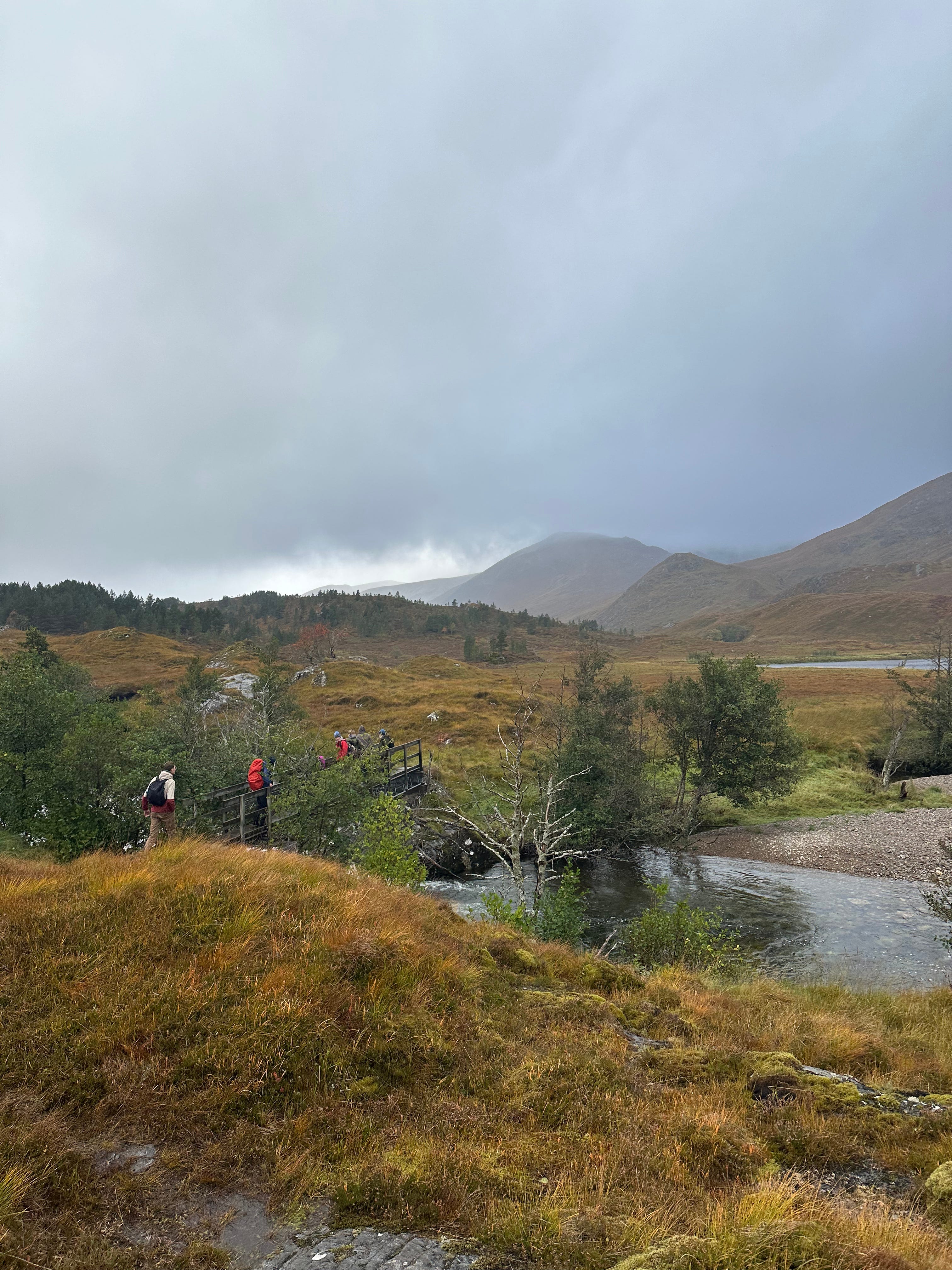
There was the immediacy of the roaring stags in the middle of the night up in the hills, the hooting tawny owls in the woods of the glen. A running stream next to the bothy. Wind running up and down the fireplace. Rowan trees planted out of the reach of the grazing animals. Cloud formations and ever-changing rain patterns.
During one of the days we went out on a vision quest into Gleann na Cìche, a tributary glen of Glen Affric. During my walk, I encountered a grove of elder birch trees, coiled and gnarled, overgrown with moss and lychen.
There was a particular birch that pulled me in. I sat down underneath her. The ground was was mossy and damp, I faced a lively river Allt na Cìche in front of me. Coiling and furling, jumping from the boulders and rocks. Carving a mossy corridor around itself. On my right — a rowan sapling next to a tiny stream merging into the river. This was my perfect place. I never wanted to move away.
Just as I sat there, sheltered under the birch, a poem came to me. In one go. About the people of the highlands, their mythical lives, their simple lives with the spirits and elementals of the glen, about the clearances and evictions. The birch was the writer, so as the river, and the rowan, and the moss, and the spreading cold humidity around me.
To write, I had to allow wildness to enter me. As if the civillization has made my words tamed, polished, agreeable. I needed to hear voices other than my own. I needed to hear the exoteric protagonists that were all around me, giving me clues and impulses. To rewild my own writing process, I had to let the otherness in. Sometimes, it’s not nature that needs to be rewilded, but a human heart.
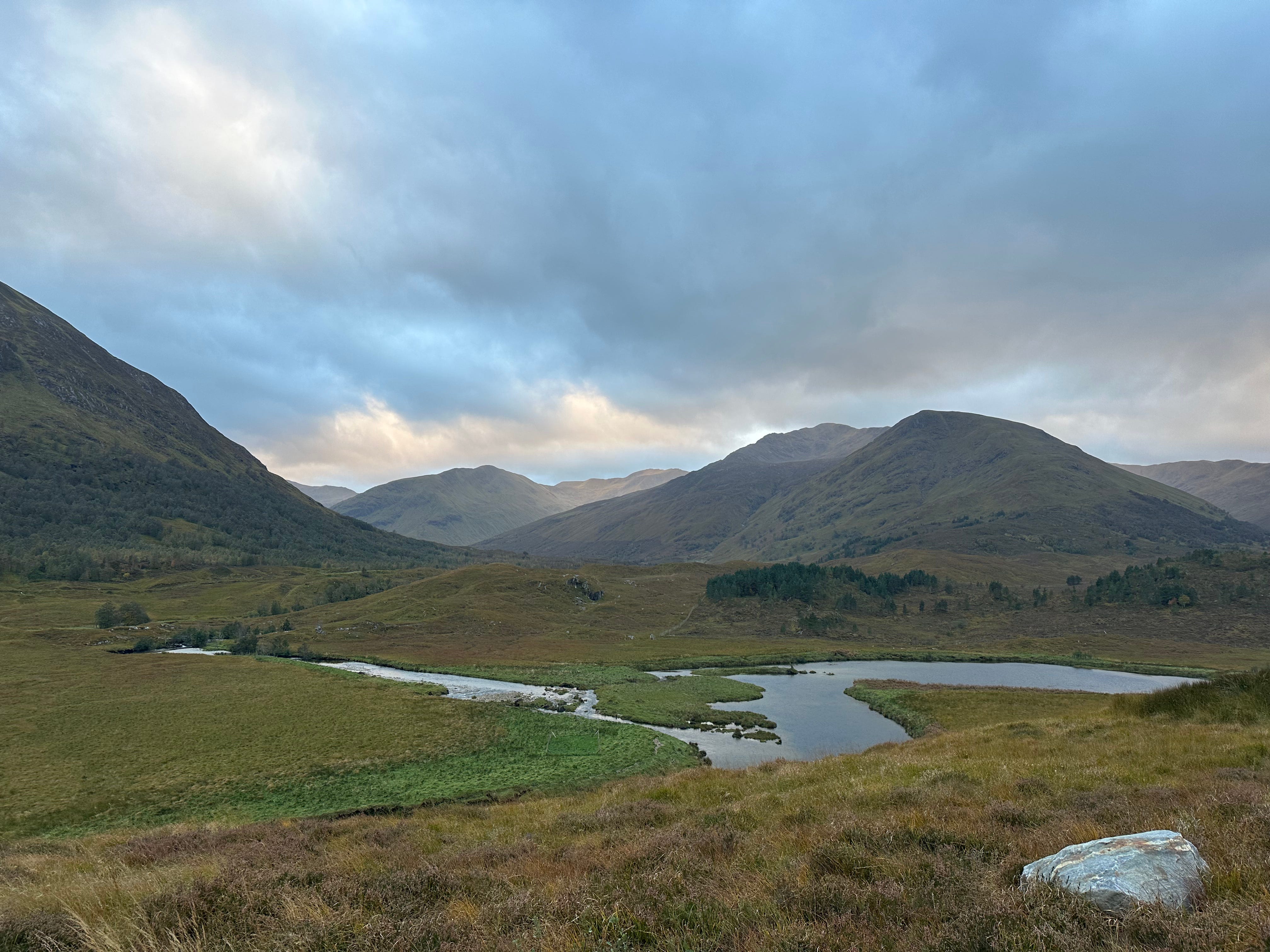
So let’s look at the ways the rewilding of planetary ecology can translate into the rewilding of the writing work, within the ecology of the psyche.
In the ecological rewilding process of land and wildlife, there are 4 C’s that help to restore the native ecosystems:
Cores: The protection of large, core areas of wildness to serve as the foundation for a functioning ecosystem.
Corridors: The establishment of connections or “corridors” between core areas to allow for the movement of wildlife and the genetic exchange between populations.
Carnivores: The protection and reintroduction of apex predators (like wolves or lynx) and other highly interactive species, which are crucial for maintaining a balanced food web and ecological processes.
Coexistence: The principle of finding a balance between human activities and the needs of nature, promoting a future where both people and the rest of the natural world can flourish together.
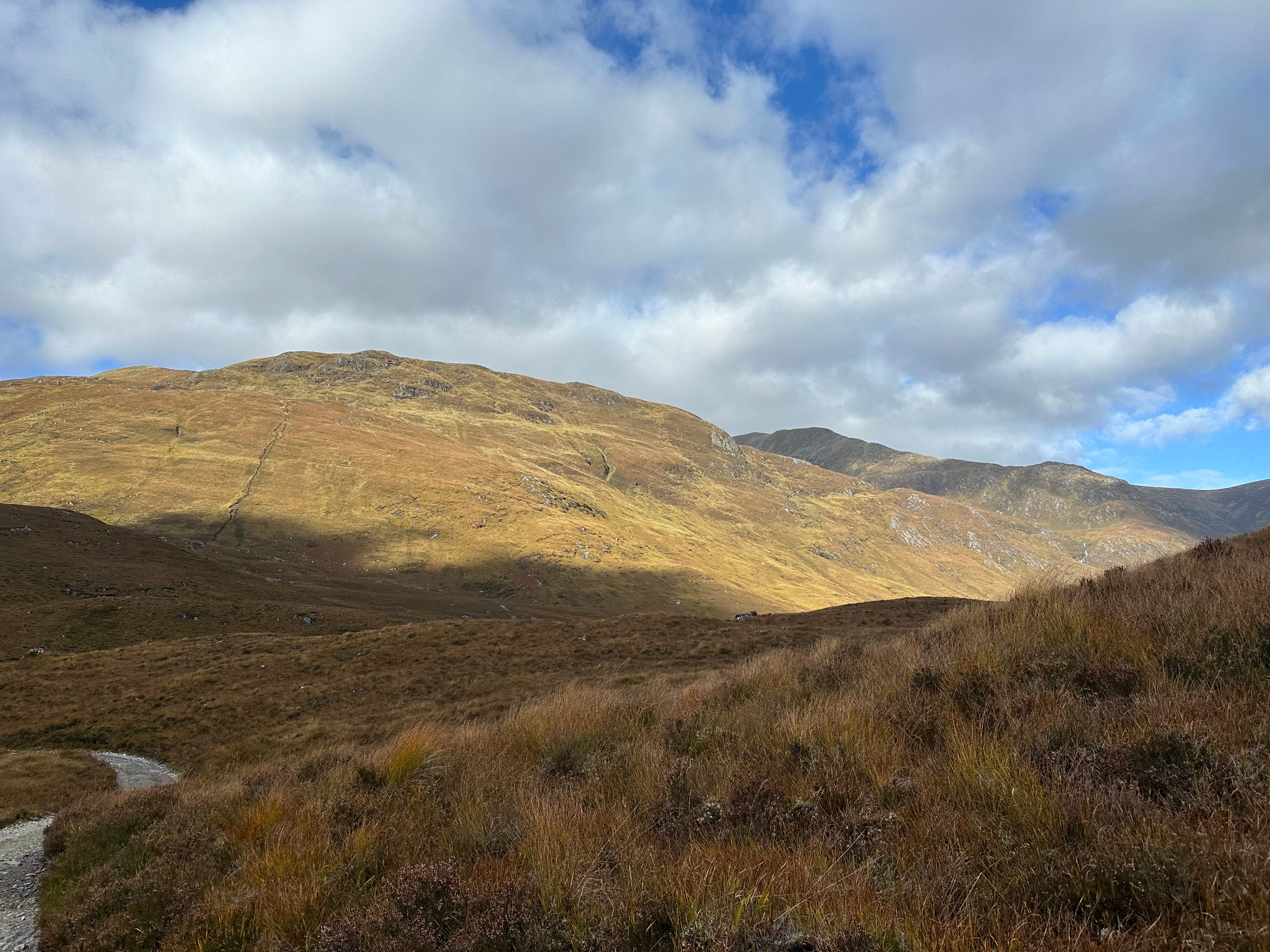
How can all of these translate into our writing practice?
The cores of writing are things that matter to you the most, and consequently, things that your writing psyche is made of. It is an intrinsic foundation from which everything else grows. Here, your voice takes shape. In ecological rewilding, these are the places where growth is naturally occurring, which means that they are the most potent spots for restoration. This is where aliveness can magnetize other aliveness. Writing that comes from these places will be inevitably authentic because your natural sense of aliveness is found in these topics or passions that are an innate part of you.
For Cores to connect, we need Corridors.
This is the process of idea synthesis (which I teach in week 5 of Headwaters). For writing to feel your own, we work to open up corridors and connect ideas that you are passionate about, but have never stitched them together before. This is a way of growing your personal niche. We need the seeds to be dispersed, shared, and planted in different places of the landscape.
However, we often forget that a corridor can be a niche in itself. A hedge, separating one field from the next, is a home for countless small mammals such as hedgehogs, mice, shrews, birds such as sparrows, robins, thrushes, kestrels, and even owls. Bats also use hedges as commuter routes. A hundred-meter hedgerow might host around 2000 species of plants, fungi, and animals.
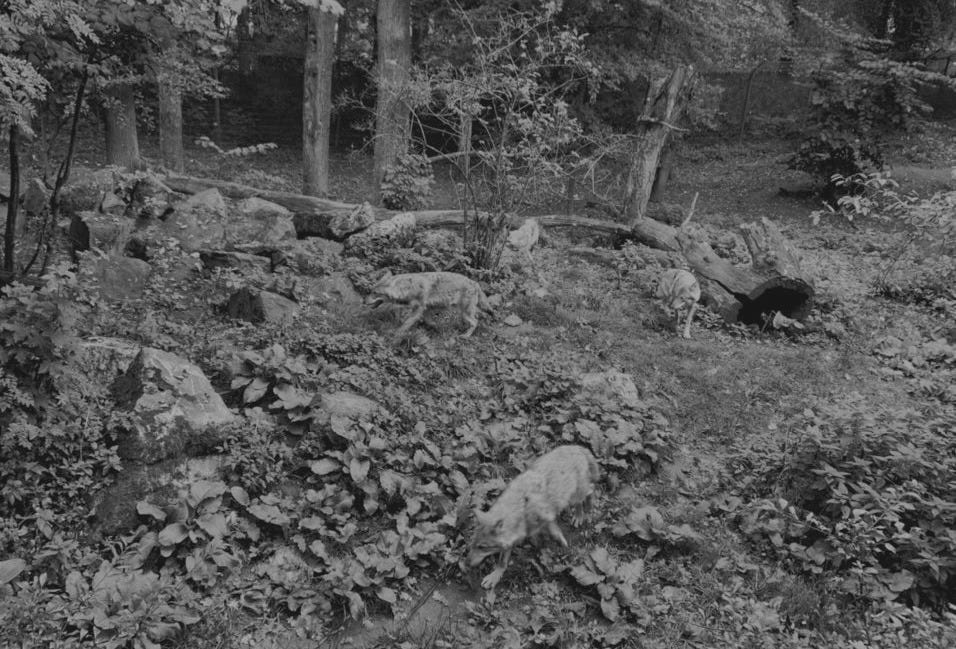
Carnivore is a predatory force in your creative writing process. It prunes your ideas and makes them fitter and healthier. Just like a pack of wolves, the predatory instinct keeps your idea population (deer) moving within the landscape. This movement is essential if we don’t want the deer to overgraze the ecological sphere. Through his movement, the landscape gradually rests and regenerates from the grazing process.
However, the predatory force can also be directed at the writer herself. Which means that the aspect of the psyche that should be a constructive editor is directly affecting your capacity to create without fear.
In weeks 2 and 3 of the Headwaters, we meet the predator (inner critic and inner rejector) and transform them during week 3 into the aspect that protects our work and brings us closer to the truth and wildness in our creative process.
Coexistence shows us how much biodiversity exists within our work. It shows us that there will be various aspects of us that will write. It also invites us to open up to otherness: voices of the larger idea ecologies around us. (Just like the elder birch and the river). Coexistence affirms that you’re not writing by yourself. There is a multiplicity of beings who are co-authoring your work. Coexistence invites help and affirms that we are not writing about, we are writing with.
Join Headwaters Writing Course
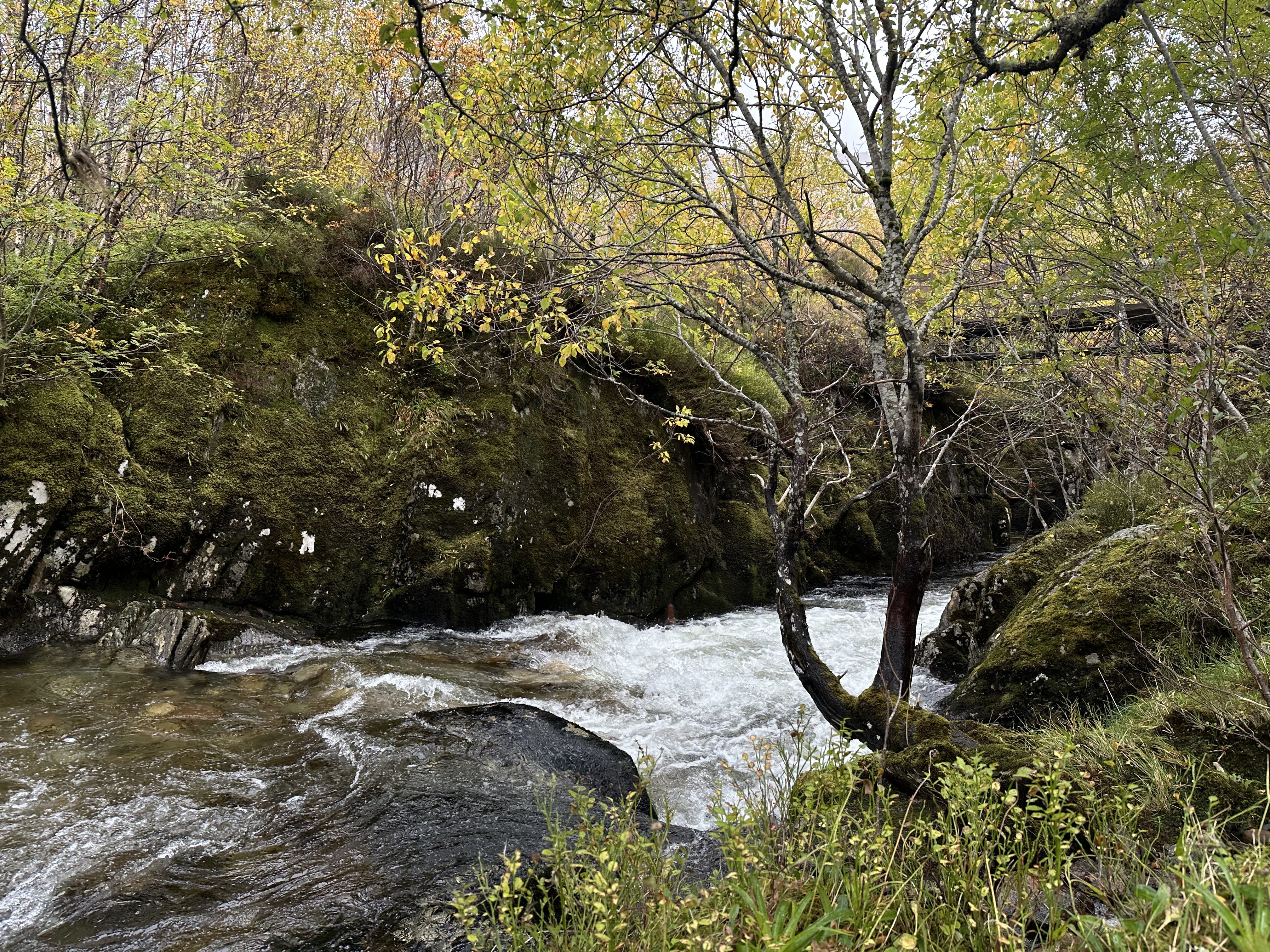
In the time of wandering through the Gleann na Cìche, I wanted nothing more but to wander this glen for the rest of my days. My head turned towards the massif of shifting clouds, then to the wind pushing branches of Scots pines, rowans, and birches, then overgrown heather, and perfect moss, and rapid river stream where all life condensed. All I could think was: we have all of this, and we think sitting in front of a laptop every day is a great idea?
And yet, if we want my writing to reach you, over here, there is an exchange I must be willing to make. A time in front of the screen.
This experience in the highlands enriched my larger inquiry about unfragmented time and mind. Perhaps it’s the pre-Internet time that I long for. Perhaps, a time much farther away. Time spent in a way that nourishes soul, body, mind. I could feel this type of time deeply while learning about rewilding in a wild place. This is where I invite writing to come from.
What is the opposite of wildness, if not fragmentation of naturally existing connections, predating human interventions?
Writing is no different. Leaving information for another, frozen in space and time, has existed for thousands of years before writing was ever invented.
If you want to explore what it means to rewild your writing practice and relationship with writing, join me and a brilliant community of writers as we set out to find the Headwaters, a source of creative life force where the writing comes from your authentic truth.
Comments
Nothing yet. Say the first thing.
Sign in to join the conversation.