
Welcome to this new episode. Today I offer you a piece that takes us to the heart of Russian history on the French Riviera — a history that is often overlooked, yet deeply woven into the very fabric of Cannes itself. The article you are about to hear tells the story of the Saint Michael the Archangel Orthodox Church on Boulevard Alexandre III, a quiet witness to over a century of imperial, aristocratic, and spiritual Russian life on the Côte d’Azur. The text is by Jean Basset. It is read for you today by Jerry B. Marchant.
Bienvenue dans ce nouvel épisode. Aujourd'hui, je vous propose un texte qui nous plonge au cœur de l'histoire russe sur la Côte d'Azur — une histoire souvent méconnue, pourtant profondément enracinée dans le tissu même de Cannes. L'article que vous allez entendre est consacré à l'église orthodoxe Saint-Michel-Archange, boulevard Alexandre III, témoin silencieux de plus d'un siècle de vie impériale, aristocratique et spirituelle russe sur la Riviera française. Ce texte est signé Jean Basset. La lecture vous est proposée par Jerry B. Marchant.
Texte de Jean Basset
Narration par Jerry B. Marchant—Russian Art & Empire
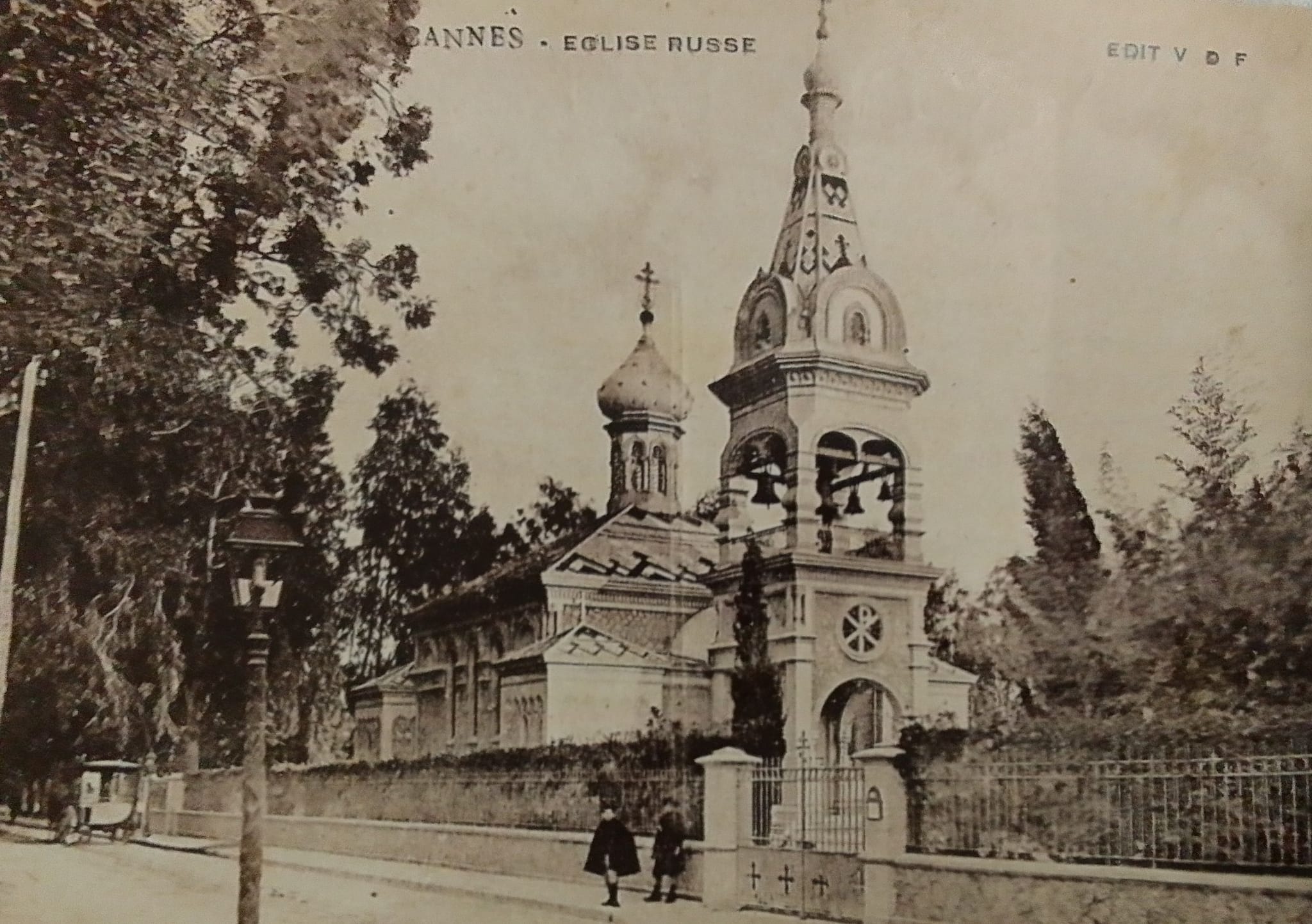
Après la construction de la villa Alexandra, Mme Tripet ajoute, en 1886, une chapelle pour accueillir une trentaine de chrétiens orthodoxes habitant alors le quartier. Leur nombre croissant très rapidement, l’archiprêtre de la famille impériale Grigory Ostroounov demande en 1893 au grand-duc Michel de Russie d’envisager la construction d’une église et dans ce but de présider un comité comportant entre autre, le consul impérial de Russie à Nice, les princes Golitzine et Ouroussov et les hivernants à Cannes et sa région. Un terrain de 1 750 m² est offert par Alexandra Tripet par acte du 3 mai 1894 en l’étude de Jammes. Une souscription rapporte, quant à elle, 6 000 francs-or. Louis Nouveau, architecte, étant en charge du projet, la première pierre est posée en 1894. L’église, dédiée à saint Michel Archange, est inaugurée le 22 novembre de la même année par Monseigneur Pallade, métropolite de Saint-Pétersbourg. À cette occasion, le boulevard des Pins prend le nom du tsar Alexandre III. Le bâtiment, couvert de tuiles vernissées bicolores, comporte une nef à plan carré, surmontée d’un clocheton à bulbe. Une magnifique iconostase offerte par la famille Tchikhatchev orne le fond de l’église de 400 places. Une icône représentant saint Vladimir et sainte Olga, une autre Notre-Dame de Koursk et de nombreux dons des paroissiens en complètent la décoration.
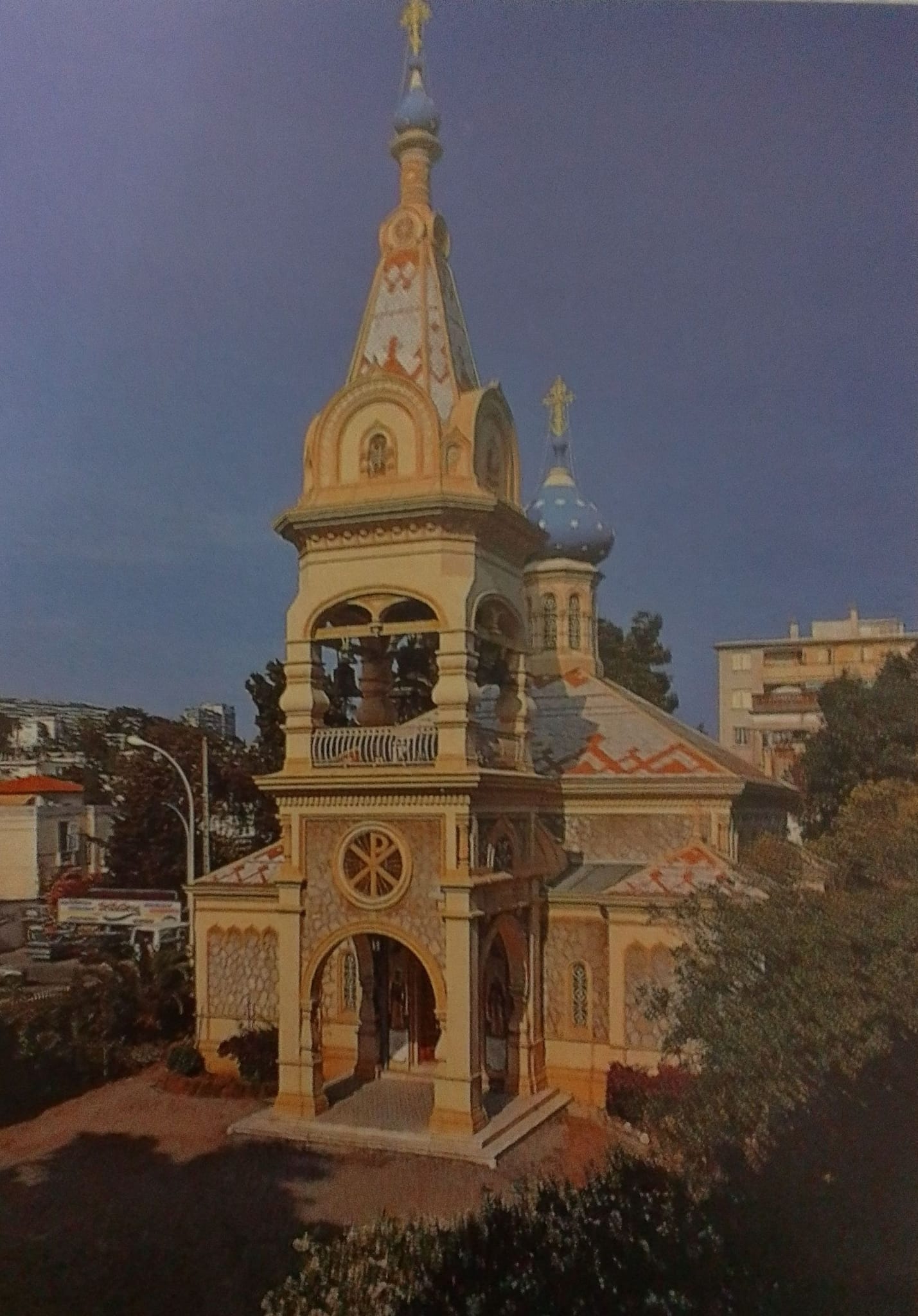
M. Elaguine finance la construction du clocher achevé en janvier 1896 et béni le 17 mars ainsi que les sept cloches fondues spécialement en Russie. Le porche couvert orné des fresques de Dimitri Kossorotov et Valentin Zevtchinsky supporte celui-ci. La villa Saint-Michel, érigée près de l’église en 1897 par Louis Nouveau sous la forme d’un grand chalet, est destinée au clergé et aux différents services.
Le 26 avril 1898, le mariage du prince Christian de Danemark, futur roi Christian X, avec la duchesse Alexandrine de Mecklembourg-Schwerin y est célébré. Le témoin de la mariée est le grand-duc Michel de Russie, son grand-père. Quand Miss Harriet Louise Wryht épouse le 9 mai 1900 le comte Alexandre Mercatis, le mariage protestant a lieu à la villa Henri IV, sur la Croisette, mais la cérémonie orthodoxe à Saint-Michel Archange. La dame d’honneur de la cour impériale de Russie, Mme veuve Damidof née princesse Sophie de Wolkonski, épouse dans les mêmes lieux le lieutenant de l’armée russe Paul Dournovo le 23 avril 1901. Le 8 mai 1901, est célébré le mariage de Mlle Anna Strigensky, fille de la princesse Bariatinski, avec le vicomte Raoul de Leusse. Une messe de Te Deum est chantée le 9 novembre 1901 pour l’anniversaire de l’avènement de Nicolas II. La princesse Anna Gagarine-Stourdza épouse en secondes noces le célèbre sculpteur Denis Puech le 11 mai 1908. L’archiprêtre marie sa fille Anastasia d’Ostroounov à Georges Kletschanski le 27 février 1910 en présence des princes de Danemark, de la grande duchesse de Mecklembourg-Schwerin et du général de Salignac-Fénelon. En 1957, Marie Louise de Bulgarie, sœur du roi Siméon, y épouse Karl Vladimir Leinig.
Alexandre Romanov en 1971 et Chantal de Bourbon-Parme en 1977 se marient dans cette église ainsi que l’actrice Viviane Romance. Les obsèques du chanteur Georges Guétary s’y sont déroulées. Christina Onassis y est baptisée en mars 1975.
La crypte dédiée à sainte Catherine, accessible par le jardin, renferme les sépultures du grand-duc Nicolas de Russie (1856–1929) et de son épouse Anastasia de Monténégro (1868–1935), du grand-duc Pierre (1864–1931) et de son épouse Militza de Monténégro (1866–1951), les deux frères s’étant unis aux deux sœurs. L’évêque Ostroounov et sa femme Nadedja reposent également en ce lieu. Hélène Vagliano, héroïne de la Résistance, fusillée à Nice le 15 août 1944, est inhumée avec ses parents et son frère dans une salle de cette crypte.
Cet élégant édifice, qui évoque les grandes heures de la Russie impériale, enchante toujours les visiteurs.
Sources : Centenaire de l’église orthodoxe russe, 1994 ; Les Russes dans les Alpes-Maritimes.
Welcome to this new episode. Today we bring you a piece that takes us to the heart of Russian history on the French Riviera — a history that is often overlooked, yet deeply woven into the very fabric of Cannes itself. The article you are about to hear tells the story of the Saint Michael the Archangel Orthodox Church on Boulevard Alexandre III, a quiet witness to over a century of imperial, aristocratic, and spiritual Russian life on the Côte d’Azur. The text is by Jean Basset. It is read for you today by Jerry B. Marchant.
If you don’t want to commit to a monthly or annual subscription, you can make a one-time donation using the “Buy Me A Coffee” button below.
Boulevard Alexandre III
By Jean Basset
Narrated by Jerry. B. Marchant—Russian Art & Empire
After building the Villa Alexandra, Madame Tripet added a chapel in 1886 to accommodate the roughly thirty Orthodox Christians then living in the neighborhood. As their numbers grew quickly, in 1893 Archpriest Grigory Ostroounov, chaplain to the imperial family, asked Grand Duke Michael of Russia to consider building a proper church and to chair a committee for that purpose, made up of, among others, the Russian Imperial Consul in Nice, Princes Golitsyn and Urusov, and the winter residents of Cannes and the surrounding area. A 1,750-square-meter plot was donated by Alexandra Tripet under a deed dated May 3, 1894, drawn up at the Jammes law office, while a public subscription raised 6,000 gold francs. With architect Louis Nouveau overseeing the project, the cornerstone was laid in 1894. Dedicated to Saint Michael the Archangel, the church was inaugurated on November 22 of that same year by Monsignor Pallady, Metropolitan of Saint Petersburg — on which occasion the Boulevard des Pins was renamed in honor of Tsar Alexander III. The building, covered in two-tone glazed tiles, has a square nave topped by a small onion-domed turret. A magnificent iconostasis donated by the Tchikhatchev family adorns the back of the 400-seat sanctuary, complemented by an icon of Saints Vladimir and Olga, another of Our Lady of Kursk, and numerous gifts from parishioners.
A Mr. Elaguine funded the bell tower, completed in January 1896 and blessed on March 17 along with its seven bells, cast specially in Russia; the covered porch supporting it is decorated with frescoes by Dimitri Kossorotov and Valentin Zevtchinsky. The Villa Saint-Michel, built beside the church in 1897 by Louis Nouveau in the form of a large chalet, was intended to house the clergy and various church services.
From the very outset, the church became a gathering place for Russian imperial society and European royalty alike. On April 26, 1898, it hosted the wedding of Prince Christian of Denmark — the future King Christian X — to Duchess Alexandrine of Mecklenburg-Schwerin, with the bride given away by her grandfather, Grand Duke Michael of Russia. When Miss Harriet Louise Wryht married Count Alexandre Mercatis on May 9, 1900, the Protestant ceremony was held at the Villa Henri IV on the Croisette, but the Orthodox rite took place at Saint-Michel Archange. The widowed Madame Damidof, lady-in-waiting to the Russian imperial court and née Princess Sophie Volkonsky, married Russian army lieutenant Paul Durnovo in the same church on April 23, 1901. On May 8, 1901, Miss Anna Strigensky, daughter of Princess Baryatinsky, married Viscount Raoul de Leusse there, and a Te Deum was sung on November 9, 1901, marking the anniversary of Nicholas II’s accession to the throne. Princess Anna Gagarin-Sturdza took a second husband, the celebrated sculptor Denis Puech, on May 11, 1908. The archpriest himself married off his daughter, Anastasia Ostroounov, to Georges Kletschanski on February 27, 1910, in the presence of the Danish princes, the Grand Duchess of Mecklenburg-Schwerin, and General de Salignac-Fénelon. In 1957, Marie Louise of Bulgaria, sister of King Simeon, was married there to Karl Vladimir Leinig.
The church’s social life continued well into the twentieth century. Alexandre Romanov married there in 1971, as did Chantal de Bourbon-Parme in 1977, along with the actress Viviane Romance. The funeral of singer Georges Guétary was held there as well, and Christina Onassis was baptized there in March 1975.
The crypt dedicated to Saint Catherine, accessible from the garden, holds the tombs of Grand Duke Nicholas of Russia (1856–1929) and his wife Anastasia of Montenegro (1868–1935), and of Grand Duke Peter (1864–1931) and his wife Militza of Montenegro (1866–1951) — the two brothers having married the two sisters. Bishop Ostroounov and his wife Nadezhda are also buried here. Hélène Vagliano, a Resistance heroine executed by firing squad in Nice on August 15, 1944, is interred with her parents and brother in one of the crypt’s chambers.
This elegant building, evoking the great days of Imperial Russia, continues to delight visitors.
Sources: Centenaire de l’église orthodoxe russe, 1994; Les Russes dans les Alpes-Maritimes.

Comments
Nothing yet. Say the first thing.
Sign in to join the conversation.