
Yesterday was the final run of the 17th week of the plan I shared in my last post (“How I’m Training for Hardrock”). Training is over, race week is here, and on Friday morning at 6am we’ll put it all to the test.
It was an aggressive train-up (for me), on the edge of what I thought I was capable of, but it had flex points, and I was committed to using it well. It turns out my body liked “aggressive” and handled everything I threw at it. My 17-week volume (1,054 miles, 200,360 feet of ascent) was beyond anything I’ve done before, yet I had none of the usual mechanical issues, nothing that made me slow down or back off. Score one for experience…
My altitude acclimation seems to be going well, too. I came west last month, spent the first 10 days sleeping at 6,500 feet above sea level, gradually took my runs to higher and higher ground, then moved to a campsite above Silverton, where I just spent my 9th night at 10,500 feet. I won’t say that I feel completely normal at altitude yet, but I’m not gasping for breath, either.
Bottom line, I feel like my body is as ready for this as it’s ever been for anything… but all that does is get me to the start line with the potential to do well. The next part is about realizing that potential.
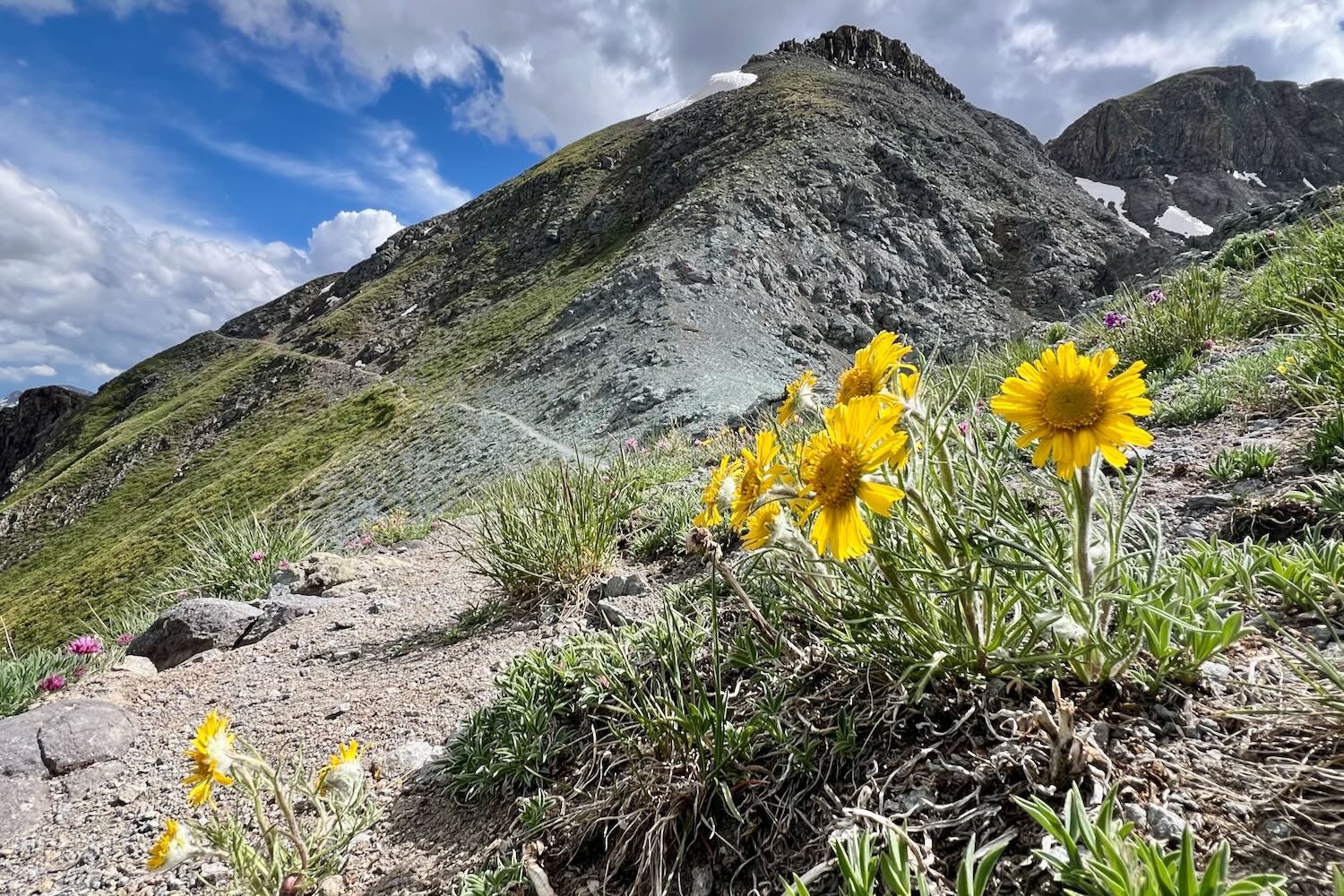
Getting ready is the same for every race, with four points of focus: physical refinement, tactical planning, logistical preparation, and mental readiness (I detail each of them in this post: “Tapering to Race Day (Western States part 4)”). I've been working my way through them — here's a summary:
Tapering, shifting time from running to resting, indulging in luxuriant yoga sessions (in the woods at my campsite, in the sun and breeze, with no time constraints), eating well, being careful not to do anything dumb...
I'm taking this race in six bite-sized sections:
The first 29.8 miles, with two big climbs (Little Giant and Green Mt.) and some lesser climbs. Slow and steady and easy, breaking into this thing gently, knowing (and remembering) that an over-eager minute gained in these early miles could cost an hour later on. At the end of this section, my crew is waiting at Sherman aid station.
The next 14.8 miles, up and over and back down from Handies (the 14er). And waiting at Animas Forks aid station, my first pacer.
With Tom for 14 miles, up to Oh Point, then down to Ouray under a full moon (!)
With Lucas for 16.1 miles, up Camp Bird Road (under that same full moon), through Governor aid station, up to Virginius Pass (and sunrise from Kroger's Canteen?), then down to Telluride.
With Leon for 16.3 miles, over Oscar's Pass and Grant Swamp Pass, across Island Lake Basin, and down to KT aid station.
With Renee for the final 11.5 miles, up and up and over Porcupine Cataract Pass and Cataract Putnam Pass, down to South Mineral Creek, and on to the finish in Silverton. Can we get there before we need headlamps on Saturday evening? We'll see..
And that's it, the whole thing... when you look at it like that, it doesn't sound like so much, does it?
I've done my charts and calculations, checked and re-checked my gear and supplies, and I'm comfortable that everything on this front is in order. (If you're interested in my gear choices, etc., I've included that in a separate section near the end.)
Functional simplicity is the goal: three drop bags, with enough gels (Huma and Muir Energy) for 100 calories per hour (to be augmented as needed at aid stations), enough Vespas to take one every 5 hours, a good supply of LMNT for electrolytes, some back-up licky-chewies (Jolly Ranchers, Wintergreen Lifesavers, and Honey Stinger chews), some back-up shoes and socks (which I hope not to use)... And if all goes well, my crew on-site with drop bag in hand, along with a well-stocked crew bag, and a primary mission — get me the heck out of that aid station and moving forward.
Yet to be discussed are the details of the crew plan — the time-distance factors and the who/when/how of getting around this giant of a course. I have ideas, but we'll work the details when everyone is here.
I review the race route in my head each night as I go to sleep, and I review the plan on paper each day. I have my race playlist on repeat, loading my mental jukebox. And I try oh so much to relax and let this experience come to me as it will, knowing that the plan is only a point of departure, knowing that flexibility is the key, that contingencies will emerge and that I am equipped to deal with them...
Now, what I really want to talk about: my team.
As much as I’ve made this race out to be an ultimate test or some such drama, here's what it mainly is: a reward, and a celebration of a decade-plus of ultrarunning — one of the best periods of my life. And celebrations aren't really about accomplishments, they're about the people who have been there with you for parts of the journey. Some of those people will be joining me for this weekend's adventure.
Races like this one deserve to be shared, and I wish I could have included everyone who offered, and everyone who's been part of these many years of running. As it is, I have a big team, and I love every one of them, all the connections, the things we've done together...
- My wife Renee, my oldest and best running connection (the earliest reference I can find is a brief appointment note in my datebook from 1987 that simply says "run with Renee"). We trained for our first marathon together (in 1998), she became a trailrunner before I did (and probably pulled me into it), and she's been there for nine of my ten hundreds — seven as crew chief and two as a fellow competitor (she didn't make the trip to Ireland when Tom and I did the Kerry Way 200k). I've been there at all of her hundreds (as crew, pacer, or fellow runner), we ran a lot of pandemic miles together, and we've done a lot of other things together...
- My son Lucas — he doesn't remember it all, but I've been running with him off and on since 1997, when he was only months old (see “A Running Start”). He was there for that first marathon, he paced me at both Eastern States and Western States, and he's finishing a through-hike of the John Muir Trail just in time to be here for Hardrock. I'm pretty sure his adventures are only beginning...
- My friend Tom, instigator of so many dubious (but momentous) adventures — our first long ultra (Laurel Highlands 2013), our first hundred-milers (Eastern States: he paced me in 2015, I paced him in 2016), all those December trips to Virginia for all those Hellgate 100Ks, that brutal but wonderful Kerry Way Ultra... And our friendly last-man-standing contest to be the first ten-time Hyner 50k finisher, that Old Logger's Path run where we took turns carrying out the injured hiker... plus countless miles and hours of trail work on the Eastern States course and the Worlds End course...
- My friend Leon, fellow runner/reader/writer and kindred spirit. I think we first ran together and talked at length on another of Tom's Old Logger's Path outings. There was that winter lap of the Black Forest Trail (also with Tom), that run from Pennsylvania to Virginia and back, our multi-modal Susquehanna adventure, a Buzzard's run with Elmo, a Quehanna loop... and there was that time in the middle of the night in a driving rain, trying to find the route across one of those ridge-top boulder fields of the Standing Stone Trail, and I was getting concerned, but I looked over at Leon and he was laughing...
- My friend Amy is a walker, not a runner, but she's been around enough of these now (UTMB, IMTUF, Bighorn, and working the Big Trail aid station at Eastern States) to know what's up, help with the crewing, and help keep everything on track. (She's also been known to lure my wife away for ice cream while I'm finishing a race.)
It's a strong team, and if they can't keep me going, no one can. It is comforting and reassuring to know they'll be there.
But what we choose and how we choose it defines the measure of our sanity, and how we go about choosing our **adaptive delusions** over the maladaptive ones defines our fitness for life.
—Amélie Rorty, quoted by Maria Popova in “User-Friendly Self-Deception”
Yes, of course I know this isn’t important, that it’s just a game. But to make good games, we have to suspend our disbelief, pretend that they do matter. Here’s what I said about that when the game took me to Western States (it applies to this one, too):
This is an act of positive self-deception. The upcoming challenge and the hardships are voluntary, and there’s almost always a safe and easy way out — you just have to stop. But deep in our sheltered modern souls we want that not to be so. We crave true tests and epic situations, and one of the main reasons we run these races is to simulate that for ourselves.
But for that to work, we must nurture the illusion. So now is not the time to equivocate, to say to ourselves that this doesn’t really matter. Of course it doesn’t matter, but that doesn’t mean that it isn’t very, very, important.
Here’s to positive self-deception, good friends, and epic games!
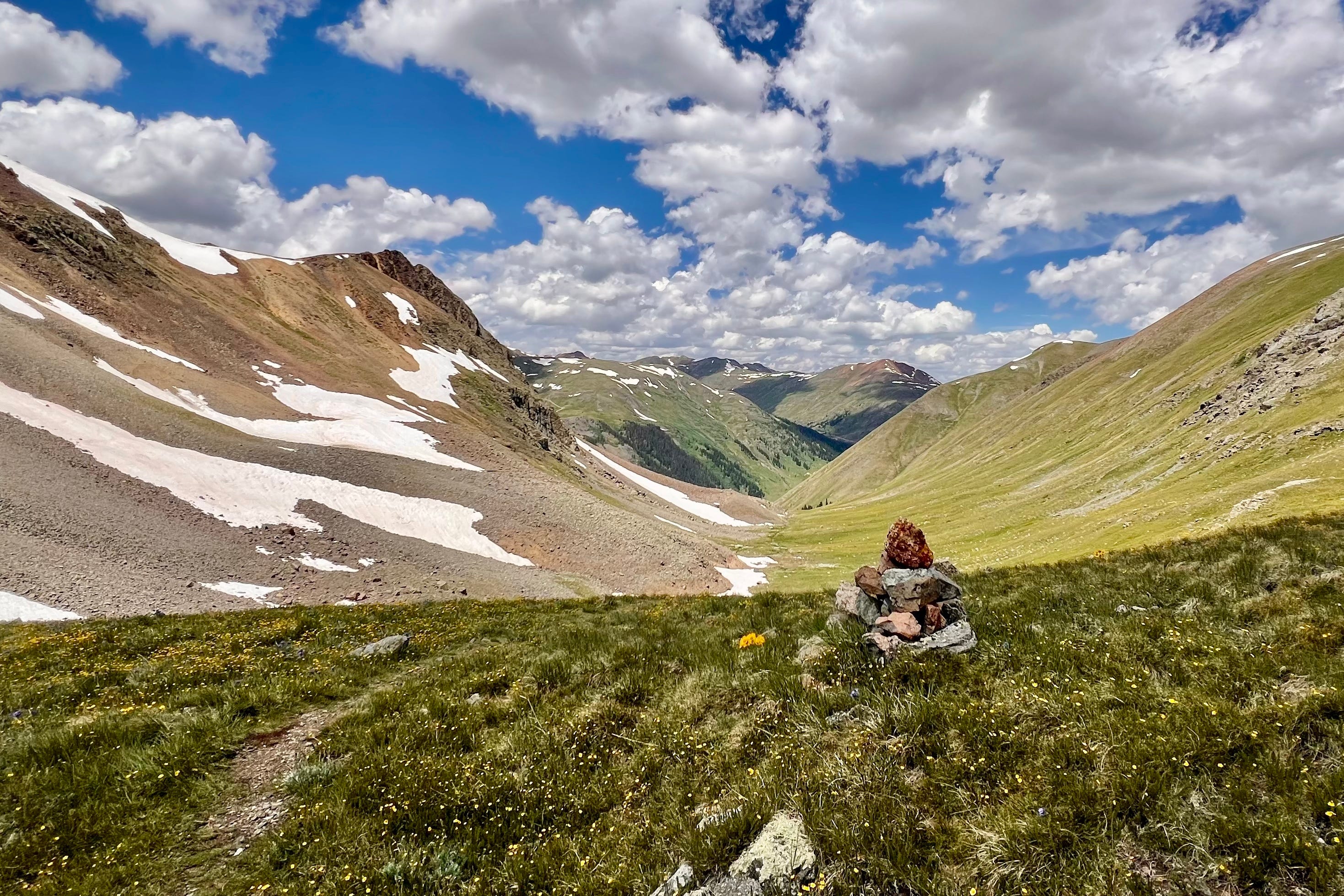
If you’d like to follow along with the race, there are many options — runner tracking, livestream commentary, etc. (more and better each year, it seems). The best way into all the options is through the race’s homepage: Hardrock100.com. The race starts at 6am Friday July 11. We’ll all be wearing trackers, so (if they’re working) you can watch our progress around the course. My race number is 113.
On my feet:
Trail Toes lube (a heavy slathering)
XOSkin toe socks
Darn Tough wool hiking socks
Topo Terraventure 4 shoes (lightly broken in, ~100 miles)
On my body:
Salty Britches lube (for the britches area)
Saxx underwear
Prana Zion shorts
XOSkin short-sleeved T
Path Project Pyrenees sun hoodie
Outdoor Research sun hat
Garmin Enduro 3 watch
Method Seven Silverton Trail26 sunglasses
Ultraspire Zygos 6
70-oz reservoir w/hose
filter bottle
Black Diamond Z-poles
Petzl Swift RL headlamp w/extra batteries
Black Diamond Spot headlamp w/extra batteries
Arcteryx vest
Berghaus ultralight rain shell
Patagonia hard shell
Sub-4 thin snookie hat
Ibex wool snookie hat
gloves (the old army polypro glove liners)
Swiss Army knife
hard flask (for cup-less aid stations, mixing LMNT, etc.)
first-aid kit (vet wrap, tape, band-aids, lube)
emergency bivvy
rain pants (maybe)
small washcloth (for cooling in creeks, etc.)
t.p.
iPhone
fuel, Vespa, and LMNT refills
Coke and beer (both have proved their value in past races)
shin braces
massage stick
back-up clothing: XOSkin shirt, Mt. Hardwear sun hoodie, Hellgate shirt, extra socks
back-up shoes: one pair each of Inov-8 Trailfly G270s, Topo Terraventure 4s, Altra Lone Peaks
(Note: the shoes and socks and clothing are emergency back-ups — I’m not planning to use any of these)
repair kit: duct tape, tenacious tape, zip-ties
Leatherman
soccer sideline coat (instant warmth at cold aid stations)
Comments
Nothing yet. Say the first thing.
Sign in to join the conversation.