
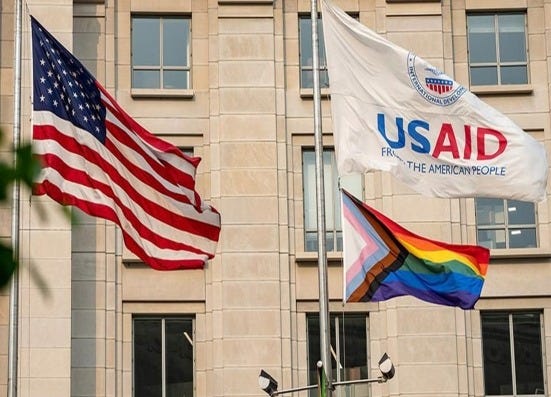
They already know what we are.
The activist in Kampala who stopped refreshing the funding portal in March 2025 knows. The man in Mombasa who found other arrangements, because he had no choice, knows. The organizations across forty-two countries that received stop-work orders overnight and never got a phone call back know. They processed this faster than we did, because they couldn’t afford not to.
They know what abandonment looks like. They know what a broken promise looks like. They know the difference between a country that failed them and a country that revealed itself. They figured out which one this was.
The question this essay asks is not what happened to them. It is whether we know what happened to us.
Before we say a word about Uganda, or Russia, or criminalization abroad, we have to account for what we’ve always been at home, a reality that the eighteen months since the 2024 election have brutally confirmed. This is not a piece about what America used to stand for. U.S. support for queer people globally was always selective, often strategic, and entangled with interests that had nothing to do with the people it claimed to protect. The rainbow flags on embassy poles were real. So was the calculation behind them.
What is different now is that the performance has ended. And when the performance ends, you find out who believed it.
Not them.
Us.
Each generation inherits a moment it cannot forget.
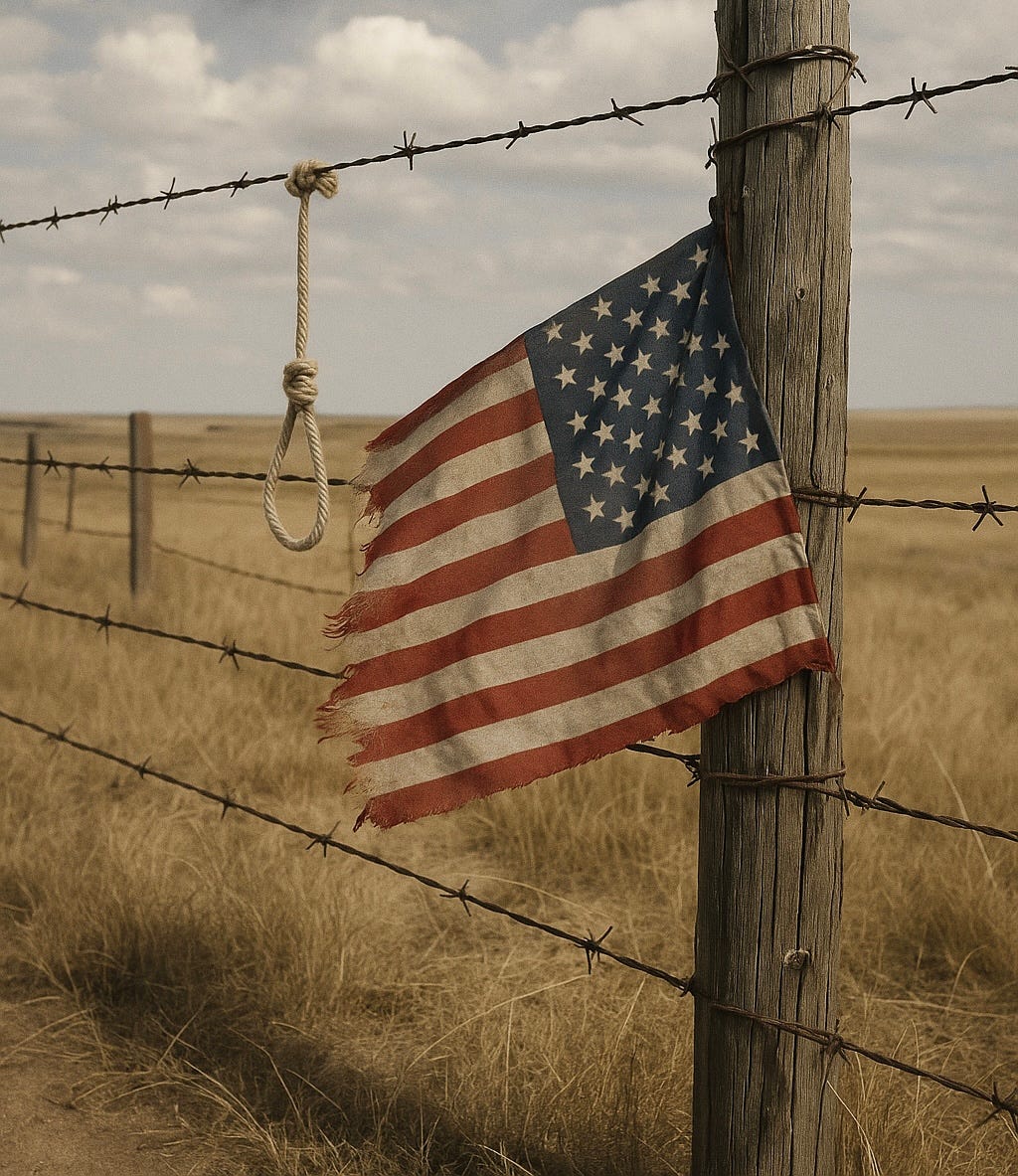
For mine, it was October 7, 1998. The day Matthew Shepard was found tied to a fence in the Wyoming prairie. Beaten. Pistol-whipped. Left for eighteen hours. Mistaken for a scarecrow until someone looked close enough to see a person. He died six days later.
I was in college then, like so many others who had come West chasing something that felt like safety. We chose schools in places like Missoula, Boulder, Humboldt, towns with clean rivers and progressive reputations, where the brochures promised you’d be welcomed and seen. We believed it, or we wanted to. And then came Laramie.
Matthew wasn’t trying to make a point. He was just at school. He went to a bar on a Tuesday night. He met two men who offered him a ride. He was honest about who he was with the wrong people in the wrong county, and that was enough.
That was the part none of us could sit with. You didn’t have to march. You just had to exist, and be truthful about yourself, and they would find you.
We told ourselves Laramie was exceptional. It wasn’t. It was the logic of the whole country, concentrated into one night and one fence, visible enough that we couldn’t look away. We passed the Matthew Shepard Act ten years later. We put a president on television who said our names. We raised flags. We wrote toolkits. We told a story about who we were becoming, and we told it long enough and loudly enough that some people built their entire survival strategy around it.
In 1978, Harvey Milk was shot in City Hall. In 2016, forty-nine people were gunned down at Pulse in Orlando. In 2022, five more at Club Q in Colorado Springs, and that same year, a gay Afghan student named Hamed Sabouri was tortured to death by the Taliban, who sent the video to his partner. In 2024, Nex Benedict, a nonbinary sixteen-year-old in Oklahoma, was beaten in a school bathroom. Days later, they were dead. The medical examiner ruled it a suicide. Oklahoma’s government said it wasn’t a bullying case. The school had been warned for months.
The thread running through all of it is not exceptional hatred. It is ordinary institutional failure, dressed up repeatedly as something no one could have predicted, and then filed away.
We are very good at filing things away.
The United States was never a reliable protector of queer people globally. That needs to be said cleanly before anything else. U.S. support for LGBTQI+ organizations abroad was real in its material effects and compromised in its intentions. It arrived with conditions, came bundled with geopolitical interests, and disappeared when it became diplomatically inconvenient, as U.S. Ambassador Daniel Foote learned in Zambia in 2019 when he was recalled for criticizing a fifteen-year prison sentence handed to two men convicted of consensual sex. He called the ruling horrifying and condemned the Zambian government’s use of law as an instrument of moral punishment.
Within days, he was on a plane home. Not backed. Recalled.
Zambia’s foreign minister went to the BBC to explain why:
“You cannot ask a government to make a decision at gunpoint.”
Defending LGBTQI+ people was reframed as coercion. The Trump administration, unwilling to contest that framing, folded. The message to every other diplomat in every other posting was clear: queer lives abroad are not worth a bilateral relationship.
But even compromised protection is protection. Even imperfect cover is cover.
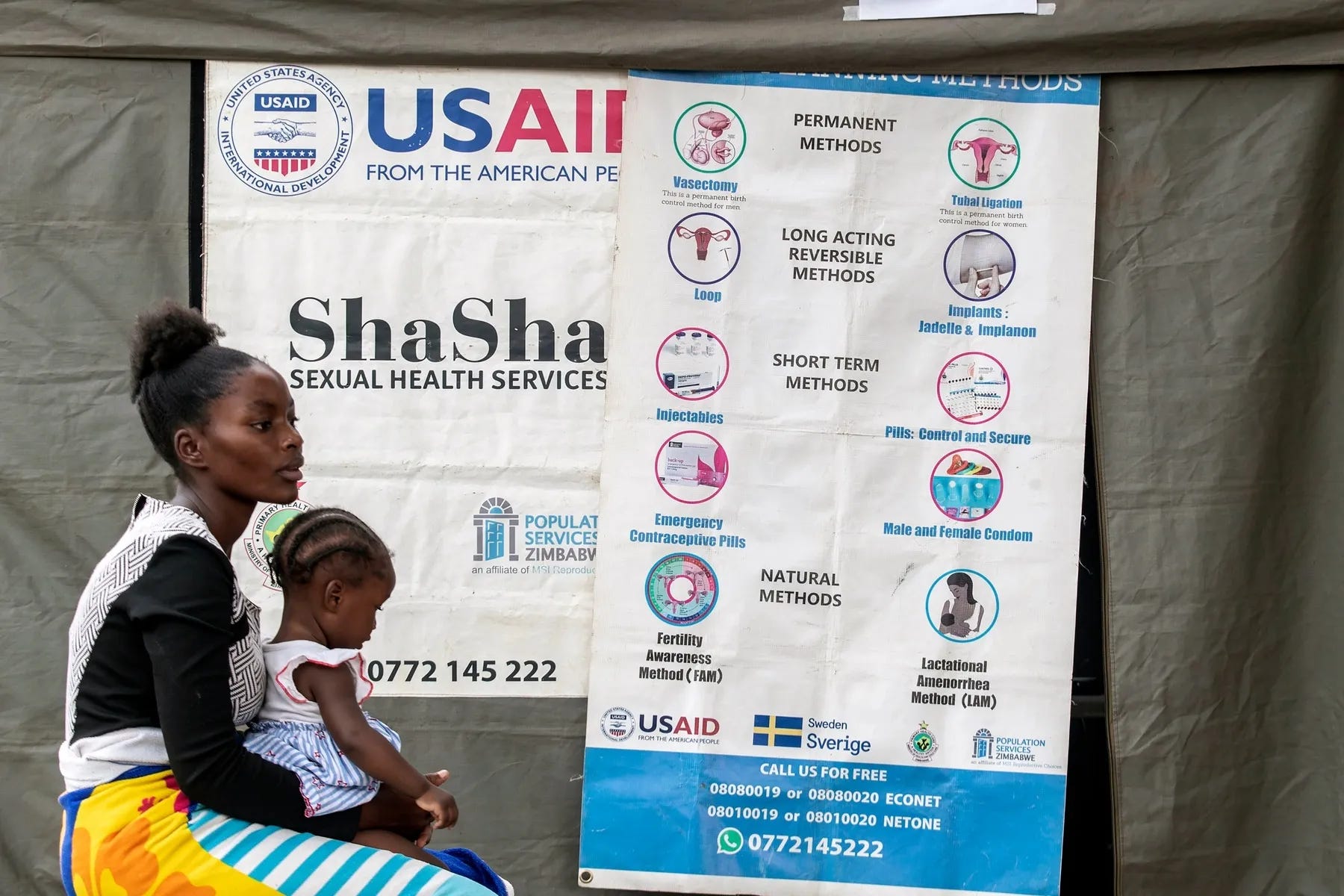
Outright International was forced to suspend 120 grants across forty-two countries overnight in January 2025. Programs covering legal aid, economic livelihoods, HIV prevention, and mental health support, cut in a single stop-work order with no transition plan, no final disbursement, no explanation. Within three weeks, 58 percent of organizations surveyed across thirty-five countries had already laid off staff or shut down programs entirely.
In Kenya, where roughly 41,500 health workers had been U.S.-funded, many faced immediate layoffs. ART clinic operations were disrupted. PrEP access collapsed. HIV testing, outreach, and peer-led services went with it.
A man in Mombasa told a reporter he could no longer protect his HIV-negative wife. His five-year-old son’s school meals, subsidized through a U.S.-funded program, disappeared the same week. He was not waiting for help when he said this. He was describing what he had already learned to live without. That distinction is the whole story. There was no suspended hope. There was assessment, adjustment, and survival without illusions about whether anyone was coming.
In Hungary, parliament passed constitutional amendments in April 2025, invoking child protection language to ban public LGBTQ events including Budapest Pride. Orbán announced this with the explicit observation that the Americans had called their ambassadors home. He was not gloating. He was reading the landscape accurately and acting on what he read.
In Lesotho, an LGBTQ activist was murdered in 2025. In the Pacific, a USAID-funded program pushing for legal reform in Tuvalu, Tonga, and Papua New Guinea, where six island nations still criminalize same-sex relations, was paused without warning, erasing years of legal momentum in countries that had no domestic alternative and no one else to call.
The Netherlands, previously the largest government donor to the global LGBTQ movement, had already cut development funding by 70 percent in late 2024. The UK, Switzerland, and Belgium followed. Rights-focused foreign assistance is projected to decline by up to $1.9 billion annually by 2026. The American withdrawal did not happen in isolation. It licensed a broader divestment that was already waiting for permission.
Human Rights Watch titled their May 2026 assessment of the damage “Every Autocrat’s Dream.” That is not rhetoric. It is the documented conclusion of a forty-two-page report on what happened to human rights investigations, victim support networks, and civil society organizations across sixteen countries once the funding stopped and the diplomatic cost of repression dropped to zero. Sarah Yager, HRW’s Washington director, put it plainly:
“The foreign aid cuts have made it harder to document human rights violations, protect communities at risk, and hold human rights abusers to account.”
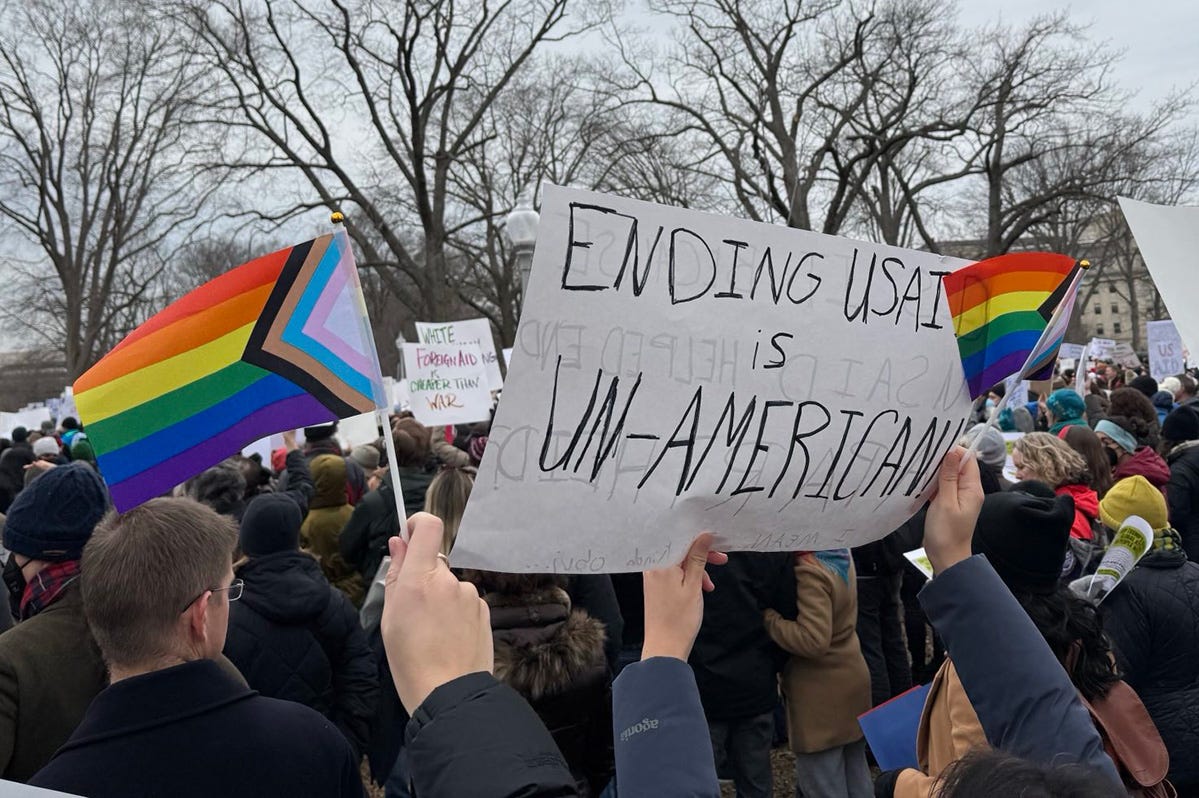
You do not need a formal declaration to destroy a movement. You need a Tuesday and a badge deactivation system.
In the months after January 20, 2025, the offices once tasked with protecting LGBTQI+ people inside the U.S. government were quietly emptied. Entire teams at USAID dissolved. Civil service staff placed on forced leave. Websites detailing gender inclusion in education and healthcare vanished. Pride flags, inclusion stickers, signs that said “Everyone’s Welcome,” stripped from workstations on leadership orders. No press conference. Just administrative execution.
One of the first casualties was a man I’ll call Andrés, not his real name, used here because the climate he was fired into makes his real name a liability, which is itself part of what this essay is documenting. A gay man, third-generation deaf American, who had spent a decade at USAID building disability-inclusive education programs for youth across three continents. He held a public service medal for it. He had helped institutionalize Universal Design for Learning in dozens of U.S.-funded school systems across Africa, Latin America, and Southeast Asia. He believed federal service could be principled. That inclusion was a promise, not a performance.
His office was shuttered on a Tuesday. No warning. His badge stopped working before his team finished clearing their desks. He didn’t get fired. He got processed out of existence: name off the directory, email bounced, a decade of work scrubbed from the federal record as if the children it reached had never needed it.
He had the medal on his desk when they cleared it out.
That medal is the essay. Not the executive orders. Not the rhetoric. The object sitting on a desk in a building where a man spent ten years doing serious work in good faith, and the fact that no one thought to hand it back to him when they deleted him.
Federal employees fired for leading diversity workshops. Public health staff silenced for using inclusive language. Gender identity reclassified as delusion by executive order. LGBTQI+ data scrubbed from suicide prevention platforms. Trans student protections under Title IX rescinded. USAID officially dissolved on July 1, 2025. And by executive decree, the administration expanded the global gag rule to explicitly bar any organization receiving U.S. aid from doing any work touching transgender rights, anywhere in the world, as a condition of funding.
None of it happened in secret. All of it happened in ceremony, with prayer, with cameras, with applause.
This was planned. The Heritage Foundation’s Project 2025 called gender ideology a national threat in three hundred pages of single-spaced policy language, published as a blueprint back in 2023. Pastors laid hands on the president when he signed the first orders. Commentators called it the end of pronouns and they were laughing when they said it.
The part that should keep us up is not that they hate us. It’s that they organized.
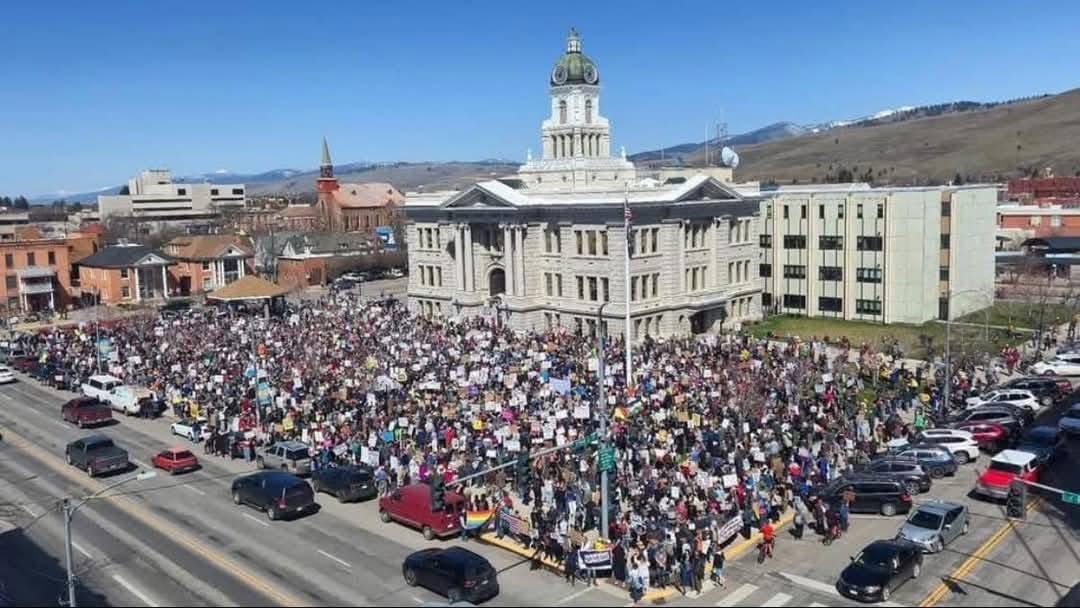
Last year I called this piece a siren. I said June 2025 would be the last Pride Month before the dismantling.
I was wrong about the framing. It was the first Pride Month after the reveal.
The reveal being this: we were always closer to Laramie than to the story we told about ourselves. The flags and the toolkits and the embassy poles were real. So was the intention behind taking all of it down, organized in a blueprint published in 2023, executed in four months, celebrated in ceremony.
They knew before we admitted it. The organizations in forty-two countries that got the stop-work orders. The health workers in Kenya. The activists in Budapest watching their parade banned by constitutional amendment. The man in Mombasa who made other arrangements because he had no choice. They had already calibrated for the version of America that actually exists, because they couldn’t afford the version we kept selling.
Andrés knew too. He cleared his desk without his badge. The medal was still sitting there when he left.
The deeper damage is not in the numbers, though the numbers are real and documented and damning. The deeper damage is that we are no longer who we told ourselves we were. Not just to the world. To ourselves.
They figured that out faster than we did. Of course they did. They had more at stake.
They know what we are.
Do we?
By a former Foreign Service Officer who believes rights are not rights if they disappear when they become politically inconvenient.
Missoula, Montana
Comments
Nothing yet. Say the first thing.
Sign in to join the conversation.