
I arrived in Ireland seeking refuge on July 12th, 2025, on a day where settlers up north commemorate a 1690 battle where colonial Protestants overwhelmed Irish Catholics. This defeat led to a prolonged era of broken treaties, religious persecution and overwhelming oppression. It gave rise to the 18th century Irish expression ‘Cuimhnidh ar Luimneach agus ar feall na Sasanach!’ or ‘Remember [the Treaty of] Limerick and Saxon treachery!’
Remembering is a critical way we heal from treachery, by bringing together what has been purposefully divided through violence and oppression. If divide and conquer is the modus operandi of colonial conquest, bringing back together is how we heal. The severing of relationships and duties of care–to one another, to the land that supports our lives and to the entire web of life–is a dismemberment of the ancestral body of a people. The ancestral body is the ancient remembrance of people to place. It situates a people within a landscape, entangled in a host of mutually beneficial relationships.
Re-membering brings those pieces back into a whole, not just for one individual but for entire collectives of people and their more-than-human kin. This act of reintegration allows us to tell a different and new story, one of healing. The vehicle of remembrance is the story. And the story is woven through infinite threads. Here in Ireland, the story is so crucial that the ancient role of the Gaelic storyteller–or seanchaí–was a venerated position. Even today, they are the keepers of myths, legends, history and genealogies, who learn and pass down the stories through the oral tradition. When they pass to the Other Side, as the beloved storyteller Manchán Magan just did, they leave guideposts, indelible markings and doorways for those of us courageous enough to step through.
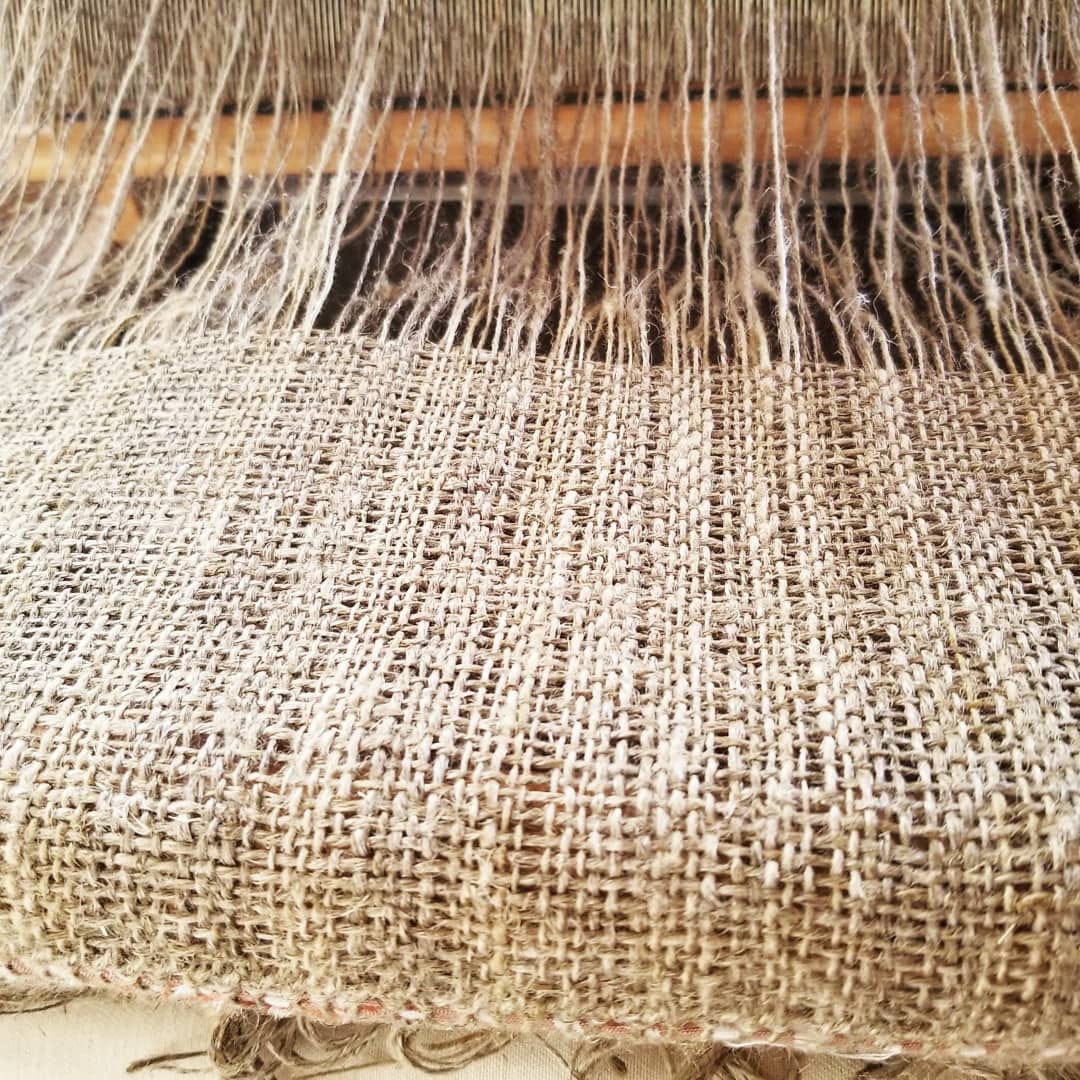
This summer, I sorted everything I owned in the place where I was born and packed what would go with me. I fled the US, where I had been persecuted and attacked for 20 straight months for the professional indiscretion of denouncing the genocide in Gaza, as a physician and professor of medicine at a preeminent university. For 23 years, my medical practice was based at the bedside of hospitalized patients, managing their acute illnesses, accompanying their grieving families, and teaching young doctors how to care. Inspired by that work, my scholarship developed to elucidate the long traces of colonialism’s impacts on the health of our bodies, our societies and our ecosystems. The university fired me in May and tried to destroy any future ability to earn a livelihood. My career-ending move was to say “Stop bombing hospitals” as a fascist wave hit the shores of Turtle Island, the land mass now called North America.
Israel’s genocide was clear to me from the moments I first heard the voice of Dr. Gassan Abu Sittah, who called me from Gaza’s operating rooms as the first hospitals were bombed in October 2023. Since that time, every hospital in Gaza has been bombed. Israeli military and even Israeli doctors continue to abduct, torture and murder my colleagues, as Israel starves Gaza’s children. The US sends the weaponry and puts forth a plan to ethnically cleanse the land, violently dissecting it from the people whose very bodies are made up of the land itself. Those Palestinian people’s own microbiota blur the lines between human and the more-than-human world in that specific place, through a web of relationships that are as ancient as the oldest human story. When people are forced out of their lands or even out of their ancestral living patterns—as with Irish Travellers, who were forced into public housing—the microbes that confer disease resistance and keep them healthy irreversibly change.
I am the child of immigrants from Punjab who left India after an estimated $45 trillion of wealth was stolen during the centuries of British invasion, leaving the people impoverished. I was born and raised in land stolen from California’s Indigenous people. By the time the US made its way West to California, during the same decades as the so-called Irish Famine or An Gorta Mór, the US stopped recognizing tribes and proceeded to slaughter whole family lines. The newly formed State of California paid mercenaries bounties to clear the land for the Gold Rush, to make way for a new white, Christian reality. Just like Israel in Palestine, these genocidal people came with proclamations that their violence was ordained by some God, some myth, some story.
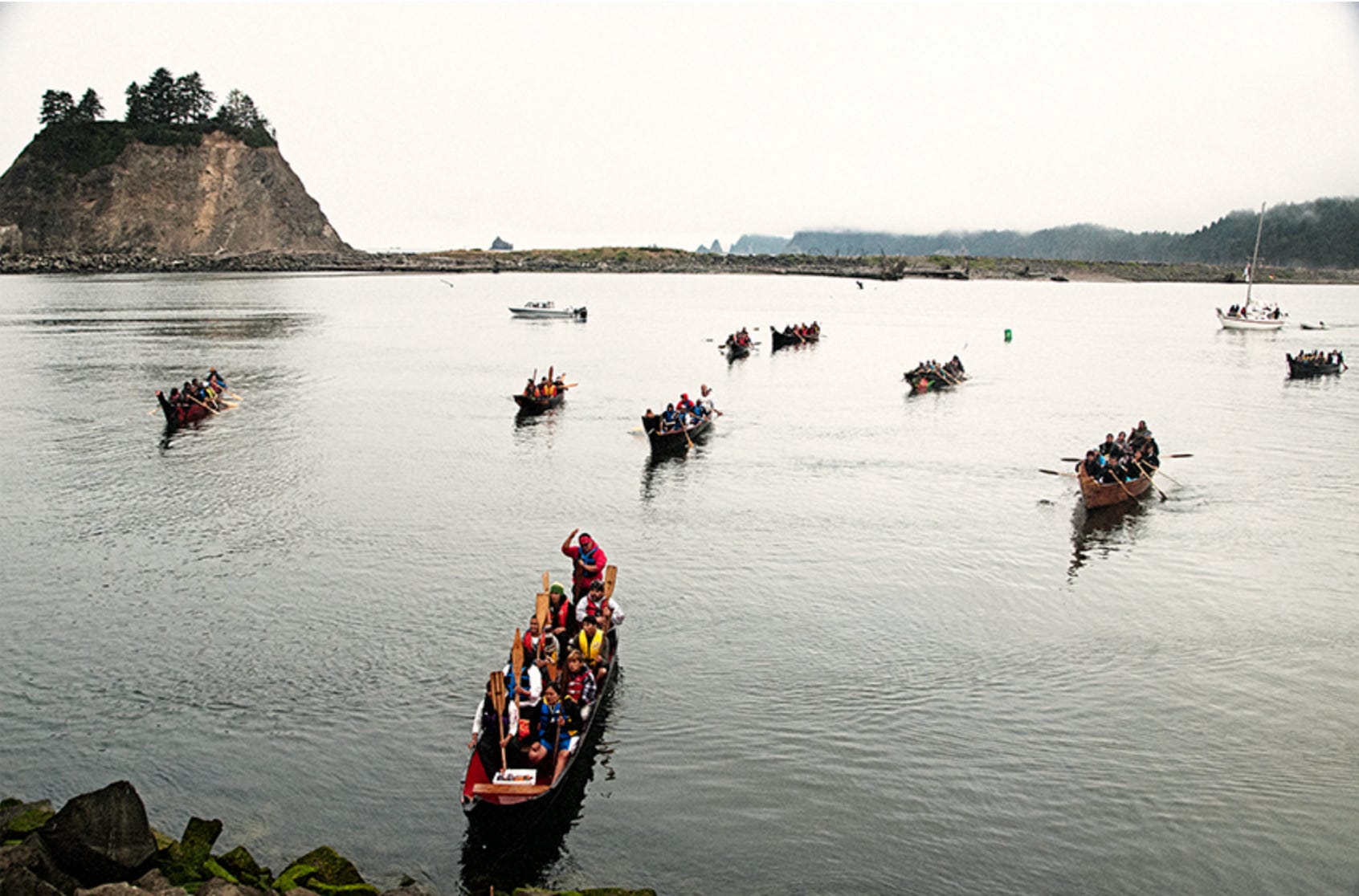
Stories are powerful medicine. Some stories harm, and others heal. Stories can limit our sense of possibility. They can also help us see beyond this one world to the multiple simultaneous worlds that exist at each single moment in time, folding into and onto one another, creating a mosaic of meaning and annunciations, of erasures and silence. Some stories have been purposefully extinguished from conscious human memory, but these threadbare places in the great fabric of remembrance still find substance in our dreams. California native artist L Frank Manriquez dreamed a Tongva canoe back into being after 200 years of disappearance from her homelands of what is now called Los Angeles. They have gone on a river journey together every year for the past 15 years. Turning air into substance, myth into form, dreams into canoes–this is the power of story.
In the new State of California, waves of settlers came, followed by railroad builders, farmers, politicians, doctors, and educators–the whole armory of colonial settlement in effect. For the places that were inhospitable to European people, cows were used to push out the tribes and forcibly inhabit the landscape. Sacred in my ancestral homeland, cows are honored for the life-giving and abundant force that is carried through their milk that flows, ready to feed any being in need. In California, these sacred beings became instruments of erasure, land theft and genocide.
Over the past 300 years, the cow’s heavy hooves have compacted the soil, causing massive erosion gullies and altered landscapes across California. At the time of conquest, the region’s soils were rich from over 10,000 years of Indigenous land stewardship that made that place one of the most fecund on earth.
The entire arrangement of relationships that conferred health and abundance has been changed by colonialism. A rich biodiversity gave way in a few short centuries to polluted waterways, air that makes you sick, and soils so damaged that the dirt aerosolizes every time the Santa Ana wind blows, sending hoards of Coccidiomycosis spores into the air. Debilitating “Valley Fever” rates continue to rise as a consequence. Colon cancer rates soar in people under 40 years old, a testament to a toxic food system. There are more guns than people now, and the leading cause of death for children is gun violence. A system built on death can only bring death.
Nothing there is sacred under the settler’s gaze. And everything is sacred to California’s Indigenous people, who continue to work quietly and diligently for centuries to get their Land Back. That story has long threads that require a multitude of participants–those who are survivors of the Californian genocide and those settlers who have awoken and actively participate in the unsettling. As we mend the threadbare places through speaking our dreams out loud around the sacred fire, the cloth takes on substance. The dream takes shape in this dimension. Land moves back. Dams are lifted. Salmon run again.
I come to Ireland now seeking shelter, to build a new life as an artist, physician, and dreamer of worlds of healing. After enduring months of racist harassment, abuse, targeting, death threats, rape threats and eventual firing, I landed in a place I hoped would offer me safety and solidarity. While I have been wrapped in the warmest welcome, I have also seen the hard traces of Ireland’s own colonial past, still very much alive today.
The day I arrived, in the north of the island, there was a massive bonfire topped with an effigy of brown people wearing life jackets on a wooden boat and a sign that said “Stop the Invasion.” As if Ireland were being invaded by brown people on boats (it’s not) or as if people seeking refuge from colonial terror are themselves “invaders”—they are not. The settlers of the north were burning effigies in acts of racist terror, the way that the KKK burns crosses in the American South. The tie between Ulster Scots who tormented the Irish and the founders of the KKK reveal an unbroken lineage of racist hate. The Israeli settlers burn houses in the West Bank. The racists in the UK and up north set refugee hotels aflame, goaded by settler racism in the US. These fires are all part of a connected colonial terror, often masked as celebrating culture or defending one’s way of life.
We live in a time of epidemic flattening of history, where oppressors recast themselves as victims to obscure the directionality of power. Rhetoric around “both sides” creates moral confusion that has enabled a genocide. Israel’s “right to defend itself” amounts to starving millions of people to death and shooting children in the head, as an international chorus of physicians working in Gaza have attested. As the people of Palestine are starved, their homes have been systematically destroyed, leaving approximately 2 million people unhoused, half of those children.
History rhymes, and stories have themes that emerge and reemerge like a motif across the cloth. During the so-called Famine in Ireland, an estimated 250,000 starving families were evicted from their homes. Some historians put that estimate at 500,000. “Wreckers” were sent to tear down the newly emptied homes, to make way for colonial land reform, turning Ireland into a feedlot and lumber yard for empire, an arrangement that persists today.
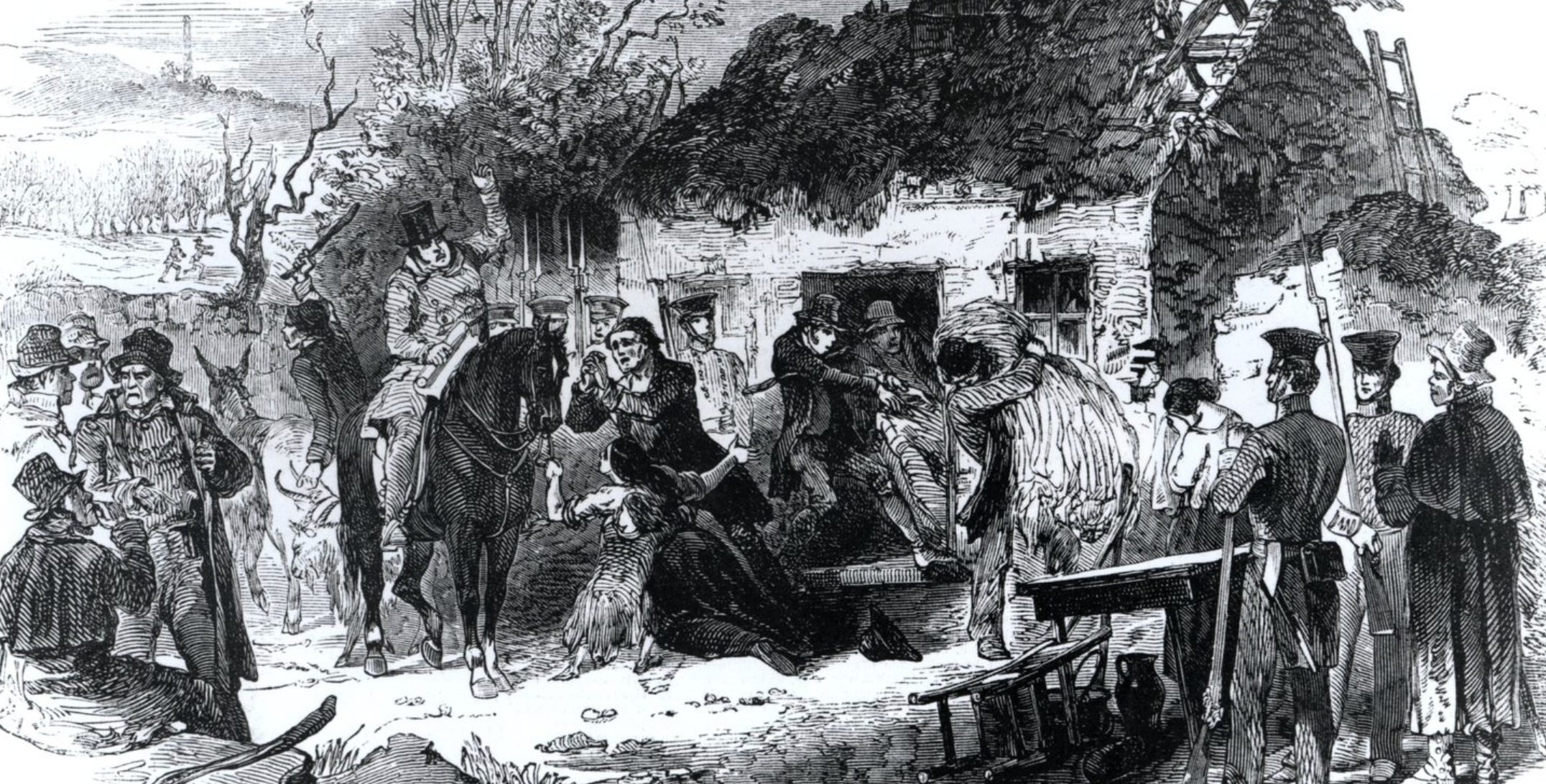
Whether we describe the defunct British Empire or the empire of colonial capitalism that persists as a web of extractive financial, corporate, national and military entities willing to commit genocide and ecocide while leaving a significant portion of the human population–most of them working class and poor people—at grave health risk, the word “empire” gets at the same rotten structure that must urgently be transformed. As men armed with guns and crowbars tore down Irish stone cottages while evicting the starving poor in the 1860s, there were reports of children and others too weak to leave crying out as they were buried in the rubble. Their cries are echoed across time in the fate of Gaza’s children buried under their destroyed homes, as the West imagines building a Riviera on top of their mass graves. In the parlance of empire, this is called “development.”
While today, Israel chokes the entry of food into Gaza, accelerating the annihilation of the Palestinian people, during the Irish so-called Famine, the British moved tens of thousands of tons of food to the colonial metropole, leaving the Irish people to starve. Surprisingly, one hundred and eighty years after this mass starvation, most food created in Ireland is still exported. Approximately 80% of the food consumed by Irish people is imported from abroad, resulting in a significant dependency on global markets that were established for empire. When increasingly disruptive storms damage and shut down the ports, like Storm Darragh recently did in Wales, Irish food security is at risk.
We live with this fragile architecture intact today. The Irish food system is dominated by the same financial structures that leave Irish farmers living on the edge of poverty unless they specifically adapt to the exigencies of the global market, rather than feeding their own people, generating community wealth, developing Irish food security and sovereignty and building a lively, culturally-rooted local food scene in the process. One recurring story to justify why Irish agriculture must focus on exports is that the land is unsuitable for growing fruits and vegetables. This is a convenient and untrue narrative that keeps a population serving financial interests off the island, instead of taking care of the farmers, land and people here.
For several decades now, the diets of Irish people have been taken over by ultra-processed foods most of which come from abroad. For the past decade, over half of the calories consumed by people come from ready-made meals, ice cream, crisps and the like. Rates of premature death rise in a dose-dependent manner with the amount of ultra-processed foods consumed. Simply put, the more ultra-processed foods you eat, the more years you shave off your life. As such, the people here are nutritionally starved, and the deep nutritional value of the Irish land is still leaving the island, echoing the vulnerabilities created during An Gorta Mór. When Ireland made school lunches free for all children, the sourcing of that food is currently from large multinational corporations and profit driven companies providing largely ultra-processed foods and leaving very little benefit for local farmers. Imagine the transformative structural impact of that money going directly to Irish farmers, through a care-based model rather than a profit-based model, to feed their own children whole foods. The Irish agroecology farmers group Talamh Beo articulates this profound impact in their local food policy framework.
With the current dynamics of the Irish food system, rates of chronic inflammatory diseases are on the rise. All the chronic inflammatory diseases I treat as a physician, such as cancer, diabetes, depression and dementia, are most expressed in people who are living with the ongoing trauma of colonial structures registering in the dismembered ancestral body. Those traumas trigger the damage signals in our own cells that lead to chronic inflammatory disease. History is alive in our bodies, in our soils and in our stories.
So how do we tell stories that heal? How do we tell stories that allow remembrance, in ways where we can hold each other in tenderness, utter shock and terror, until we come to the other side, metabolizing our individual and collective grief as we compost empire, so that we can walk together on this one planet in another way? How do we remember things we were forced to forget, the ways our ancestors knew how to bring people together in common purpose, to allow our culture to evolve with our changing circumstances, rather than remain recalcitrant, fixed to a static notion of self or nation that never existed, except in the oppressive imaginary of colonialism?
As I walk these unfamiliar streets and learn of Indian people assaulted by racists in Ireland this summer, friends reassure me that racism here is not structural. Perhaps the ubiquitous “It will be grand” is a trauma response storyline that emerged to reassure, from under what felt like the inevitability of the colonial boot falling on the necks of the people for some 800 years. Tell that to the 6-year-old Indian girl who was attacked while riding her bike in front of her Waterford home. To her, the sting is as immediate and as hard as the structures that enshrine impunity for her assailants. She and her community are just supposed to hope it does not happen again. Wishful thinking is no bulwark against fascism, as the situation in the US demonstrates.
I hear the casual racism expressed that immigrants are causing a housing shortage, as if the housing crisis was caused by poor brown people traumatized by colonial terror in their own homelands seeking refuge here, rather than neoliberal policies that have created two Airbnb short-term rentals for every student housing rental in Irish university towns. The expansion of corporate residential landlordship has sent people back onto the streets once again, rendering them homeless. The tech industry’s takeover of San Francisco did the same thing to our communities some twenty years ago. They are the modern day Wreckers. Rates of homelessness skyrocketed. As with the so-called Famine, the issue was never a shortage: it was distribution. Housing is not in crisis. Our policies around caring for people and the earth, however, are.
Mass evictions and even the modern understanding of “landlord” are colonial realities invented in Ireland. So too are the brilliantly organized rent strikes, boycotts and land protests. Quantum decolonial theory suggests that for every colonial action, there is a greater and opposing force for liberation.
Ireland is still in the active process of reclaiming its whole self–its housing, healthcare and food, its governance, its forests, its 6 counties, and its very remembrance, out of the dead clutch of colonial structures in a state of rigor mortis, back into the embrace of people actively remembering the names, the syllables, the stories, the trees, the holy wells, and the songs. In short, they are breathing life into the sacred. These people are gathering around ancient fires, which are now reignited. They are reawakening ancestral ways of honoring this particular living, breathing land and all whose bodies make up the soil upon which we stand, blurring the lines between life and death, between our insignificant human existence and the more-than-human world in which our lives are situated.
These processes of remembering are ongoing. As some well-intentioned friends move to hush me and advise me not to say the word “colonialism” and to just focus on moving forward, I know as a physician that in order to heal, we must follow the Hawaiian proverb, “I ka wā ma mua, ka wā ma hope.” We must look back to move forward. We must have a correct understanding of the pathology at hand. We must name it, describe it and understand it, so that we can compost what does not serve healing and build a new kind of story together, a path forward based in care.
I arrive here now, humbled and energized, in my new home. I pick up my part of the thread, to weave what I can in this great tapestry of time, this epic story of service, this unraveling, this returning, this bringing back together that which has been severed so that we may heal, so that we might remember the depths of who we are. We all have our own thread to pick up and weave, in these uncertain times, as we create this particular story of the ages. How the story goes will be a testament of our individual and collective courage, clarity and commitment to those things that serve as a beacon for the future of humanity. One point of moral weight of gravity sits right here on this island and roars loudly, as if the earth speaks under our feet. May we have the courage to hear that story and weave it tightly into our own.
No posts
Comments
Nothing yet. Say the first thing.
Sign in to join the conversation.