
Hi and welcome to our newsletter!
135 miles across Death Valley, unbearable overnight heat, pavement hot enough to melt a shoe. In this issue, we’ve got the record-breaking run from Badwater 2026, plus new articles to help you train by heart rate and find your next great read:
What every heart rate zone is for, and how to find your own numbers
Ten running books worth a late night, every one a true story
Let’s get into it.

Easy run, long run, tempo, intervals: each one has a heart rate zone where it works best, and running it anywhere else changes what you get out of it.
We put together a chart covering all of them, along with how to work out your own numbers.

You can learn a lot about running from a coach. Sometimes you learn more from a story. These ten books are all true, and they cover the full range of the sport, from a four-minute mile to a run across a continent.
Pick one for your nightstand, and don't blame us when you're still reading at midnight.
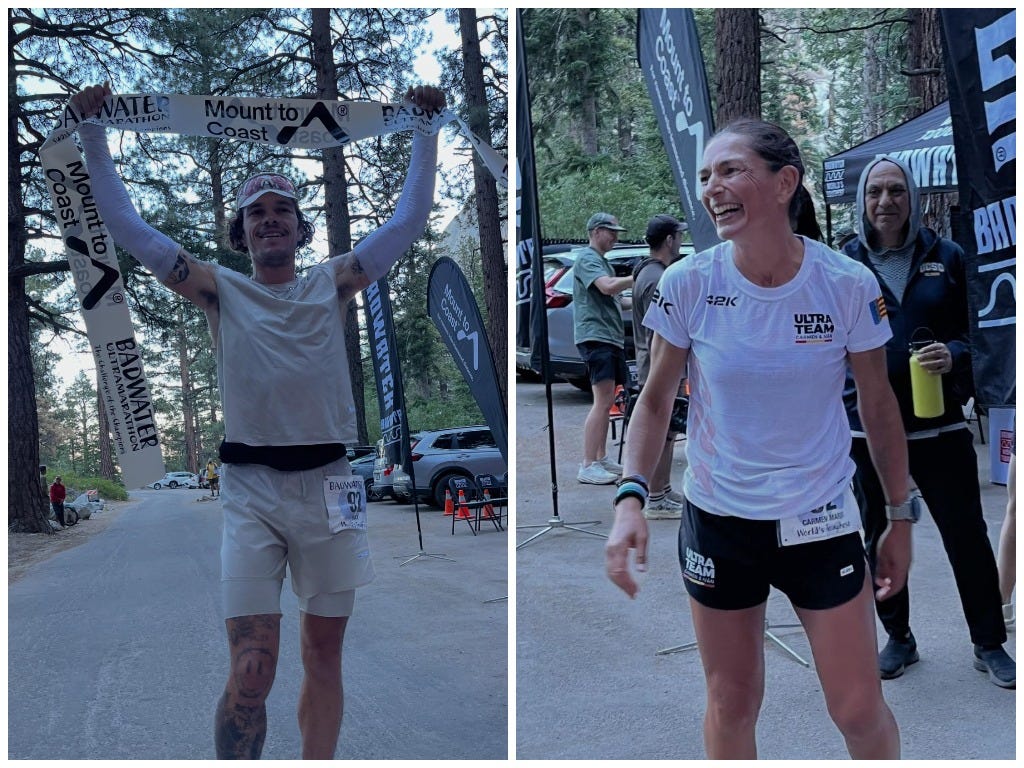
Max Jolliffe became the first person to run the 135-mile race under 21 hours. The woman right behind him nearly caught the old men’s record.
Badwater sends runners 135 miles across Death Valley in July, from the lowest point in North America up to the Mount Whitney trailhead, through overnight heat well above 40°C. On Tuesday, Max Jolliffe won it in 20:53:41, the first sub-21-hour finish in the race’s history and 39 minutes faster than the mark Yoshihiko Ishikawa set in 2019. The 34-year-old from California had never finished Badwater before.
Neither had Carmen Maria Perez, and she nearly stole the whole story. The 44-year-old Spaniard led through most of the desert and came in second overall in 21:05:32, less than 12 minutes behind Jolliffe. That took 39 minutes off Ashley Paulson’s women’s record from 2023 and, remarkably, landed more than 27 minutes under the old men’s course record too. It stands as the second-fastest time anyone has ever run at Badwater.

He says the race has outgrown the town that made it famous.
UTMB brings about 80,000 people into the Chamonix valley in a single week, and the town’s new mayor has had enough. François-Xavier Laffin, elected in March, told L’Équipe that most locals now resent the event, and he has already squeezed this year’s expo down to a single square.
August 2026 is safe, since registration closed before he took office, but he wants real change by 2027: fewer spectators, fewer night races, and far fewer runners crossing the area’s fragile nature reserves. His reason is the mountains themselves. He points to collapsing glaciers and says watching quietly is no longer an option.
Nothing is decided yet. The local authorities and UTMB will sit down in September or October to settle what the 2027 race looks like before registration opens.
Our top picks this week:
No posts
Comments
Nothing yet. Say the first thing.
Sign in to join the conversation.