
Getting rejected from a grant or opportunity is disappointing. Full stop.
It’s also, if you know what to do next, a key strategic step towards acquiring funding.
Most artists close the email, sigh or sulk, and move on. To do this, however, is to throw out the baby with the bathwater, so to speak. You’ve just spent countless hours on an application. You might have even consulted a grant writer. You put forward your best application possible. Still, that familiar email arrived.
I’m here to tell you, dear artists, that this is not bad news. It’s one step closer.
Every rejection is a doorway. The open call is often the only public entry point into a funder’s ecosystem. Regardless of the results, you’ve cracked the door. Your job now is to stay in the room. Here’s what that looks like in practice.
Before you do anything else, read the rejection email and the program guidelines one more time. Do they explicitly say they don’t offer feedback?
If not — ask for it.
Not to argue. Not to ask for a second chance. Just this:
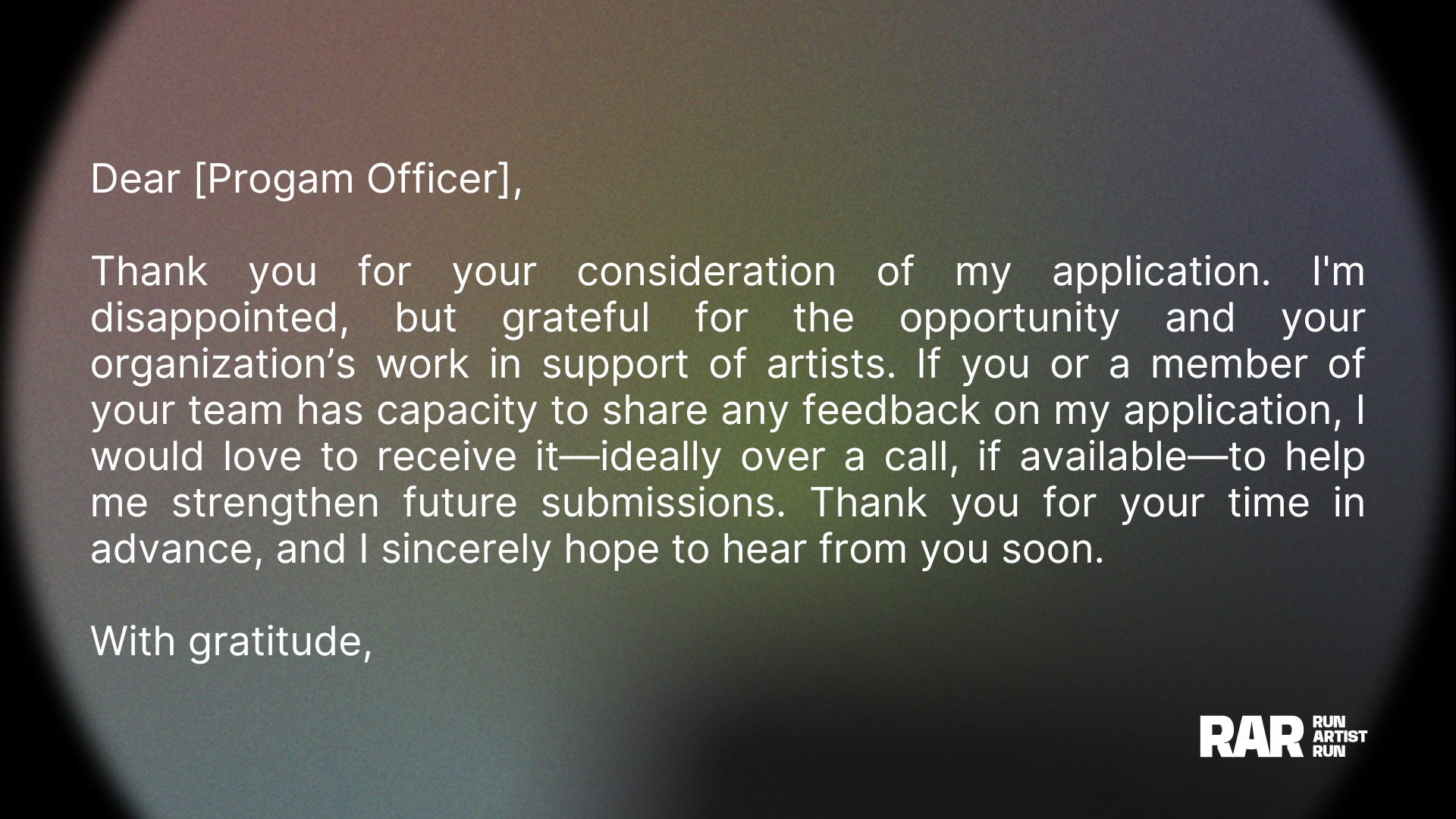
Why does this matter? Two reasons.
First, the feedback itself is useful. You learn how your application was actually read, which is often different from how you intended it.
Second, and more importantly: asking for feedback keeps the conversation open. A program officer who spends fifteen minutes with your application and writes you a note now knows your name. They recognize your seriousness, your kindness, or your ability to communicate effectively. They have a reason to remember you.
When you apply again the following cycle—and you explicitly implement the feedback you received—you are no longer a stranger to that organization. That is a real competitive advantage.
If they do say they don’t offer feedback, thank them and ask something else: Do they plan to offer the program again? How can you stay in touch? Send a link to your newsletter or social media. Make clear you intend to try again.
Every touchpoint counts.
This path is available to you whether or not feedback is. Think of it as the long game.
In applying to this program, you likely have received the program officer’s email. They know your name and something about your work. That’s a crack in the door. Your job now is to keep it open.
A few simple ways to do that:
Add them to your newsletter. Your newsletter is a living document of your developing practice. They now have a reason to care about it. Offer the link in your thank-you email—then go ahead and add them.
Follow the organization on Instagram. The organization, the program officer, the program director if they have a public account. Comment on their posts. Participate in their community.
Go to their public events when you can. Invite them to yours—via email or DM.
Let your work speak over time. If this program genuinely aligned with your practice, your work will continue to develop in ways that align with their priorities. Show that publicly. Not in a calculated way—just by doing your work and letting your communications tell that story.
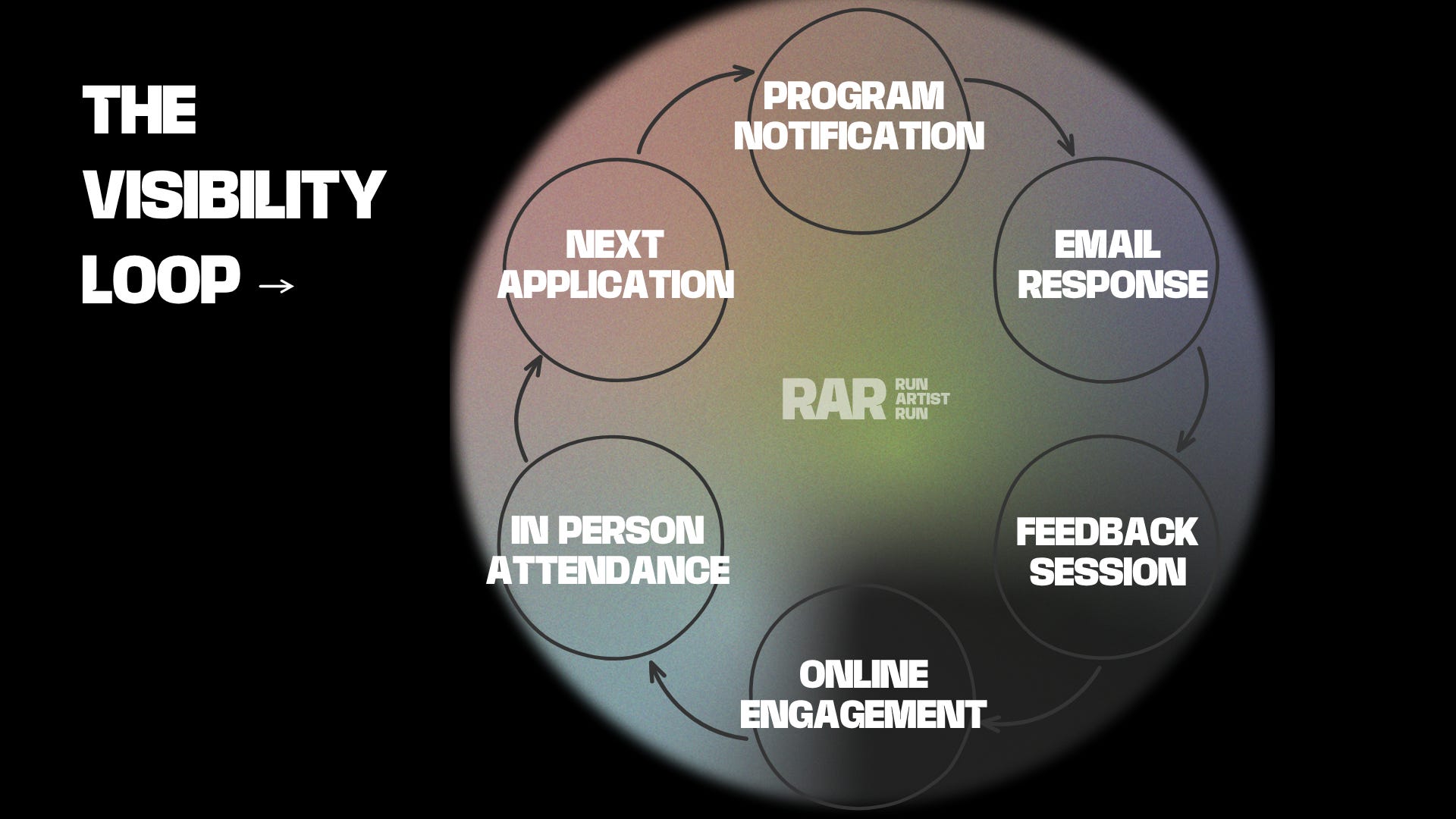
This is the strategy most artists don’t think of — and one of the most effective.
→ Screenshot the rejection. Tally up your numbers for the year. Post about it.
Some of the most resonant artist content online is when artists are honest about rejection—not bitterly, not as a grievance, but as part of the real story of sustaining a creative practice.
Done well, this kind of transparency does three things at once:
It normalizes rejection for other artists who are watching and experiencing the same thing.
It keeps your audience inside your process, not just seeing the wins.
It often generates direct support—people who feel connected to your story and your resilience are more likely to show up for you.
A few caveats worth naming:
Tone matters everything here. This works when it’s generous and forward-looking. It doesn’t work when it reads as bitter or accusatory. Don’t tag the funder. This isn’t about calling anyone out — it’s about the honest truth of what it takes to maintain an artistic practice, which includes a lot of rejection.
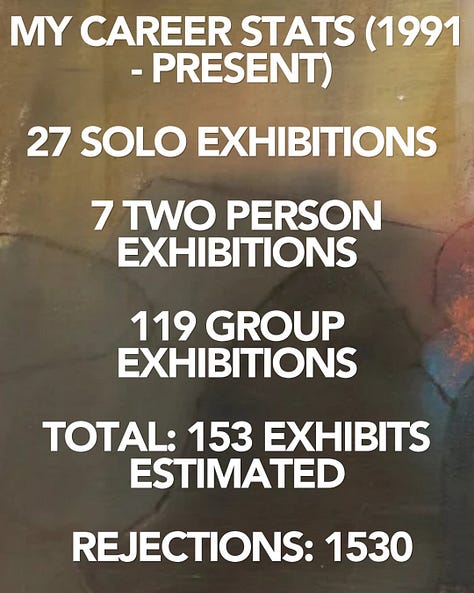
In April 2026, visual artist John Sproul, like so many others, received a rejection letter from the Guggenheim Fellowship. John has been keeping track of his “career stats” since 1991.
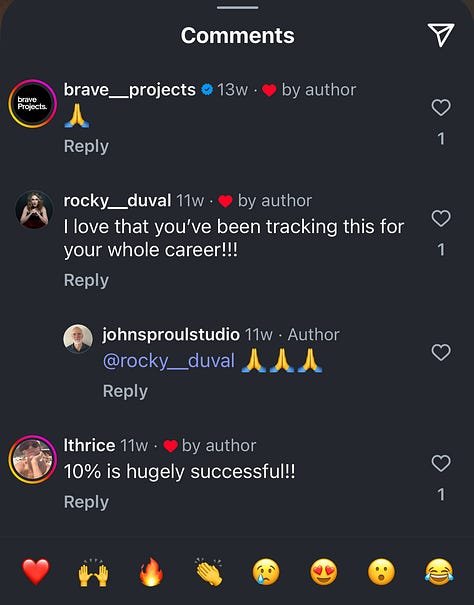
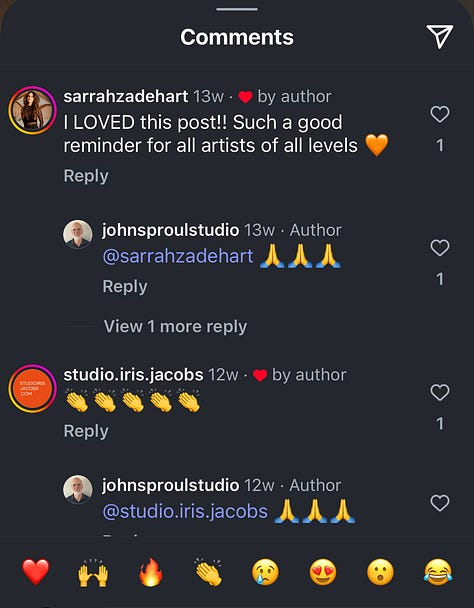
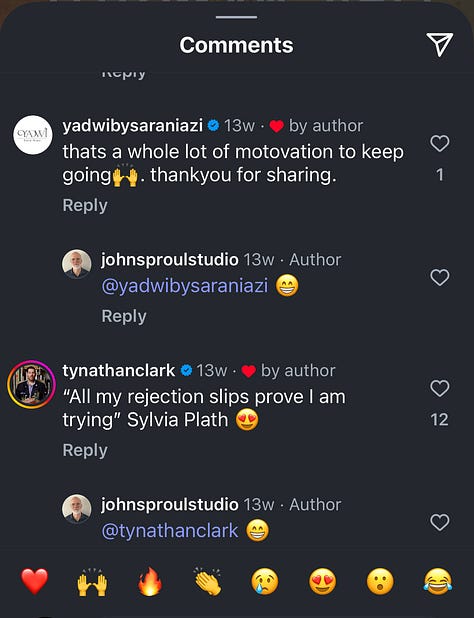
The season of Guggenheim Fellowship notifications gave him the perfect opportunity to seek community online, and share transparently about what it takes to pursue art professionally. The result was over 200 supportive and grateful comments, and expanded visibility for his practice.
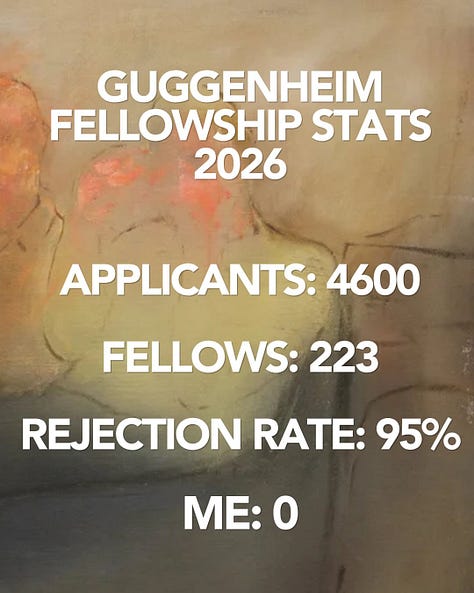
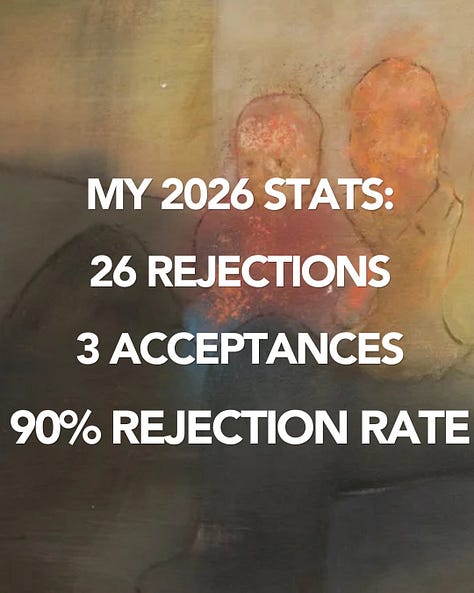
These three paths are not mutually exclusive. They work together.
Ask for feedback. Stay visible. Tell the story honestly.
A rejection is not the end of a relationship with a funder. For most artists, it’s the beginning of one—if you know what to do next.
Want help building a grant strategy that accounts for the long game — rejections included? Book a free 30-minute consultation with a RAR grant writer, subscribe to the Programs That Matter, or share this article with a fellow artist.
Comments
Nothing yet. Say the first thing.
Sign in to join the conversation.