
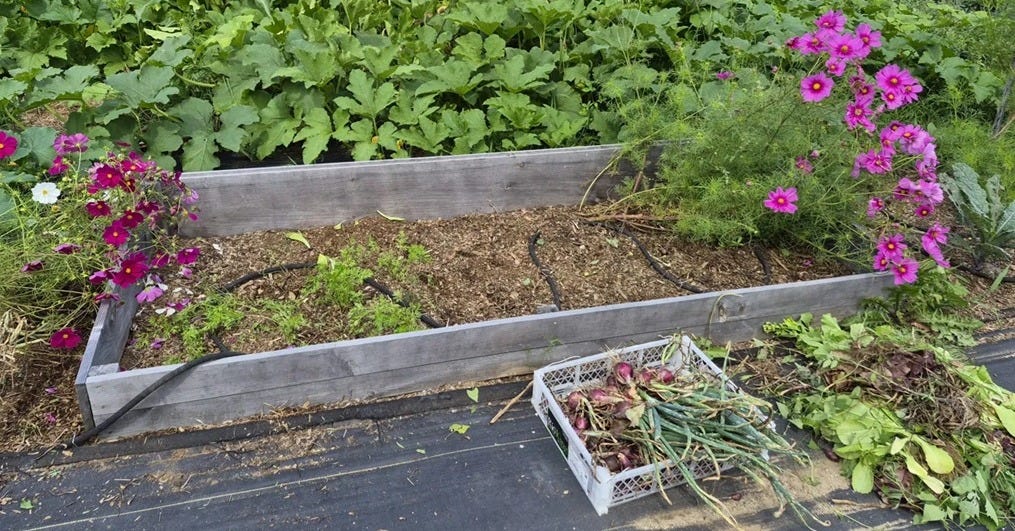
Pulling the onions from the bed, I did the math in my head—trying to decide what I might be able to plant in that spot next. My goal is two-fold: 1) to have a handful of crops I can harvest throughout the winter for fresh eating, and 2) to overwinter a few select crops that will give Runamuk a significant jump in production come next spring.
We’re in the third week of August now, still plenty of growing season left for the strategic gardener.
Here in western Maine, my Persephone Period starts around November 5th—that’s the point when daylight drops below ten hours and active plant growth all but stops until February. It’s a term coined by Maine’s own four-season organic grower, Eliot Coleman.
Coleman named the season after the Greek myth, the daughter of the harvest goddess pulled underground for half the year. Everything I put in the ground between now and then is racing that same date—but this is where a little strategy comes into play.
By setting yourself up with a few simple pieces of equipment, you can significantly extend your growing season and enjoy fresh produce from your own garden all winter. What’s more, you can do this even without any sort of greenhouse or high-tunnel.
In seasons past, by the time we reach August I’ve been too burnt out or too overwhelmed to think about fall planting. Now that I’m not spread so thin and the garden is my main focus, I find myself gung-ho to implement practices and methods I’ve long known about, but never been able to test for myself. That, in conjunction with my renewed determination to feed both my family and my community year-round, even if only on a small scale, has me fired up about fall planting this season and I’m making it happen come hell or high water.
Overwintering crops without a greenhouse, high tunnel, or “walipini” isn’t the outlandish concept you might imagine. For years, Eliot Coleman has been successfully overwintering a good many crops right here in our northerly region, at Four Season Farm in Harborside, Maine. He’s also the author of The New Organic Grower, Four-Season Harvest, and The Winter Harvest Handbook—pretty much required reading for market growers in cold climates.
Having spent five years in their Call Center, I know that Johnny’s Selected Seeds employs these same methods to successfully overwinter a variety of crops at their research farm in Albion, Maine. Farmers across the state
are using these same methods to extend their growing seasons and produce more food for their local communities—so why not me and you?
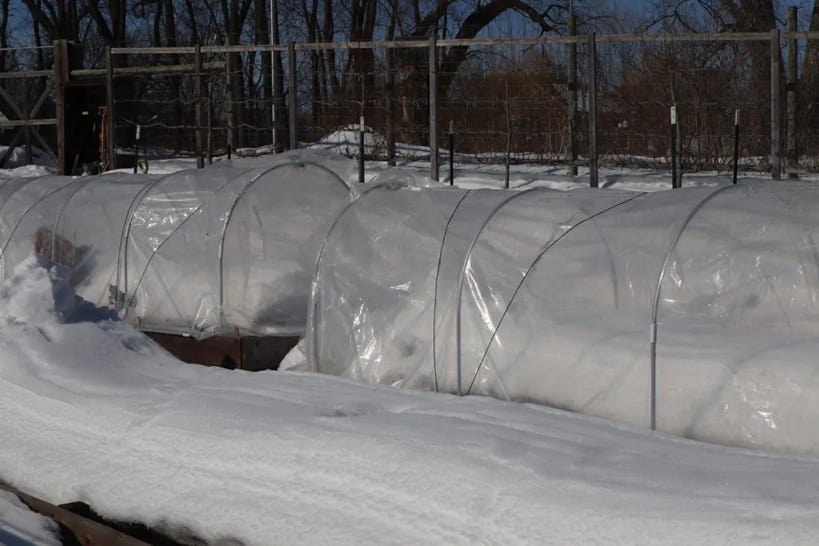
Neither of these strategies requires a heated greenhouse or a high tunnel. A cold frame or a simple low tunnel is enough to get most of these crops through a Zone 4 winter.
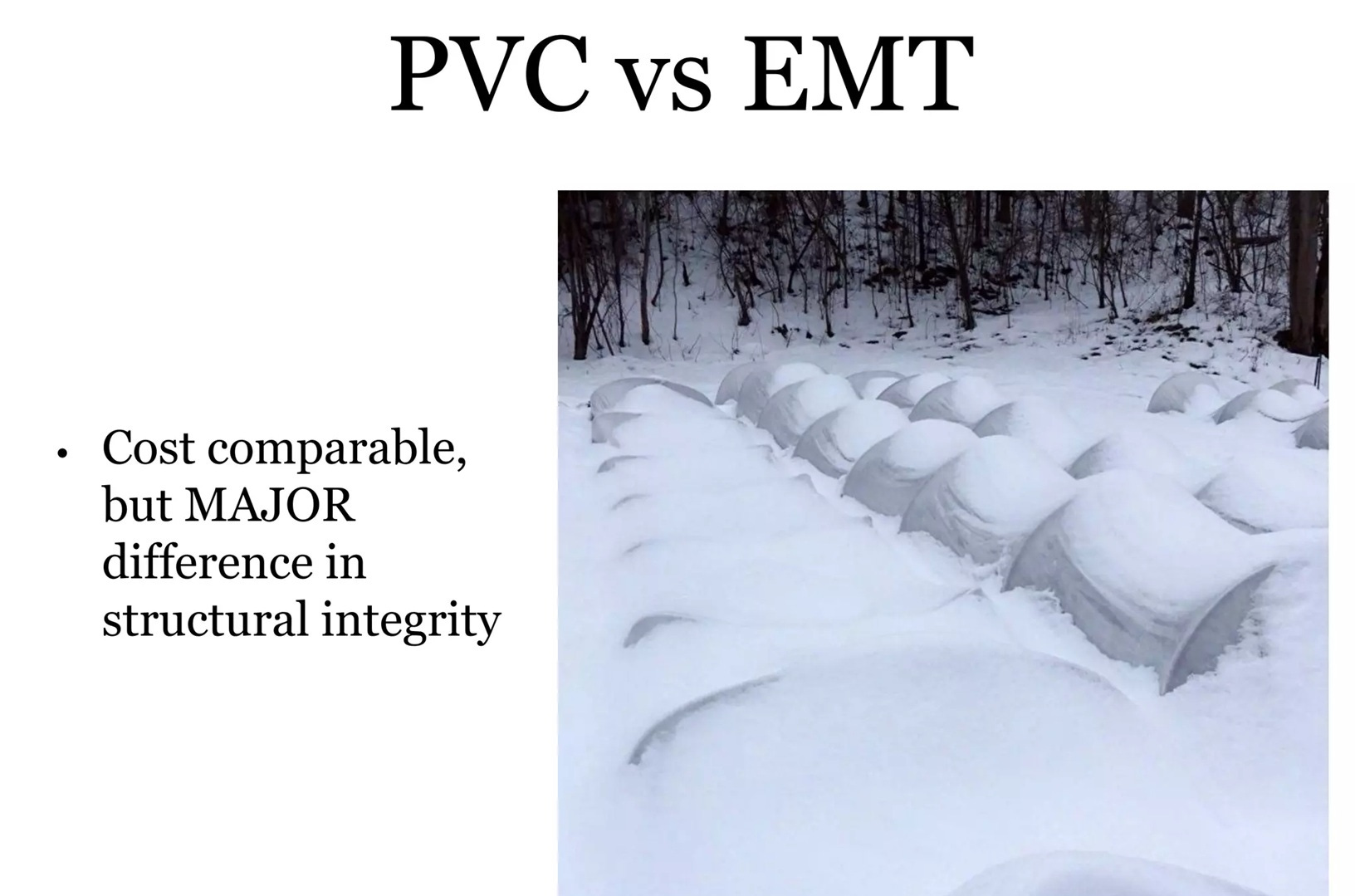
The key is running a two-layer system. The inner layer is row cover—Agribon AG-30—draped over 9-gauge wire hoops, which gives four to six degrees of frost protection on its own. The outer layer is greenhouse film stretched over EMT conduit hoops, anchored on all sides and strapped down with cord so a hard winter wind can’t get under a flap and rip the whole thing loose. Skip PVC for the hoops if you’re in a cold climate—it gets brittle and cracks in freezing temperatures in a way conduit doesn’t.
Between the two layers, you’re creating a buffer zone—not a warm space, exactly, but a stable one, where the swings between day and night temperatures are less extreme than they are in open air. That’s often the difference between a crop that survives and one that doesn’t: not warmth, but consistency.
A University of New Hampshire study measured this directly: tunnels covered with both row cover and a layer of plastic ran more than 20°F warmer than the outside air, and the top inch and a half of soil inside never froze all winter, while the ground outside the tunnel froze solid. That’s the whole point of the second layer—not warmth exactly, but enough of a buffer that hardy crops can sit through a Zone 4 winter without freezing solid themselves.
What you’ll need:
Row cover (Agribon AG-30 or equivalent—protects to roughly 26–28°F)
Hoops: 9-gauge wire for the inner layer, EMT conduit for the outer
Greenhouse film - available in a variety of dimensions. Whatever you choose, I recommend 6mil UV resistant clear plastic.
Anchor weights—rocks, bricks, sandbags, whatever you’ve got on hand
Cording, to strap the outer layer down tight
This list is geared toward Zone 4 growers, and tailored to what we can still put in RIGHT NOW in the third week of August to meet one of these two goals. If you’re reading this from Zone 5, 6, 7, or beyond, your Persephone Period will fall on a different date—the U.S. Naval Observatory’s Duration of Daylight table will help you find yours.

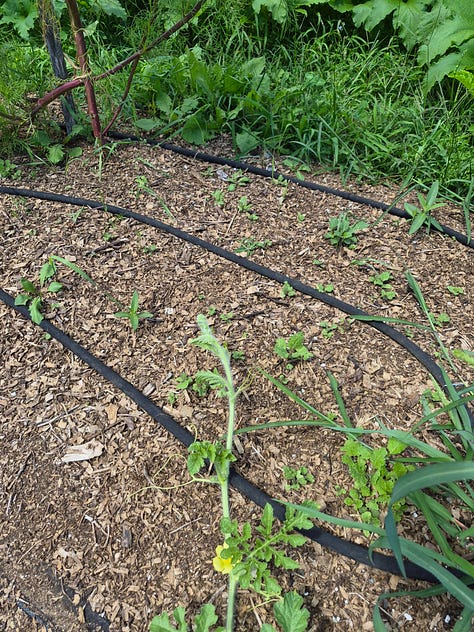
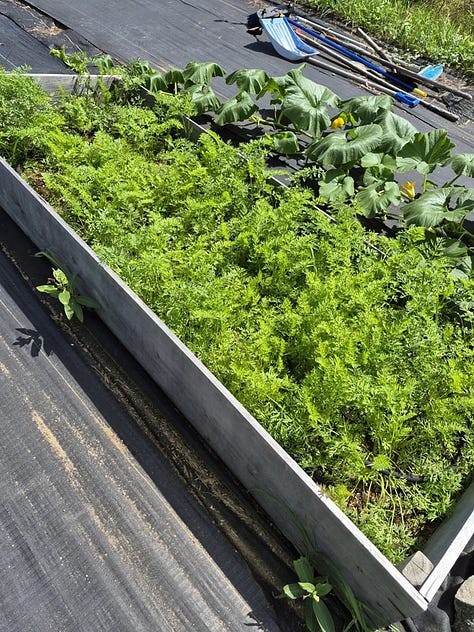
What’s still open, in order of how soon the window closes:
Lettuce, full-size—sow by August 27. This one’s closing fast, and it’s the least cold-hardy thing on this list, so it needs to be further along before hard weather hits.
Swiss chard, full-size and turnips—sow by September 3.
Tatsoi—sow by September 10.
Spinach—sow by September 17. Spinach actually germinates poorly in warm soil, so if it’s still hot when you sow, water first to cool things down.
Lettuce, baby leaf, Swiss chard, baby, and radishes—the most forgiving of the bunch, with windows running into late September and, for radishes, up to October 1.
If you only grow one thing, make it the greens. They’re the most reliable payoff for the least amount of effort. Scatter a few radish and turnip seeds across the bed, and you’ll have something crisp and peppery to harvest in a season when you’d otherwise be eating from the freezer.
This is where I’m the student, not the teacher. For early spring harvesting, you’re not growing to size—you’re getting the crops established just enough to survive dormant, then harvesting weeks or even months earlier next year than if you wait for spring planting to start the clock.
Carrots—sow by August 27. Napoli is the standard Maine overwintering carrot because it’s the variety behind Eliot Coleman’s own “candy carrots”—a Nantes type bred to hold up under cold rather than just tolerate it, and cold is what turns the starch to sugar. Be aware that carrots sown this late in the season take noticeably longer to mature than the seed packet’s summer number suggests, so get these in ASAP.
Onions, full-size—sow late August through early September, transplant late September into mid-October. Target four to five leaves before the ground freezes hard—much less than that and they won’t have the reserves to survive; much more, and they can bolt come spring instead of bulbing. This is the most time-sensitive item on either list, and the one I’d prioritize this week if I had to pick just one.
Bunching onions—sow by September 10.
Claytonia—sow by September 10. It doesn’t need much protection either. A single layer of row cover, sometimes none at all, and it comes out of winter looking better than anything else in the bed.
Kale, overwintered—sow by September 24.
Baby leaf brassicas and greens mixes—the most room of anything here, with a window that stretches into late October, so as other crops are finishing up you could be planting greens in their place.
If you’re feeling pressed for time, the greens mixes are the most forgiving place to start.
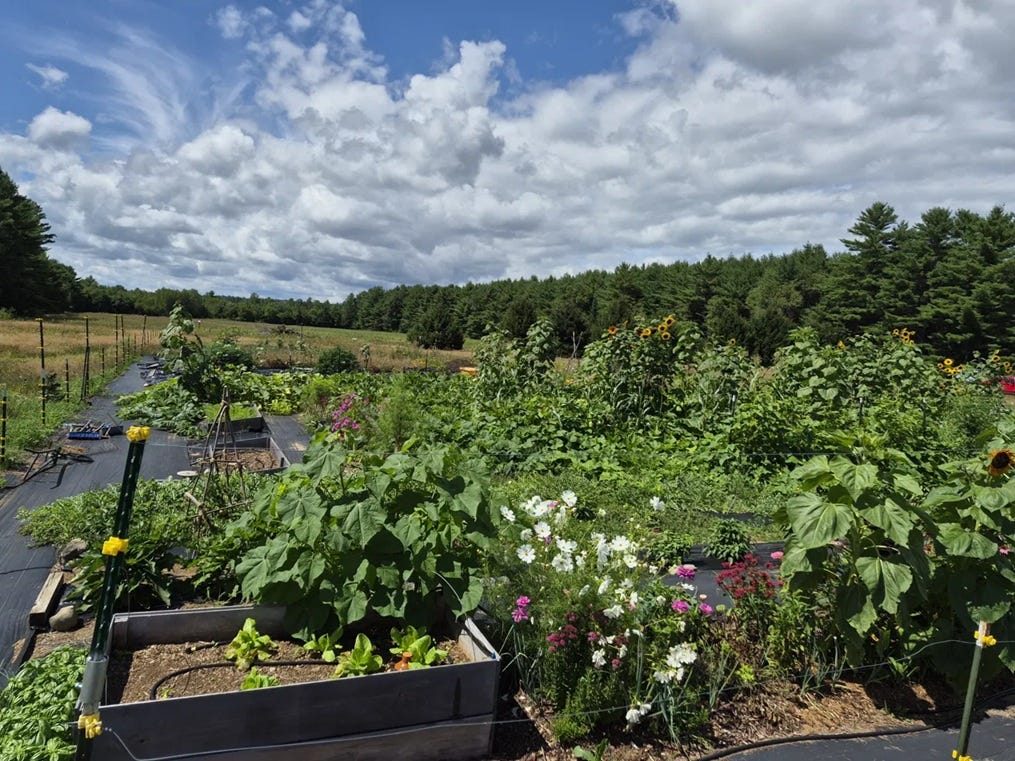
Half of that onion bed I started with will be planted with more of the Kalebration mix for fresh eating this winter. The other half is getting a few rows of different lettuces—another crop I trust to hold under a row cover well into December.
Normally, by this point in the season I am too burnt out from trying to manage “it all” along with off-farm work that I don’t have it in me to plant for winter eating. Things are different now, though, with BraeTek working off-farm and the sheep gone. The garden is my main focus, and the benefit of not being spread so thin is obvious.
I’ve got crops we’re eating now, crops that will be harvested in September and October for storage, and as one crop finishes I’m planting more seeds right behind it—turnips, radishes, a lettuce mix, and Johnny’s “Kalebration” mix, plus a few odd kale transplants I’ve put in, all with the intention of harvesting through the winter and ensuring my own access to quality produce in this rural region of Maine come the depths of the season.
What’s more, my renewed commitment to growing food to share with my community has sparked something in me—I want Runamuk to be known as a place that always has something fresh and nourishing to offer the people I serve, regardless of season.
The Persephone Period is coming whether we like it or not. But because I took five minutes to scatter a few seeds, that bed of greens will be feeding us before the darkest days even hit. The onions and carrots are the riskier move—the question being, can I provide adequate protection and keep them covered all winter?
To do that, I need to invest in some new materials: the pipe bender, EMT conduit, AG-30 row cover, and more 9-gauge wire. This investment is partly the reason I’ve never overwintered anything, and I’m ready to change that but I’m gonna need a little help.
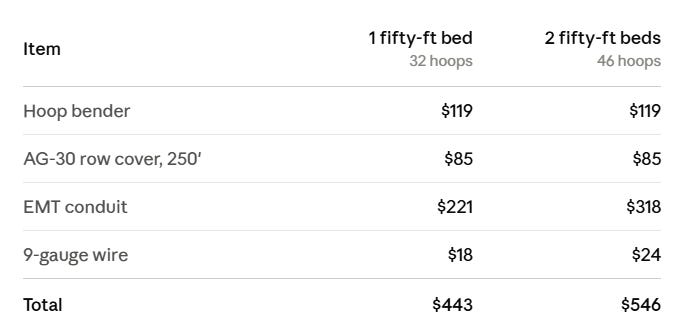
If you’ve read this far and want to see whether this experiment actually works, you can help make it happen. A few dollars toward the equipment list above goes directly into this season’s overwintering setup. Whether I overwinter one bed or two is entirely up to you—without these materials, I’m limited to the six small beds and whatever I already have on hand.
Two ways to help:
Upgrade to a paid membership → CLICK HERE
Make a one-time contribution, no subscription required → PAYPAL or VENMO.
Regardless, I'm planting a few more greens and turnips this week.
Until next time, farm friends!
—Sam
Comments
Nothing yet. Say the first thing.
Sign in to join the conversation.