
On August 15, 2021, the future that Maryam had been building for herself as a student at Kabul University collapsed.
News the Taliban had seized the Afghan capital spread fast, through text messages urging students to flee the campus.
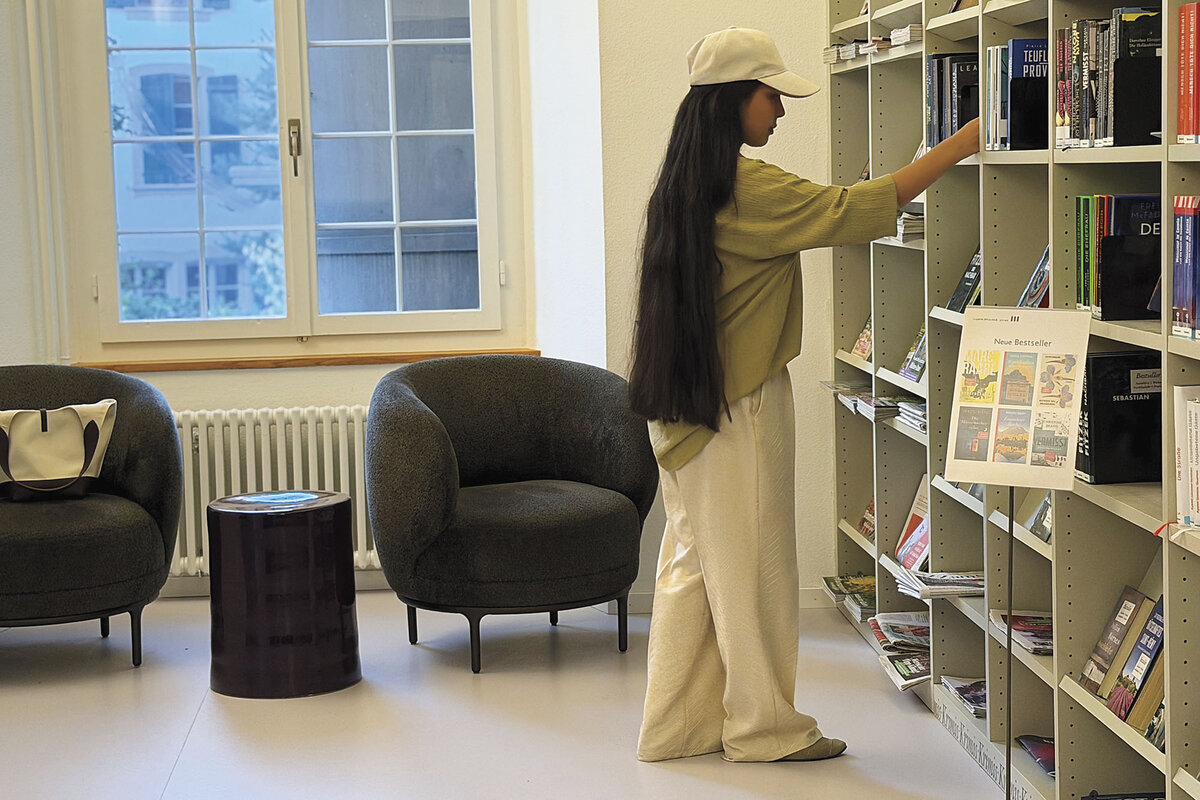
“It was a big shock. Everyone went home or to the airport,” says Maryam, who’s in her mid-20s, sipping an iced matcha outside a library in the Swiss city of Aarau.
Why We Wrote This
Five years after the U.S. military pulled out of Afghanistan, and the Taliban seized power of the government in Kabul, women in that country have lost most of their basic rights. But these Afghan women living abroad are not giving up hope for change.
The library offers both an escape from the single room she shares at an asylum center here and the quiet she needs to study German.
Maryam is one of three Afghan women, now resettled in Europe, the Monitor spoke with for this story. Each started from scratch here in the West. And each of them has never stopped hoping for change back home. Two are being identified with pseudonyms out of concern for the safety of relatives in Afghanistan.
The Taliban takeover of Afghanistan five years ago ushered in an era of dehumanizing restrictions for women and girls. Simply being a woman from that country is enough to be granted asylum in some European countries, including Denmark and the Netherlands. Most of the world’s 2.6 million registered Afghan refugees are in Iran and Pakistan. In 2021, following the Taliban’s rise to power, Afghans submitted 102,000 asylum applications in the European Union, more than double the previous year. In 2025, they lodged nearly 64,000 first-time asylum applications and another 6,207 in Switzerland.
“The Taliban have stripped women and girls of their rights and dignity,” says Shaharzad Akbar, executive director of Rawadari, an Afghan human rights organization. “This situation has led to mass exodus of educated and professional women from Afghanistan.”
Leaving Afghanistan is not easy, particularly for single women. And Europe has become less welcoming to Afghan refugees in recent years. But the continent has offered the kind of education that was taken from women at home – and that many see as a tool of both resistance and preparation for a future they still want to help shape in their home country.
Dominique Soguel
Maryam (a pseudonym), who was granted asylum after fleeing the Taliban, takes a book from a library in the Swiss city of Aarau.
Starting over
German is not the first foreign language that Maryam has tackled in pursuit of a better future. By the time Kabul fell to the Taliban, she had completed six semesters of Chinese alongside a cohort of about 30 university students who believed their best prospects for jobs and scholarships would come from the East.
“Before the Taliban came to power, there were many opportunities for girls,” recalls Maryam, who belongs to the Farsi-speaking Hazara minority of Afghanistan.
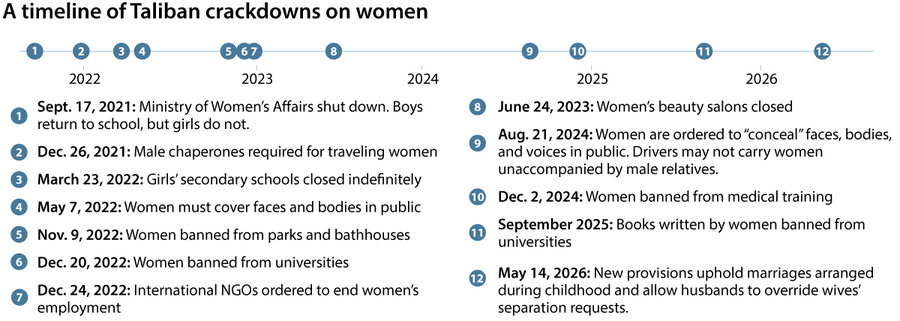
That soon changed. Female students were first required to wear hijabs, with colorful headscarves tolerated for a while. Then only black was allowed, and full-face coverings became mandatory. By December 2022, women were banned from campus altogether. As of June 2026, the Taliban has issued 166 decrees specifically targeting the rights of women and girls, according to the Georgetown Institute for Women, Peace and Security.
“Afghanistan is the worst women’s rights crisis in the world,” says Fereshta Abbasi, a researcher in the Asia division of Human Rights Watch, pointing out that Afghanistan is the only nation in the world where women and girls are barred from secondary and higher education.
Today Maryam hopes studying German will pave the way for a bachelor’s degree. She carries the pain of separation from her husband and parents, who are still in Kabul. Her sisters contact her from there constantly.
Freedom for Maryam takes shape in simple pleasures. At the top of the list is taking the train to discover different parts of Switzerland, and learning to ride a scooter. Back in Kabul, she would be confined to her family’s home or the city’s sole park designated only for single women.
“The best part is I have my freedom here and I have my hope,” she says. “I hope I can find something that can help not just my sisters but all the girls in Afghanistan. They, too, have their hopes.”
Melanie Stetson Freeman/Staff/File
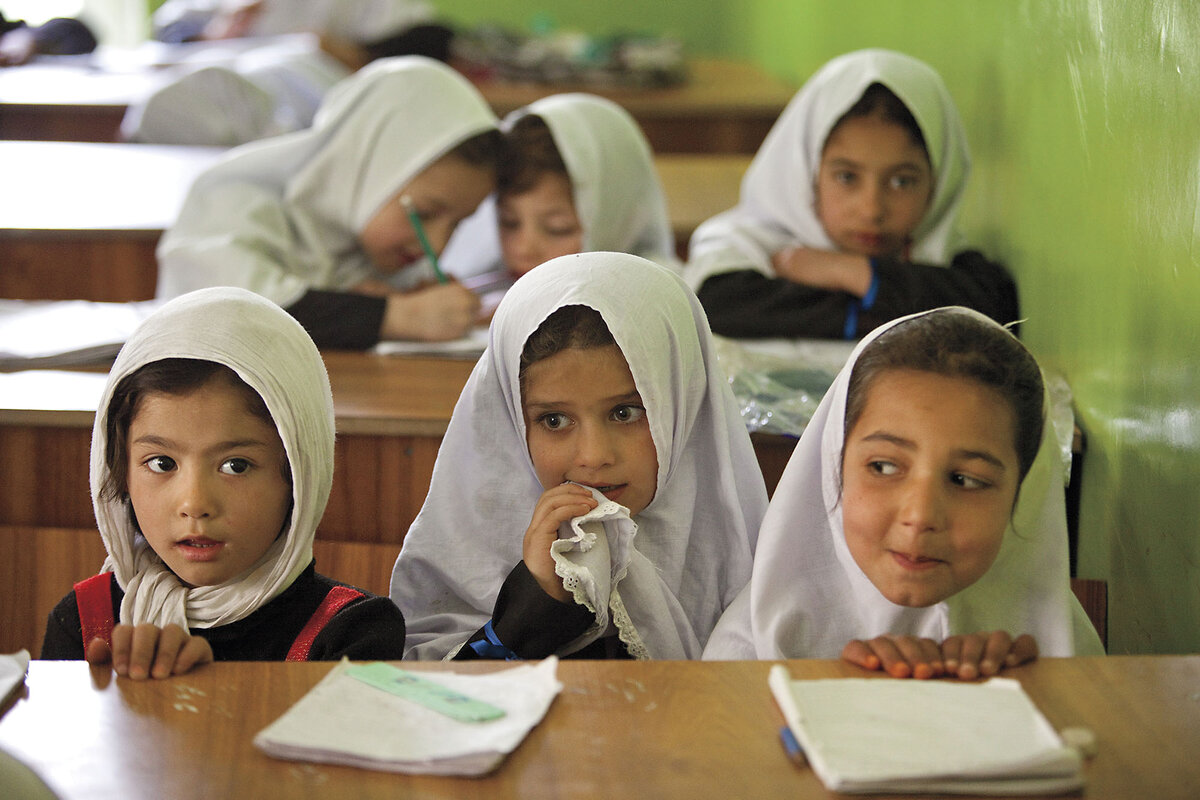
When the Taliban was overthrown in Afghanistan in late 2001, many new schools for girls were built. Pictured here is a group of first graders from Speena Adi Primary and Middle School in Kabul, April 8, 2012.
Fighting for a chance to learn
Sitara grew up in Afghanistan’s cultural capital of Herat, where her mother, who married at age 13 and never attended school, was her constant champion. Though illiterate, she sat by Sitara as her child learned the alphabet, and stayed up late to cook and keep her company when she finally reached university.
“I wish I had had this opportunity,” she often told Sitara, who went on to become a teacher.
Violence drove Sitara from Afghanistan. Taliban fighters gunned down one of her brothers in the street in retaliation for a rejected marriage proposal.
She flew to the country of Georgia with her sister and continued to Greece. Finding little support there, Sitara sought better conditions in Switzerland, only to be moved through seven “prison-like” camps and deported back to Greece under EU asylum rules.
Over the past five years, Europe’s political debate has shifted away from resettlement and toward returns. Brussels recently hosted a Taliban delegation in June for migration talks, and Germany has sent four deportation flights to Afghanistan, deporting 154 Afghans between August 2024 and April 2026.
Now more settled in Athens, Sitara paints landscapes in her free time. Through church, she gained the freedom to openly practice the Christianity that she first encountered in Afghanistan. She also studies economy and management on a scholarship and helps guide migrants through the asylum process.
“I have deep empathy because I went through many of these challenges,” says Sitara, who wants to create an organization that helps refugees rebuild their lives. She urges others to see displaced Afghans, particularly Afghan women, as more than victims or burdens to society.
“They are qualified to work, learn languages, become part of communities and contribute,” she says. “Hope has gone from my country. Darkness has taken over Afghanistan. This country has become a prison for every Afghan girl.”
Nava Jamshidi/AP
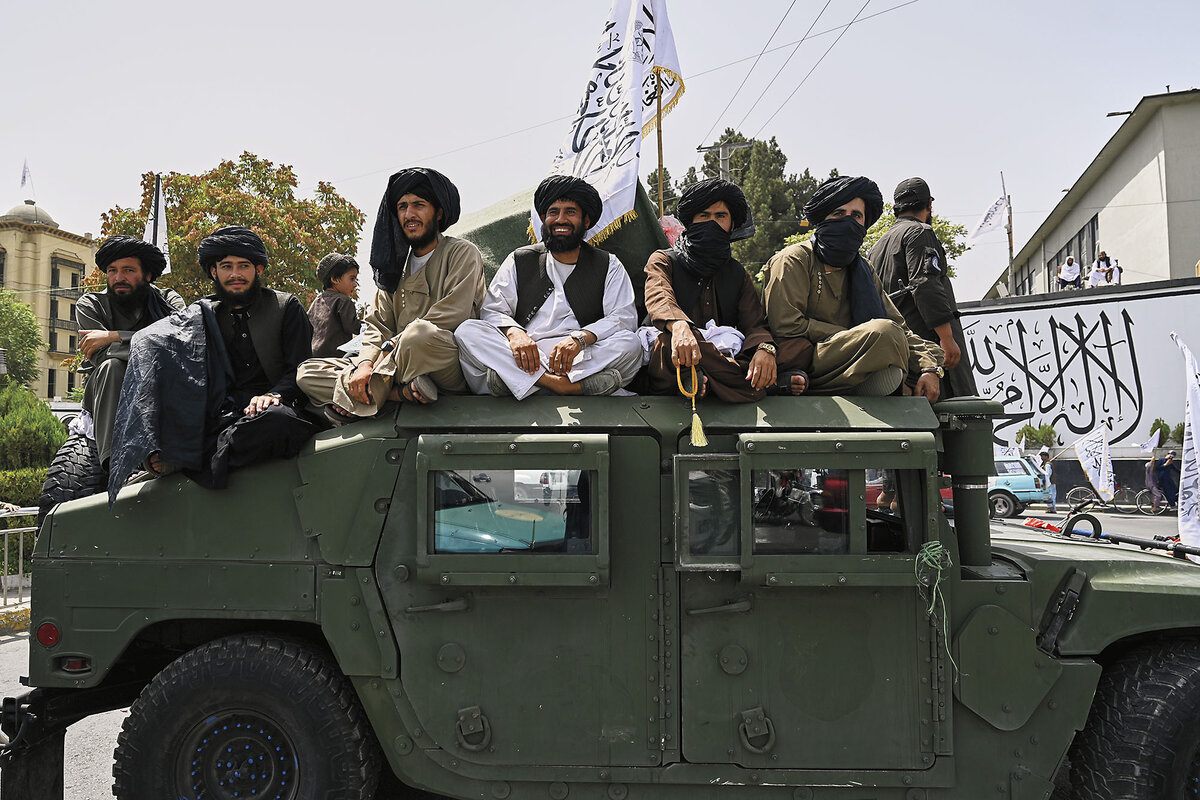
Taliban fighters ride on the roof of a Humvee during celebrations for the fourth anniversary of the U.S. withdrawal and the start of Taliban rule in Kabul, Afghanistan, Aug. 15, 2025.
Taking it back home
UNICEF estimates that more than 3 million Afghan girls were shut out of secondary education in 2021. “Close to half are unlikely to return should school reopen today,” the agency concluded in a report published after the first year of Taliban rule.
For Mursal, an Afghan student at the University of Edinburgh in Scotland, getting an education is a responsibility toward those who were denied the same chance. “I’m going to open a path for my siblings, for my cousins, for my community,” she says.
“My grandma was always encouraging me to focus on my education, stand on my own feet, don’t be dependent on anyone else, especially men,” she recalls. “If you don’t rely on yourself as a woman, anyone who provides for you will also control all aspects of your life.”
Gender-based restrictions appeared in her life at age 9. They included abandoning outside playtime with friends in favor of household chores. She says her grandfather was loving enough to walk her to private school in Kabul. “I think that was the only privilege that I had in Afghanistan,” she says.
Mursal was a teenager when she arrived in Glasgow in August 2021. A series of violent attacks persuaded her father that Afghanistan was not safe for his daughters. He left first to begin a new life for the family in the United Kingdom.
In Scotland, it was back to square one. Her Afghan high school qualifications were not recognized.
“I struggled a lot,” she says, to adjust to the Scottish accent and make her way to university, where she now goes to class with native English speakers. “But when you are so determined to achieve something, you will do it, no matter what.”
Afghanistan is never far from her mind. One day, scrolling through social media, she saw the devastating images of an attack at her old school. “I realized that I recognized my seat,” she says. “I couldn’t do anything except cry.”
Mursal says life in exile has made her conscious of which Afghan values she wants to preserve. Hospitality and respect for elders are obvious keepers. Religious and cultural restrictions for girls are not. She says she is grateful her parents embraced her independence, including by allowing her to live in another city.
When it comes to the future of Afghan girls, she says what worries her is that the Taliban mindset will outlast its control over the government.
“It takes lots of time and effort to change,” that thinking, she says. “We can achieve it by people who have the opportunity to leave the country, be in a safe place, educate themselves, and then maybe hopefully we can do something for Afghanistan.”
SOURCE:
Al Jazeera, France 24, Human Rights Watch, National Public Radio, GlobalSecurity.org, CNN, United Nations Human Rights Office, Amnesty International
|
Jacob Turcotte/Staff
Comments
Nothing yet. Say the first thing.
Sign in to join the conversation.