
On a weekend morning, a van leaves Damascus and clambers toward Monte Rosa, a rocky area on the outskirts of the Syrian capital. Everyone is laughing and talking, eagerly anticipating a day of climbing. For some, it will be the first time climbing outdoors; for others, it marks a return to a sport they discovered years earlier, in exile, while a protracted civil war tore apart their country.
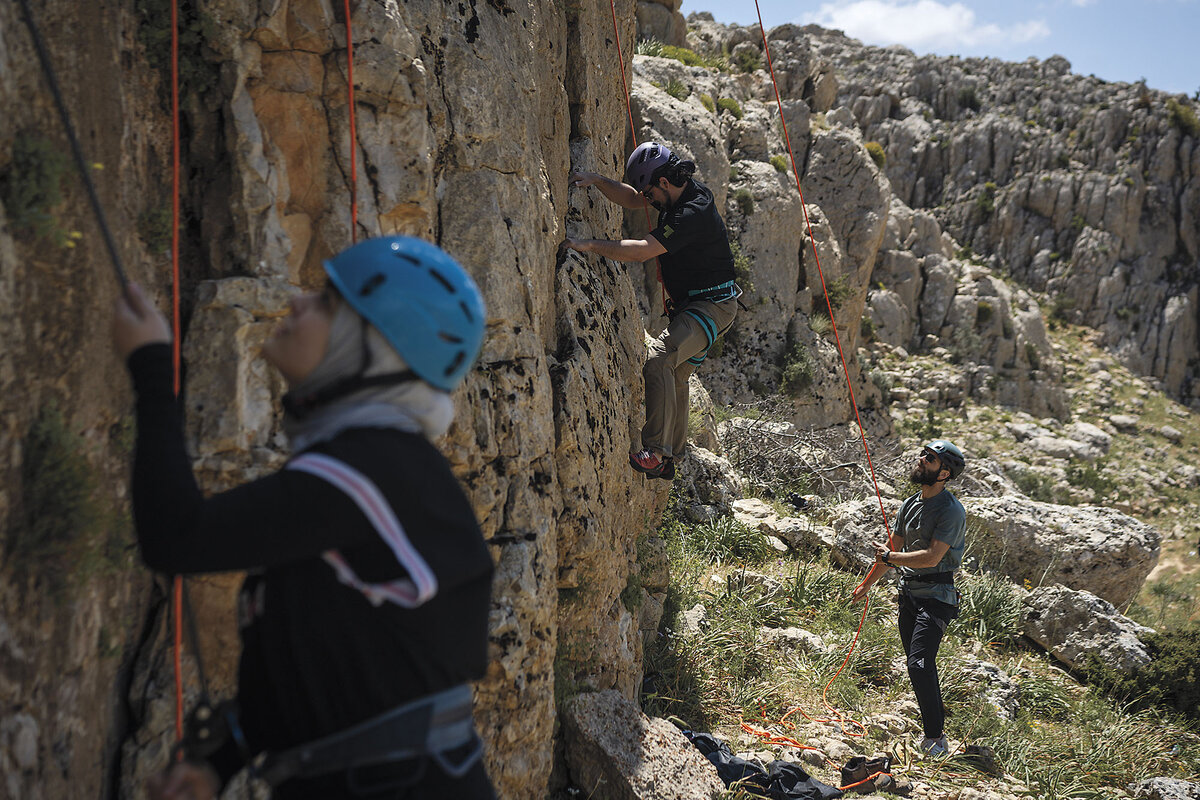
Ropes, harnesses, and helmets are laid out at the base of the limestone cliff. Children, young people, and adults listen as organizers explain how to tie knots, trust the rope, and move safely on the rock wall. In a country where war reshaped daily life, the simple act of climbing becomes something larger: a way to regain confidence, reconnect with nature, and share a moment of joy.
Siblings Moaz, Yasseen, and Zahira Tasabehji organized the trip as part of a climbing project they founded, known as Jabalna (Arabic for “our mountain”). The three had left Syria in 2010 as teens and spent 15 years in Canada, where they built new lives and discovered climbing. After the fall of Bashar al-Assad in December 2024, they returned to Damascus and began building a climbing community.
Why We Wrote This
In a country where war reshaped daily life, the simple act of climbing becomes something larger: a way to regain confidence, reconnect with nature, and share a moment of joy.
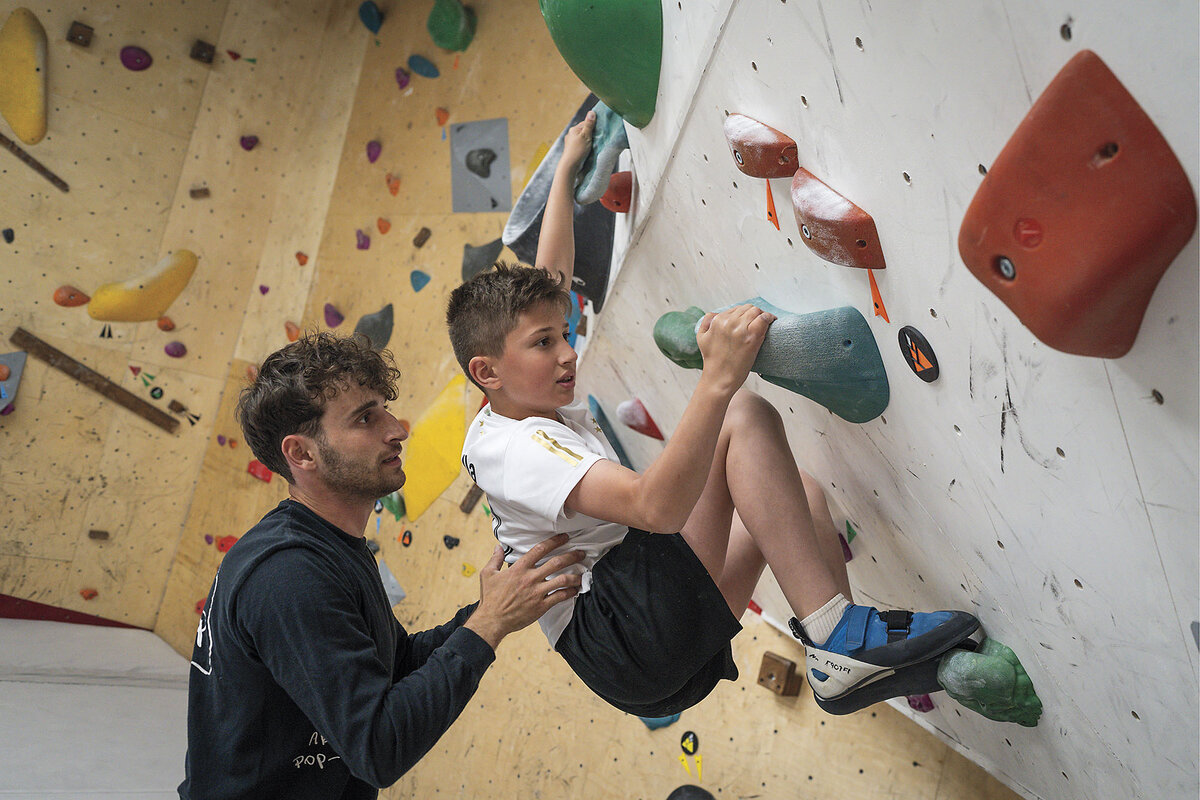
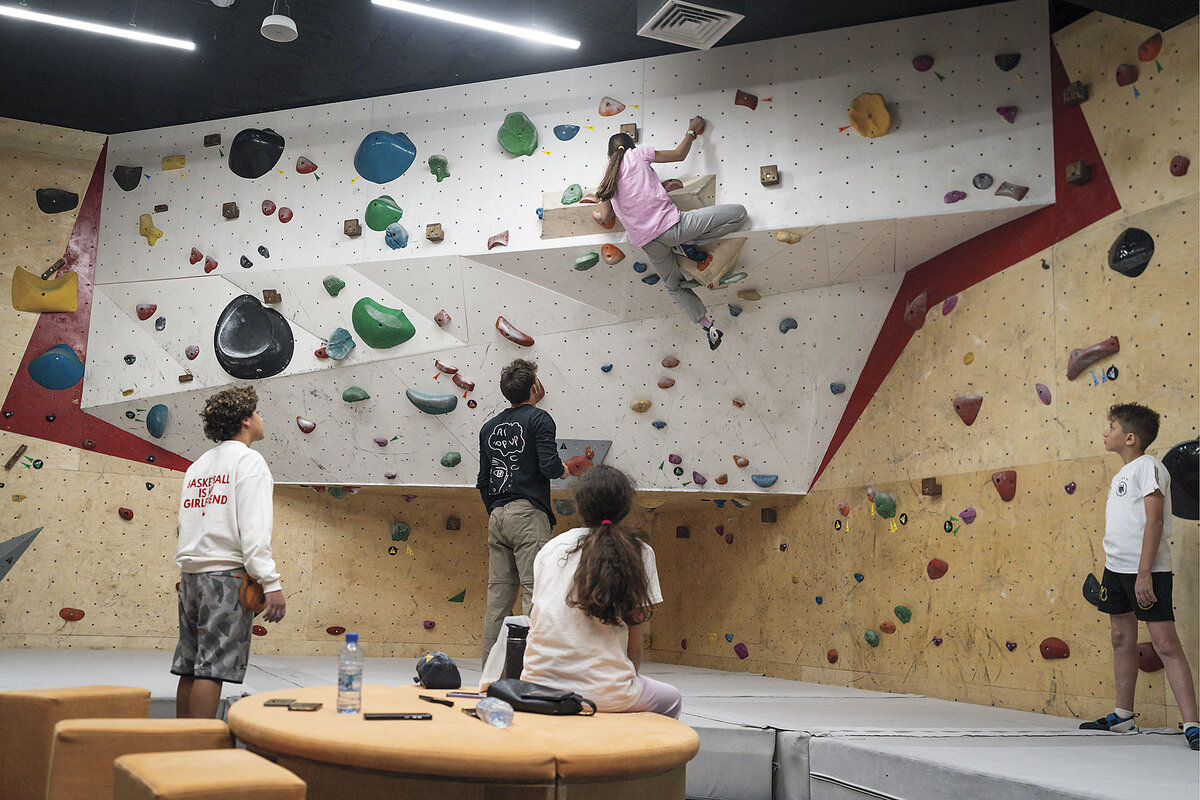
Jabalna opened its climbing gym – the first in the capital – in January 2026, operating on a discounted access system. Children participate alongside adults. Experienced climbers guide beginners. Women and girls are encouraged to take part. A national climbing association was also created, and outdoor climbing sites across the country are under development.
“It is somehow really special to climb the rocks of my home,” says participant Omar Moussa.
Adri Salido
WALL-TO-WALL FUN: Moaz Tasabehji helps Abdullah Dal Al Bab during a youth climbing session at Jabalna, the first climbing gym in Damascus.
During the war, Hiba Askar fled with her family to Lebanon, where she discovered climbing. Now back in Syria, Ms. Askar helps guide newcomers on the rock. “To climb in my own country now means hope, rebuilding, and creating opportunities for a new generation to feel strong and free, too,” she says.
As the sun starts to drop over Monte Rosa, the group gathers again at the base of the rock. Some are tired; others ask for one more climb. Ropes get packed up, helmets are collected, and the van begins to head back to Damascus.
Outdoor climbing in Syria still comes with serious challenges. Landmines make some areas unsafe. Equipment is difficult to import, and many guidebooks are outdated.
But whether climbing can help Syrians rebuild after war is an open question. For now, the answer each weekend starts with a rope, a hand on the rock, and the decision to go up.
Adri Salido
RISING GENERATION: Mr. Tasabehji teaches youths who are just beginning to discover climbing at Jabalna.
Adri Salido
HELPING HANDS: Omar Moussa secures a climber (center) as he descends from the rock at Monte Rosa.
Adri Salido
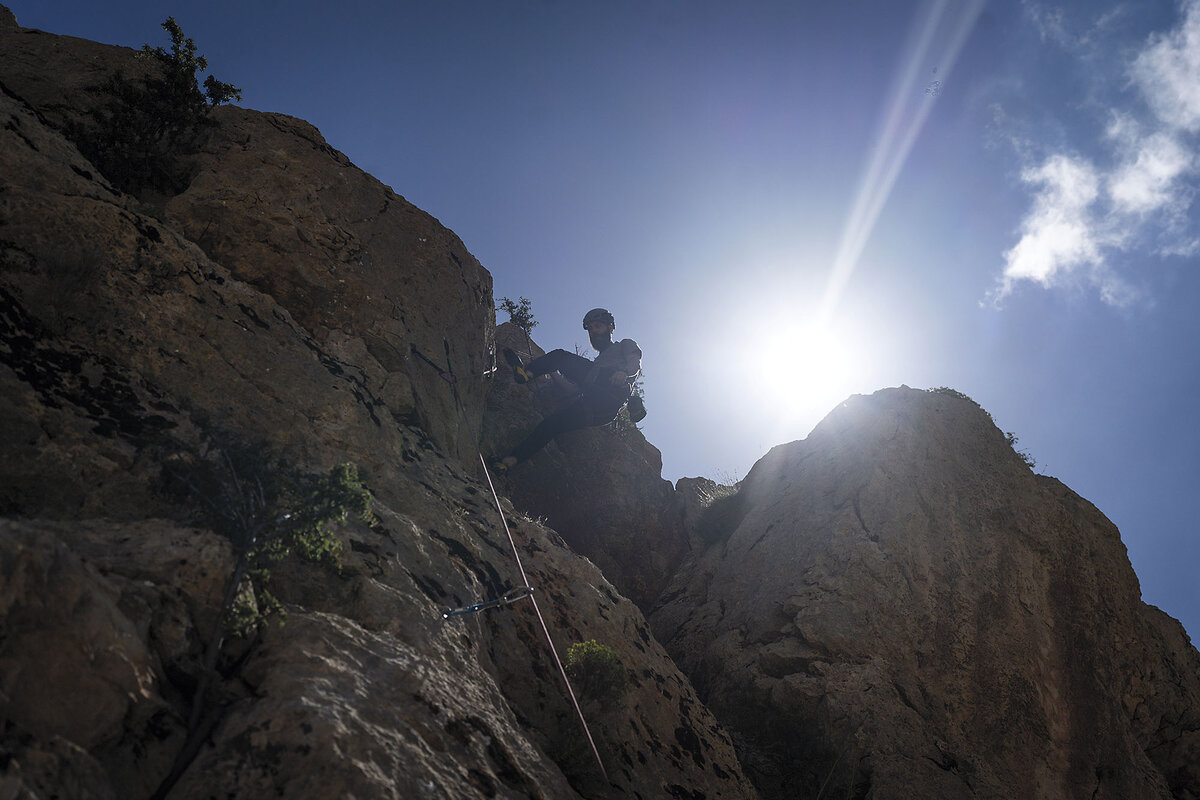
TRAILBLAZER: Mr. Moussa rappels down a route after setting the rope. By preparing the climb, he helps make the wall safe for less experienced participants.
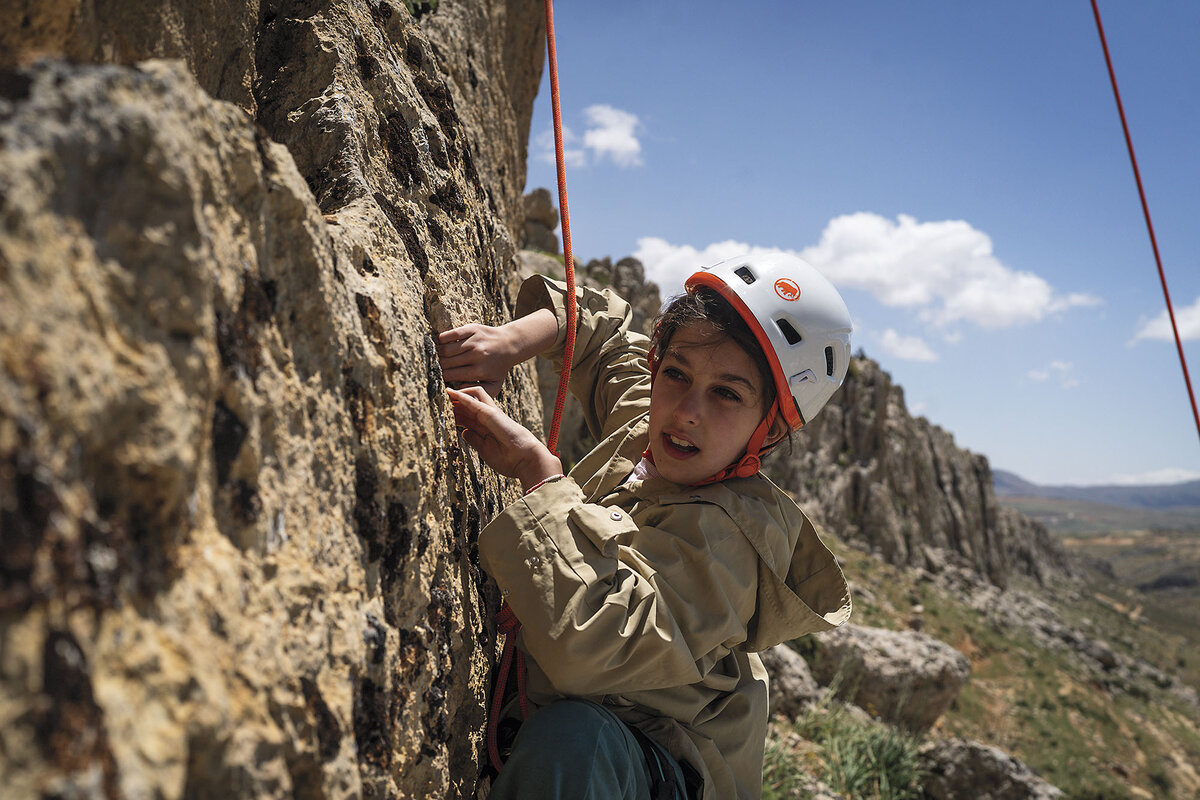
Adri Salido
ROCK STAR: Taj Kassar, the youngest participant in the group, climbs a route at Monte Rosa.
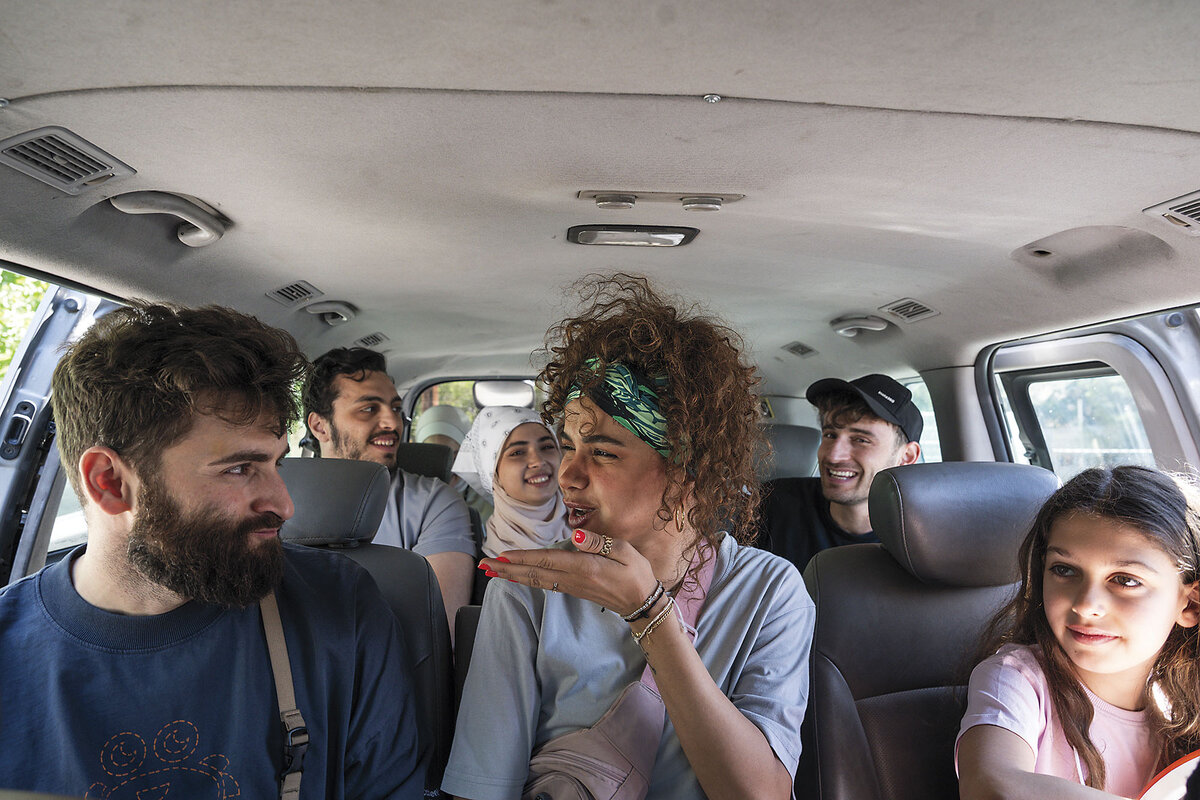
Adri Salido
ON THE WAY UP: Yasseen Tasabehji (from left) and Jana Soultani share a moment of laughter and joy in the van taking them from Damascus to Monte Rosa.
Comments
Nothing yet. Say the first thing.
Sign in to join the conversation.