
In 1801, on the nation’s 25th birthday, the nascent District of Columbia’s muddy streets were chockablock with horse racing and cockfighting, according to the White House Historical Association.
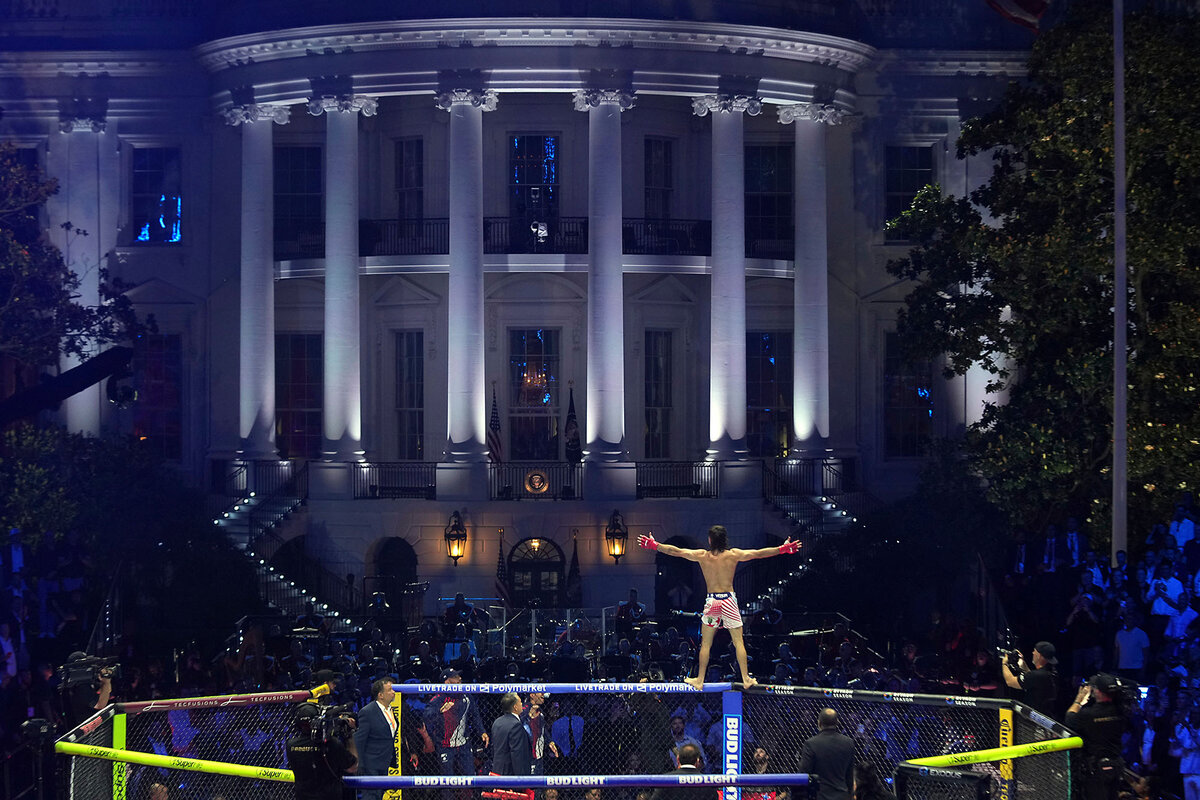
More than two centuries later, Washington is again hosting sporting events to celebrate 250 years of national grit. In June, the White House staged the kind of mixed martial arts fights once referred to as “human cockfighting” by the late Sen. John McCain. On Sunday, the capital is staging the Freedom 250 Grand Prix, an IndyCar event that brings open-wheel racing to the streets around the National Mall for the first time, with cars going so fast that workers are welding down more than 200 maintenance hole covers so they don’t pop off.
While some Americans see these events as a poor fit for the nation’s capital, a high-traffic city where locals mix with tourists and jet-riding elites, others have cheered the celebrations.
Why We Wrote This
Car racing and mixed martial arts are featured in President Donald Trump’s Freedom 250 celebrations. The sporting events also raise questions about how fandom and favors can complicate civil discourse.
“It’s about speaking in the language of the forgotten blue-collar man,” says political strategist Michael Caputo, who attended the full-contact combat event in Washington promoted by the Ultimate Fighting Championship, or UFC.
Mark Schiefelbein/AP
Diego Lopes celebrates after winning his featherweight bout against Steve Garcia at a UFC event on the South Lawn of the White House, June 14, 2026.
“The reason politicians are attracted to sports and athletes is because it provides a common language,” says political commentator Chris Cillizza, author of “Power Players: Sports, Politics, and the American Presidency.”
A move away from “republican simplicity”
Racing and mixed martial arts have both seen mainstream integration and rising audience metrics over the past decade.
But the two events also include aspects distant from ideals championed by the nation’s Founding Fathers, critics say. Thomas Jefferson, for one, urged “republican simplicity” to connect with the common man, rejecting grand celebrations to distance the American presidency from European royal pomp. (Jefferson walked to work, wore informal attire to greet visitors, and hosted small constituent dinners instead of rallies to honor the nation’s modest beginnings.)
Today, some wealthy sports leagues are aligning with President Donald Trump’s specific brand of Republican ideology, forgoing the kind of neutrality sports once offered.
And while past presidents, including Ronald Reagan, have championed the nation’s winning sports teams, Mr. Trump – through business deals, White House visits, and partnerships, including with IndyCar and the UFC – has fed ethics concerns that he might be using these entities and national public events involving them for political and personal gain in ways other presidents have not.
Trump’s ties with sport
Both IndyCar owner Roger Penske and UFC chief executive Dana White have close ties to Mr. Trump, with Mr. Penske gushing in a recent letter about the president’s “America first” vision. Mr. White, meanwhile, has enjoyed a decades-long alliance, forged in the early 2000s when Mr. Trump agreed to host the struggling UFC’s fights at his Taj Mahal casino in Atlantic City. Those events were a boost for Mr. White’s business venture and filled hotel rooms at Mr. Trump’s properties.
The mutual loyalty and favors have continued.
Jacquelyn Martin/AP
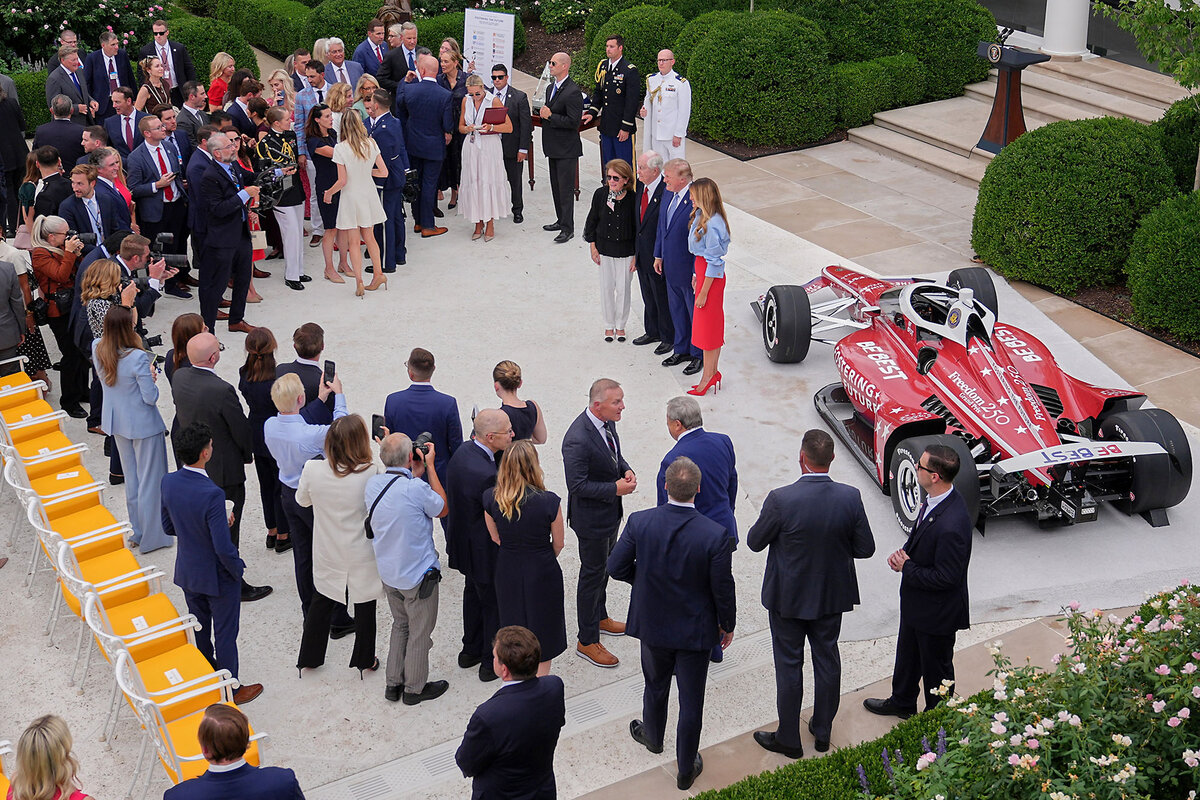
President Donald Trump and first lady Melania Trump pose for photos with IndyCar owner Roger Penske and his wife, Kathy Penske, at an event promoting the Freedom 250 race, outside the White House, Aug. 20, 2026.
Each time Mr. Trump ran for president, Mr. White became a shield and public relations megaphone for the Republican candidate. Most memorably, just days after his 2024 felony hush money conviction, Mr. Trump’s first public move was to attend a UFC fight. Walking into a roaring arena sealed his image as a resilient, anti-establishment icon.
UFC’s brash, physical style reflects a broader conservative zeitgeist, particularly the president’s MAGA movement, says Luke Thomas, a combat sports analyst in Washington.
In life and in politics, Mr. Trump “always punches back,” says Mr. Caputo, the veteran Republican strategist in Ave Maria, Florida. He adds that the president makes events symbolic of his political message, where he insists on “wins” and “winners” only. No “losses.”
And for Mr. Trump, both entertainer and scrappy fighter, in the case of the IndyCar event, timing matters.
With the president’s approval ratings now hovering between 33% and 37%, the race is a chance for him to burnish his political brand ahead of midterm elections – in front of an estimated 140,000 race fans. Mr. Trump is expected to wave the green flag to start the race and might take a lap around the course in the presidential limousine.
“A political bond through sports is a very durable one,” says Mr. Thomas.
Still, Americans appear divided. By a wide margin, Americans disapproved of the June 14 fight on the White House lawn, according to polls. Though D.C. Mayor Muriel Bowser has welcomed the potential economic benefits of the race, historic preservation groups have objected, citing traffic disruptions, security constraints, and potential damage to national monuments from vibrations caused by the speeding race cars.
There are also questions about who is footing the bill.
Julia Demaree Nikhinson/AP
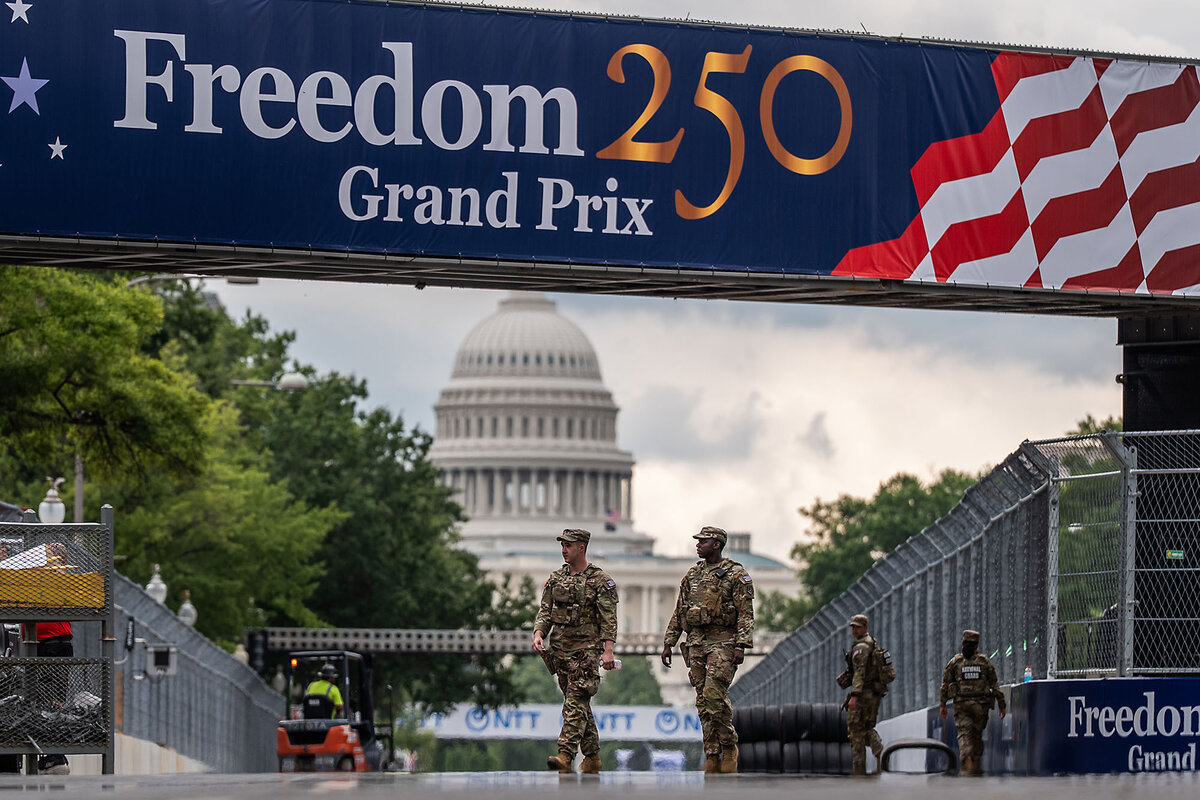
The U.S. Capitol stands in the distance as National Guard members patrol the track for the Freedom 250 Grand Prix, in Washington, Aug. 18, 2026.
The administration said that the UFC and IndyCar have largely funded the events. Still, other logistics will fall, at least in part, to taxpayers. Federal filings and reports note that supplemental public security and agency support will ultimately cost taxpayers between $10 million and $12 million. The Interior Department allocated roughly $68 million to Freedom 250 LLC – set up as an arm of the National Park Foundation – to prepare the nation’s capital for the celebrations. And the company handling the job, Event Strategies Inc., is closely tied to President Trump’s campaign activities, according to a New York Times report.
Beyond costs, the mixing of sports and politics threatens, at least for some, the ability to unite people around competition and athleticism.
Sports or politics?
“When you look at the UFC event on the White House lawn, you can’t make that apolitical: It’s on the lawn, it’s the president, it’s the White House,” says Michael Butterworth, director of the Center for Sports Communication and Media at the University of Texas.
“The current administration has manipulated the language and symbolism of these events so that they are ... about the president and about loyalty to him,” he says. “That takes away the claim that sports are about unity.”
Patrik Jonsson/The Christian Science Monitor
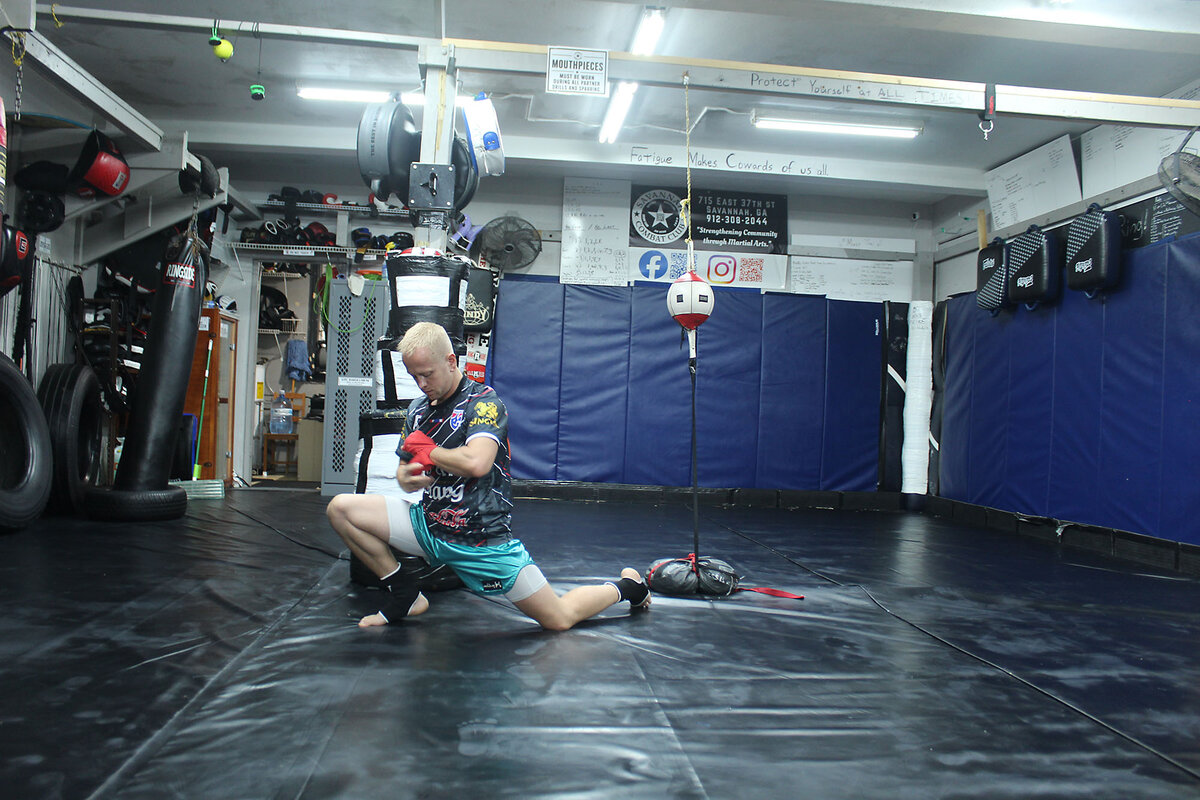
Savannah hotelier and amateur fighter Paris Nelson trains at the Savannah Combat Club in Georgia, Aug. 4, 2026. He says that mixed martial arts "shouldn’t be about money and politics. It should be about the athletes."
New York City writer and longtime UFC fan Laura Jedeed agrees, saying that, for fight enthusiasts, the virtue lies in skill and sportsmanship. President Trump and Defense Secretary Pete Hegseth instead appear to view mixed martial arts as an expression of masculinity, she says. “For them, you have to win, to dominate. ... As a fan of the sport, it does make me sad.”
At the Savannah Combat Club, an MMA gym on the Georgia city’s rough-hewn east side, Paris Nelson, a hotelier and amateur fighter, stretches ahead of a workout on a recent morning. On the wall, a poster dotted with national flags proclaims: “We are all one.” The gym’s motto is: “Strengthening community through martial arts.”
Those kinds of sporting ideals might ease the tribalism that, according to Pew Research Center data, has left many Republicans and Democrats feeling polarized and angry about modern politics.
“MMA is about respect,” says Mr. Nelson. “It shouldn’t be about money and politics. It should be about the athletes.”
Comments
Nothing yet. Say the first thing.
Sign in to join the conversation.