
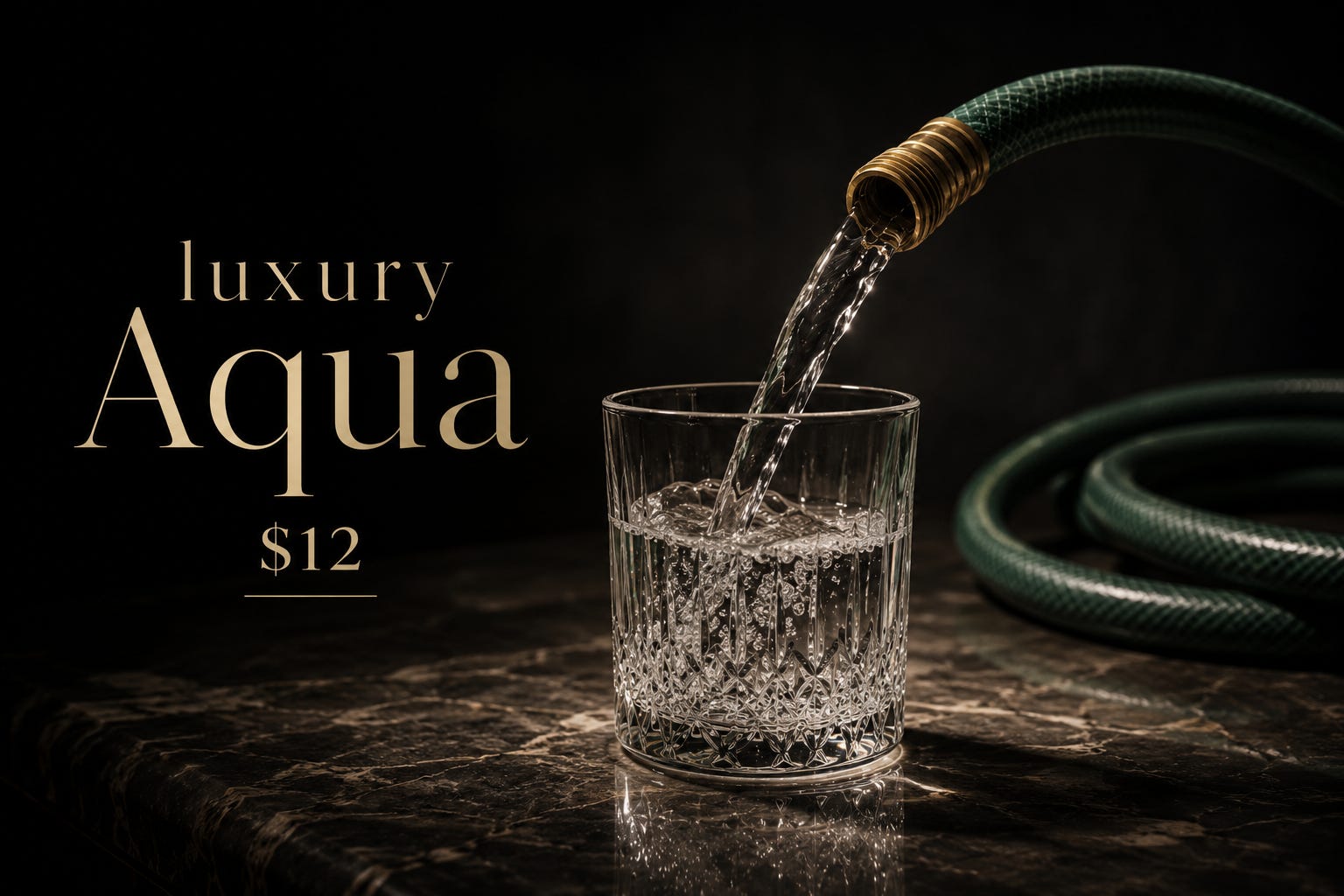
There’s a certain genre of stunt that never gets old, because it keeps confirming the same uncomfortable thing about us. Someone takes an ordinary object, dresses it in the language of luxury, hands it to a stranger with a camera rolling, and asks them what they think. And every single time, the stranger obliges - not with skepticism, but with poetry.
The water. In July 2026, during a week Colman Domingo was guest-hosting Jimmy Kimmel Live!, the show’s crew filled cups with plain hose water, told people on the street it was Erewhon’s $12 “water experience,” and stuck a microphone in their faces. The reactions were exactly what anyone who’s watched this genre before could have predicted: people described tingling sensations, subtle notes of nutmeg, a clean mineral finish, even a boost of energy. It was LA tap water.
The shoes. Years earlier, Payless ran a version of the same experiment with real financial stakes. The company took over a former Armani storefront in Santa Monica, rebranded itself with the Italian-sounding name “Palessi,” and invited fashion influencers to a launch party - champagne, red carpet, the works. The shoes on display were ordinary Payless stock, items that normally sell for $20 to $40. Guests paid between $200 and $600 for them, calling them elegant, sophisticated, made from clearly high-quality material. One man said he could tell the leather was premium just by looking at it. It was a shoe that, minutes earlier, had been sitting in a Payless warehouse.
The wine. In 2023, a Belgian consumer show called On n'est pas des pigeons teamed up with Eric Boschman, once crowned Belgium's best sommelier, to test whether wine medals mean anything at all. They went shopping for the cheapest, worst-rated supermarket wine they could find, landed on a €2.50 (about $2.70) bottle, and gave it a total makeover: a fabricated château name, a premium-looking label, and an invented backstory about its grape varietals and region.
They entered it into the Gilbert et Gaillard competition, one of the more prestigious wine contests in Europe — and, notably, one that charges winemakers an entry fee and rarely bothers to independently verify the lab data winemakers submit about their own wine. So the team simply sent in lab results borrowed from an entirely different, genuinely high-quality bottle. Boschman worked the room too, quietly telling fellow sommeliers and wine enthusiasts how exceptional the wine was, betting — correctly — that professionals are just as susceptible to peer influence as anyone else.
The $2.70 bottle won gold. Judges described it in glowing, technical language: notes of freshness, a rich palate, real complexity. Afterward, the organizers offered the "winemakers" the option to buy a thousand gold-medal stickers to slap on future bottles, for a fee.
The clothes. This is the spirit behind the running “Balenciaga” joke too — designer garbage bags, deliberately ugly $1,800 sweatpants, trash-bag-shaped clutches — except in that case, the brand isn’t hiding the con, it’s selling the con directly, and people buy it anyway, because the label itself has become the flavor.
Line these four up and the laughing stops fairly quickly, because none of this was actually about water, shoes, wine, or fashion. Those were just the props. What’s actually being exposed is something most people spend their whole lives assuming is solid ground: your taste, your judgment, your sense of quality - the things you’d swear are internally generated, coming from you - are far more manufactured than you think.
They can be built, on command, by a stranger who understands the mechanism well enough to pull the right levers.
And once you see how easily it’s done with a hose and a paper cup, you start to wonder what else has been done to you the same way - and by whom.
Comments
Nothing yet. Say the first thing.
Sign in to join the conversation.