
It has to be.
Every waking moment, millions of pieces of information compete for our attention. Light changes by the second. Colors shift as clouds pass overhead. Tiny movements ripple through leaves, reflections tremble in windows, shadows lengthen almost imperceptibly across the ground. Every surface contains patterns, textures and relationships that could occupy our attention for hours.
If we actually noticed all of it, we would never accomplish anything.
So, the brain makes a bargain on our behalf.
It quietly asks one question over and over again.
Does this matter?
If the answer is yes, it moves the information to the front of our awareness. If the answer is no, it disappears before we ever realize it was there.
It’s a brilliant system.
It keeps us alive.
It gets us safely through traffic, reminds us where we left the car, recognizes the face of a friend across a crowded room and allows us to navigate a world that would otherwise be impossibly overwhelming.
But every gift has its price.
The same brain that protects us from information overload also hides an astonishing amount of beauty.
Not because beauty is unimportant.
Because beauty is rarely urgent.
The changing reflection in a rain puddle won’t help us survive. Neither will the rhythm of light moving across an old brick wall or the fleeting harmony between two colors that happened to meet for only a few seconds. The brain looks at those things, decides they aren’t necessary, and moves on.
Most of us never know what we’ve missed.
Artists spend their lives trying to find it again.
That has always fascinated me.
People often ask photographers how we find our subjects, as though the world has thoughtfully scattered them about like Easter eggs waiting to be discovered. I don’t think that’s what happens at all.
The subjects were always there.
The difference is that, little by little, we learn to distrust the brain’s first answer.
“This isn’t interesting.”
Says who?
Certainly not the light.
Certainly not the colors.
Certainly not the world itself.
Only the efficient little editor inside our heads, trying to help us get on with the business of the day.
Photography taught me that the first answer is almost never the most interesting one.
When I first arrive somewhere, my brain immediately begins assigning labels.
Street.
Building.
Tree.
Shadow.
Finished.
The labels are useful, but they are also limiting. Once something has been named, the mind has an unfortunate tendency to believe it has also been understood.
It hasn’t.
A tree is never just a tree.
It is gesture.
Texture.
Light.
Movement.
It is the way the morning sun catches one branch but leaves another in darkness. It is the conversation between the trunk and the empty space surrounding it. It is the changing relationship between the tree and everything beside it, a relationship that has never existed in exactly the same way before and never will again.
Labels close the door.
Observation quietly opens it again.
Children seem to understand this instinctively.
Watch a young child on a walk and you’ll notice that the journey takes forever. Every crack in the sidewalk deserves investigation. Every feather becomes a treasure. Every puddle contains another world.
Adults smile impatiently because the child is constantly distracted.
I sometimes wonder if the child is the only one who isn’t.
Perhaps creativity is nothing more mysterious than refusing to outgrow that habit.
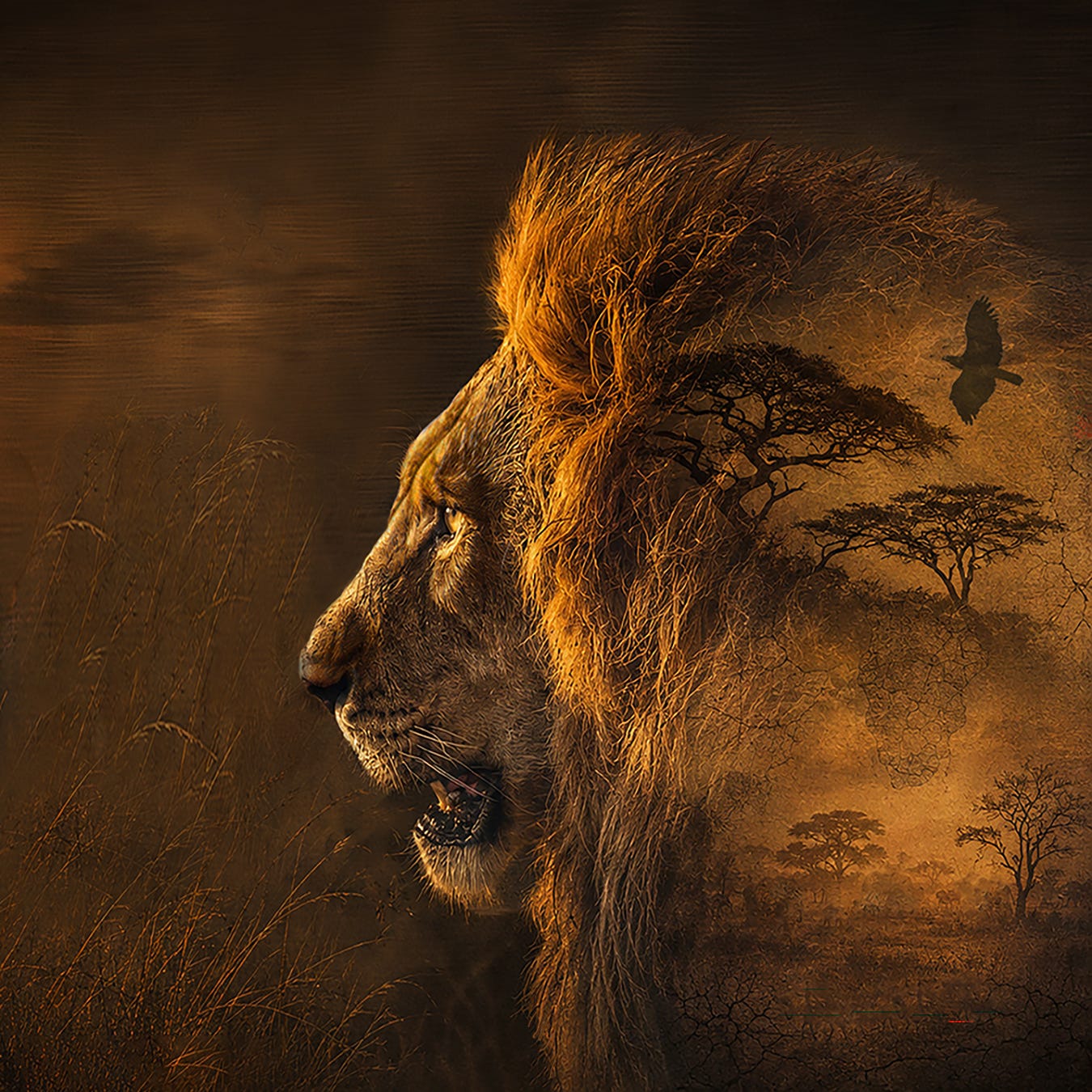
The longer I’ve been an artist, the less interested I’ve become in finding extraordinary places.
Extraordinary places have never been in short supply.
Extraordinary attention is.
The camera eventually became almost secondary. It gave me a reason to stop, but it wasn’t responsible for what happened next. The real work began when I stayed with something longer than my brain thought necessary. Every additional moment seemed to reveal another layer that had been invisible only seconds before.
That realization escaped photography long ago.
Now it follows me everywhere.
I listen longer.
I look longer.
I question my assumptions more often.
I’ve become suspicious of the phrase, “I’ve seen that.”
Have I?
Or have I merely recognized it?
Those are very different things.
Recognition is immediate.
Seeing takes time.
Perhaps that’s why creativity has never felt to me like the act of inventing something new.
It feels more like recovering something that was there all along, patiently waiting beneath the labels, beneath the assumptions, beneath the efficient shortcuts of a remarkable brain that was doing exactly what it evolved to do.
Every artist eventually discovers that the world contains far more than the mind is willing to reveal.
Our work is not to create that hidden richness.
Our work is simply to remain still long enough to notice it.
More ideas and techniques on my webpage: www.roxanneoverton.com
No posts
Comments
Nothing yet. Say the first thing.
Sign in to join the conversation.